
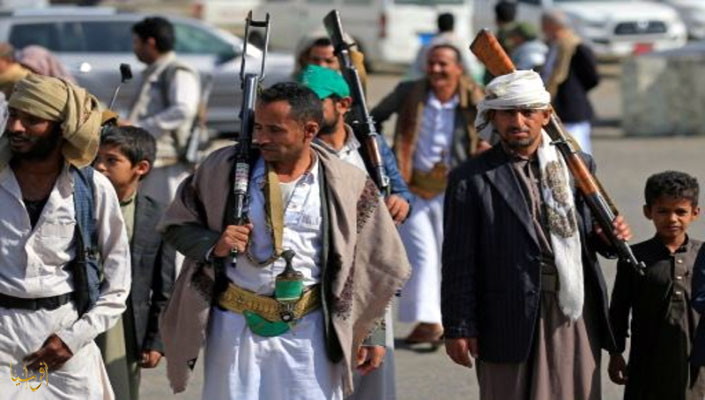
Afrasianet - On September 11, 2026, the Ansar Allah group (Houthis) announced its control over six districts in the governorates of Taiz and Hodeidah in southwestern Yemen, with an estimated area of about 5,400 square kilometers, after forces loyal to the internationally recognized government withdrew from the area.
The control included the Mokha district and its strategic port, and a number of islands, the most important of which are Mayun Island (Burim), located in the heart of the Bab al-Mandab Strait, and the Hanish archipelago, located in the north of the strait.
The Houthis' control of this strategic area on the southwestern coast of Yemen is the most prominent development on the ground between them and government forces, since the UN-sponsored humanitarian truce between the two sides took effect in April 2022[1].
First: Background of the Renewed Fighting
The crisis of the Mahan Air plane represented" Mahan Air Iran, which took the Houthi delegation to Tehran to participate in the funeral of Supreme Leader Ali Khamenei in July 2026, is the direct reason for the resumption of fighting between the two sides.
At the time, the Yemeni government tried to prevent the Iranian plane from landing on its way back from Tehran, accusing the Houthis of transporting Iranian weapons and experts on board[2]. Therefore, the runway of Sana'a airport was targeted by strikes by warplanes attributed to the government, forcing the plane to land at Hodeidah airport, before returning to Iran[3].
The Houthis took advantage of the incident to escalate and announced, in late July, a ban on maritime navigation on Saudi Arabian ships, and the start of targeting its oil tankers, which have increased their transit in the region, after the kingdom shifted oil exports from the port of Ras Tanura on the Persian Gulf to the port of Yanbu on the Red Sea after the closure of the Strait of Hormuz.
The Houthis have increased the pace of targeting Saudi military bases and vital facilities in the western regions of the country[4], and also escalated their attacks on the port of Mokha using ballistic missiles, planes and drones..
Despite the intersection of the interests of the Houthis and Iran in pressuring Saudi Arabia to strengthen its grip on navigation throughout the region, including the southern Red Sea region, the Bab al-Mandab Strait, in addition to the Strait of Hormuz, this narrative does not explain the delay in the Houthi movement for six months since the United States launched its war on Iran on February 28, nor the Houthis' announcement that freedom of navigation in the Red Sea will not be affected after their control of the Bab al-Mandab Strait[5].
Therefore, it is likely that the opening of the Yemeni coastal front was primarily the result of Houthi calculations, which Iran, which seeks to increase pressure on the Donald Trump administration by raising oil prices before the US midterm elections, tried to invest in it politically.
The Houthi offensive came as a pre-emptive move to counter the movements of government forces, aimed at imposing a new reality on the ground in the region, taking advantage of the regional situation resulting from the war launched by the United States and Israel against Iran.
These moves were evident in the talk of Yemeni government officials about the imminent declaration of the "decisive battle that will liberate Sana'a" and the acceleration of the steps to rebuild the Yemeni army and enhance its capabilities, in the context of what was described as "preparation for the next stage, in the event that the Houthi militias reject peaceful solutions"[6].
Accordingly, the Houthis took the initiative to determine the time and arena of the battle, and began targeting the city of Mokha, since August 9, 2026.
On September 3, they expanded the scope of their military operations to include the fronts of Hays, Jabal Ras, Maqbanah, Al-Kadaha, Al-Barah, Jabal Habashi, Mawza, Al-Waziyah, Al-Khokha, Al-Mokha, and Dhu Bab, and ended up controlling the most prominent strategic areas located on Yemen's southern Red Sea coast, including the Bab al-Mandab Strait and the Yemeni islands it controls.
Second: Reasons for the collapse of government forces
The collapse of government forces and their withdrawal to a distance of more than 120 kilometers, along the southwestern coastline of the country, is related to a set of external and internal factors, most notably the Saudi-Emirati rivalry in Yemen during the past years, and the disputes and conflicts between the armed forces against the Houthis, which prevented the building of a unified Yemeni army, due to the multiplicity of goals and references, and the conflict of interests and loyalties.
As a result of this rivalry, Yemen has witnessed numerous armed confrontations within the ranks of the anti-Houthi coalition, starting with the events in Aden in 2019[7], leading to the armed confrontations that erupted in early 2026 after the forces of the UAE-backed Southern Transitional Council (STC) tried to expel the Saudi-backed government forces from the governorates of Al-Mahra and Hadramawt, and ended with a Saudi military intervention that resulted in the dissolution of the STC forces and the UAE's final withdrawal from Yemen[8].
Despite what appeared to be a resolution of the conflict in the south in favor of the legitimate government, harmony remained absent among the various factions of the government forces that fought the battles against the Houthis, especially in Taiz and the southern west coast.
This was evident between the forces in charge of the Taiz axis and the forces of the so-called "national resistance," which was established under Emirati auspices, led by Brig. Gen. Tariq Saleh, and consisted of the Republican Guards, brigades of the Tihami and Zaraniq resistance, and three brigades of the Giants Forces[9].
It was also noteworthy that these forces lacked any air support or logistical supply in the early stages of the confrontation with the Houthis, who took advantage of the delay in air support to the government forces, and took the initiative to expand the scope of their military operations, which caused widespread collapses in the ranks of these forces[10].
Other factors contributed to weakening the ability of government forces to repel the Houthi offensive, which appeared to be well-coordinated and planned, most notably the organized corruption among government forces, which was reflected in the inflated numbers of troops registered on the payroll, compared to the numbers actually present on the ground[11].
Geographical, local, and tribal factors also played an important role in determining the outcome of the battle; most of the commanders of government forces deployed in the area were from outside the area, which limited their ability to build local networks in support of their presence there[12].
Government forces faced a defensive burden that exceeded their capabilities to confront it, given their numerical and qualitative superiority, and the firepower employed by the Houthis in their attack, especially since the western coast front was the main direction of their attack.
The fronts that were deployed in Marib and Al-Jawf to relieve pressure on the Sahel front did not have enough impact to limit the Houthis' advance towards the south of the west coast, or cut off their supply routes, as well as the slow arrival of reinforcements and air support to government forces. Government forces faced a determined opponent who enjoys strong centralized control over his forces and excels in some types of weapons that they were able to obtain from Iran, despite the blockade imposed on them[13].
Third: The Repercussions of the Houthis' Control of Bab al-Mandab
The Houthis' full control of the southern coast of the Red Sea has produced important political and military repercussions, and its continuation depends on their ability to retain the areas they have seized, and the nature of the response to them, locally and internationally.
Politically, the Houthis' control of strategic areas in the southwest of the country represents a major setback for the Yemeni government, and is likely to have important repercussions on its overall situation, both inside Yemen and in the regional and international arena.
In addition to weakening the government's position internally, it has lost the ability to deal with regional and international powers as the controlling party in one of the most important maritime straits in the region and the world, through which about 12 percent of global trade passes[14].
In turn, this control has given the Houthis greater ability to deal with countries whose interests are linked to this important sea crossing, and to influence even the positions of some of them on the conflict in Yemen. If the Houthis are able to retain control of the Bab al-Mandab Strait, it will open up room for them to engage with the international community, as the de facto controller of the strait.
The Houthis' control of the areas previously occupied by the National Resistance Forces, led by Tariq Saleh, has removed an important political opponent, representing the environment that remained loyal to the late President Ali Abdullah Saleh, who was killed by the Houthis after their dispute with him in December 2017.
Militarily, the Houthis have been able to dislodge one of the most prominent military formations hostile to them, weakening the ability of government forces and their allies to target and access weapons smuggling routes. Moreover, the Houthis' control of much of the western coast and its maritime surroundings has provided them with an advanced logistical position to break the blockade imposed on them and threaten shipping routes if their interests so require.
This comes in light of the escalation of maritime piracy groups that have taken advantage of the Western Navy's focus on the Iranian war and attempts to secure navigation in the Strait of Hormuz, with these groups increasing their activities in the Gulf of Aden, in particular.
The activity of the Somali group al-Shabaab on the other side of the Red Sea has also expanded, and there is a possibility of an alliance of interest between them and the Houthis, according to a report issued by the United Nations Security Council[15].
Regionally, the Houthis' control of the Bab al-Mandab Strait has added a greater strategic dimension to the conflict in Yemen and strengthened its connection to the broader conflict in the region between Iran and the United States. In addition, the Houthis have become increasingly important to Iran, which has also been able to politically exploit the strategic location of both Hormuz and Bab al-Mandeb, although the Houthis have seemed eager to assert their independence in this regard.
They have avoided going to war since the United States and Israel attacked Iran, and have remained committed to understandings with Washington since May 6, 2025, which has been in direct contact with them.
They have asserted that their control of the Bab al-Mandab Strait will not affect freedom of navigation there, with the exception of Saudi ships, and that this is also related to the lifting of the kingdom's blockade of Yemen, without mentioning the conflict between Iran and the United States[16].
Conclusion
The Houthis' control of large parts of Yemen's coast on the Red Sea and the Bab al-Mandab Strait, and the rapid collapse of the Yemeni government's National Resistance Forces, constitute an important shift in the balance of local and regional power, and will have important repercussions on the situation of the Yemeni government, both domestically and internationally.
The effects of this shift are reflected in the overall confrontation in the region, including attempts to control sea crossings, trade lines, and energy transmission, which have become one of the most important goals of regional and international competition after the war against Iran.
This shift is even more important if the Houthis' control of the Bab al-Mandab Strait and most of Yemen's coasts on the Red Sea leads to the formation of a transnational network of influence across the Red Sea and the Gulf of Aden, in the direction of the African coast, and intensifies competition for it.
_____________________________
[1] See: "UN Initiative for a Two-Month Truce", Office of the Special Envoy of the UN Secretary-General for Yemen, April 2022, at: https://bit.ly/3UyGrzP"Prospects for Saudi-Houthi negotiations towards an agreement to end the Yemen war"، Estimating a Situation, Arab Center for Research and Policy Studies, 20/4/2023, accessed on 17/9/2026, on: https://acr.ps/hBxNLMK
[2] “Iran flew IRGC Commanders, Missile Gear to Yemen's Houthis, Sources Say,” Reuters, at: https://acr.ps/hBxNLZj
[3] "After hitting the tarmac of Sana'a airport. An Iranian plane carrying a Houthi delegation arrives in Hodeidah"، Al Jazeera Net, 13/7/2026, Accessed on 17/9/2026, on: https://acr.ps/hBxNMbS؛
Mohammed Ghobari, Tala Ramadan & Timour Azhari, “Houthis Fire Missiles at Saudi Arabia, Breaking Years of Calm,” Reuters, 4/7/2026, accessed on 17/9/2026, at: https://acr.ps/hBxNMor
[4] "Houthis announce naval blockade of Saudi Arabia"، Reuters, 29/7/2026, Accessed on 13/9/2026, on: https://2u.pw/7h9SQn
[5] "Houthis: Navigation in the Red Sea and Bab al-Mandab is safe and regular"، Swiss Info, 10/9/2026, Accessed on 17/9/2026, on: https://acr.ps/hBybHeB
[6] Among them are: the head of the Presidential Leadership Council, Rashad al-Alimi, and a member of the Leadership Council, the commander of the National Resistance, Tariq Saleh, who has stated more than once that his forces are ready to retake the rest of the western coast and advance towards Sana'a. See: "The head of the Leadership Council announces the success of the process of receiving the camps and the formation of a supreme military committee to restore state institutions in peace or war"، The official website of the President Dr. Rashad Al-Alimi, Chairman of the Presidential Leadership Council, 10/1/2026, Accessed on 15/9/2026, on: https://2u.pw/GR9KwY
[7] On the Aden confrontations, see: "The Conflict in Aden: The Dimensions of the STC's Control and Arrangements"، Estimating a Situation, Arab Center for Research and Policy Studies, 19/8/2019, accessed on 17/9/2026, on: https://acr.ps/hBxNLW4
[8] On the UAE-Saudi conflict in Yemen, see: "The Crisis of Saudi-Emirati Relations and the Conflict in Yemen"، Estimating a Situation, Arab Center for Research and Policy Studies, Accessed on 17/9/2026, on: https://acr.ps/hBxNM8D
[9] See: "The National Resistance Forces... Capabilities, Stages of Formation, Nature of Organization, Deployment Map"، Defense Line, 30/4/2025, Accessed on 17/9/2026, on: https://acr.ps/hBxNMB0
[10] See: "The official spokesman of the National Resistance Forces, Sadiq Dawid"، Platform X, 15/9/2026, Accessed on 15/9/2026, on: https://2u.pw/tnKq3m
[11] Nic Robertson & Lauren Kent, “‘A f***-up of Epic Proportions’: Blame Game Begins after Iran-backed Houthis’ Lightning Advance Down Red Sea Coast,” CNN, 12/9/2026, accessed on 17/9/2026, at: https://acr.ps/hBxNLJv
[12] On these challenges, see: Ali Al-Dhahab, "Rebuilding the Yemeni Military Institution in the Light of the Repercussions of the Popular Revolution and Democratic Transition in 2011", in: Yemen Revolution, Democracy and War: Political Transformations and State-Building Hopes, edited by Bakil Ahmed Al-Zindani and Abdo Musa Al-Barmawi (Doha/Beirut: Arab Center for Research and Policy Studies, 2023), pp. 175–218.
[13] Some reports talked about the Houthis receiving information and intelligence support from Russia, see: "Washington accuses Russia of arming the Houthis"، Al Jazeera Net, 26/9/2024, Accessed on 14/9/2026, on: https://2u.pw/jeygpw
[14] "The Gulf is placed between the jaws of pincers. What is the importance of Bab al-Mandab and the danger of escalation in it?"Al Jazeera Net, 13/9/2026, Accessed on 17/9/2026, on: https://acr.ps/hBxNMlc
[15] United Nations, Security Council, Letter Dated 15 October 2025 from the Panel of Experts on Yemen Addressed to the President of the Security Council, S/2025/650, 17/10/2025, accessed on 17/9/2026, at: https://acr.ps/hBybGBg
[16] "The Houthis continue their control over the Bab al-Mandab area and the western coast of Yemen"، Agence France-Presse, 11/9/2026, Accessed on 14/9/2026, on: https://acr.ps/hBybH1Z
________________
Political Studies Unit - The unit at the Arab Center for Research and Policy Studies is tasked with studying and analyzing current issues in the Arab region. The unit issues publications that adhere to solid scientific standards in three series: Position Assessment, Policy Analysis, and Case Evaluation.
The unit aims to provide analyses that meet the needs of readers, including academics, decision makers, and the general public in Arab countries and elsewhere. The scientific production of this unit is supplemented by specialized researchers from inside and outside the Arab Center, according to the issue under discussion.

