

Behind the Façade of Prosperity: Dr. Zakaria Shaheen Reads Predatory Capitalism in "The New Usurers".
Afrasianet - The book offers a critical reading of the intersections between money, politics and war, tracing how powerful interests may be presented in the language of necessity—and how asking who benefits can become a way of understanding the system.
Some books do more than ask how the world works; they ask who benefits from the way it works. In "The New Usurers: A Reading in the Depths of Savage Capitalism", Dr. Zakaria Shaheen makes that question his point of entry into a landscape where wealth meets influence and the language of economics overlaps with the maps of politics and war.
The result is not a dry lesson in terminology, but an attempt to look beyond the façade: how interests take shape, and how they find a language that justifies them.
According to the book’s description, the work begins with a critical reading of a report discussed at a meeting in Lugano, in the Swiss Alps, and considers troubling ideas concerning resources, population and the balance of power. These claims should be understood as material the book presents and examines, not as independently established facts asserted by this article.
The work’s editorial interest lies, above all, in its invitation to scrutinize documents and rhetoric—to ask about their context, sources and the parties that might benefit from adopting them.
From this starting point, the discussion widens into a critique of what the book calls savage capitalism: a structure that exploits contradictions, summons conflicts of identity and—according to the book’s argument—makes room for monopolistic corporations, arms industries and private security firms, before leaving societies to confront disorder and its consequences.
The point is not simply to list accusations, but to trace the connections between money and public decision-making, between those who control resources and those who bear the cost of policy.
Shaheen blends documentary-style narration with direct political analysis, drawing on examples and conclusions for the reader to consider. The combination gives the book a distinctive rhythm: information leads to a question, and the question opens a window onto the choices and interests that official language may conceal.
Yet the most worthwhile reading does not stop at the thrill of an unsettling revelation. It continues to test, asks for evidence and distinguishes fact from interpretation—so that critical alertness remains stronger than credulity.
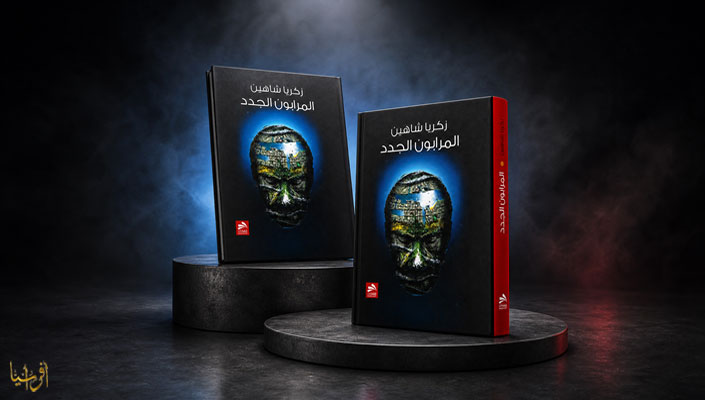
The Book: The New Usurers.. A Reading in the Depths of Savage Capitalism 〉
Published in 2011, the book runs to 380 pages. Its page describes it as an analytical study with the character of a political novel. With its striking title and wide-ranging subject,
The New Usurers invites readers to see economics as a matter that touches people’s lives and nations’ futures, not as a set of numbers isolated from power. It presses a simple but difficult question: When a policy is presented as inevitable, who wrote its rules, who reaps its rewards, and who pays the price?
Book details: 380 pages; published in 2011 by Fadaat for Publishing and Distribution; in Arabic; described as an analytical study with a political-novel character.
________________

