
Afrasianet - Zakaria Shahin - I don't know why I remembered that man who built a wall with which he closed one of the rooms of his house to hide the books he had hidden in the room from the eyes of the visitors of the dawn.
He was afraid that those writings that he considered part of his soul would be confiscated.
I also remembered that boy who loved to read. He spent his little money on renting novels and other books from a vendor's stall that rented books to readers who could not own them, while his father used to abuse him whenever he saw him reading a book outside the school curriculum, and the violence sometimes extended to beatings, while the boy worked hard to hide these books from his father's eyes.
Books may not have been banned by the ruling authority in both cases, but the arrests and imprisonments of many writers and readers laid the groundwork for the idea of hiding these books.
This is a different case, but another case was revealed by the writer Lina Joudeh, when she documented how the Zionist occupation was interested in confiscating the books it found during its raid into Palestinian homes, not to destroy them, but to understand their content, study the orientations of their owners, and understand their patterns of behavior and how culture reflects on their behavior, especially those books that have to do with the human self and its relationship to emancipation and freedom, and to devise ways to combat them and prevent the expansion of their concepts to others. There is a difference between the two cases, and there is a similarity in one word, which is the arrest of the author of that book.
Lina Jawdat restores the memory of 70,000 books stolen during the Nakba
The idea is to write the numbers from one to 70,000 by handwriting, with each number representing a lost book, in a project in which collective history intersects with personal and family memory.
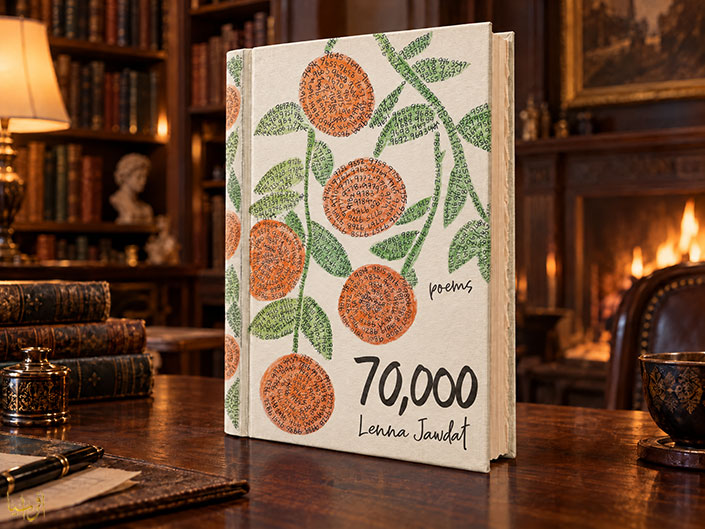
Palestinian poet Lina Jawdat has released her first collection of poetry, "70,000," in which she recalls thousands of Palestinian books confiscated from private homes and libraries during the 1948 Nakba.
Published by Central Avenue House in Canada in 2026, the book combines poetry, historical documents, photographs, maps and collage art, in an attempt to turn the loss of books into a literary and visual testimony to cultural uprooting.
The idea is to write the numbers from one to 70,000 by handwriting, with each number representing a lost book, in a project in which collective history intertwines with personal and family memory.
Jawdat drew inspiration from a reference to confiscated Palestinian books in historian Rashid Khalidi's book "The Hundred Years' War on Palestine."
According to the publishing house, about 6,000 of these books are still preserved in Israeli national collections, while the vast majority of them have not been recovered.
The poet uses her expertise in trauma psychotherapy to explore the relationship between memory and loss and resilience, presenting work that goes beyond the traditional poetry collection into an artistic and historical archive.
________________

