
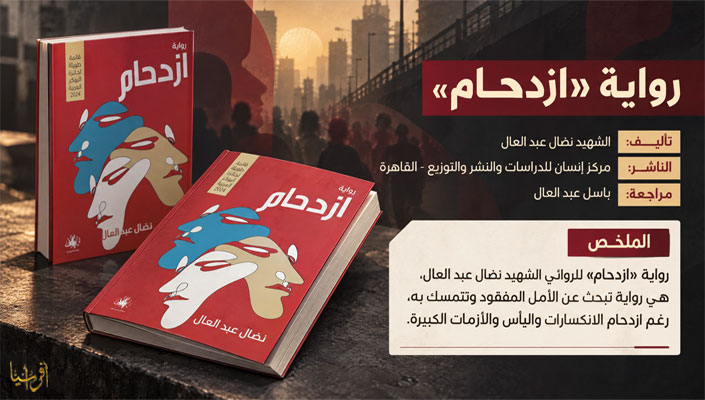
The novelist and martyred leader Nidal Abdel Aal, who was martyred in Beirut in 2024 in the Kola region, has four novels: Another Narrative, The Lost Obelisk of Adim, Crowding, and The Copper Wire.
Afrasianet - Basil Abdel Aal - We open the pages of the novel of the martyr Nidal Abdel Aal, his novel "Crowding", which won the Mustafa Bayoumi Writer Award for Fiction between 2021 and 2022 issued by the Insan Center in Egypt, where the novel narrates the crowd of tragedy that Saeed lives and his multiple names: "Sadiq, Mahjoub, Othman, Mahfouz and Bassam", the names of the characters and protagonists of the novel who live an exceptional life in the time of aggression and resistance, fleeing and hiding from the occupation during the invasion of Beirut, and the place in the novel seems to be the Palestinian diaspora in the Sabra and Shatila camps, in addition to South Lebanon and the resistance to the occupation in the territories, as it accurately sheds light on the baldness of existence and identity in the diaspora for a boy who did not exceed the age of sixteen, who joined the Palestinian fedayeen at the time of the invasion, and about his arrest and suffering in Ansar prison in southern Lebanon, and Saeed "multiple names" lives the entire Palestinian suffering from the calamities to steadfastness, loss and loss, especially after the martyrdom of his entire family in the horrific massacres that took place at that stage, in the Sabra and Shatila camps in Beirut, but until he finds exceptional hope.
Through a friend of his, he gets to know him in prison, and guides him to the right path, after he has drowned in addiction from the intensity of suffering, and Saeed has a habit that he always repeats, which is, "Do you know how...?" And also in the detention center, he got to know Zainab Al-Janoubi in Ansar Detention Center, and Zainab became for him the healing medicine and the warm embrace that gives hope and reassurance, and years later during the direct confrontations with the occupation in Sidon, Zainab suddenly disappeared, and she was not found...
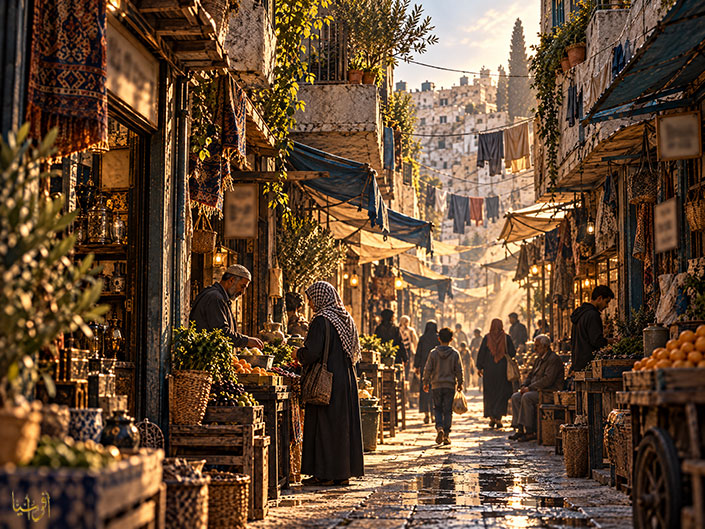
He says on page 36: "Sadiq has become part of the features of the place he has been occupying for many years, and it is said that for more than twenty years he was stuffed into a corner, under an external staircase built by, so he took his place next to the main road, overseeing an intersection that connects two streets, and they connect to the camp market, it is a vital area, almost not without passers-by, thousands pass through there daily, day and night, in addition to what is rumored."
The state of displacement and loss stands out on this exceptional fedayeen "Sadiq", who details the camp in all its tragedy, as if he too lives in a different kind of detention, and in this strange crowd of tragic questions and the state of loss that dominates the scenes of the novel, which move with its multiple voices, from the explosive resistance to the brutal occupation to the diaspora and getting lost in the depths of the massacres, and the voice of the narrator in it moves from happy to sad and obscured, which shows that they are one character with multiple names and multiple sufferings, and a language The novel is poetic with distinction, and it has a philosophy and smooth wisdom to reach its message with a brilliant spontaneous goal, because it is the novel of the exceptional hope that Saeed finds in prison and hope becomes the weapon of the future that makes him an exceptional resistant, when he reveals his many names, which are: "Said, Mansour, Mahfouz, Bassam, Mahjoub, Radwan, Sadiq."
The most beautiful thing in the novel is that he reveals his names, while he is traveling when the plane takes off from the airport, and it comes as a conclusion to the novel, when he writes on a piece of paper in the field of his first name, his multiple names that he invented previously in order to escape from the Zionists' pursuit of him, and this is evident on page number 90 that he says:
"Sadiq is different from you, Saeed, Mansour, Mahfouz, Bassam, Mahjoub and Radwan, do you know who these people are? These are my creatures, and I am the exact opposite of you, you were creating them outside of you, so they were able to kill them like the rest, but I know how, I created them inside me, they live inside me, and no one will be able to do them until they can."
The martyred novelist Nidal Abdel Aal is creative in dealing with the multiple names of Saeed that live in him, after they became his creatures, and no one could kill them because they live inside him, they live in the real meaning that Saeed created for them as well, if it were not for the meaning, those names would have lost their value within him, and the meaning in the names, may move with him in the novel from one chapter to another, as in the first chapter you find the meaning revolves around in the context of the beginning and the end, "The title of the chapter: Saeed starts where Sadiq left off", and then moves on to the second chapter, "Saeed practices his hobby, and fills the void with his strange creatures...", and the third and fourth chapters, and thus he moves from one chapter to another, so that the scene of the novel moves in the journey of suffering with the created names, until he reaches the last chapter and reveals all of them, he is one exceptional character, not without the crowd of great suffering, but in the end he does not lose the sacred hope in the novel, Nidal wanted to tell us in the novel: Said's fate is the fate of all the Palestinian people, on the path of calamities from generation to generation, as he said:
"The Nakba, my friend, it is the Nakba, Said, you know how, it was not a cruel and transient event in our lives, it was not an ordinary hammer, it cracked a wall and made a hole in it. It is a hellish hammer that shattered our world."
The novel "Crowded" by the martyred novelist Nidal Abdel Aal is a novel that searches for the lost hope and clings to it, despite the crowd of breakdowns, despair and major crises.
________________

