
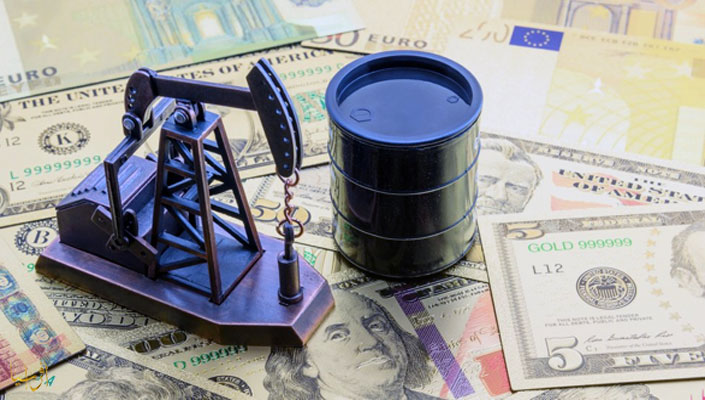
The world is likely moving toward a multi-instrumental system, from reserves more distributed between dollars, euros, gold, and other currencies, to bilateral settlements in local currencies.
Afrasianet - Wael Sherry - The "end of the petrodollar" is so often talked about that the term sometimes suggests that the world is on the verge of a major monetary coup, in which it will move from one dollar to another. But the numbers paint a more complicated picture. The latest available IMF data for the first quarter of 2026 shows that the dollar still accounts for 57.13% of global foreign exchange reserves, compared to 20.03% for the euro and only 1.99% for the Chinese yuan.
In the foreign exchange market, the dollar was a party to 89.2% of all global transactions in April 2025, according to the Bank for International Settlements. These are not currency figures that are about to disappear. But at the same time, they do not deny that the system that has given the dollar for decades an exceptional degree of exclusivity is changing.
Therefore, it is not advisable to talk about the end of the petrodollar as a global system, but rather to start investigating whether there is any competitor that emerges to replace this system that meets the necessary conditions for competition.
The petrodollar, in essence, is broader than just selling a barrel of oil for dollars. The system, which has been entrenched since the 1970s, is based on an interconnected set of elements: pricing much of the energy trade in dollars, accumulating huge surpluses in oil-exporting countries, and then recycling some of that revenue into banks, markets, and global financial assets, especially U.S. assets. Alongside this financial ring, a close security and political relationship has developed between the United States and many Gulf states, making the monetary, energy, and security system part of a single structure, albeit not the result of a single simple agreement as popular rhetoric sometimes portrays it.
Despite the current geopolitical shifts, many pillars of this structure remain. The strength of the dollar does not come from oil alone, and this is a key point in understanding the debate. Federal Reserve estimates show that the dollar is used for the largest proportion of trade bills outside of Europe; in the latest comprehensive series of export invoices available, its share was 96 percent in the Americas, 74 percent in Asia and the Pacific, and 79 percent in the rest of the world, excluding Europe, where the euro plays a larger role. In international finance, about 55 percent of international bank claims and foreign currency and about 60 percent of bank liabilities are dollar-denominated, and the share of U.S. debt issuances in foreign currency is around 60 percent.
The Treasury market remains one of the most important strengths that any competitor can find a similar alternative. In June 2026, foreign investors held about $9.30 trillion in U.S. Treasuries, of which about $3.78 trillion were held by foreign official entities. The size of the market, its liquidity, and the ability to quickly enter and exit the market provide central banks and global institutions with a vast pool of tradable assets, a function that political will alone cannot create a replacement.
But the dollar's continued strength does not mean that its position has remained stable. At the turn of the millennium, the US currency accounted for about 72% of global reserves, while its share fell to about 57% in early 2026. This decline does not mean that central banks are abandoning the dollar or that another currency is ready to inherit its position, but rather reflects a broader trend towards diversifying reserves and reducing dependence on a single asset. More importantly, what the dollar lost was not transferred to one competitor; it was distributed among the euro, other currencies, and gold, making the ongoing transition closer to a gradual decline in the dollar's exclusivity, rather than an orderly transition from one currency to another.
Gold is emerging as one of the biggest gainers from this shift. By the end of 2025, the European Central Bank estimated that gold would now account for about 27% of global official reserves by market capitalization, compared to about 22% for US Treasuries and 15% for assets in euros. But this rise does not mean that central banks are replacing the dollar for gold of the same size; much of its weight gain is due to price jumps, while growth in officially owned quantities has remained more limited. Therefore, the rise of gold reflects a growing trend towards diversification of reserves and risk hedging, neither a direct shift from the dollar to gold, nor evidence in itself of the collapse of the US currency.
A distinction must be made between three concepts that are often mixed up in public debate: the decline of the dollar's share, its decline, and its collapse. The dollar's share of reserves could fall from more than 70% to less than 60% without losing its position as the dominant currency, if alternatives remain far away from it in the exchange, credit, bond, and trade markets. A collapse presupposes a more radical transformation, such as a widespread loss of the dollar's functions as a reserve asset, a means of financing, settlement, and a pricing unit at the same time.
In contrast, it cannot be ignored that the infrastructure of a more pluralistic system is developing more rapidly. China is expanding the use of its currency in trade and investment; in the first half of 2025, cross-border payments and receivables in yuan reached 34.9 trillion yuan, up 14.1% year-on-year, and then reached 53.1 trillion yuan in the first nine months. China's CIPS payment system also processed about 175 trillion yuan of cross-border payments during 2024, an increase of 43%. In parallel, projects such as mBridge have been testedA structure for direct settlements between central banks and commercial banks using central bank digital currencies, with the participation of China, Hong Kong, the UAE, Thailand, and Saudi Arabia. These developments do not mean the creation of an "alternative to the dollar" overnight, but they do mean that the execution of some transactions outside of traditional channels has become more technically and institutionally viable.
The increased use of financial sanctions also adds a geopolitical incentive to this trend. Research presented by the Federal Reserve found a correlation between sanctions and geopolitical distancing from the United States and a decline in the dollar share of some countries' reserves. But the opposite result is no less important: even after the freeze of Russia's reserves and extensive sanctions since 2022, there has been no significant global exit from the dollar. That is, some countries have a desire to reduce exposure to the US financial system, but it is much more difficult to turn this desire into an integrated alternative.
The yuan is the best example of this. China is a formidable trading power, and the use of its currency is already expanding; the yuan's share of global exchange market transactions has risen to 8.5% in 2025. But its share of global reserves is still only 1.99%. The reason is that the international currency needs not only a large economy, but also deep and open financial markets, high freedom of capital movement, secure assets in large quantities, full transferability, and investor confidence in rules and institutions. The Federal Reserve points out that restrictions on capital movement and the yuan's inability to freely convert remain the main obstacles to its transformation into an all-out competitor to the dollar.
Energy remains an important part of the equation. The center of gravity in oil demand growth has been moving toward Asian economies for years, even if the turmoil of 2026 temporarily distorts the course. In the International Energy Agency's medium-term forecast, emerging and developing economies were expected to add about 4.2 million barrels per day (bpd) to demand between 2024 and 2030, with Asian markets dominating the increase, and demand from India alone rising by about 1 million bpd.
As China, India, and Asia become a larger destination for energy exports, the more rationale for expanding settlement options for producers will become. But there is a considerable distance between increasing the use of the yuan or local currencies in bilateral contracts and changing the currency of pricing, liquidity, and hedging in the entire global oil market.
Therefore, the more realistic scenario for the coming years seems less dramatic than the narrative of the dollar's fall, but it is more economically significant. The world is likely moving toward a multi-instrumental system, from reserves more distributed between the dollar, euro, gold, and other currencies, to bilateral settlements in local currencies, greater use of the yuan in China-linked trade, and new payment networks that run in parallel with the traditional financial architecture.
In this system, the dollar may lose some of its dominance without losing its centrality. Current data do not suggest that the dollar is heading for complete collapse or loss of its central position in the global financial system. But this position is no longer as rigid and exclusive as it has been for decades.
What is emerging today is not a world without the dollar, but a more pluralistic system, in which the dollar retains the lead, while local currencies, the yuan, the euro, gold, and alternative payment channels expand alongside it. Thus, the next phase may not be the end of the dollar, but rather the end of the era of near-absolute dependence on it.
________________

