
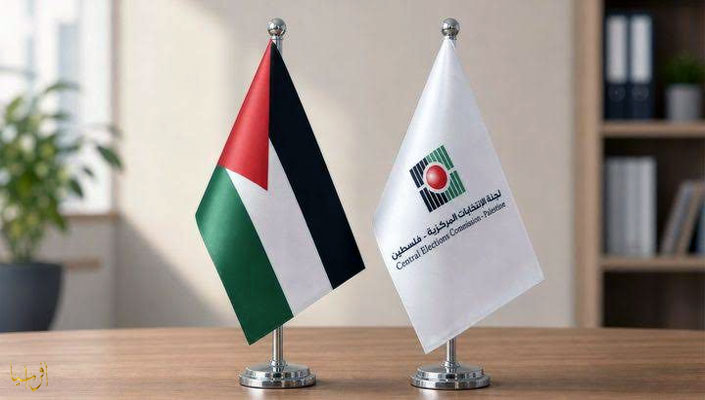
Afrasianet - Oraib Al Rantawi - The majority of Palestinians (half to two-thirds according to opinion polls) did not take the first presidential decree to hold legislative elections on November 28 seriously, suggesting that it would be postponed or canceled before the polls opened.
As for the Palestinian elites, factional, civil, and academic, they read from the "Open Election Book" that postponement, not action, is the most likely scenario, and that the "ruling troika" in the PA will not proceed with elections unless its results are guaranteed in advance, and that these elections fall within the context of "re-engineering" the Palestinian system to become more compatible and adapted to the outcomes of an Israeli-American solution to the Palestinian issue, instead of internalizing the goal of arranging the internal Palestinian house, breaking hegemony and exclusivity, opening the doors of participation, producing a new political class, giving additional impetus to the national project, and formulating a national consensus program to face the challenges of Israeli annihilation, cleansing, displacement, and.
Whenever the "calendar" of the elections becomes clearer with its scheduled entitlements revealed by its Central Committee, the specter of postponement hangs over the Palestinian scene, and the postponement scenario occupies wider areas of leaks and deliberations that dominate the Palestinian arena.
The "troika" and the circles close to it frequented information and leaks about "exits" that are being discussed to postpone the elections, amid divisions about each of them, among the leadership of the ruling party, the Fatah movement, over the most appropriate one, including those who called for throwing the ball in the court of the "Central Elections Committee", as if it itself took the initiative to announce its unreadiness to enforce the entitlement, which the committee and its chairman, Rami Hamdallah, rejected, to a supporter of a short postponement justified by the current pressing reasons, or a supporter of the idea of an open postponement, without an alternative date, whatever it is.
However, the opinion was ultimately settled on throwing the ball in another court, the stadium of the factions and their national dialogues, and the proponents of this opinion took the initiative launched by the Popular Front for the Liberation of Palestine (PFLP) a few weeks ago called for the postponement of the electoral entitlement, for a period during which the tables of the National Dialogue would meet, to discuss the elections and the rebuilding of the Palestinian regime (mainly the PLO), and to formulate a national program to face the pressing challenges facing the Palestinian people and their cause.
A high-level delegation from Fatah was assigned to lead a round of dialogue, which ended with a general consensus to postpone the entitlement, before a presidential decree was issued in this regard, noting that the PA had informed the European and Canadian election funders of the decision to postpone the postponement even before the decree was issued, and before the meetings of the Fatah Central Committee and the PLO's executive committee.
"When these forces, together and scattered, showed their readiness to participate and compete, and began to form their coalitions and lists, and succeeded in gathering those who could not be gathered into possible lists (Dahlan and Hamas, for example), the anxiety worsened and fears of the consequences of the "magic coup against the magician"
________________
Why the postponement?
There is a kind of consensus that all the "positive reasons" mentioned in the new presidential decree for postponing the elections for an additional ten months, there is not a single reason, new or emerging, as the situation in Jerusalem has been like this for years, and it was an excuse to disrupt the elections five years ago (in 2021), and Gaza has been torn apart by the machine of annihilation, cleansing and destruction for three years ago (forget the previous ones), while the West Bank has been suffering from permissibility, settlement hunger, and settler, for years, and the walls, gates, and military checkpoints are tearing them apart and dismembering them. So what is the emerging new that did not exist before, when the president issued his first decree, to appear in his second decree?!
Moreover, the decree to hold the elections was not issued by any Palestinian institution that is entrusted with such a matter, it was issued in "Layl Bahim" and took the Palestinian political community by surprise, and it was not the result of a national dialogue and broad consensus to hold them, so why is the second decree referring to the need for dialogue and consensus, and why is the new decree issued after decisions and recommendations issued by the two aforementioned committees? It seems that the holding of the elections is a matter for the "troika", but the decision to postpone them requires formal arrangements such as those that began in Cairo and did not end in Ramallah, as if what is required is the distribution of the blood of the elections and the Legislative Council to the Palestinian "tribes/factions".
The postponement is simply due to one reason: the expectation of its loss, the loss of the membrane of "legitimacy" that the leadership and institutions still enjoy, and its transfer to the opponents of the PA and the presidency and its polemicists, from within Fatah in particular, and from all the forces that are part of the organization, or those that are still outside it.
The specter of loss not only hung over the PA, Fatah and their influential leadership, but it may have confused the calculations of some parties concerned with the Palestinian file, as some of them were enthusiastic about the idea of elections, hoping that they would fall within the context of a "reformist" project that would end in adapting the PA and reproducing it and imparting a cloak of legitimacy to its institutions, in order to enable it to carry out tasks in the name and on behalf of the Palestinian people, despite the questions that this path may raise about its compatibility with Palestinian interests and the national liberation project.
As for the elections to bring in the people who want them and choose them to lead the new strategic phase that they have wrapped up after the "flood and its repercussions", and for its leadership to assume "undesirable" symbols, personalities and forces, this is an option that no one wants, even the most enthusiastic parties for the elections under the title of "reform", and therefore we saw that marketing the postponement decision was not a difficult task for the pillars of the authority, especially after it was assured to them (through their methods and means) that the loss was realized, and that failure was coming.
"The specter of loss not only hung over the PA and Fatah and their influential leadership, but it may have confused the calculations of some parties concerned with the Palestinian file, as some of them were enthusiastic about the idea of the elections and began to finance them, hoping that they would fall within the context of a "reformist" project that would end in adapting the PA, reproducing it, and imparting a cloak of legitimacy to its institutions"
________________
This is due to two factors:
The first is the failure of the Fatah leadership to unite the ranks of the movement and achieve the Fatah-Fatah reconciliation, as it seemed to the "boycott" that Fatah's lists in the legislative elections would strike at each other, and that a list that includes Marwan Barghouti, Mohammed Dahlan, Nasser al-Kidwa, and Qaddura Fares would overcome the official Fatah list, especially since the repercussions of the eighth Fatah conference and its repercussions left behind an "army" of angry and resentful people.
In addition, the acceleration of the "succession process" resulted in aftershocks, which struck at the heart of Fatah's structure, and placed historical leaders on the platforms of "waiting and preserve."
The second is that the bets and justifications of those who issued the first decree were based on the reluctance of Hamas, Jihad, al-Shabaab and others without them to participate in the elections, and when these forces, together and dispersed, showed their readiness to participate and compete, and began to form their coalitions and lists, and succeeded in gathering those who could not be gathered into possible lists (Dahlan and Hamas, for example), the anxiety worsened and fears of the consequences of the "magic coup against the magician" escalated.
When the contacts and preliminary consultations held by the "troika" and its envoys, with Hamas and the factions, showed signs of agreement to postpone, albeit for various reasons and motives, it seemed that there was a possible way out of the impasse in which the PA had found itself. The Cairo dialogues became the "rope" to which those who wish to fall from the tree of presidential decrees depend, with little to spare.
The fact is that the elections are scheduled and timed, and Hamas and the resistance factions have been raided unprepared, as the aggression on Gaza has not yet ended, and the campaigns of liquidation and persecution of the leaders and cadres of these forces are in full swing, and there is no guarantee of any kind that candidates from their ranks or affiliated with them will not face the risk of arrest and assassination at the hands of the Israelis lurking in the air.
"In this context, it is worth emphasizing that in order for the national dialogue to be fruitful, it must include everyone without excluding or excluding anyone, and that the factions and their leaders must be joined by symbols and personalities representing the inside and outside world, and that the rule that legitimacy comes from the people and belongs to them, and that the Palestinian regime, which is tired of renewal and extension, will not accept inheritance"
________________
How will the next ten months fill the void?
However, Hamas and its allied factions, while participating in the Cairo talks, may have fallen into the forbidden, as there is no indication that the dialogues of the coming days, in their form and content, will deviate from the "folklore of national dialogues" that travel between the capitals of the world, or what I call the "tourism of dialogues."
There is no indication that there will be some degree of participation and participation in the performance of the PA during the period between one betrayed and another expected one, as no unified leadership framework for the organization has been activated and revived, and there is no commitment with guarantees that the "results of the dialogue will be binding" for all, especially the influential leadership in Ramallah.
Those who are concerned about the presidency returning to the politics of buying time, where the 10-month deadline turns into a time interval and a space filled with vacuums, are justified in this concern.
Hamas and the factions should have at least stipulated the activation of the PLO's unified leadership framework in order to accept the extension and postponement, and if this demand could not be met, then the PA alone, without the cover of "national consensus," should go to the postponement decision, and the tribe responsible for the decrees should bear the responsibility of visiting them alone in front of the people and history.
Before ratifying the postponement, it was necessary to establish rules governing the dialogue, in terms of its timetables, agenda, and the identity of its participants, let alone the features of the program that will be issued by it, and the parties' unequivocal commitment to its outcomes.
In this context, it is worth stressing that in order for the national dialogue to be fruitful, it must include everyone without excluding or excluding anyone, and that the factions and their leaders must be joined by symbols and personalities representing the inside and outside the country, and that the rule that legitimacy comes from the people and belongs to them, and that the Palestinian regime, which is tired of renewal and extension, will not accept inheritance, and that the goal of dialogue and elections, if held on time, is not to replace new people with outdated figures, but to formulate the project, program and tools that raise the efficiency of the people and their living forces in the face of the challenges of the current and future stages.
Because we are aware that this is not what those who have gone to the demand for dialogue and are ready to resume it after a long period of protest, we call on the living forces of the Palestinian people to walk on two parallel lines, so that after ten months they will not come with zero hands, so that they will be faced with one of two options, no third: repeated postponement of the electoral entitlement, and the people's quiver full of excuses and excuses that are falsely called "positive reasons", or confronting the entitlement individually without preparing sufficient equipment, and after the dominant party has completed its "homework" and arranged its papers, to ensure its permanence and "legitimacy".
In order not to be a leap in void and an escape forward, efforts to form the broadest national and popular coalition of the existing forces must remain in full swing and be established now, not on the eve of the next due date, and in a hurry.
At the same time, there is an urgent need to crystallize a national democratic resistance movement, and the resistance here, with its broad concept and multiplicity of tools, brings together tens of thousands of activists and initiators in various places of deployment and the Palestinian diaspora, is urgent to renew and rejuvenate the national movement, rebuild and define the Palestinian national project, formulate public and sectoral programs for the next stage, and build consensus on the tools of struggle and the priorities of the Palestinian people, especially in the occupied homeland and the entire country under occupation.
________________

