
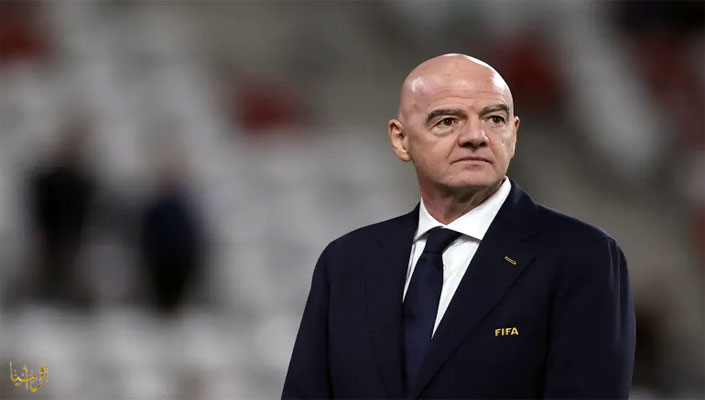
A salary that does not appear in the accounts and a president that is difficult to overthrow. What is going on inside FIFA?
Afrasianet - Gianni Infantino, the president of the International Federation of Football Federation (FIFA), received millions of dollars in additional payments that did not appear in the federation's annual financial reports, despite his commitment since 2016 to disclose the salaries and remuneration of his top officials, in a possible breach of the organization's regulations, which he has vowed to reform after a series of corruption scandals, the Times has revealed.
The investigation, published by the newspaper, showed that Infantino was receiving two separate salaries, one from FIFA's headquarters in Switzerland and included in the declared compensation, and the other from the US company tasked with organising the 2026 World Cup, which did not appear in the FA's annual report. According to sources who spoke to the newspaper, part of the money was used to cover the expenses of his stay in Miami, including renting a luxury waterfront mansion for tens of thousands of dollars a month.
The information comes less than three months after Infantino was forced to back down from a project to sell a stake in the World Cup commercial rights to private investors, under pressure from widespread opposition within international football, as he prepares to run for the FIFA presidency in March.
Despite multiple crises and calls for his departure, the ouster of the president who has ruled the federation for a decade seems a complicated task, according to an analysis published by the Financial Times, which monitored how Infantino managed to retain the support of a large number of national associations, even after losing the support of major continental associations.
$1.76 million additional salary
The Times' investigation was based on a financial declaration submitted to the IRS by FIFA's FWC2026 US Inc., which is responsible for organizing the World Cup in the United States, which showed that Infantino received $1.76 million in 2024, in addition to the amounts announced by the organization in Switzerland.
According to FIFA's annual report for 2024, the total base salary, bonus and fixed allowances for the president of the federation amounted to 4.274 million Swiss francs, distributed between 2.6 million francs basic salary, 1.65 million variable bonuses, and 24 thousand francs in additional allowances.
But those figures did not include the U.S. payments disclosed by the newspaper, including amounts included in the tax return under compensation and additional benefits, amounting to $626,229.
According to the Times, part of that money helped cover Infantino's stay in Miami before the World Cup, including renting a luxury home previously owned by Eric Schmidt, the former CEO of Google.
The revelation has raised questions about the extent to which financial disclosure at FIFA, which after Infantino's election in 2016 pledged to publish the compensation paid annually by the president and secretary-general, is included in reforms aimed at restoring confidence after former president Joseph Blatter and other leaders were embroiled in corruption scandals.
Transparency rules on compensation stipulate the publication of the individual salaries of senior officials, while a competent subcommittee is responsible for determining their compensation, approving their contracts, and monitoring compliance with the rules governing them.
Miguel Maduro, the former head of FIFA's governance committee, was quoted by the Times as saying that the failure to disclose the additional payments was a clear violation of the federation's statute, calling for an independent investigation.
The newspaper also asked for clarification on the possibility that Infantino would receive other undisclosed payments before the Qatar 2022 World Cup, or during 2025 and 2026, but did not receive answers to those questions.
How did FIFA respond to the investigation?
In its response to the newspaper, FIFA did not deny the existence of additional financial benefits, but did not provide a direct explanation for why U.S. payments were absent from annual reports.
A FIFA president annual compensation, along with other contractual benefits, is determined by the remuneration subcommittee, a spokesman for the federation said, adding that the organization contributes to social insurance, a pension fund and other employment benefits stipulated in the contract.
He added that these benefits are reported to the US authorities in accordance with the disclosure requirements in place there.
However, the submission of information to the tax authorities is different from that announced in the annual reports, leaving the fundamental question of the investigation unanswered as to why the second salary did not appear in the published compensation of the President of the Union.
The information available is not enough to prove that the money was illegally disbursed, and no independent regulator has ruled or decided on it, but the Times' investigation brought the FIFA's oversight to the forefront at a sensitive time for Infantino.
The new case was preceded by an even bigger crisis that threatened his position over the summer, when he tried to bring private investors into the commercial rights of the federation's championships, before facing opposition that forced him to back down. However, that crisis did not succeed in undermining his support within the General Assembly.
Why is Infantino so hard to overthrow?
To understand why the FIFA president has withstood the pressure, the Financial Times has returned to the financial and electoral system that governs the federation, which gives each of its 211 members one vote in the presidential election, regardless of the size of their country's football economy or population.
The FA, which belongs to one of the world's largest football economies, has the same voice as Montserrat, the Caribbean region of just 4,300 people, despite the huge difference in potential and revenue.
This electoral parity gives small associations an important influence in the selection of the president, especially since many of them rely on the funding provided by FIFA to run its activities, build stadiums, develop age groups, and prepare coaches and referees.
Under the FIFA Forward program, each national association is entitled to receive funding of up to $8 million during the 2023-2026 cycle, divided between operational expenses and development projects, as well as additional assistance that may reach $1.2 million for the most needy associations, according to the terms of the program.
The system gives the FIFA president the ability to strengthen his ties with associations whose continued activities depend on international aid. Infantino realized its importance early on, when he pledged during his first election campaign in 2016 that the federation's funds belonged to its members, not its president.
Since then, he has increased the organization's revenues and expanded its tournaments, including the men's World Cup from 32 to 48 teams and the Club World Cup, allowing for increased resources allocated to national associations.
Many of these associations view Infantino from a different angle than European clubs and fans, who have been critical of high ticket prices and commercial expansion in tournaments. For officials in resource-constrained countries, continued funding is an opportunity to set up sports facilities or develop local football activity.
Norway's Lise Klavinis, president of her country's federation, summed up this dilemma when she wondered why a federation like Montserrat would vote for a candidate who tells him he won't give him the money he currently gets.
The deal that threatened his rule
The extent of Infantino's influence to this policy was on display last July, when The Times revealed a plan to sell a 20 percent stake in the World Cup and other tournament-related business to a group of investors led by American Joshua Kushner, the brother of Jared Kushner, the son-in-law of US President Donald Trump.
The value of the offered stake was estimated at $4.2 billion, while Infantino gave national associations 53 days to study the proposal and promised to distribute $20 million to each federation if it is approved, according to the Financial Times.
Although the offer included a significant increase in the resources available to the associations, it raised objections to the valuation of commercial rights, the lack of competition among investors, and the lack of adequate consultation with FIFA members before launching a project affecting one of the organization's most important assets.
UEFA led the opposition, declaring that the World Cup was not for sale, while European federations threatened to boycott FIFA competitions if Infantino went ahead with the plan, before backing down.
This was one of the most significant setbacks he has had since becoming president, but it did not lead to the collapse of his electoral alliances, as nearly 200 national associations had announced their support for his re-election by mid-July, before the crisis erupted, although the positions of some unions changed later.
Subsequent developments have shown his continued support outside Europe, with the Confederation of African Football (CAF) announcing on October 8 its unanimous support for his re-election, Reuters reported.
During the meeting in Cape Verde, CAF president Patrice Motsepe spoke of the importance of partnering with FIFA and increasing investments in the development of African football, while Infantino noted the allocation of around $1 billion to support football on the continent since he took office in 2016.
This position illustrates why it is difficult to turn the European opposition into an electoral majority, even as criticism of the president widens.
Europe has the money.. The other federations have the votes.
According to figures reported by the Financial Times, Infantino accounts for about 70% of the global football economy, and is home to the most prominent clubs and leagues and the most attractive for television rights and investments.
But this economic power does not give the European associations extra weight in the FIFA elections, making the president's downfall contingent on co-opting associations from other continents, rather than simply uniting the European position against him.
As for the threat of boycotting the World Cup, it is difficult to implement due to the losses it may entail for federations, players, fans and sponsors, as well as depriving teams of participation in the most important international tournament.
The limits of this threat became clear when the European Union backed off the idea of a boycott after the withdrawal of the business stake sale, without being able to force Infantino's departure.
In a bid to deal with the financial concerns of the federations, UEFA president Alexander Ceferin and Concacaf president Victor Montaliani have proposed distributing $2 billion of FIFA's reserves to members, at about $10 million per association, rather than tying the increase in funding to selling business stakes to investors, the Times revealed in a report on Monday.
The proposal indicates that Infantino's opponents recognize that they need to offer a financial alternative that preserves the interests of the associations that used to benefit from his funding program.
However, the opposition was not limited to the dispute over the distribution of funds, as some federations began to resort to FIFA's supervisory bodies to challenge the president's decisions and practices.
Can he be held accountable or defeated electorally?
On October 6, the Norwegian Football Association (NRF) submitted formal complaints to FIFA's Ethics Committee and Governance, Audit and Compliance Committee, demanding an investigation into a number of decisions, including the stake sale project, the FIFA Peace Prize and the revocation of the suspension of American player Volarin Bologun during the World Cup, according to Reuters.
The complaints, along with the Times' investigation into undisclosed payments, raise questions about the ability of regulators to investigate and take action against the president of the federation if he is found to have violated the regulations.
Maduro, who served as chairman of the governance committee before his dismissal, has criticized FIFA's accountability mechanisms, arguing that the regulations do not apply equally to all officials and that the organization lacks sufficient safeguards to enforce them independently.
In parallel with this regulatory path, Infantino is preparing to run in the presidential elections scheduled for March 18, 2027, in the Moroccan capital, Rabat, after Swiss Ramon Vega, a former Tottenham defender and Swiss national team, announced his intention to compete.
Vega confirmed his potential candidacy on October 7, calling for the reform of FIFA's management and restoration of confidence in its institutions, the Swiss broadcaster reported.
A contender needs to get the endorsement of at least five national federations before the nomination closes on November 18, and then build a broad electoral coalition against a president who enjoys the overt support of a large number of unions outside Europe.
As Infantino prepares for this election, he is still required to provide a clear explanation of the payments disclosed by the Times and whether their failure to publish them complies with the organization's financial disclosure rules.
It is not yet clear whether the investigation will lead to formal proceedings against him, but the impact of the case on his political future within FIFA will also depend on the position of the federations that elect the president. So far, past crises have shown that many of them favor Infantino's continuity, despite the criticism his management faces.
Crisis shakes Infantino's throne. Norway steps up against FIFA and opens the bid for the sale of World Cup quotas
In an escalatory step that reflects the extent of the growing tensions over governance and transparency mechanisms within the corridors of the International Federation of Football Association (FIFA), the Norwegian Federation announced on Tuesday that it has submitted two parallel files to the ethics and governance committees of the international body, demanding an investigation into three recent cases that have sparked wide controversy in the global football community.
The complaints represent the biggest official challenge yet to the leadership of 56-year-old Swiss Gianni Infantino since he took over the FIFA presidency, putting his policies and decision-making mechanisms at the institution under the microscope of legal and ethical accountability.
Complaints targeting the top of the pyramid
In its official statement, the Norwegian federation explained the nature of the legal moves, saying: "The first request is a formal complaint addressed to FIFA's ethics committee, in which we request an examination of the actions of its president Gianni Infantino, and any other individuals that the investigation may reveal, regarding possible violations of the federation's code of ethics."
"The second complaint is a referral to the Governance, Audit and Compliance Committee, through which we inquire whether FIFA's governance mechanisms, financial controls, internal controls and decision-making processes are working as intended," the statement added.
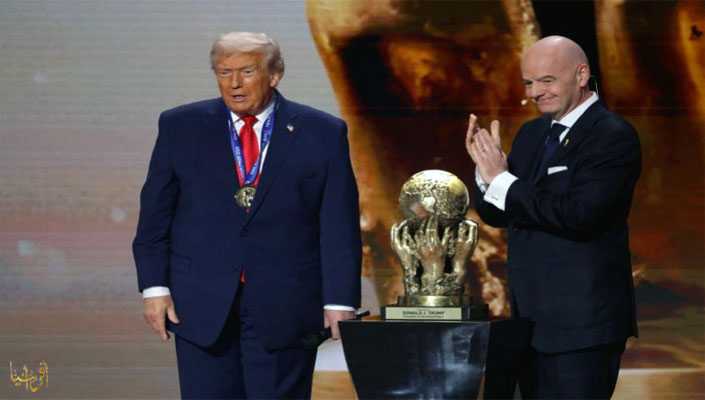
Infantino applauds Trump after he imitates him with the FIFA Peace Prize (Reuters)
3 Razor-Sharp Files Anger Norway
The Norwegian Confederation noted that the two files submitted are based on three separate and controversial incidents and cases:
• FIFA Peace Prize.
• The sudden suspension of American striker Volarin Balogun during the World Cup was lifted.
• The controversial FIFA Forward Enterprise proposal (later abandoned) that would have allowed investors to buy minority stakes in the company that would have managed and marketed major FIFA tournaments, most notably the World Cup.
Oslo stressed that its move comes as a natural extension of its historic commitment to strengthening the governance of international football, adding that "the aim is to formally bring these cases before the competent bodies for thorough examination, obtaining the relevant evidence, and achieving the principle of accountability for any conclusions reached."
FIFA's response. And anticipation for the Zurich meeting
In a quick response to these developments, a FIFA spokesperson told Reuters that Infantino had previously addressed the concerns expressed by the Norwegian federation in a letter to member associations last September. The spokesman confirmed that the president of the federation had shown his "full openness" to an independent review of the decision-making process within the organization.
The spokesperson also revealed that the issues raised by Norway have already been included in the agenda of the upcoming FIFA Council meeting, which is scheduled to take place on October 15 in the Swiss city of Zurich. The sixth item of the meeting will address a comprehensive review of governance and finances, with a specific focus on the FIFA Forward Enterprise proposal, as well as disciplinary procedures and the governance framework within the organization.
The Norwegian Confederation expects the Ethics Committee's Inquiry Room to assess the complaint, and the Governance and Compliance Committee to use its oversight powers to review the institutional issues raised by these thorny files.
________________

