
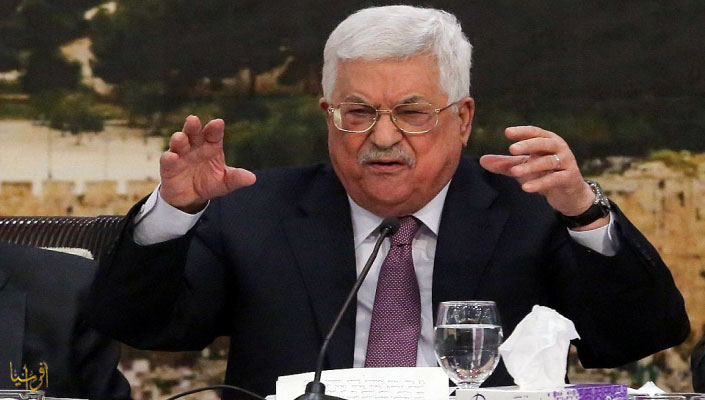
Afrasianet - Dr. Mohsen Mohamed Saleh - President Mahmoud Abbas has issued nearly 500 decrees, about 280 presidential decrees, and more presidential decrees from 2007 to September 2026.
The figures show that we are facing a "factory" or "flood" of decisions that govern Palestinian political life (since the so-called division), which are tied to the person of the "leader": the head of the PLO, the president of the Palestinian Authority, the president of the State of Palestine, and the head of Fatah.
At the same time, during this period, Abbas succeeded in exerting complete domination over the Palestinian executive, legislative, and judicial organs; he was able to paralyze and neutralize the elected Palestinian Legislative Council, and to bring under his control the Palestinian National Council, the Central Council, and the PLO's Executive Committee, as well as the PA government.
It appears that we are facing a situation of leadership monopoly that has turned the Palestinian political structure into a "personal" one, and deepened the crisis of the Palestinian national project, as if its crises, challenges and dangers were not enough. Since the Oslo Accords of 1993, and especially during the past two decades, the following has deepened:
• The crisis of popular legitimacy
• The crisis of Palestinian representation in the institutional structures governing the Palestinian people.
• The crisis of separation of powers.
• The crisis of the founding structure of the organization and the Authority.
• The internal crisis of "democracy" and the crisis of pluralism.
This has created paradoxes that are worth stopping at:
The first paradox is that while the leader (President Abbas) monopolizes all powers and practices a single authoritarian behavior, the Palestinian people are one of the most educated, open-minded and freedom-loving people in the world, and they have hundreds of thousands of competencies, experiences, and energies, which have no place within the leader's narrow system.
The second paradox is that while the leader takes away all powers, monopolizes all powers, and exercises his dictatorship over his people, he and his leadership team of VIP card holders live "under Israeli carpets," as he himself puts it, and cannot go to his workplace or enter or leave the areas of power without the consent of the Israeli soldier standing at the checkpoint.
The third paradox is that Mahmoud Abbas exercises all these powers, and he is in a state of "expiration" as he was elected to the presidency more than 22 years ago, and he has not received a real and transparent renewal either at the level of the authority, or even at the level of the PLO, whose results were engineered in advance while excluding potential competitors.
The fourth irony is that Abbas is insistently exercising all these powers, despite the fact that Palestinian public opinion polls have been demanding him every time, and it is clear and unambiguous, for about three years, to resign at rates ranging from 80 to 89%. Also, according to the same polls, he loses in any free election to the Hamas candidate, or to Marwan Barghouti, by a wide margin.
The fifth irony is that the Palestinian public accuses the Abbas-led authority of corruption, at rates of more than 80%, while most of the public in the West Bank and Gaza Strip sees it as a burden on the Palestinian people.
The sixth paradox is that despite the comprehensive authoritarian situation practiced by Abbas, in the face of the existential dangers that the Palestinian cause is experiencing, he lacks the vision, compass, and program to get out of the Palestinian impasse, and at the same time it does not provide an institutional environment that incubates and accommodates Palestinian forces and competencies for positive interaction to get out of the crisis.
The seventh paradox is that while the Israeli occupation has left the Oslo Square, and its current leaders are busy implementing the "decisive" plan, dismantling the Palestinian Authority into municipalities or cantons, effectively annexing the West Bank and closing the Palestinian file, and Abbas and his team are in dire need of achieving an effective Palestinian alignment, he is still presenting himself as a trustworthy party to chase down the Palestinian resistance, replace it in the Gaza Strip and disarm it, while committing not to include it in the Palestinian political system and not to absorb it into the structure of the PLO and its institutions.
The eighth irony is that while many Palestinians went beyond their remarks about Abbas and his regime, and sought to participate in the elections for the National Council, which are scheduled to be held next November, and were satisfied with agreeing on a common minimum in the face of the Zionist project, they found themselves in the circle of ignorance and exclusion, and saw with their own eyes how the representation of Palestinians abroad was "engineered", as happened in the selected communities in the Gulf countries and Europe. This created a widespread state of resentment and a feeling that the leadership was underestimating the minds of the people and stealing their will and their right to fair representation.
The ninth paradox is that the legitimacy of the PLO and its representation as an institution of the Palestinian people does not necessarily mean the legitimacy of the leadership that controls it, and there is a big difference between the PLO as a home for the Palestinian people and a chronically authoritarian leadership over it. The automatic linkage between the two "legitimacys" is constitutional, legal, political, and morally incorrect; Abbas and his team should not raise the stick of legitimacy in the wrong place.
***
Unfortunately, President Abbas is still betting on his ability to continue to monopolize the decision through his control over Fatah, his control over available resources, and the keys to appointments, through Arab and international political and financial support, and through control of the tools of managing the electoral "game." He is also betting on fear and hostility towards Islamists and the line of resistance in the regional and international environment, and he is also betting on the state of fear among many that a political vacuum will occur in the event of his overthrow or the fall of his regime.
Realizing the seriousness of the stage requires President Abbas and his team (especially Fatah, which is the effective infrastructure of the president's machine) to shoulder their historical responsibilities and at least move towards a common minimum with the Palestinian forces. Frankly, the author of these lines believes that the balance of experience is unreassuring, cannot be built upon, and he hopes that he will be wrong. Therefore, sincere Palestinian forces, actors, and symbols must also shoulder their responsibilities to push for a way out of the Palestinian impasse.
________________
Dr. Mohsen Mohamed Saleh - Director General of Al-Zaytouna Center for Studies and Consultations.

