
Brazil has become China's first strategic partner in the Western Hemisphere and the most important country for the BRICS group, which coordinates with Russia and China in the areas of joint payment of trade exchange away from the dollar
Afrasianet - Ahmed Sabri Alsayed Ali - The kidnapping of Venezuelan President Nicolás Maduro has already taken place in Venezuela, but it is most likely aimed at Brazil, whose northern neighbor and one of the cheap sources of energy it relies on, without coordination.
The link between the American-Zionist riots is not only related to the convergent timing, but it is noticeable that these riots started from distant points and ended at one point: China. The end result of these riots will be detrimental to China's quest to expand and connect the global economy to it through the Belt and Road Initiative.
The tactic was uniform: if China could not be directly harmed, it was better to strike the parties on which it depended.
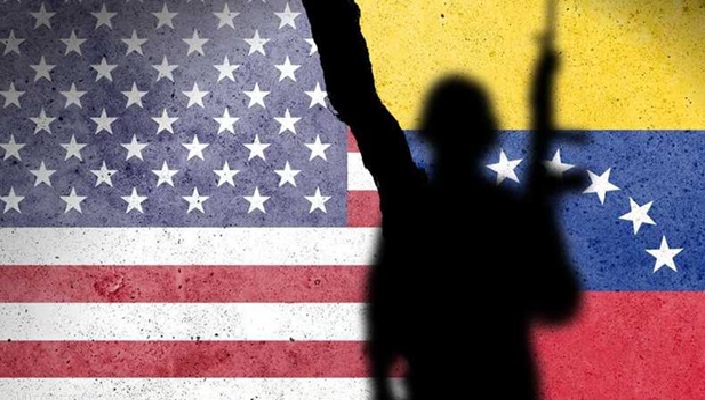
Venezuelan President Nicolás Maduro Arrested
Let's start with the riot that Donald Trump made through the process of arresting Venezuelan President Nicolás Maduro, and the secret of the strangeness of the operation is the real purpose of it! It has been said that the target is Venezuelan oil and the US president was one of the supporters of this narrative, and Secretary of State Marco Rubio sought to point to a second goal, which is the Chinese, Russian and Iranian presence in Venezuela, while Trump tried to emphasize that China will not be harmed if America takes control of Venezuela because it will get the oil.
This chaos in the American statements to determine the goal of an operation of such a complex level does not negate an important observation, which is that America did not overthrow the regime in Venezuela, which in turn was able to control the street and the situation without problems, by assigning Vice President Delcy Rodríguez to run the country, while the mass demonstrations in Venezuela continued to express adherence to the kidnapped president, and most importantly, the demonstrations against this behavior expanded to other regions of the world, and even reached America itself.
What raises the question of the real purpose of this operation is not to overthrow the existing regime, but what Trump expected to achieve by taking such a risk that would shatter all the rules of the political game that America has established?
It is noted that most of the trade corridors in South America and the Caribbean pass through Brazil as the main logistics node, the most important of which are:
1. River Passages (Paraná-La Plata): Like the Hydrovia Passage, it starts deep in Brazil, passing through Paraguay and then Argentina until it empties into the Rio de la Plata (Atlantic Ocean). The Amazon Passage, which is the largest in terms of area, connects the city of Manaus (the industrial heart of the Brazilian Amazon) to the Pacific ports of Peru, Ecuador, and Colombia. In 2025, the Solimães River corridors were modernized to connect Brazil to the port of Chancai in Peru (built by China).
2. Bioceanic Corridors: For example, the Transcontinental Railway, a project (supported by China) that aims to connect the Brazilian coast with the Peruvian coast via Bolivia, to be a "dry Panama Canal" for the transport of grain and minerals.
3- Corridors coming from Venezuela, the most important of which is the "Ora-Andino" corridor or "Andean-Amazon Corridor". This corridor runs from Venezuela through Colombia to Brazil, where goods are transported away from traditional maritime control. But what is important is that it is connected to a Venezuelan inland corridor that is both river and land, the Orinoco Delta Internal Corridor, which starts from the oil production areas of the Orinoco Delta to the coastal ports of the Caribbean, but during periods of blockade it is connected to the Orinoco Delta corridor to transport oil and other products to Brazil through Colombia.
4- Its control of the Mercosur bloc, the most important economic bloc in South America, which was founded in 1991 and includes, along with Brazil, Argentina, Paraguay and Uruguay.
This control of important trade corridors in South America has contributed to Brazil's current economic development to the point that some analysts call it the "China of South America", as Brazil is the world's number one exporter of soybeans, meat, sugar and coffee. It also owns mineral and oil wealth, especially iron ore, in addition to the technological development it has witnessed in the recent period, especially in the aircraft industry.
But the real problem for Americans is that Brazil has become China's number one strategic partner in the Western Hemisphere, and the most important country for the BRICS, which coordinates with Russia and China in the areas of mutual payment of trade away from the dollar and the reform of the global financial system. Being a huge domestic market with a population of more than 215 million, this has encouraged Chinese investments to set up factories within Brazil to serve the entire continent.
If Egypt can support the de-escalation of the situation in Libya in cooperation with Turkey, the Cairo-Dakar corridor will be able to integrate with Brazil's ports on the Atlantic Ocean, where China invests in the development of ports on both sides (the port of Dakar in Senegal and the ports of Santos and Baranagua in Brazil), which supports this possibility that the exported goods will be made in Egypt through the industrial zones in which China also invests, and will go through the port of Dakar to the port of Santos or Paranagua in Brazil, where Egypt is the only Arab country with a free trade agreement with Mercosur that came into full force in 2017. In other words, China, through Egypt and Brazil, will encircle all American spheres of influence in the east and west.
The kidnapping of Venezuelan President Nicolás Maduro has already taken place in Venezuela, but it is most important targeting Brazil, whose northern neighbor and one of the cheap sources of energy it relies on, without coordination. As an end target, China's interests in the region will be threatened by the hijacking of one of its allies in such a humiliating way. The BRICS, or China, will be confronted with coarse military force.
By formulating the new Monroe Doctrine, the US president wanted to prove America's power in controlling the region that it considers its vital sphere, but he forgot that the Monroe Principle, from which his new principle was inspired, is essentially defensive, that is, the US president has come to clearly recognize multipolarity as a reality, and most importantly, he has not taken into account the public reactions to this behavior, and has only calculated the government's reactions.
Latin nationalism
In 1966, the World Cup was held in England, and the English and Argentine teams met, after the match that witnessed violence between the two teams, the English manager, Sir Alf Ramsay, made arrogant remarks, commenting on the actions and roughness of the Argentine players, describing them as "animals". Here the whole of Latin America reacted violently against Sir Ramsay, and in the next tournament in Mexico in 1970, the Mexican fans were on the lookout for the English team and encouraged all the teams that faced England, although the Argentine team did not Participates in this tournament.
This attitude may seem like a typical tussle in football activities, but it was not so for the Latinos, who are used to Anglo-Saxon arrogance in their confrontations, and Trump and his administration team certainly did not take into account that Latin countries may clash in their interests and differ in their orientations, but the Latino masses nevertheless feel this bond and react to it in the face of the Anglo-Saxons, whether they are English or American.
But it will become a real problem, if this association, due to the feeling of humiliation towards such arrogant behavior, turns into an attempt to revive Latin nationalism in a revolutionary way against Anglo-Saxon arrogance, and here the transatlantic Latin nationalism will emerge, which will bring together speakers of the Romance languages (France, Spain, Portugal, Italy and Latin American countries), and it seems that the mass sentiment towards this transatlantic action was unified, and Spain, along with 5 Latin countries, issued a joint statement distributed by the Spanish authorities against the kidnapping. Maduro.
This statement cannot be seen as merely a unified position that unites these countries, as much as it is the inauguration of a solid bloc that defends Latin sovereignty in the face of the new Monroe doctrine. Rather, it brings together countries with a negative attitude toward Maduro, such as Chile and Uruguay. Although France, Portugal, and Italy did not sign the statement, public emotion and rejection may put pressure on the ruling elites later.
The idea of Latin nationalism or a common Latin identity is not a conception based on conjecture, as there are many intellectuals in these countries who advocate it, perhaps the most famous of these thinkers: the Portuguese sociologist Buevoentura de Sousa Santos, one of the most important founders of the leftist Podemos party in Spain, Juan Carlos Mondeiro, the French philosopher Regis Dupre, who accompanied the Argentine Marxist revolutionary leader Che Guevara, and the Italian political philosopher and communist Massimo Cachari. These are not just academics, but organic elites that have an influence on the ruling parties and the protest movements that took place in Madrid, Paris, Lisbon and Rome.
Zionist tampering in the Eastern Mediterranean and the Horn of Africa
Let's move on to the eastern side of the world, where the last days of 2025 witnessed two important events: the first: the alliance between the Zionist entity and both Cyprus and Greece, where the intention to establish a rapid reaction force capable of confronting threats in the Mediterranean basin was announced, and this alliance was very explicit that it was directed against Turkey, and that is why Erdogan's response came by describing this new alliance as the "axis of evil."
However, long before the alliance in the Eastern Mediterranean, Netanyahu surprised everyone by recognizing the Republic of Somaliland, and leaks even began to speak of his intention to recognize the Republic of "South Yemen," which was accompanied by the recent unrest between the STC and the Forces to Support Legitimacy. If the alliance with Greece and Cyprus provoked Turkey and angered Egypt, which understood that Netanyahu was seeking to play the role of a policeman to maintain security in the Eastern Mediterranean by marginalizing its role, his latest move to recognize the land of the Somalia was perceived by surrounding countries as a threat to its national security, leading to an unexpected rapprochement between rival countries that came together in the face of Netanyahu's move.
According to Graham, recognition of Somaliland is an effective way to achieve American national security goals and confront Washington's opponents, through the use of the port of Berbera (which is the port of Somaliland and the UAE and Ethiopia is investing in its development), which can be a base to confront Chinese expansion in Djibouti and Africa. The presence of a country allied with the United States and the Zionist entity in the Gulf of Aden will cut off the path to Iranian supplies to Yemen and secure maritime shipping lanes.
For the Zionist entity, this decision had several objectives:
1- Netanyahu's attempts to get out of the state of marginalization and exclusion from the India-East-Europe corridor as a result of his failure to resolve the confrontations with the Arab resistance in Gaza, Lebanon and Yemen. By tightening control over the entrance to the Red Sea.
2- Approaching Ansar Allah in Yemen to counter their missile control over the Red Sea and the Gulf of Aden.
3- Encirclement of the rising Egyptian influence in East Africa and the Horn of Africa, by supporting Ethiopian activities, which are besieged by the Egyptians, and they have no choice but to rely on the port of Berbera in the Republic of Somaliland.
4- Striking Turkish influence in Somalia, where the Turks established their largest military base outside Turkey.
5- Supporting the Emirati presence in South Yemen in the face of Saudi influence, which has begun to gradually move away from accepting the Abraham Accords.
6- Preparing for the recognition of Taiwan, which is one of the allies of the Zionist entity and Somaliland as well, and there are diplomatic representation offices between the two unrecognized countries (Taiwan and Somaliland), and most importantly, China has previously issued warnings to the Republic of Somaliland about the consequences of these practices.
What Netanyahu did not expect, however, was the swift reactions of Egypt, Turkey, and Saudi Arabia to his practices, with the three countries issuing a unified statement, Iran and Pakistan supporting the position of these Muslim countries on Zionist recognition of Somaliland, in addition to threatening Ansar Allah in Yemen that any Zionist presence in Somaliland or southern Yemen would be a legitimate target for their missiles.
As for China, which is aware of American/Zionist goals by striking its influence in the Horn of Africa and East Africa in preparation for the re-revival of the India-Middle East-Europe corridor and its land route from India to the Zionist port of Haifa and the construction of the Ben Gurion Canal, which leads to a hit on its investments in the Suez Canal, the industrial zone in Ain Sokhna and the western Red Sea, it has had an unusually strong reaction, especially since recognizing Somaliland means paving the way for the recognition of Taiwan, an issue that China does not tolerate Never, and therefore it has directed its threats against both the Zionist entity and Somaliland, supporting the position of the three countries.
Therefore, it is noticeable that there is a clear consistency between the American and Zionist movements, and that these moves target the pivotal countries of China's "Belt and Road" initiative across the three continents of Asia, Africa, and Latin America, starting with Iran and Turkey, passing through Egypt and Saudi Arabia, and ending with Brazil.
On the other hand, however, it is clear that these practices have led to shifts in alignment in the Arab East within a state of Arab-Islamic solidarity, which prompted the Zionist writer Zvi Briel in the Haaretz newspaper to warn against this state of solidarity. In South America and Southern Europe, it has contributed to a clear rise in Latin nationalist sentiment in the face of Anglo-Saxon arrogance, which may provoke greater changes later on, both in terms of attitudes and interests and in terms of the fundamental positioning in this conflict.

