
From hunger to malnutrition. The danger that aid photos don't capture
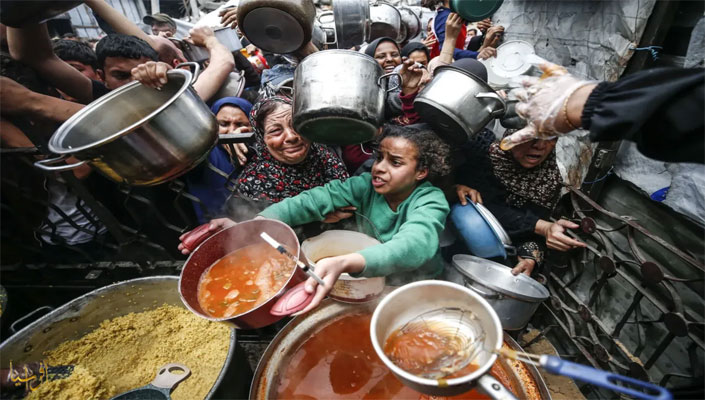
Afrasianet - Sarah Sweilem - Hunger in the Gaza Strip is no longer just a direct reflection of war, destruction and displacement, but has become a multi-layered crisis, intertwined with limited aid access, declining international funding, collapsed purchasing power, and deteriorating health services, putting hundreds of thousands at risk beyond securing today's meal to threatening their health and the future of their children for many years.
When a person is deprived of adequate and balanced food, the result is not just an empty stomach or a hunger-exhausted body; a series of repercussions begin that affect immunity, growth, and the ability to learn and recover from diseases. In a war-torn society where large areas of infrastructure have been destroyed, these repercussions are even more serious, especially for children, infants, pregnant and lactating women and the sick and the elderly.
More seriously, the crisis is worsening at a time when the capacity of humanitarian institutions to respond is declining, due to a lack of funding, and the movement of goods and aid into the Gaza Strip continues to face constraints and disruptions that make supplies insufficient or irregular to meet the actual needs of the population.
In Gaza, it is not enough to have access to any food to be free from malnutrition. Having a minimum number of calories does not necessarily mean having the proteins, vitamins and minerals necessary to maintain health and growth.
Herein lies one of the most dangerous episodes of the crisis: some households may be able to get bread, rice, or limited meals, but they are unable to provide milk, eggs, meat, vegetables, and fruits, either because of a shortage of markets, high prices, or a loss of income to buy them.
Food is turning from a basic right into a daily battle with scarcity and prices. The question is not just how many meals an individual eats, but also how much they have nutritional value and how well they can protect their body from deterioration.
Recent UN data point to the depth of this problem, with the World Food Programme (WFP) reporting that only one in five children in Gaza has access to a sufficiently diversified diet, while the population faces extremely fragile economic conditions, with unemployment exceeding 80 per cent according to WFP estimates.
These figures do not describe a transient food crisis, but rather reveal an environment in which households' ability to meet their basic needs declines, even when some goods are available in the market. A market where people cannot buy is not a real solution to hunger.
Half a million people face a new food gap
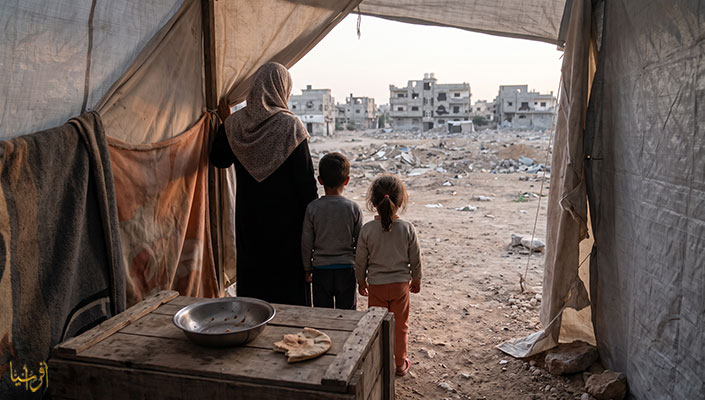
Concerns are growing as the World Food Programme (WFP) announced, on 19 October 2026, that it would be forced to reduce its food assistance in Gaza due to a lack of funding, reducing the number of beneficiaries from about 1.6 million to 1.6 million 1.1 million, about half a million people were out of the scope of the assistance that WFP was providing.
Food rations were also cut in half, and the number of hot meals served daily fell from 250,000 to 150,000, while the program warned of the fragility of the limited improvement in food security.
WFP's operations in Gaza and the West Bank require approximately $450 million from October 2026 to March 2027, with funding available for its humanitarian operations declining.
These developments reveal a very dangerous equation: as the gap between needs and resources widens, institutions are forced to reduce the scope of beneficiaries or the amount of assistance provided to them, while humanitarian needs do not necessarily decline, but may increase as winter approaches, displacement continues, and living conditions deteriorate.
These cuts do not mean that half a million people will face hunger to the same extent, but they do mean that they will lose a vital resource that used to help them meet their needs, in an environment where there are limited alternatives, job opportunities and incomes are declining, and many families are making up for lost aid.
Humanitarian funding should be seen as part of the life protection system, not just an item in the budgets of international institutions. When funding runs out, not only does administrative activity cease; children's meals may decline, assistance to families may shrink, and food access for the most vulnerable may become more difficult.
When malnutrition becomes a threat to the future of an entire generation
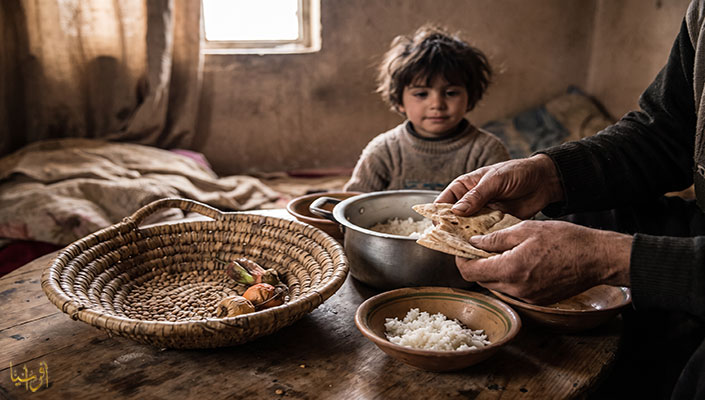
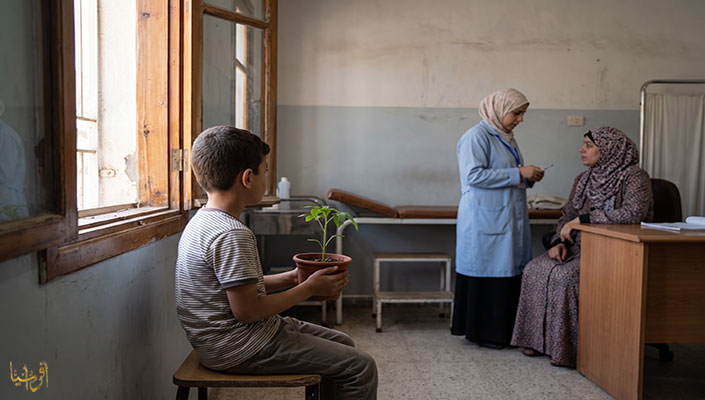
The danger of malnutrition in Gaza is that its effects do not end once a new shipment of food arrives. Children who experience severe or long-term deficiencies in essential nutrients may face disorders in physical development and cognitive development, as well as a higher risk of disease, especially when food shortages coincide with water pollution, poor sanitation and overcrowding within displacement settings.
Pregnant and lactating women also need adequate nutrition to maintain their health and the health of their babies, while infants and young children face particular risks because their bodies are undergoing rapid growth phases that require balanced nutrition and ongoing health care.
If malnourished children do not receive early detection and appropriate treatment, their condition can worsen and become more complicated, especially if the necessary supplements, medications and medical care are absent.
These risks should not be treated as an inevitable expectation for all children, but they are documented health prospects that increase as food deprivation persists and basic services decline. The longer intervention is delayed, the more difficult it is to prevent complications in the most vulnerable cases.
UN data shows that humanitarian partners have put more than 2,800 children into malnutrition treatment programmes in September 2026, including more than 360 children suffering from acute malnutrition. This underscores that the food crisis is measured not only by the number of trucks entering the Gaza Strip, but also by the number of children in need of treatment, and the health system's ability to reach them and provide the necessary care.
Children who miss out on opportunities for healthy growth and regular education, and live in an environment where nutrition, health care and psychological stability are declining, need long-term interventions, not limited emergency assistance that ends with the end of a funding cycle or the arrival of a shipment.
Crossings and economic restrictions.. Why is intermittent aid not enough?
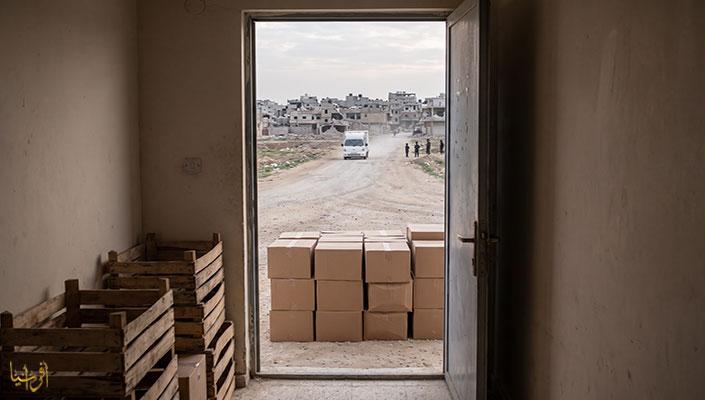
The food crisis cannot be separated from the reality of the crossings and restrictions that control the entry of goods into the Gaza Strip. Humanitarian aid, trade, and the ability to restore local production are interlinked, and any imbalance in one of them is reflected in the availability, prices and accessibility of food to families.
Recent UN reports have warned that the flow of commercial goods into Gaza is still fragile, and halting access even for short periods could exacerbate market shortages. Aid inflows also continue to face challenges related to restrictions, logistics, inspections, and transport, storage and distribution capacities.
The problem here is not only the number of trucks, but also the regularity of their flow, the variety of their loads, their speed of reaching beneficiaries, and the ability of institutions to distribute them fairly and effectively.
Aid that arrives intermittently cannot build sustainable food stability, and allowing limited quantities of goods into the country does not guarantee that they reach households who do not have the money to buy them. Therefore, any serious approach to the crisis must combine expanding the flow of aid, restoring trade, improving purchasing power, and supporting health and food services.
At the same time, there is no real economic recovery in light of the destruction of productive facilities, the loss of sources of income, the disruption of large sectors of commercial and agricultural activity, and the dependence of a large proportion of the population on humanitarian aid.
Keeping the population almost completely dependent on relief makes their lives hostage to the fluctuations of funding and decisions about crossings. Effective recovery requires restoring economic living conditions, including job opportunities, rehabilitating infrastructure, supporting local farmers and producers, and ensuring the availability of fuel, water, electricity and essential supplies.
When international funding weakens.. The gap between need and response widens
The lack of funding is a real challenge for international institutions, but it also reveals a crisis in the sustainability of the humanitarian response. War-affected communities need ongoing funding on which to plan, rather than temporary pledges that diminish in practical value when contributions lag behind or fall short of needs.
In Gaza, this gap is compounded by the fact that humanitarian institutions operate in an environment where war has destroyed many elements of self-reliance. Food assistance cannot be easily replaced by income from work and health services Declining patients cannot take in more patients without additional resources, and families who have lost their homes and savings do not necessarily have the means to cope with rising prices or supply disruptions.
Aid cuts should not be read as a separate financial measure from the rest of the spectrum, but rather as a factor that can exacerbate existing crises, from malnutrition to disease, from food insecurity to widespread poverty.
Humanitarian institutions cannot compensate for the lack of safe and regular humanitarian access, nor can they rebuild a devastated economy through food parcels. Dealing with the crisis requires a commitment from donors to provide funding, from those controlling crossings to ensure adequate and regular access to essential aid and goods, and from those concerned with the protection of civilians to respect relevant legal obligations.
It must be emphasized that food is not a privilege granted when resources are available, but a fundamental human right. Aid access should not be subject to short-term calculations that ignore the health and humanitarian consequences of delaying or reducing it.
Winter is approaching.. Any delay may double the human cost
These developments come as winter approaches, at a time when hundreds of thousands of displaced people are living in places prone to cold, rain and flooding, amid shortages of shelter materials and basic services.
In such circumstances, hunger does not work in isolation from other risk factors. Poor nutrition, cold, poor sanitation, lack of clean water and lack of access to treatment can all interact to increase risks for children, the sick and the elderly.
The response is therefore not only the provision of food, which is of paramount importance, but also includes ensuring safe drinking water, medicines, health and nutrition services, shelter supplies, and access to hard-to-reach groups.
The response should also be measured not only by the number of trucks crossing the crossings, but also by the actual number of households, the regularity of its distribution, its ability to meet minimum food needs, and by child health indicators and the availability of treatment for at-risk groups.
Relief success is not achieved by simply entering the Gaza Strip, but when it becomes continuously available, reaches those in need, and prevents food deprivation from becoming a long-term health complication.
Gaza faces a test that goes beyond relief
The danger facing the Gaza Strip today is not only the prospect of food shortages, but also hunger, malnutrition, collapsed sources of income and declining health services, with a heavy reliance on aid, which in turn faces underfunding and difficulties in access and distribution.
If this trend continues, food deprivation could widen, treatment needs could increase, and households and institutions' ability to contain the repercussions would diminish. This is not to say that a particular disaster is inevitable, but it is a warning of a path whose risks can be reduced if the necessary action is taken in a timely manner.
What is needed today is urgent international action to secure the necessary funding, ensure the entry of aid and commercial goods in adequate and regular quantities, rehabilitate health services, water and sanitation, and expand malnutrition detection and treatment programmes, with priority given to children, pregnant and lactating women, and the sick.
In the longer term, it is necessary to move from managing daily needs to restoring the elements of economic life, so that household access to food is no longer tied to the continuation of external financing that may decline at any moment.
Gaza does not need food shipments that arrive and then be interrupted, nor does it need emergency responses that shrink as funding declines; it needs a stable humanitarian and trade flow, health care capable of protecting its children, and real opportunities to restore lives.
The hunger that threatens Gaza's population today could have effects beyond the present moment to years of health, social and economic suffering. Preventing the worsening of malnutrition is therefore not only a relief task, but a necessity to protect the future of an entire generation.
When a child in Gaza is left without adequate food or treatment, the loss is not only in their day; Delaying the response today could make the cost of recovery tomorrow much greater.
________________

