
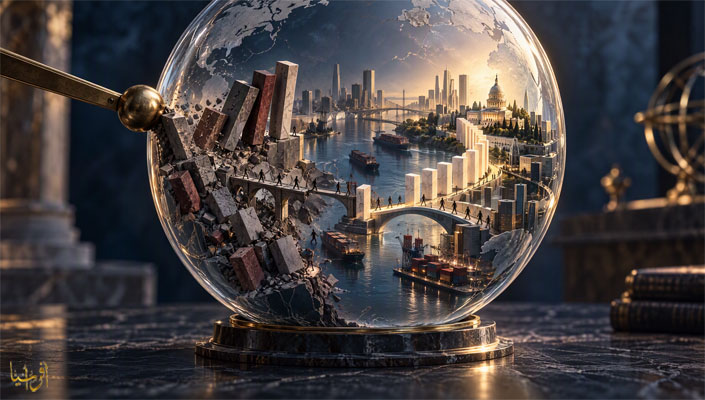
From Strategic Failure to Rebounding Chaos!!
Afrasianet - "Creative chaos" is no longer put forward as an official, declared doctrine in current U.S. foreign policy literature in the way it was formulated by neoconservatives (such as Michael Ledeen) or Condoleezza Rice in the mid-2000s. However, many strategic analysts believe that the mechanisms and outcomes of this theory remain present and actively operational, albeit through a different operational pattern that aligns with shifts in international and domestic U.S. politics.
To understand how this concept has evolved in American policy, the current reality can be divided into two axes:
1. Retreat from the Classical Concept (Demolition then Reconstruction)
Institutional Failure: Historical experiences (such as the 2003 invasion of Iraq or the repercussions of the 2005 Arab Spring) proved that instigating chaos for the purpose of dismantling old regimes and rebuilding them on pro-Western democratic foundations failed to produce a stable environment. Instead, the chaos spawned cross-border groups and magnified Iranian, Russian, and Chinese influence, making the cost of "reconstruction" exceed Washington's capacity and desire.
Shift in Strategic Priorities: The U.S. focus shifted from "counterterrorism and regime change" in the Middle East to "great power competition" (China and Russia).
2. Transition to "Chaos Management" or "Calculated Disruption"
Instead of spreading chaos for the purpose of building, American behavior shifted toward using chaos as a tool to weaken and exhaust adversaries, which is evident on several levels:
Comparison: Classical Creative Chaos (2003–2011) vs. Current Disruption Strategy (2025–2026)
Primary Goal: Dismantling old regimes and reshaping the Middle East → Exhausting adversaries and depriving them of regional stability.
Mechanism Used: Direct military intervention and preemptive wars → Proxy warfare, maximum sanctions, and trade wars.
Dominant Feature: Evangelizing democracy and liberalism → Strict pragmatism, transactional trade, and unpredictability.
3. Features of Chaos in the Current American Approach
With Donald Trump’s return to the White House and his adherence to a strict "America First" doctrine, dealing with the international system has taken on a strategic form based on manufacturing uncertainty and rattling traditional frameworks to achieve quick gains:
The Weapon of Sanctions and Tariffs: Sudden economic shocks are used to destabilize both partners and adversaries to extract concessions (such as including intermediary countries in trade sanctions against Iran).
Dismantling Multilateral Commitments: Withdrawing or threatening to withdraw from international organizations (such as the World Health Organization) and freezing funding for relief agencies (such as USAID) creates an international vacuum that pushes other parties to operate in an unstable environment.
Grayness in Alliances: There is no longer a blank check for Washington's traditional allies (such as pressuring NATO countries to raise defense spending to 5%), keeping the global security environment in a state of constant anticipation and anxiety.
Conclusion: America is no longer pursuing a "creative" chaos that produces a new democratic system; rather, it is managing a "utilitarian chaos" that keeps the international arena turbulent enough to prevent adversaries from forming an alternative global system, allowing Washington to intervene as a final arbiter or beneficiary, exploiting its superior economic and military power.
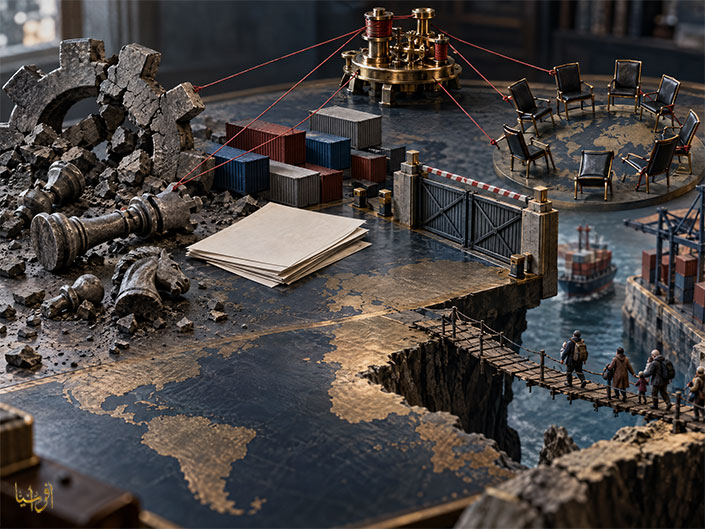
Creative Chaos That Still Casts Its Shadow on Our Region
Creative chaos achieved some things for America, but it did not settle the master plan completely. Nevertheless, it continues to develop the same philosophy or adopt another idea.
Creative chaos is a political and military term meaning the creation of a state of chaos and deliberate destruction of the existing system with the aim of rebuilding a new system that serves the interests of major powers. "Creative chaos" is considered one of the most prominent concepts used by the U.S. administration under President George W. Bush to justify its interventions in the Middle East, serving as a strategic vision to rearrange conditions in the region in line with American interests.
Talk of "creative chaos" began after the September 11, 2001 attacks, which were considered a turning point in the U.S. national security strategy. The U.S. administration decided there was a need to modify political rules in the Middle East to ensure U.S. hegemony, protect its interests, and place national security as a fundamental priority. Therefore, creative chaos is considered part of an American strategic plan aimed at achieving hegemony over the region by dismantling existing political systems and reshaping them.
It appears that the creative chaos formulated by Condoleezza Rice was here to stay. After coming into effect, many regimes changed and strongholds fell in our Arab world, while Iran remained—where Trump exerted all his weight to change the regime. Reshaping the Middle East means maintaining a unipolar state, and hence the United States struggles to remain at the top of the pyramid. However, China, a country rising at the speed of light, and Russia, despite its war with Ukraine, continue to search for a place under the sun. All of this is sufficient to disrupt America's ambition, making the U.S.-Iran war a nuisance to what Washington aspires to.
In the context of "creative chaos," it can be observed that Israeli policy plays a pivotal role in shaping and analyzing these strategies, as Israel considers that reshaping the region in line with the interests of major powers—such as the United States—could lead to weakening regimes hostile to it, providing a safer and more stable environment.
Thus, reshaping the Middle East is not an easy task; there are dilemmas, foremost among them Israel, which still insists on its biblical dream. Greater Israel, spoken of by Netanyahu and planned by the icons of religious Zionism, is an integral part of the New Middle East. Here, American and Israeli interests may not align, meaning that a significant part of the Middle East is subject to Israel through an undeclared conflict between the United States and its protégé, Israel.
The question remains: Does the philosophy of creative chaos pave the way for Greater Israel? One must look back at the British Mandate for Palestine in particular and the Sykes-Picot Agreement in general, which tore the Arab region apart. The British Mandate for Palestine aimed to enable Jews to build a strong homeland there. The general framework was the mandate for Palestine, but the essence was establishing a national home for the Jews. Creative chaos, despite the disappearance of this slogan publicly, still exists and is practiced in secret: fragmenting the fragmented and re-engineering the Arab region to suit Israel's ambition.
In Iraq, for example, and not exclusively, every chord has been struck since the 2003 American occupation: detonating sectarian rifts, fueling religious and tribal conflicts, and reviving ethnic tensions, after tightening the grip on the central state, undermining its institutions, and destroying its security, military, and economic structure. In the countries of the "Arab Spring," we also face the same picture and methodology: playing on internal contradictions and pushing them to extremes where everyone turns against everyone.
From Iraq to the Arab Spring, creative chaos has materialized in inciting internal conflicts so that American policies remain a tool to weaken states and redraw maps.
From this, we understand that U.S. foreign policy relies on the theory of the hedgehog and the fox, a philosophical idea popularized by philosopher Isaiah Berlin in 1953, which divides thinkers and people into two types based on their thinking and handling of challenges:
The Fox: Tries to do many things at the same time, possesses multiple plans and skills, but gets distracted and doesn't focus on a single goal, thus failing to achieve major long-term success.
The Hedgehog: Focuses on a single, simple idea or strategy and masters it completely, like rolling up into a ball to protect itself from the fox, and this focus ensures survival and success despite difficulties.
The conclusion is that the United States adopts many methods to maintain its grip on the world. It is true that creative chaos achieved some things for America, but it did not finalize the plan completely. Nevertheless, it is moving forward in developing the same philosophy or adopting alternative concepts.
Creative Chaos!: How Does President Donald Trump Think?
On this subject, Prof. Dr. Hamdi Abdel Rahman Hassan, professor of political science at Zayed University and Cairo University, writes:
An observer of the American political system notes that President Donald Trump's thinking is characterized by an intense focus on American greatness, skepticism toward traditional political and global norms, and a hostile stance toward those he considers enemies or critics of his policies. He frequently emphasizes his belief that the country was on the brink of an abyss before his leadership, and that his actions, including his heavy use of executive power, are necessary to "Make America Great Again."
This may prompt some to express concerns about a potential decline of democracy in the United States. It may also lead us to summon history in an attempt to understand. The greatest foreign observer of the United States was the young French aristocrat Alexis de Tocqueville (1805–1859). He undertook a ten-month field trip across the United States in 1831–1832—under the presidency of Andrew Jackson, a controversial figure with populist rhetoric very similar to Donald Trump's. Tocqueville argued in his two-volume book Democracy in America (published in 1835 and 1840) that the strength of American civil society—from entrepreneurship to religious freedom—would make it an invincible superpower.
However, Alexis de Tocqueville's prophecy regarding U.S. foreign policy was not entirely accurate. Tocqueville imagined that the American democratic system, by its nature based on pluralism and competition between states and various local interests, would make it difficult for the United States to formulate and execute a unified and effective foreign policy. He believed that this intensely competitive character in American decision-making would give hostile nations—whose systems often feature central focus and rapid mobilization capabilities—a clear advantage in the international arena.
According to Tocqueville's vision, while the U.S. federal government is preoccupied with reconciling the desires and conflicting interests of the states, competing powers exploit this distraction to build their armies and expand their empires without major bureaucratic or political obstacles. By this logic, Tocqueville saw that American democracy, despite its internal advantages, was not designed to be capable of rapid and effective responses to international challenges or managing external crises efficiently, making it vulnerable to the risk of defeat in global great-power struggles.
Nevertheless, history offers a contrasting lesson. Authoritarian regimes collapsed, while the controversial American democracy became one of the most prominent powers in world history. The way the United States formulated its foreign policy granted it permanence and strength to the point where it often became the world's policeman.
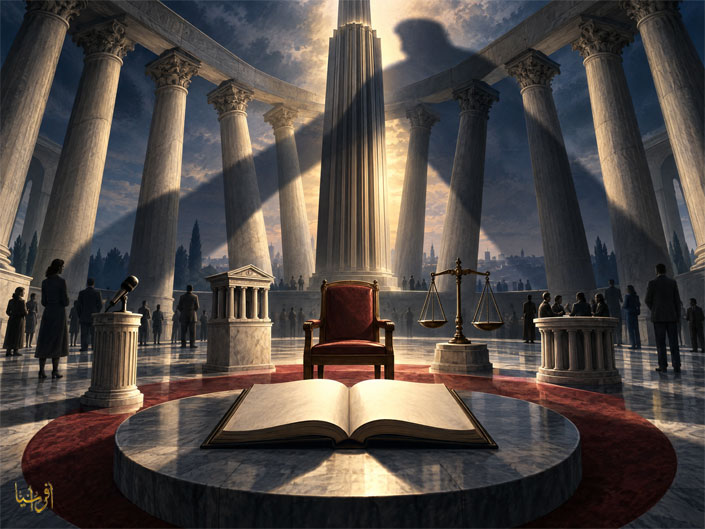
Trump and the Risks of Democratic Decline
Within weeks of his inauguration in January 2025, Trump sparked widespread controversy over a range of geopolitical issues, including renaming the Gulf of Mexico to the Gulf of America, offering to buy Greenland, presenting a vision for the Gaza Riviera, and announcing talks to end the war in Ukraine—after boasting that he could stop the war in Ukraine within 24 hours. In an extraordinary White House meeting on February 28, 2025, Ukrainian President Volodymyr Zelensky and the U.S. President clashed dramatically over whether to trust Russian President Vladimir Putin and the issue of U.S. funding for the war. Zelensky was subsequently asked to leave the White House, sparking a diplomatic crisis over the future of the war, U.S. loans, and the future of European security.
On the domestic front, Trump is considered a symbol of the collapse of the old order in the United States because he radically changed the political and administrative rules of the game that had prevailed for decades. Trump adopted a policy of "creating chaos then arranging it," targeted traditional state institutions, and canceled or modified entrenched policies such as diversity and inclusion programs. He also used his executive powers in an unprecedented manner to repeal or suspend decades-old laws, such as the Foreign Corrupt Practices Act, justifying it by his desire to enhance the competitiveness of American companies even if at the expense of anti-corruption standards.
All of this raises the question of how to analyze President Trump's personality and how he thinks. There are four pivotal dimensions through which President Trump's political behavior can be understood:
1. Amplifying the Concept of the Presidential System
President Trump's term was marked by the frequent use of executive orders to expand the executive authority he holds as someone elected by the people, often leading to the marginalization of Congress and, at times, challenging the judiciary. For example, since the beginning of his second term, Trump has signed 143 executive orders as of this writing, targeting a wide range of issues from immigration and environmental policy to education and legal affairs. Notably, he attempted to end birthright citizenship for the children of undocumented immigrants via an executive order—a measure that directly challenged the Fourteenth Amendment and bypassed congressional authority, but was ultimately blocked by several federal judges as unconstitutional.
Trump also issued orders to dismantle federal agencies, such as the Department of Education and USAID, and freeze federal grant funding—steps that disrupted existing legislative frameworks and triggered lawsuits from states and civil rights defense groups. In another unprecedented move, Trump targeted prominent law firms and journalistic institutions with executive orders, imposing sanctions and revoking their security clearances in response to their opposition or participation in investigations against him, drawing widespread condemnation and legal challenges. These examples illustrate how Trump exploited executive actions to achieve his agenda, frequently crossing the boundaries of presidential power and provoking fierce opposition from Congress and the judiciary.
2. Undermining the Liberal Project
President Donald Trump's style directly contradicts the liberal project, which focuses on protecting individual rights, the rule of law, promoting pluralism, and democracy. Trump's policies and rhetoric have consistently undermined these principles, both domestically and internationally, under the argument that he represents the electoral majority. Domestically, the Trump administration enacted comprehensive measures that undermine individual rights. In his first hundred days of his second term, his administration targeted immigrants through mass deportations, family separations, and strict asylum restrictions, violating international law and tearing communities apart.
He also suppressed freedom of expression by threatening protesting students—especially non-citizens—with detention and deportation for exercising their right to free speech. Furthermore, his administration attacked freedom of speech, targeted journalists, and used regulatory power to undermine independent media, all of which are essential to liberal democracy. Trump's executive actions also led to a further rollback of protections for women and racial minorities, including anti-transgender policies, attempts to weaken reproductive rights, and the forced closure of diversity, equity, and inclusion (DEI) programs. Together, these actions represent a broad assault on the rights of marginalized groups from the perspective of the liberal project demanded by the Democratic Party.
Internationally, Trump downplayed the priority of liberal values in U.S. foreign policy, expressing admiration for iron-fisted leaders and minimizing human rights in favor of security and economic considerations. Some may see this trend as undermining the foundations of the global liberal order that the United States previously supported. Initiatives like Project 2025, which closely aligns with Trump's agenda, seek to consolidate executive power, replace merit-based civil servants with loyalists, dismantle agencies protecting civil rights, and criminalize behaviors protected by liberal standards. Legal experts warn that these proposals will undermine the rule of law, the separation of powers, and civil liberties, which are core elements of the liberal project.
3. National Pragmatism and Transactionalism
Trump treats international relations like commercial transactions, viewing U.S. alliances and foreign aid through the lens of "what the United States gets in return." Countries are treated either as customers or competitors: they either pay their share like NATO members or risk losing American support. In this context, trade deficits are viewed as evidence of deception, regardless of long-term structural or strategic factors.
Trump believes that U.S. sovereignty should transcend global institutions and multilateral agreements such as the United Nations, the World Health Organization, and the Paris Climate Agreement. He also portrays many international issues—such as immigration, trade, and China's rise—as direct threats to U.S. power and pride.
In this context, Trump frequently rejects established U.S. strategic principles; he criticized the Monroe Doctrine, yet revived its spirit to counter China in Latin America. He also holds a skeptical or hostile view of "globalization," opposing U.S. intervention unless it yields immediate national gains.
Consequently, zero-sum game narratives dominate his outlook, centered on winners and losers. Trump often views international politics in binary terms: allies versus enemies, and loyalty versus betrayal, a biased thinking that frequently influences his political rhetoric.
4. The Envoy of Divine Providence
Donald Trump acts as if he is an envoy of divine providence, as observed in his political style and alliances that frequently inspire religious language and themes evoking this sentiment, particularly through his relationship with the prosperity gospel movement and the rhetoric of American exceptionalism. Trump’s close association with prosperity gospel leaders, such as Paula White—whom Trump described as his "personal pastor" and head of the White House Faith Office—is central to this dynamic. The prosperity gospel teaches that material success and power are signs of divine favor, a message that reflects Trump's self-portrayal as a uniquely successful and chosen leader. Trump's speeches directed at evangelical and Pentecostal audiences often blend religious and nationalist language, portraying his presidency as part of a broader, almost predestined plan for American greatness. Many evangelical supporters and leaders have justified their support for Trump by arguing that God uses imperfect individuals to fulfill divine purposes, reinforcing the idea of a special mission.
This narrative connects to deep roots in American exceptionalism—the belief that the United States has a unique, God-given destiny to lead or save the world. Trump invokes American exceptionalism, but with a new twist: instead of the traditional mission of spreading democracy globally, he portrays America's destiny as restoring sovereignty, reclaiming greatness, and putting its people first. His rhetoric echoes "fatalistic" language and the idea that the United States is exceptional, blessed, and tasked with a special role in history.
In conclusion, many researchers and observers believe that Donald Trump's actions and policies, especially during his second term, pose a significant threat to the American democratic project, as described by Alexis de Tocqueville. Tocqueville stressed the importance of state roles, civic participation, the distribution of power, and the protection of minority rights as pillars of American democracy. He also warned that democracy could degenerate into tyranny if the concentration of power increases or if the majority suppresses minority rights.
Accordingly, Trump's amplification of executive branch functions, his efforts to marginalize or control independent institutions (such as the judiciary, the press, and federal agencies), and his attacks on civil society and dissenting voices directly undermine these Tocquevillian principles. His administration's steps to reclassify federal workers as political appointees, purge agencies of perceived disloyalty, and dismantle regulatory and oversight mechanisms represent a centralization of power that undermines the federal balance and local independence that Tocqueville admired when he visited the United States.
Furthermore, Trump's rhetoric and policies have frequently targeted minorities and dissidents, recalling Tocqueville's warning against the "tyranny of the majority" and the risks of sacrificing individual freedoms for the sake of a purported majority interest. Hundreds of writers have warned that these trends—combined with the use of executive orders to bypass Congress and ignore judicial independence—pose a genuine danger of democratic decline and even regime change.
________________

