
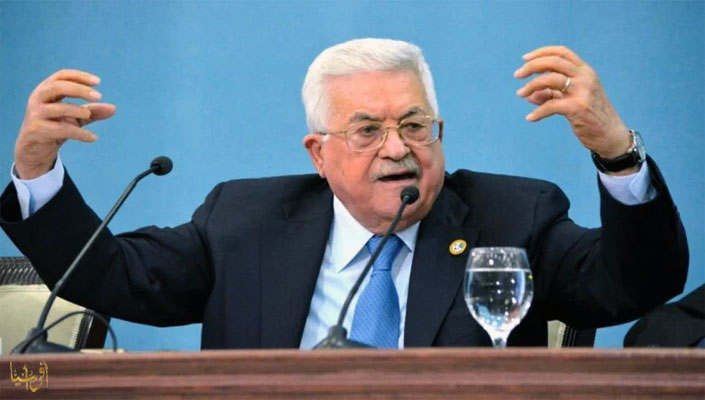
Afrasianet - By taking the step to postpone the legislative elections—despite its pledges over months to hold them, both before the Palestinian public and regional and international parties—the Ramallah Authority has trapped itself in an inescapable dilemma, amid consistent indicators of its intensifying external isolation and the collapse of the final bets on its future.
Ramallah-based political writer and analyst Jihad Harb points out that the Palestinian political class "has not yet learned from the crises it has experienced over past years, whether from the repercussions of the position during the Second Gulf War when Iraq occupied the territory of the sister state of Kuwait, or in its post-October 7, 2023 actions to contain the drift toward catastrophe."
Harb considers that the latest blunder by the Authority's leadership was issuing a presidential decree, based on a recommendation from the Executive Committee—"which lacks jurisdiction"—to postpone the elections that were scheduled for November 28, 2026, without taking into account the State of Palestine's obligations and commitments toward friendly nations and the international community.
Harb points out that "the volume of pressure exerted on the Palestinian Authority leadership by the U.S. administration and its followers is understood, and might be acceptable if there were a shift or signs of a shift in U.S. policy, but continuing to bet on promises or crumbs of unfulfillable promises has become unacceptable."
In contrast, international shifts are emerging to break free from American dominance over the Palestinian cause, or to break away from its hegemony over the trajectories of the Palestinian-Israeli conflict as a non-neutral mediator. These signs are embodied in a parallel international track led primarily by France and Saudi Arabia to implement the two-state solution option.
Postponing the Legislative Elections
Harb warned that the decision to postpone the legislative elections—"even if these elections were flawed"—has generated anger among countries that are friendly, or transformed into "friendly" nations over the past two years, due to the failure to respect the written commitment submitted to them by the Authority's leadership within the framework of the international community's new path. This path consists of "implementing the two-state solution option, contracting with donor countries to implement the institutional reform program in the Authority, and messages recognizing the State of Palestine, especially from French President Emmanuel Macron."
This anger was reflected in statements issued by European Union foreign ministers and a joint statement by the four countries that recognized the State of Palestine in 2025: France, Britain, Canada, and Australia. The harshest of all was the statement by the French Ministry of Foreign Affairs, which conditioned any assistance for building the institutions of the State of Palestine on respecting written commitments, alongside a demand by the EU High Representative—phrased diplomatically as a command—to "hold elections at the earliest opportunity."
According to Harb, the diplomatic formulas issued by these parties carry multiple repercussions, not least of which is the study of halting or reducing financial aid provided by these countries, individually or through the European Union, to the Palestinian Authority, not to mention the possibility of political shifts in their positions on the Palestinian cause, the reduction of measures they took against Israeli occupation and its crimes, and potentially even exerting pressure on the Palestinian leadership in the form of a political siege.
Harb concludes that the Authority's leadership "has trapped itself in an inescapable dilemma: if it responds and cancels the presidential decree postponing the elections to September 11, 2027, it will appear glaringly subservient to external powers; and if it insists on what was stated in the postponement decree, it must bear the political repercussions of failing to respect the commitments it pledged, and burden the Palestinian people with the resulting costs. Continuing is unacceptable, backing down is impossible, and the leadership's current sentiment is: we have fallen into the trap."
________________

