
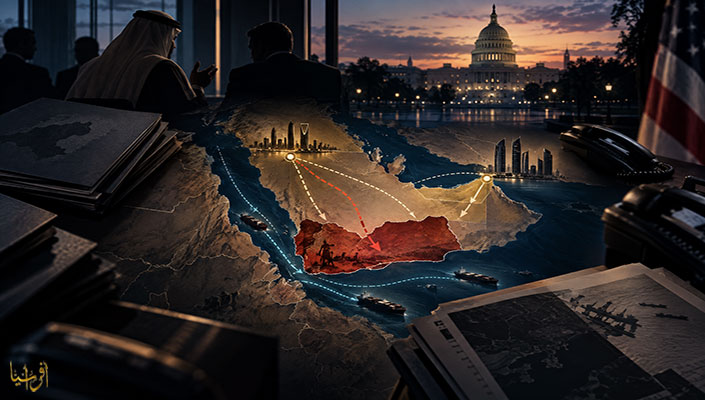
Afrasianet - Zeynep Gürünlü - With its new sanctions, Washington is not actually targeting Iran itself, but rather the network of countries that trade with it. After years of living under sanctions, Iran has developed alternative payment systems, conducted trade through third parties, sold its oil through various channels, and utilized financial brokerage networks. The Trump administration wants to dismantle this system.
The administration of U.S. President Donald Trump has imposed an unprecedented economic blockade on Iran.
Washington's message is clear: Iran's sources of funding will be cut off, its oil revenues will be targeted, countries trading with Iran will face pressure, and the financial channels allowing Tehran to breathe will be closed.
U.S. Treasury Secretary Scott Bessent also highlighted the limits of this policy, stating: "Anyone who provides Iran with a financial lifeline will pay the price of isolation alongside it."
President Trump went a step further, declaring: "We will completely isolate Iran and cut off all trade with it."
As the United States seeks a quick resolution to the Iranian issue ahead of the November midterm elections, the real question that needs to be asked is:
To what extent will the United States entangle itself in an economic and political conflict with the countries surrounding Iran while trying to choke Tehran?
Iran's Strong Economic Network Will Pose a Challenge to Washington
Looking at Iran's foreign trade map, it becomes clear that despite decades of sanctions, the United States has thus far failed to achieve the results it desires.
In Iran's imports, the United Arab Emirates ranks first with 31%, China second with 27%, and Turkey third with around 10%. Following these countries are India, Germany, Russia, and Switzerland.
Therefore, with its new sanction decisions, Washington is not actually targeting Iran itself, but the network of countries that trade with it.
After years of living under sanctions, Iran has developed numerous alternative payment systems, conducted trade via third countries, sold its oil through various channels, and relied on financial brokerage networks. The Iranian economy has suffered major blows throughout these years, but it has not completely collapsed.
Now, the Trump administration wants to completely dismantle this system. To achieve this, it is looking not only at Tehran, but also at Dubai, Beijing, Ankara, and other centers with economic ties to Iran.
If the New Sanctions Fail Too...
Washington's latest attempts to economically paralyze Iran are also likely to fail in producing the desired impact.
Images coming from Dubai, reported by The Wall Street Journal, illustrate why the sanctions policy is not succeeding as easily as anticipated.
While the U.S. tries to cut off Iran's financial lifelines, Iran-related banking activities in Dubai continue. The Melli Bank branch in Deira remains open. Employees continue to provide services. Iranian clients continue to visit the bank.
Some direct flights between Iran and the UAE continue. Some Iranian visas that were previously canceled have been reactivated.
In short, the map drawn by Washington on the table does not match the reality in the streets of Dubai.
The Iranian and Gulf economies are far more interconnected than commonly believed. Severing one side of this relationship overnight imposes costs on the other side as well.
China is the Real "Wall"
Furthermore, Iran's most important economic gateway is not Dubai, but China.
Given that the vast majority of Iranian oil goes to China, Beijing is one of the true targets of the new U.S. sanctions package.
While Washington attempts to cut off Iran's oil revenues, it is also sending a message to China: "If you buy Iranian oil, you will pay the price."
Although Washington has warned Beijing that it risks losing access to the U.S. financial system if it fails to comply with U.S. sanctions on Iran, it is safe to say this has not significantly impacted China, as Beijing has been preparing for this for years.
China has developed its own legal defense mechanisms against unilateral U.S. sanctions, and a striking picture has emerged:
Banks that comply with Washington's sanctions face punitive measures imposed by China. For banks, complying with both simultaneously is nearly impossible. Therefore, U.S. sanctions target not only the UAE and China, but also global companies, banks, and trade networks, forcing them to "choose a side."
Sanctions Extend to the Seas
The U.S. administration has taken measures to strike Iran not only through financial networks, but also in maritime trade.
According to Bloomberg, the United States is preparing a new legal mechanism to detain Iran-linked tankers and their cargoes with the assistance of a federal court in Houston. If applied, this new method would undermine the freedom of navigation and the freedom of the high seas guaranteed by international maritime trade law.
Here, a much more dangerous threshold emerges:
What happens if Washington—which has lectured the world for decades on a "rules-based international order"—begins to consider its sanctions regime superior to maritime law?
The Situation in Turkey is Becoming More Difficult
Turkey shares a complex and vital economic relationship with its neighbor Iran, spanning energy, border trade, transport, logistics, and even banking. Therefore, Turkey could be among the countries most heavily impacted by the latest U.S. sanctions.
Moreover, U.S. sanctions are not limited to Iran alone:
The Washington administration has put all its economic cards on the table to pressure both Europe and Russia over the Ukrainian issue. Turkey finds itself caught between these sanctions. For Turkey, the issue is remaining within the Western system while simultaneously maintaining economic relations with its neighbors.
So far, Turkey has managed to follow an approach that balances sanctions against Russia and Iran. On one hand, it avoided becoming a direct party to the sanctions regimes through "concessions" it secured from the Washington administration; on the other hand, it managed to maintain its economic relations with the West.
However, the Trump administration's new pressure policy toward Iran seems to make old "concessions" impossible for Turkey.
In the upcoming period, Turkey's foreign policy test may not take place at diplomatic tables as much as it will in banks, ports, energy companies, and tanker routes.
Therefore, the most crucial issue for Turkey will not be how to respond to sanctions, but rather how to protect the economic space that remains outside the scope of sanctions.
Turkey's Search for Balance: The Putin-Erdoğan Meeting in Bishkek
The Shanghai Cooperation Organisation summit is of critical importance for Turkey in its "search for balance" at a time when the United States is increasing pressure on both Tehran and Moscow.
One of the summit's most prominent meetings will be between President Recep Tayyip Erdoğan and Russian President Vladimir Putin. The meeting will demonstrate Turkey's readiness to continue political dialogue with Moscow and signal Ankara's efforts to maintain economic relations with Russia despite sanction pressures. In other words, Ankara will once again show its preference for "multilateralism."
As Washington's sanctions policy increasingly shifts from a stance of "we impose sanctions and you comply" to an approach of "those who do not comply with our sanctions will pay the price," only time will tell whether Turkey can maintain its preference for "multilateralism"...
________________

