

Trump's hardline immigration policies have had an impact on the lives of Americans, especially sectors of the economy
Afrasianet - Corruption, racism and immigration are turning into hot issues in the U.S. midterm elections, as anger over the cost of living mounts and President Donald Trump's administration tightens its crackdown on immigrants. Democrats are seeking to link these issues to voters' daily suffering, while Republicans face increasing pressure to threaten their majority in Congress.
Politico says Democrats are recasting their anti-corruption rhetoric from accusations of political behavior to an explanation for the rising costs of housing, health care and living.
The website cited the results of a poll conducted by Blue Rose Research in collaboration with the "Winning Jobs Narrative Action" group, which showed that linking corruption to economic burdens increased voter support for Democratic congressional candidates by about three percentage points.
Since April, Democrats have spent about $104 million on election ads about corruption, compared to $36 million for Republicans. Their rhetoric is based on the idea that the political system is biased in favor of the wealthy and big business at the expense of citizens, and that political favoritism contributes to raising prices.
The Democratic Party has moved from presenting corruption as a crime to an explanation for the high cost of living, but Republicans reject the Democrats' monopoly on this file, accusing them of political hypocrisy, citing cases of fraud in government programs.
Democratic strategist Jesse Ferguson argues that the party has moved from presenting corruption as a crime to seeing it as an explanation for rising costs. This shift gives candidates a chance to capitalize on popular discontent, without limiting their campaigns to attacking Trump personally.
But Republicans reject the Democrats' monopoly on the dossier, accusing them of political hypocrisy, citing cases of fraud in Minnesota's government programs.
Racism is a test for Republicans
In an analysis for The Hill, writer Juan Williams argues that Trump's racial policies have become an influential factor in the election, especially in Florida , which has large numbers of Latino and black voters.
Williams points to Trump's declining popularity among Latino voters, with his approval rating at 27 percent, according to an NBC poll. Another poll showed that 66 percent of them believe his administration's handling of irregular immigration has exceeded acceptable limits.
While some of their candidates are trying to steer clear of deportation policies, others are sticking to their defense to win the support of Trump's conservative base. Rep. Byron Donalds, a candidate for governor of Florida, is an example of Republicans backing the deportation campaign against his Democratic rival David Joly.
Ignoring the racial dimension could cost Republicans crucial votes, especially in South Florida, where a shift in the Latino vote could change the race for House seats, Williams said.
Florida restaurant and hotel owners say the proliferation of Immigration and Customs Enforcement agents is scaring workers and customers. In Kansas, ranchers have warned that raids are disrupting the arrival of skilled workers, threatening meat production.
The Consequences of Migration
The Guardian newspaper says that the mass deportation campaign promised by President Trump is no longer an issue for immigrants alone, but its effects have extended to the lives of Americans and various economic sectors.
In Florida, restaurant and hotel owners reported that the proliferation of ICE agents was scaring workers and customers. In Kansas, ranchers warned that raids were disrupting the arrival of skilled workers, threatening meat production and driving up prices.
About two-thirds of those working in agriculture are non-citizen migrants, and that targeting them could lead to labor shortages and high food costs. Restaurants, aged care institutions and the health sector also face challenges due to their reliance on migrant workers.
Electoral setbacks
The Guardian says a poll shows that nearly half of Americans see the administration's immigration enforcement practices as overly strict. More than a quarter of Latino voters said they knew someone who had been detained or deported by immigration authorities since the start of Trump's second term.
These concerns point to the possibility that some voters may be reluctant to vote in person, adding a new dimension to the electoral battle.
The three files intersect in one message: Trump's policies directly affect household income, security and future. Democrats hope to turn that anger into gains in Congress, while Republicans try to blame their opponents for corruption and governance failures.
Corruption, loyalty, and war. Trump between his partisan power and his declining popularity nationally
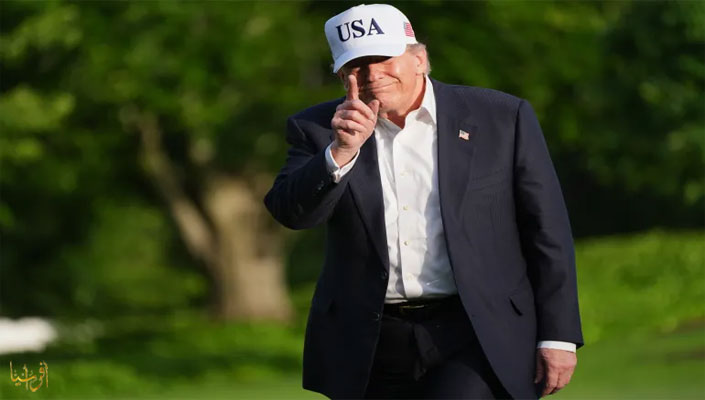
Trump tightens control of Republican Party, but his popularity is declining on the back of several decisions, including the war on Iran (Associated Press)
A series of reports and analyses published by the New York Times, The Washington Post, and Politico reveal a confused U.S. political landscape in which President Donald Trump's influence within the Republican Party is growing, while his political standing is declining nationally due to the escalating controversy over the war on Iran, corruption accusations, and divisions within the Republican Party.
In a sharply worded editorial, the New York Times described what it called an "incident of presidential corruption" unprecedented in modern American history, focusing on a $1.8 billion compensation fund created by the Justice Department after a legal settlement .
From classrooms to newsrooms. Trump's Restrictions Besiege Education and Media
The administration has presented the fund as an "anti-politicization fund" aimed at compensating those affected by politically motivated prosecutions, but critics see it as a system of taxpayer-funded political patronage funding for Trump loyalists.
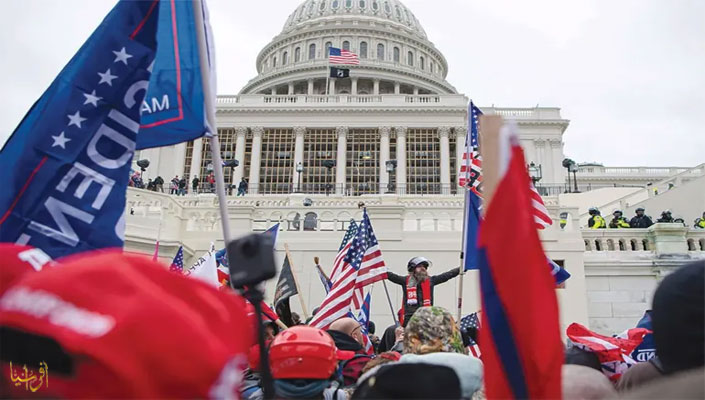
The attack by Trump supporters on the Capitol in early 2021 continues to cast a shadow over U.S. political life (Associated Press)
Personal gains
According to the newspaper's editorial board, the move reflects three key elements of Trump's political style:
• Personal gain.
• Politicization of federal law enforcement.
• Continuing to reframe the narrative related to the 2020 elections and the storming of Congress on January 6, 2021.
The editorial added that the administration was rewarding allies who were "willing to defy the law and commit acts of violence on behalf of the president."
The controversy intensified after the settlement reportedly gave Trump and his family immunity from ongoing tax reviews that experts had predicted would cost him more than $100 million.
The newspaper noted that the settlement was reached through unusual negotiations because government lawyers were practically negotiating with officials loyal to Trump himself. Trump even acknowledged the strangeness of the situation when he quipped, "I'm supposed to negotiate a settlement with myself."
The Justice Department has previously approved multimillion-dollar settlements for figures close to Trump, including his former security adviser Michael Flynn. Critics say the new compensation mechanism entrenches the principle of political favoritism under official legal cover.
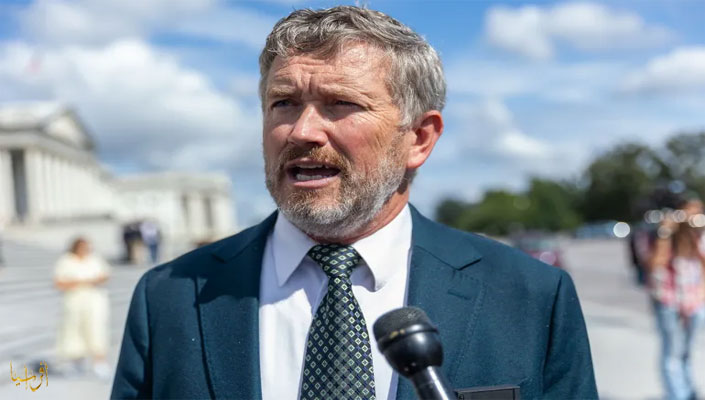
Trump played a role in defeating prominent Republican candidate Thomas Massie, who was a critic of the president (Getty Images)
Political paradox
In contrast, the Washington Post argues that Trump faces a growing "political paradox": The stronger his control over the Republican Party, the lower his popularity among independent voters and the wider public.
According to a report signed by Karen Tumulti, Trump has turned the Republican Party into a movement based primarily on personal loyalty to him, rather than on legislative platforms or traditional electoral calculations.
The recent Republican primary showed how much influence Trump has within the party, as was evident in Kentucky, where the Trump-backed candidate, former Navy Special Forces officer Ed Gallerin, beat Republican Rep. Thomas Massey, one of Trump's most prominent critics within the party.
But the Washington Post argues that these domestic victories could weaken Republicans ahead of the midterm elections. Polls cited by the newspaper point to growing public discontent with the war on Iran, inflation and economic pressures.
A New York Times poll conducted in collaboration with Siena University also showed a sharp decline in Trump's popularity among independent voters, with Democrats clearly outperforming in enthusiasm for electoral participation.
The newspaper also highlighted growing discomfort within the Republican Party over some of Trump's recent moves, particularly the new compensation fund and his continued policy of settling political scores.
Republican insurrection
In the same context, Politico reported on signs of an escalating Republican rebellion against Trump's Iran policy. Votes in the House and Senate aimed at curbing the president's military powers could be his first major political defeat in the wake of the war.
The report noted that a number of Republicans have joined Democrats in supporting resolutions based on the War Powers Act, which requires congressional approval to continue military operations.
Politico argues that Trump's ongoing campaign to retaliate against his political opponents may ultimately undermine his legislative agenda. A number of Republicans who lost the primaries are more willing to publicly oppose him during the remaining months of their terms.
'Self-defeats'
A Republican strategist described Trump's recent victories as "self-defeats," arguing that the president is obsessed with revenge at the expense of addressing voter issues such as inflation, rising energy prices and legislative deadlock.
Politico also noted rising tensions between Trump and congressional Republicans over stalled legislative issues, including immigration laws, funding disputes and controversial projects in the White House. Some Republicans have warned that Trump's focus on punishing his opponents could weaken the party's chances in the upcoming election.
Overall, the reports paint a picture of a president with a strong grip within the Republican Party, but at the same time facing increasing political decline at the national level, amid growing public anger over the war on Iran, economic conditions, and accusations that state institutions have been exploited for political and personal ends.
Republican insurrection. Has Trump's power begun to wane in Congress?
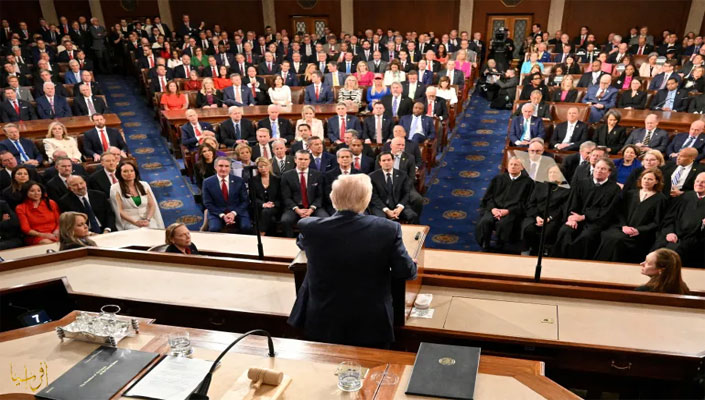
Republicans fear election loss due to Trump's controversial policies at home and abroad (Reuters)
The Washington Post and the Wall Street Journal reported an unprecedented escalation in tension between US President Donald Trump and Republican Party leaders in Congress, in a sign of Trump's ability to impose full discipline within his party is waning, as the midterm elections scheduled for next November approach.
Last week marked a turning point in the Senate and House of Representatives, after Republican lawmakers publicly opposed a number of his political and financial decisions, amid growing fears that his policies and conflicts could lead to a recession
The crisis began with a massive Republican immigration policy bill that includes about $70 billion to support the U.S. Immigration and Customs Enforcement agency. But the bill sparked controversy after it included $1 billion to fund the expansion and renovation of the East Wing of the White House, including a massive ballroom that Trump is seeking to build.
Secret Political Fund
A number of Republicans saw the allocation of this amount to a project with a personal connection to Trump as a political burden in light of the high fuel prices and the deteriorating economic situation, before the Senate rules official intervened and considered the funding to be against budget rules. When Trump hinted that she should be fired, Republican Party leaders rarely rejected the idea, a sign of the widening gap between the White House and the Republican Congress.
But the most divisive issue was the Justice Department's announcement of a $1.7 billion fund to compensate people Trump says were victims of "politicization of the judiciary" or "political targeting."
Reports indicated that a large number of Republicans viewed the fund as a "secret political fund" that could provide compensation for those involved in the Jan. 6, 2021, storming of the Capitol , including those convicted of assaulting police or violent crimes.
During a stormy closed-door Senate meeting, Acting Attorney General Todd Blanche came under fire from angry Republicans. Republican Senator Ted Cruz was quoted by the Wall Street Journal as saying the meeting was "one of the most violent meetings I've ever seen in the Senate," adding that some members were "screaming in anger."
The crisis was exacerbated by Trump's decision to support Texas Attorney General Ken Paxton against veteran Republican Senator John Cornyn in the Republican primary.
Purge of party leaders
The decision has sparked widespread outrage within the party, which sees Cornyn as one of the most prominent pillars of the Republican establishment in the Senate, and has raised hundreds of millions of dollars to support the party's candidates over the past two decades.
A number of Republicans have warned that backing Paxton, who has faced corruption scandals, accusations and a political trial in Texas, could put the party at risk of losing a state that is traditionally a Republican stronghold and could consume the huge money the party needs in other competitive states.
The crisis also worsened after Republican Senator Bill Cassidy lost the Louisiana primary, after Trump backed rival Julia Little, in a move that many interpreted as a "purge" of Republican leadership that has shown relative independence from the president.
According to the newspapers, the Republicans' anger is no longer limited to domestic files, but also extended to the war on Iran, as Cassidy and a number of Republicans joined Democrats in supporting a bill that would restrict Trump's ability to carry out additional military strikes against Iran without congressional approval. House Republican leaders were also forced to withdraw a similar vote after it emerged that it could pass with the support of members of the same party.
Declining popularity
According to a poll published by the Wall Street Journal, Trump's approval rating has fallen to 41 percent, compared to 57 percent of dissent, and the percentage of Republicans who "strongly support him has dropped from 75 percent in January to 57 percent in May. The poll also showed Democrats leading by eight points in voting intentions for Congress.
Timothy Naftali, a political science professor at Columbia University, said what is happening represents the beginning of a real test of Republicans' independence from Trump, especially when "the president puts his personal loyalty above the interest of the party and his electoral chances."
Despite the White House's attempt to downplay the differences, the two newspapers assert that the past week exposed the fragility of Republican cohesion and that Trump's absolute dominance over the party is no longer the same, at a time when many Republicans fear that the president's personal battles could become a burden to their political future in an election that could be the most difficult since his return to the White House.
________________

