
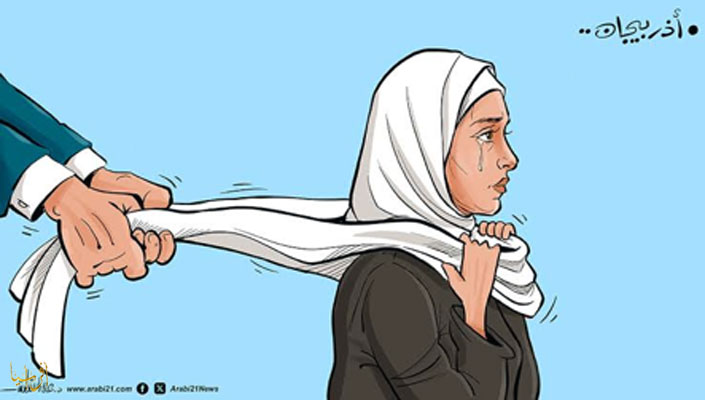
Afrasianet - Sarah Sweilem - The issue of the hijab in Azerbaijan is not just a dispute over school uniforms, nor a fleeting detail in the debate over the relationship between religion and the state; it touches on the essence of human freedom, the limits of state power, and women's right to learn without being forced to abandon their convictions. When a girl finds herself faced with a choice between wearing what she believes in and sitting on a study chair, the question becomes bigger than a piece of cloth: is education supposed to be a right for all, or a privilege conditioned on a look that pleases the authorities?
What happened in Azerbaijan?
According to press reports published in October 2026, new school uniform rules, passed in September, have banned some hijab-wearing students and teachers from entering schools, although the texts in circulation did not mention the hijab by name, but rather spoke of clothing that was inconsistent with the principle of secular education. The application of the rules sparked protests and arrests over protest-related unrest, according to media reports and Amnesty International.
In a statement published on 16 October 2026, Amnesty International said that denying girls access to classes because of the hijab is discriminatory and violates the rights to education and freedom of religion and expression, and called on the authorities to reverse the restrictions and ensure that affected female students and teachers return to school. It is important to distinguish between what is officially stated in the decision and what has been reported to be applied on the ground, as this precision is essential for any serious human rights debate.
Secularism does not mean erasing belief
The Azerbaijani authorities base the principle of secularism of education in justifying dress codes. But secularism should not be turned into an excuse to force the abandonment of belief, nor should respect for freedom of religion mean imposing religious practice on others. What is needed is a reconciliation of rights, not a sacrifice of a fundamental right in favor of a single interpretation of neutrality.
This is particularly important because the Constitution of Azerbaijan itself combines the definition of the State as a secular State with the guarantee of relevant fundamental rights. Article 25 establishes equality and prohibits discrimination on the grounds of, inter alia, religion and belief, article 42 guarantees the right to education and guarantees free and compulsory secondary education, and article 48 provides for freedom of conscience and the right to profess or not to profess religion and to express one's belief. It is therefore not enough to rely solely on the secularism of the State;
This is not to say that every regulation of school uniforms automatically constitutes a violation. But when the application of a general rule excludes female students from classes because of religious dress, the authorities must explain the legitimate purpose of the restriction, its necessity and proportionality, and whether there are alternatives that are less rights-infringing.
The veil between history, identity and the right to choose
For many Muslim women, the hijab has been associated with their understanding of religious texts, their spiritual choices, and their cultural identity, with societies and individuals differing in their interpretation and practices. It is not correct to reduce Muslim women to one image, nor is it correct to assume that every veiled woman embraces the same experience or that every non-veiled woman is less committed to her religion or culture.
Azerbaijan has a complex history of interaction between civilizations and cultures, and during the Soviet era it was influenced by policies that restricted religious practices. After independence, the challenge remained how to build modern institutions that respected the secular nature of the state, without excluding citizens for expressing their beliefs.
In the Islamic tradition, science occupies a central place, as the Qur'an asks: "Say, 'Are those who know equal to those who do not know?'" (Al-Zumar: 9). Muslim women have also emerged in the transmission of knowledge, jurisprudence, and narration, foremost among them Aisha bint Abi Bakr. Invoking this heritage does not mean imposing a religious perception on non-religious people, but rather affirming that women's commitment to the hijab should not be a barrier to their knowledge or participation in public life.
Double standards in some feminist discourses
The case poses a question for organizations that have been at the forefront of advocating for women's rights: Is freedom an inalienable right for every woman, or is it granted only when her choices align with the perceptions of others? Feminist movements have made significant achievements in advocating for education, work, and equality, but the credibility of any human rights discourse erodes when discrimination against women is ignored because of their religious dress, or assumes that a veiled woman cannot make an independent decision.
However, it would be inaccurate to accuse all feminist or human rights organizations Rights groups, including Amnesty International, have been outspoken of the restrictions in Azerbaijan. The most useful critique is to hold those who adopt selective positions accountable and demand consistency everywhere.
Women who choose not to wear the hijab deserve protection from coercion, and women who choose to wear it deserve protection from coercion as well. Freedom is not achieved by replacing social authority with official authority, nor by making a single cultural model the criterion for entitlement to education, employment and public participation.
Human Rights Standard: Freedom of Religion and the Right to Education
Article 18 of the Universal Declaration of Human Rights provides for freedom of thought, conscience and religion, including the manifestation of religion or belief, and article 26 establishes the right to education. Article 18 of the International Covenant on Civil and Political Rights (ICCPR) provides for freedom of expression of religion or belief in practice, education and observance, with specific restrictions permitted by law that are necessary to protect the safety, public order, health, morals or fundamental rights and freedoms of others. The International Covenant on Economic, Social and Cultural Rights affirms the right to education and the principle of non-discriminatory access to education.
Therefore, legal assessment is not based on saying that every dress code is contrary to the law, nor on recognizing that the description of education as secular settles the issue. Rather, it requires consideration of the impact of the restriction, its legal basis, its necessity and proportionality, and whether it is applied discriminatory. When the actual effect is to prevent a student from education because of the hijab, this requires independent legal review and effective remedies.
What can Arabs and Muslims do?
Solidarity with the affected students should not stop at statements of condemnation. Arab and Islamic universities and educational institutions can consider offering scholarships and academic exchange opportunities to students who are unable to complete their education, according to declared and fair standards, and these initiatives are not considered a substitute for their right to return to school.
Human rights organizations can also build partnerships with independent international institutions to document cases of education deprivation, provide legal counseling and follow up on complaints, while respecting the privacy of female students and not exposing them to additional risks. Arab media should move beyond passing coverage to in-depth reports that listen to students, teachers, and families, explain official texts and the implications of their implementation, and differentiate between verified facts and allegations that still need to be verified.
Religious institutions, on the other hand, can present a balanced discourse that links the value of science, human dignity, and freedom of belief, without turning the issue into a tool of polarization or offending the Azerbaijani people. Defending the right of veiled women to education does not require derogating non-veiled women, just as protecting secularism does not justify derogating religious women.
Conclusion: Freedom is not granted on the condition of renouncing one's identity
The issue of the hijab in Azerbaijan reveals a question that goes beyond the country's borders: do we want a public space that accommodates diversity, or a space that forces people to look the same in order to be allowed to participate? Women's empowerment is not achieved by excluding them from school, nor by forcing them to choose between their beliefs and their future.
Azerbaijani authorities should review the implications of the new rules and ensure that no student is denied education because of their religious belief or appearance, and organizations should Human rights groups should defend rights with a single standard, while Arabs and Muslims should turn solidarity into concrete educational, legal and media initiatives.
The real battle is not between the hijab and secularism, but between exclusion and justice, and between freedom that is respected as an inherent right and a freedom granted by a decision of the authorities. Women do not need to give up their identity in order to deserve education; they should be able to learn, work and participate in society without coercion or discrimination.
________________

