
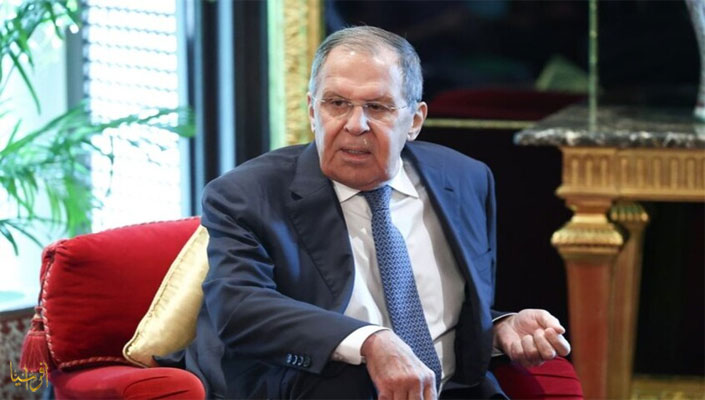
Afrasianet - Russian Foreign Minister Sergey Lavrov said Moscow views the updated "concept of ensuring collective security in the Gulf" as its contribution to the settlement and creating conditions for direct dialogue between the countries of the region.
"It is necessary to give the littoral states (on the Gulf) the final say in determining ways to ensure the safe development of this vital strategic region of the world," Lavrov said.
Russia's concept of security in the Gulf aims to create conditions for direct dialogue between Gulf states and their neighbours such as Iraq and Jordan, he said.
Russia is proposing to attract players from outside the region as well, including the leadership of the Arab League, the Organization of Islamic Cooperation and, where interested, permanent members of the UN Security Council.
Lavrov stressed that Moscow supports voluntary efforts, including those of the countries represented at the meeting, aimed at preventing the return of all-out war to the region.
The Russian Concept of Ensuring Security in the Gulf Region
The Russian concept of ensuring security in the Gulf region is a development of proposals developed in the late 1990s and completed in 2004, 2007, 2019, and 2021, and is based on the following principles:
• The commitment of all States to international law, the fundamental provisions of the Charter of the United Nations and the resolutions of the United Nations Security Council. Our common goal is a prosperous Middle East that supports peace and coexistence among religions, sects and ethnicities. The establishment of a security system in the Gulf region is an integral part of comprehensive efforts to ensure stability in the Middle East as a whole. The central provisions are respect for the independence, sovereignty and territorial integrity of States, the diversity of their socio-political patterns and the resolution of internal political problems without illegal external interference and within the legal sphere and through an inclusive national dialogue as an important prerequisite for maintaining internal stability and interfaith and communal harmony.
• Multilateralism as a means of ensuring that all parties involved are involved in the joint assessment of the situation, decision-making, and implementation. The exclusion of any party from this process for one reason or another is counterproductive.
• The comprehensive nature of the security system in the Gulf region. The multilateral structure is based on the principle of common and indivisible security and respect for the interests of regional and non-regional players, including military, economic, energy, transport and environmental components.
• Progress is made in phases towards the establishment of a comprehensive security system in the Gulf region, starting with the resolution of the most acute and pressing problems facing this subregion. This includes ensuring freedom of navigation in the Strait of Hormuz, a commitment to non-proliferation of nuclear weapons, as well as a common struggle against the acute challenges of our time, foremost among them international terrorism.
• The principle of progression is also applied in phases as the States of the Gulf region adopt confidence-building measures and provide mutual security assurances in the subregion.
________________

