
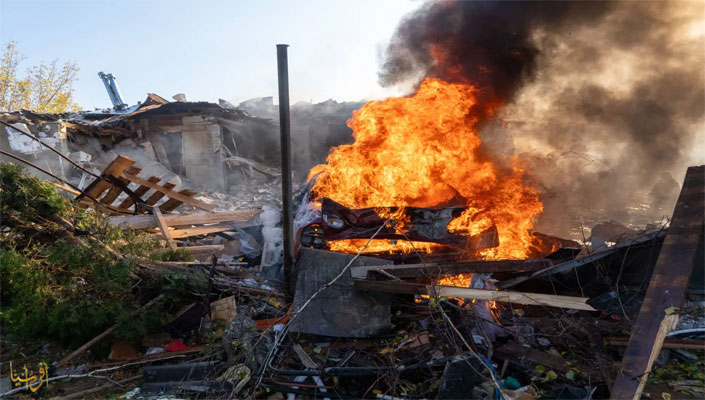
Escalation of Russian strikes on Ukraine
European capabilities cannot compensate for American support for Ukraine!!
Afrasianet - Russia's military escalation deep inside Ukraine is intersecting with a behind-the-scenes diplomatic movement between major powers, putting the war at a critical juncture in which ballistic strikes are intertwined with efforts to dismantle Kyiv's domestic political landscape.
As Russian attacks hit data centers and bioenergy facilities from Kharkiv and Dnipro to Odessa and Kyiv, President Volodymyr Zelenskyy 's complaint about the lack of advance intelligence warning from partners has come to the fore, coinciding with the Kremlin's rejection of any settlement without a Ukrainian leadership that "takes responsibility."
The developments coincide with news of arrangements for a trilateral summit in the Chinese capital involving the leaders of the United States, Russia and China, reinforcing signs of a compromise that goes beyond the parties directly involved.
Russian response
On the ground, the Russian strikes, which targeted a logistics center for the production of "Flamingo" missiles , a military cargo ship in Odessa, and facilities in the capital that left dead and damage to infrastructure, revealed the widening of the operational gap, with Moscow-based political analyst Roland Bedjamov attributing the bombing to being a direct response to the targeting of Russian oil and diesel plants.
Speaking to Al Jazeera's "Beyond the News" program, Bedjamov pointed out that Zelensky ignored repeated requests from US President Donald Trump to stop these attacks to protect the international market and economy.
On the other hand, former Ukrainian diplomat Volodymyr Shumakov put the blocking of intelligence and the disabling of Patriot missiles and the Starlink network in the context of the Trump administration's pressure to force his country to surrender, stressing that Kyiv is resorting to AI-powered dronesto compensate for Western support .
For his part, Hosni Abidi, a professor of international relations at the University of Geneva, explained that this intelligence decline revealed the inability of European allies to compensate for the US air intelligence and intelligence systems.
Zelensky's legitimacy
On the political track, Zelensky's legitimacy turned into a parallel front, as Bedjamov saw a crossover between Moscow and the Trump administration in considering Zelensky as an untrustworthy figure to conclude a deal, promoting the possibility of the speaker of parliament taking constitutional powers to end what he described as the procrastination in holding elections.
Shumakov responded by refuting this approach, stressing that Ukraine's constitution explicitly prohibits the organization of elections or the amendment of laws under martial law, describing efforts to impose territorial concessions and disarmament as a flagrant violation of the guarantees of the Budapest Memorandum.
According to Abedi, raising the presidential file is an attempt to engineer pressure to weaken Zelensky's position and extract forced political concessions.
A possible tripartite summit
Fears are growing in Kyiv with talk of a possible trilateral summit that will bring together the presidents of the United States, Russia, and China on the sidelines of the upcoming APEC summit. In this context, Bedjamov believes that the great powers are moving to revive the formula of the "Yalta Conference" to manage the world's files away from limiting them to the Ukrainian issue, while Shumakov believes that passing deals over the heads of Ukrainians and Europeans is an encouragement for Moscow to continue the war.
The Yalta Conference, the most influential historical summit in shaping the post-World War II international order, was held in Crimea from February 4 to 11, 1945, and brought together the leaders of the three "grand allies" – Joseph Stalin (Soviet Union),Franklin Roosevelt (United States) andWinston Churchill (Britain).
In turn, Abedi concludes that Europe, which was quick to adjust the US position after the previous Alaska summit, finds itself forced to strengthen its own capabilities and hold on to its diplomatic seat, rejecting any formula that marginalizes the continent's existential security.
Russia has been waging a special military operation on Ukraine since February 24, 2022, and Moscow says its termination is conditional on Kyiv abandoning joining Western military blocs, while Ukraine rejects this condition.
A 4-point US-European plan to end the Ukraine war
Amid rising tensions between US President Donald Trump and his Ukrainian counterpart Volodymyr Zelenskyy over Washington's deal to supply diesel from Russia, and the White House also threatening to cut off vital intelligence support to Kyiv, these latest differences may obscure a more important development, represented in the United States and Europe gradually moving towards the crystallization of a joint peace proposal that would provide financial and security advantages for both Ukraine and Russia, in preparation for reaching a regional settlement that would end the war.
In an article in the Washington Post, writer David Ignatius said that he spoke to a US official familiar with the ongoing negotiations in this regard, and he told him that this diplomatic move was discussed during a six-hour meeting, held last Friday in the state of Florida, and hosted by US envoys Jared Kushner and Steve Witkoff.
Ukrainian officials and representatives of Britain, France and Germany took part in the meeting.
According to the official, U.S. negotiators have tried to draft a package that addresses the post-war needs of both Ukraine and Russia, in a way that ends the bloodbath and ensures a better situation for both countries.
The proposed plan included 4 main pillars to end the war:
Reconstruction of Ukraine
The World Bank and investment firm BlackRock are seeking to develop a framework to meet Ukraine's multiple financial needs, which include rebuilding devastated areas of the country, providing benefits to the families of dead and wounded soldiers, and reviving the crumbling economy.
Negotiators have asked Kyiv to provide detailed estimates of reconstruction costs, and guarantees that the money will not be looted by post-war beneficiaries. According to Ignatius, the Ukrainians have not yet provided specific figures, but are expected to do so in the next few days, unless peace efforts collapse.
Security guarantees to prevent the renewal of war
Security guarantees will be the second key element, as Ukraine will receive a pledge from the United States and European countries to respond militarily if Russia launches a new offensive, which the U.S. official who spoke to Ignatius described as similar to the protection NATO provides to its members.
The official noted that Russia will also negotiate agreements with Europe that address its security concerns, although the details of what those agreements might entail are not yet clear.
Economic integration between Russia, Ukraine and Europe through an energy agreement
This could include the construction of a pipeline to transport Russian oil and gas to Europe, with profits shared between Ukraine and Russia.
The U.S. official said such a line would significantly reduce energy costs in Europe.
The plan also includes setting out mechanisms and a timetable for lifting economic sanctions on Russia, giving Moscow an opportunity to regain long-term access to European markets.
Ceasefire at the current lines of control
This will be the most difficult and complex pillar, as it requires the approval of Russia, which has started the war hoping to take control of all of Ukraine, for a ceasefire at the current frontlines between Russian and Ukrainian forces, or "lines of control" as negotiators describe it.
In practice, this means accepting Ukraine to remain Russian-controlled territory as part of the settlement, including disputed areas in the Donbas region.
One obstacle is that the Line of Control is not precisely defined, given the slight changes that occur on the front almost daily.
Starshield gives Trump enormous power over Ukraine
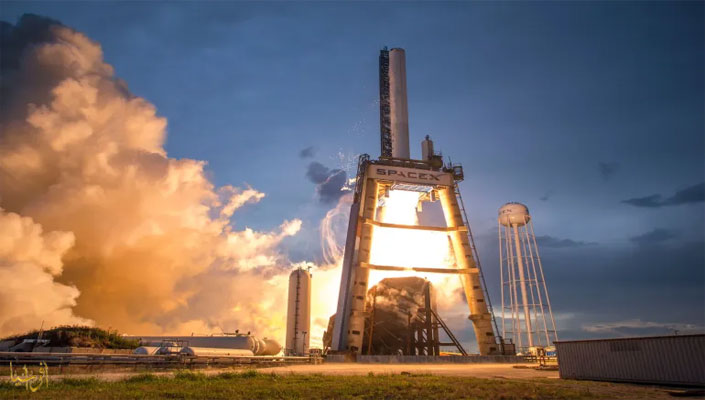
Newsweek: Restrictions on Starshield show the vulnerability of Ukraine's capabilities to US decisions (pixels)
Starshield restrictions show Ukraine's capabilities vulnerable to U.S. decisions
On the other hand, the abrupt restrictions imposed on Ukraine's use of the Starshield military satellite system revealed the extent of Kyiv's dependence on Washington, and the extent to which the administration of US President Donald Trump is able to influence the course of the war with Russia, by controlling technology and vital intelligence data.
In a report published by Newsweek magazine, defense correspondent Eli Cook points out that the disruptions to vital U.S. services have shown the vulnerability of Ukrainian capabilities to U.S. decisions, especially in light of the growing tension between Trump and Ukrainian President Volodymyr Zelenskyy.
Last week, Ukrainian drone operators found that their devices lost contact with the Starshield system when exceeding a certain speed of movement, forcing them to slow down their planes and weaken their ability to hit Russian targets before Russian defenses could shoot them down.
Kyiv also said it did not receive the usual intelligence warnings about Russian ballistic missiles targeting Ukrainian cities.
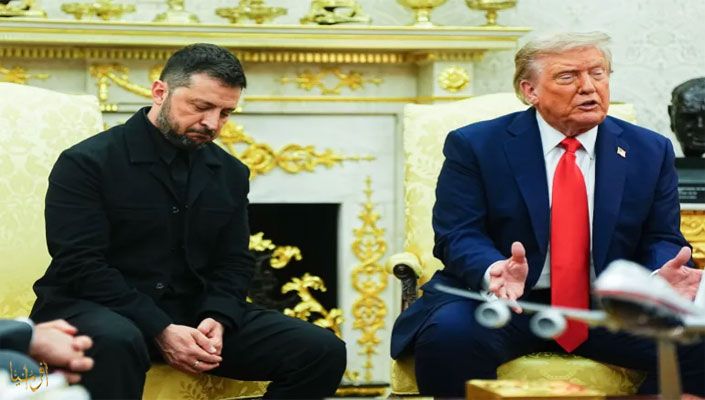
Newsweek: Trump administration takes a volatile approach to war, pressuring Kyiv to push it toward a settlement with Moscow
Revealed the extent of dependence on Washington
Despite Zelensky's announcement of the resumption of the flow of intelligence, the simultaneous reports of the disruption of the two services revealed the extent to which Ukraine is dependent on U.S. support, at a time when the Trump administration is adopting a volatile approach to the war and pressuring Kyiv to push it toward a settlement with Moscow.
StarShield, a military service developed by SpaceX based on Elon Musk's Starlink network, is particularly important because it allows Ukrainian drones, air and sea, to target Russian supply lines, ammunition depots, and command and control centers within nearly 200 kilometers of the front lines, even under electronic jamming.
The problem is that this capability is not under Ukrainian control. U.S. Secretary of State Marco Rubio denied that the White House had ordered the service to be restricted, while Reuters quoted unidentified U.S. officials and a Western official as saying that the Pentagon had received a letter from inside the White House requesting restrictions on the use of the military system in Ukraine.
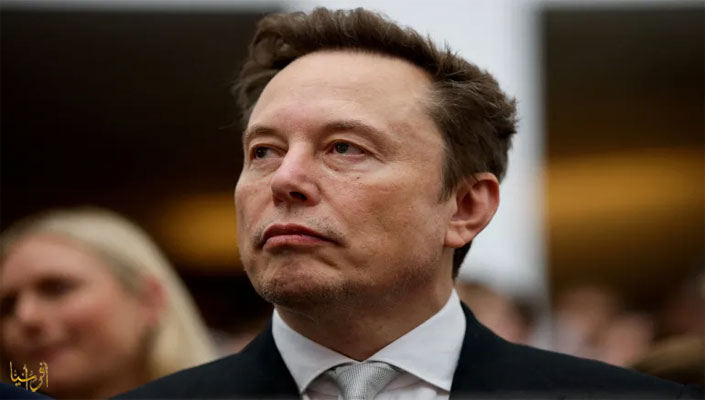
Elon Musk: Starshield systems are owned and controlled by the US government (Reuters)
Owned by the US Government
Musk said StarShield systems are owned and controlled by the U.S. government, and that any speed or usage restrictions are decided by the U.S. military and, ultimately, by the U.S. president.
Anthony King, director of the Institute for Strategy and Security at the University of Exeter in the United Kingdom, told Newsweek that these developments clearly showed Ukraine's continued dependence on Starlink, the U.S. tech sector and the U.S. administration.
Bohdan Sas, co-founder of Ukrainian defense technology company Pontar Aerospace, also described what happened as an important reminder that militaries around the world should keep in mind.
There is no ready alternative
Kyiv has no ready-made alternative to this system. Europe is gradually developing its own independent space capabilities, but EU foreign policy chief Kaya Callas acknowledged that the continent cannot currently compensate for these potentials, calling on European countries to close the gaps as soon as possible.
These developments come in a broader context of U.S. pressure on Ukraine, coinciding with Washington's postponement of new sanctions on Russia and an agreement with Moscow on the supply of Russian diesel. King believes that the current U.S. administration seems willing to use biotechnology as a means of influencing Ukrainian politics, even when it comes to Kyiv's interests.
At the same time, Trump accused Zelensky of contributing to the rise of global oil prices through Ukrainian strikes on Russian oil refineries and not doing enough to reach a peace deal, accusations the Ukrainian president rejects.
Significant damage suffered by Ukraine
Earlier this month, Trump announced an energy truce between Moscow and Kyiv, but neither country has confirmed its approval.
But Russia continued to strike Ukraine's energy facilities, and Zelensky said Russian attacks targeted energy infrastructure 76 times in the week following the announcement, causing power cuts to about 600,000 people in Kyiv.
These facts reveal that the battle is not only on the ground, but extends to space, communications and intelligence networks. When a country fighting an existential war relies on a technological system that has the keys to operating it by an external party, military support becomes a tool of political influence, and the push of a button can become an influential factor in the balance of battle and the state's ability to defend itself.
Has the relationship between Trump and Zelensky reached a point of separation?
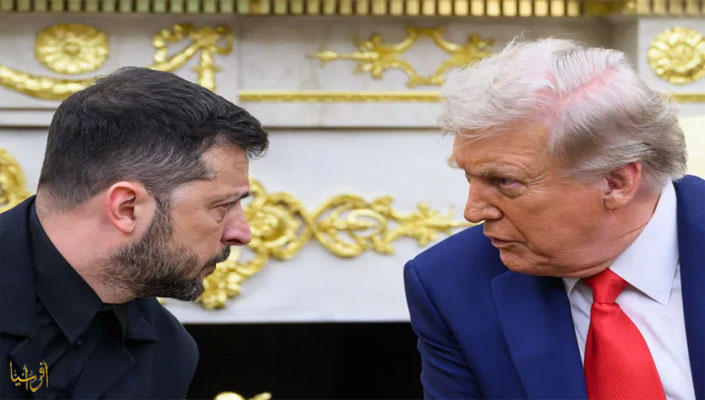
Analysts: Trump's (R) and Zelensky's continued standoff hurts the parties involved, but poses a greater risk to Ukraine (French)
The relationship between US President Donald Trump and Ukrainian President Volodymyr Zelensky is heading towards an unprecedented confrontation, amid disagreements over the war with Russia, which threaten the military and intelligence assistance Kyiv needs to continue fighting.
The dispute between Trump and Zelensky is no longer just a passing political debate, but threatens to weaken US-Ukraine cooperation at a critical juncture of the war as the US midterm elections approach, seen as a test of Trump's popularity and presidential performance.
In an analysis published in the New York Times, Kim Parker writes from Kyiv that the past week has carried a series of political blows to Ukraine, with Trump blaming the Russia-Ukraine war for rising diesel prices, rather than the war his administration has started against Iran, according to the analysis of energy experts.
He also temporarily eased U.S. sanctions on Russian diesel sales, unilaterally declaring a "ceasefire in the energy sector," a move the newspaper believes has benefited Moscow and hurt Kyiv.
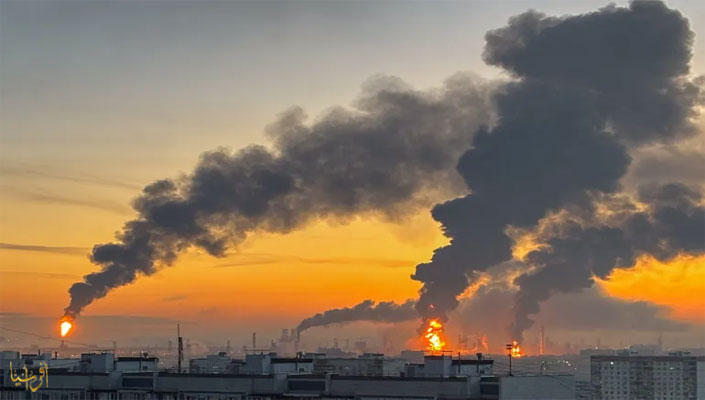
Fires at Russian oil refinery after Ukrainian drone attack September 20, 2026 (Reuters)
Restriction of Ukraine's use of Starshield
Trump called for the election of a new Ukrainian president, before reports of sudden restrictions on the Ukrainian military's use of StarShield, a military version of the Starlink satellite internet service, which plays a vital role in communications on the battlefronts.
Zelensky responded with apparent anger, saying he had been betrayed after Trump appeared to be siding with Russian President Vladimir Putin.
The Ukrainian president announced the resumption of attacks on Russian oil refineries, challenging Trump's announcement of a ceasefire in the energy sector, and when asked by journalist Piers Morgan if he thought his country was losing the United States, he answered a brief "yes."
Trump responded by saying that Zelensky is "not a good person to deal with," and in Belgium on Friday, the Ukrainian president sounded even more cynical, when asked if Trump was scapegoating him for his problems. He only had a side smile and a long silence that drew laughter from the audience, before saying to the microphone, "That's my answer."
Worst-case scenario for Kyiv
According to analysts quoted by the newspaper, the continuation of the confrontation will hurt the parties involved, but it poses a greater risk to Ukraine. The worst-case scenario for Kyiv is that Trump and the US War Department decide to halt military aid, which includes intelligence warning of missile attacks and helps Ukrainian forces identify their targets, along with spare parts for F-16 fighter jets and Patriot interceptors, which are capable of shooting down Russian ballistic missiles.
Analysts have warned that the loss of these capabilities will expose Ukrainian cities to further Russian attacks and increase the number of civilian casualties.
Ukrainian military analyst Oleh Katkov said the lack of early warnings of ballistic missiles would deprive residents of enough time to reach shelters, while the country would not have the means to intercept them.
Ukrainian officials said their country had not received advance warnings from its partners, an indirect reference to the United States, ahead of two waves of missile attacks on Kyiv on Tuesday and Wednesday.
Soldiers also reported that Starshield system disruptions hampered drone launches and other military operations, prompting a group of U.S. senators from both parties to call for an investigation.
Room for maneuver
The coming weeks, leading up to the midterm elections, could reveal the direction of the relationship between the two presidents, as Trump wants to show his ability to lower fuel prices, but he also faces criticism from within his own party for his handling of Ukraine.
Between electoral calculations and geopolitical interests, the relationship appears to be facing a decisive test, the consequences of which may go beyond personal disagreement to affect the course of the war and the future of European security.
Starlink at the heart of the confrontation.. American threat to Europe, military restrictions and suspicions of sabotage
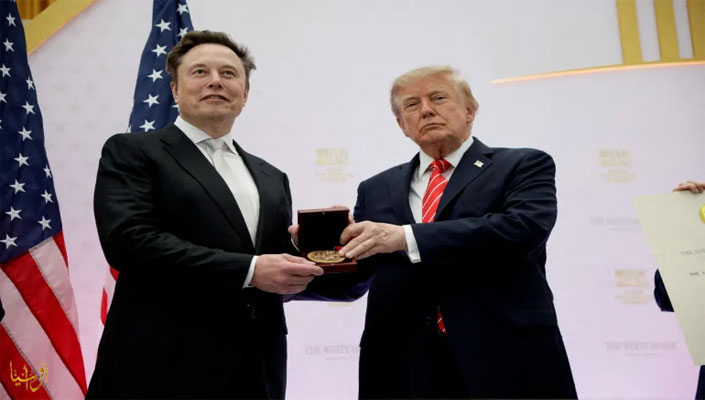
Trump (right) denies that he or Elon Musk caused the outage (Reuters)
Starlink's satellite internet network is no longer just a vital means of communication for Ukrainian forces, but it and its military counterpart, StarShield, have become the focus of disputes where military interests, technological rivalry and political disagreements between Washington and Europe intersect amid accusations of communications restriction and fears of sabotage targeting service-related facilities.
At a time when the United States is warning Europeans of economic retaliation if the EU goes ahead with its proposals to give European companies priority in the use of certain space communications frequencies, Washington and Kyiv are accusing each other of disruptions to Starlink services, which Ukrainian forces rely on for their field communications and drones, while European countries allege Russia's involvement in attacks and attempts to sabotage network-linked facilities.
U.S. threat to Europe
In a report published in the Financial Times, journalists Barbara Moynes and Henry Foy quoted US Ambassador to the European Union Andrew Pozder as warning that European companies could face "devastating" retaliation if Brussels goes ahead with plans to restrict access to parts of the European space communications market, including Elon Musk's US company SpaceX.
The warning comes against the backdrop of a proposal by the European Commission to allocate part of the radio frequency band, which allows smartphones to connect directly to satellites, to European companies.
This would limit the range of frequencies available to U.S. and Chinese companies, as part of the EU's efforts to strengthen its technological independence and reduce its dependence on foreign suppliers in strategic sectors.
Bozder said European companies should be prepared for the possibility of a U.S. response, warning that the consequences would be severe given the size of the U.S. market.
He criticized what he saw as a European trend to use legislation to boost domestic firms at the expense of U.S. competitors, stressing that making U.S. companies less competitive does not make their European counterparts more efficient.
U.S. Treasury Secretary Scott Bisant called on Ukrainian President Volodymyr Zelensky to be cautious in his "reckless" and inaccurate remarks accusing the U.S. side of causing the service slowdown.
Technological sovereignty
The dispute goes beyond the Starlink case to the EU's policies to regulate the tech sector, including the Digital Markets Act and fines imposed on major US companies.
It also extends to European plans to impose technological sovereignty requirements on sensitive cloud service providers, and to develop European alternatives in the fields of artificial intelligence and cloud computing.
The U.S. ambassador believes that Washington and Brussels should cooperate to compete with China in the race for artificial intelligence and quantum computing, rather than draining their efforts in the regulatory dispute.
The European Commission says its proposal aims to encourage the entry of new European suppliers and diversify service sources, while keeping the market open to non-European companies.
Accusations over service disruption in Ukraine
Parallel to the dispute between Washington and Brussels, controversy has escalated over disruptions to the Starlink service, on which Ukrainian forces rely extensively for their military communications and the operation of drones.
The Hill quoted US Treasury Secretary Scott Besant as saying that Ukrainian President Volodymyr Zelensky should be cautious in his remarks accusing the US side of causing the service slowdown, describing these accusations as reckless and untrue.
Zelensky had said, in an interview with the American television network "NBC", that the decision to restrict the speed of "Starlink" came from the US government, based on the discretion of the Ukrainian leadership, but admitted that he did not know who made the decision.
US President Donald Trump denied that he or Elon Musk caused the outage, while Foreign Minister Marco Rubio confirmed that no order had been issued by the White House to slow down or restrict satellite internet service to prevent it from operating certain drones.
Starshield is not available for Ukraine
Rubio said that disruptions in the service had already occurred and that they were later restored, without elaborating on their causes. But he stressed the need to distinguish between Starlink and the Starshield military system, explaining that the latter operates under contract with the U.S. military and is not used by Ukraine.
He added that Kyiv had requested access to Starshield to carry out long-range strikes inside Russia, but did not receive it.
According to a source familiar with the matter quoted by The Hill, the restrictions during the week included platforms moving at speeds exceeding 100 miles per hour, or about 160 kilometers, affecting Ukrainian drones, planes and helicopters. However, U.S. officials have denied deliberately disrupting the service, and the published materials did not conclusively specify the cause of the disturbances.
The case is of great military importance, because Starlink provides essential communications to Ukrainian forces and its devices are used in drone guidance systems that carry out strikes on Russian targets and help counter drones launched by Moscow.
Russian sabotage of network facilities suspected
In another development, Lithuanian authorities announced that an attempt to set fire to a Starlink service ground station near the capital Vilnius had been foiled, in an incident that raised fears that Ukraine's telecommunications infrastructure could be targeted.
Lithuanian Prime Minister Mendojas Sinkevicius said the incident appeared to be part of a hybrid war aimed at undermining Ukrainian capabilities, claiming Russia may be behind it.
According to his statements, flammable liquids and containers were found near the facility, which provide communication to 9 antennas belonging to the service used in Ukraine.
Lithuanian officials confirmed that the fire was quickly extinguished, causing only minor material damage, while the investigation continued to determine the identity of the suspects and who was behind the attempt. Authorities have not released final findings proving Russian responsibility, while Moscow denies similar accusations as baseless.
The incident follows incidents of Starlink-related facilities or equipment in Poland and Bulgaria, where authorities suspected arson. Lithuania believes these incidents may be linked and aimed at disrupting the service, which plays an important role in Ukraine's defense.
As accusations of service disruptions and suspected sabotage continue, the broader challenge for Europe and Ukraine remains to ensure the continuation of vital communications, at a time when the risks of making technology itself a weapon of conflict and a tool of pressure in international relations are increasing.
________________

