
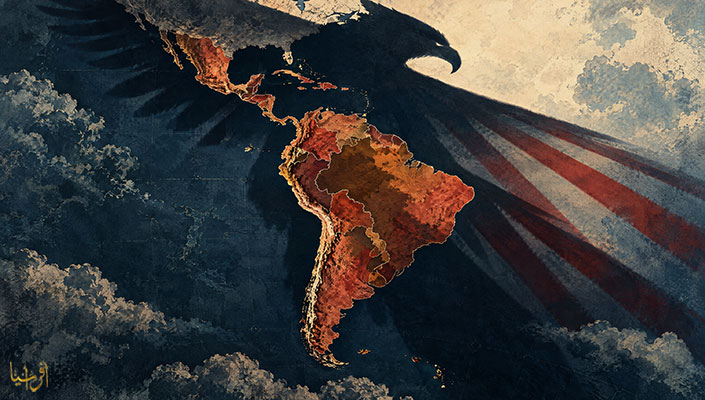
Washington aims not only to counter China’s growing influence but also to reassert its hegemonic control over the region.
Afrasiant - Alex Lo - When China’s trade with Latin America reached a record US$518.4 billion in 2024, it marked a fundamental shift in the hemisphere’s economy. Beijing is now the largest bilateral creditor and the second-largest trading partner of Latin America and the Caribbean, with President Xi Jinping pledging a new credit line of 66 billion yuan (US$9.2 billion) at the 2025 China–CELAC (Community of Latin American and Caribbean States) Forum.
Chinese investment has shifted from extractive industries toward clean energy and manufacturing, with electric vehicle production expanding across Brazil and Chinese-made vehicles capturing 57 percent of Ecuador’s market by the first half of this year.
Washington’s response under President Donald Trump has been anything but subtle. Rather than competing economically, the administration has returned to traditional gunboat diplomacy under the so-called Donroe Doctrine...
The “Monroe Doctrine”: From a Symbolic Declaration to a Tool for Intervention in “America’s Backyard”

A Version of the Monroe Doctrine
Writer Tasnim Hasnaoui explains the Monroe Doctrine as follows: A doctrine formulated by U.S. President James Monroe and announced in his seventh annual message to Congress on December 2, 1823, it emerged amid growing U.S. concern that the continental powers might attempt to reannex Spain’s former colonies in Latin America after their independence.
This political doctrine toward the countries of South America is one of the most important pillars of U.S. foreign policy. It rests on the principle that South America is the United States’ backyard and does not allow any outside global power, no matter which, to gain a foothold in this region, which is strategically important to U.S. national security.
Historical Background
The Latin American republics gained independence from Spanish and Portuguese colonial rule in 1823 and received diplomatic recognition from the United States. But that did not protect them from the danger of being colonized again by their former European rulers, especially as the Spanish crown regained its strength and joined the “Holy Alliance” with Russia, Prussia, and Austria.
As Russia announced its claims to Oregon territory (a U.S. state in the Northwest), the United States grew increasingly concerned about its colonial interests and its ambition to control North America’s Pacific coast, amid existing tensions over the European powers’ return to colonize Latin America.
Under these circumstances, Britain—the great power of the day—made an offer to America, proposing that they issue a joint declaration rejecting any potential intervention by the “Holy Alliance” in the Western Hemisphere.
U.S. Secretary of State John Quincy Adams intervened, objecting to the British proposal and advising President Monroe to issue a unilateral declaration to demonstrate the United States’ independence and present it as a regional power, rather than a state subordinate to England.
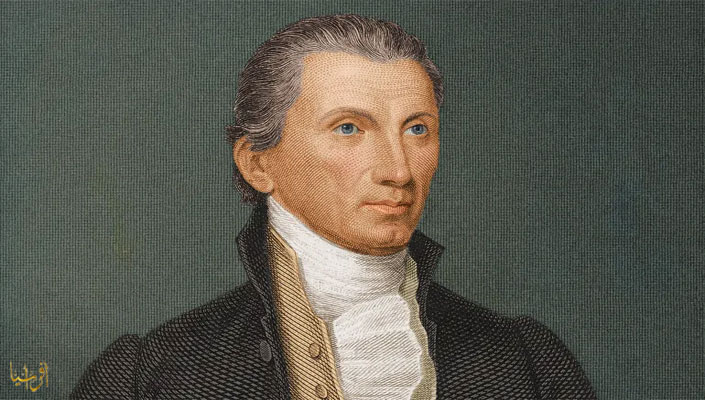
James Monroe, one of the Founding Fathers of the United States (Getty)
Announcement of the Doctrine
Monroe’s declaration was set out in the president’s seventh annual message to Congress on December 2, 1823. A printed version of the concluding section of the president’s address—the part containing what later became known as the “Monroe Doctrine”—then appeared in a local newspaper in Urbana, Ohio.
The American declaration explicitly rejected the European presence in the southern half of the American continent. In return, it pledged that the United States would not interfere in the affairs of the “Old World,” while regarding any European attack on the United States’ neighbors as an attack on the United States itself.
The Declaration’s Principles and Foundations
In his annual address, Monroe affirmed that the Old and New Worlds were based on different systems and must remain separate. In this context, he laid out 4 fundamental pillars:
• The United States would not interfere in the affairs of European powers or their internal disputes.
• The United States recognized existing European colonies and dependencies in the Western Hemisphere and would not interfere with them.
• The Western Hemisphere was considered closed to any new colonial undertaking.
• The United States would regard any European attempt to suppress or subjugate a country in the Western Hemisphere as a hostile act directed against it.
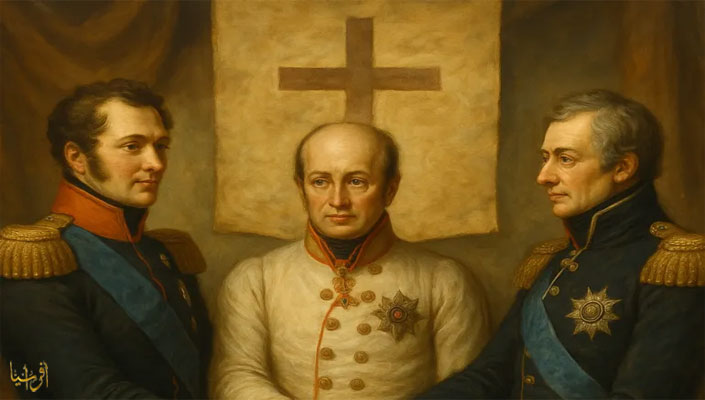
The “Holy Alliance” included Spain, Russia, Prussia (a former kingdom within present-day Germany), and Austria (Al Jazeera).
A Symbolic Declaration
The Monroe Doctrine marked the starting point for America’s “acquisitive” approach to Latin America, although the declaration was more symbolic than enforceable; Washington did not then have the military capacity to impose it.
The declaration did not prevent subsequent European actions that defied Monroe’s warning, such as Spain’s return to impose its control over Santo Domingo, the capital of the Dominican Republic, in 1861. Until the late nineteenth century, the United States remained preoccupied with its continental expansion westward to the Pacific Ocean.
Nevertheless, the declaration won broad support in Latin America as a guarantee of its fragile independence. Francisco de Paula Santander regarded it as “a consolation to human nature” and a cornerstone of Colombia’s protection, while Venezuelan leader Simón Bolívar saw the United States and Britain as the region’s line of defense, an assessment shared by countries such as Chile and Argentina.
During the American Civil War, cartoons circulated depicting Washington’s inability to enforce the Monroe Doctrine. When introduced in 1823 as a declaration of unilateral U.S. protection over the Western Hemisphere, the doctrine was essentially a policy with no military power to back it.
Monroe and his secretary of state recognized that their real deterrent was the British fleet, not the United States’ own capabilities. Because Washington was not a major power at the time, and because the European powers showed no serious desire to recolonize Latin America, the declaration remained marginal outside the United States.
Washington did not demonstrate a commitment to the doctrine when Britain took control of the Falkland Islands in 1833 or when it later expanded in Latin America. But with U.S. President James Polk’s rise to power between 1845 and 1848, the doctrine regained momentum, as he warned Britain and Spain against attempting to establish a foothold in Oregon, California, or the Yucatán Peninsula.
After the American Civil War ended, Washington began to show greater determination to impose its will, massing troops along the Rio Grande to pressure France to withdraw its “puppet” regime from Mexico. In 1867, under U.S. pressure, Paris was forced to withdraw its troops and end the project.
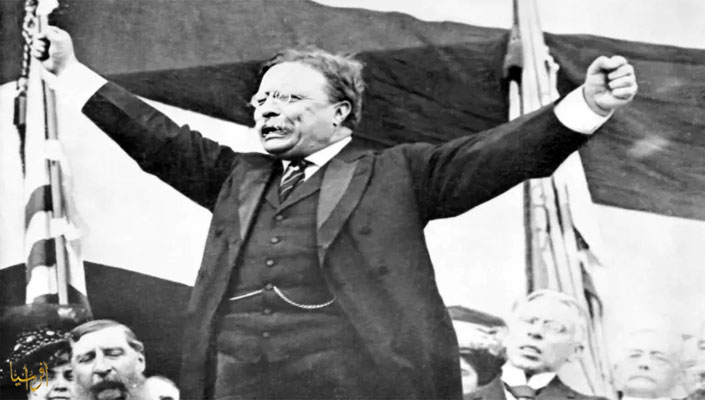
In 1904, U.S. President Theodore Roosevelt added what became known as the “Roosevelt Corollary” (Getty).
“The Roosevelt Corollary”
At the turn of the twentieth century, the interpretation of the Monroe Doctrine expanded significantly, coinciding with the rise of the United States as a global power. By 1904, President Theodore Roosevelt had added what became known as the “Roosevelt Corollary,” which gave Washington the right to intervene in the affairs of any country in the Americas where “flagrant and persistent wrongdoing” occurred.
Although called a “corollary,” Roosevelt’s declaration represented a substantial expansion of the doctrine, transforming it from a defensive policy to protect Latin American independence into a tool for imposing American dominance.
At its core, the corollary aimed to protect the doctrine from “violation by European powers seeking to collect what they were owed by poorly governed states,” as happened in 1902, when Britain, Italy, and Germany imposed a naval blockade on Venezuela to force it to repay its debts.
Roosevelt responded to these moves by demonstrating American power and confronting European power with the fleet. In his 1904 and 1905 addresses to Congress, he affirmed what became known as the “Big Stick policy,” which linked American dominance to a moral obligation in the region.
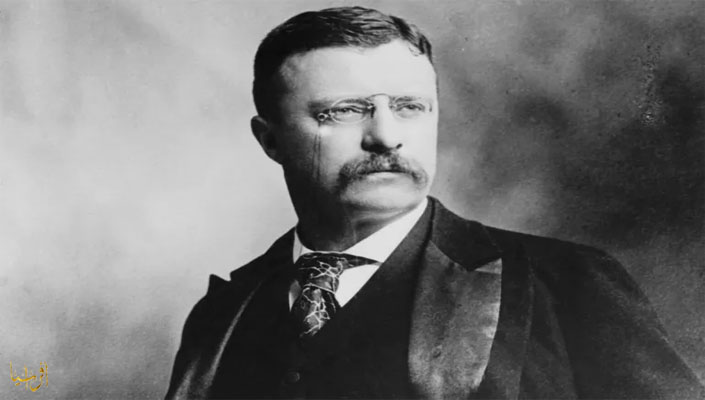
Under U.S. President Theodore Roosevelt, the United States intervened militarily in Latin America several times (Getty).
A Pretext for Military Intervention
The Monroe Doctrine was invoked in 1865, when the U.S. government exerted diplomatic and military pressure in support of Mexican President Benito Juárez. This support enabled Juárez to lead a successful revolution against Emperor Maximilian, whom the French government had installed as ruler of Mexico.
By 1904, as European creditors threatened armed intervention to collect debts from Latin American countries, President Roosevelt declared the right of the United States to exercise “international police power” to curb such “chronic wrongdoing.”
While the doctrine’s original aim was to prevent European powers from intervening, Roosevelt reinterpreted it to justify sending American troops into countries in the region. Having become a global power, Washington began asserting its right to intervene directly.
As a result, U.S. Marines intervened in Santo Domingo in 1904, Nicaragua in 1911, and Haiti in 1915, ostensibly to prevent European powers from intervening. The doctrine became a tool for justifying direct military and political intervention in the name of protecting order and stability in the region.
These interventions alarmed other Latin American countries, and relations between the “northern giant” and its southern neighbors remained strained for many years, particularly as the United States committed numerous abuses, including several massacres, under the pretext of safeguarding its security.
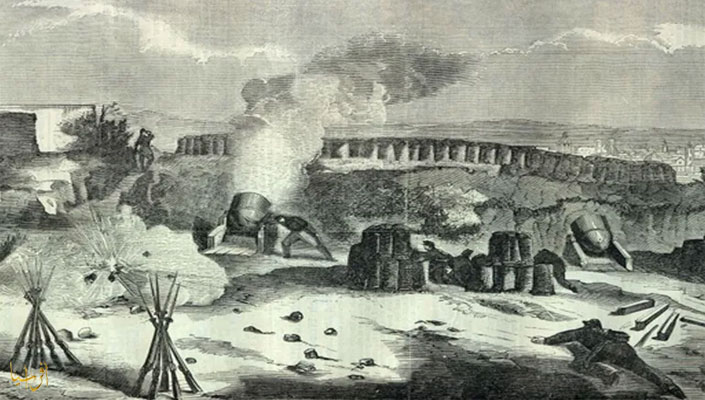
After the Civil War ended, America massed its troops to pressure France to withdraw its regime from Mexico (Getty)
The Evolution of the Doctrine
By the 1930s, as World War II approached, U.S. policy toward Latin America underwent a significant shift, and interpretations of the Monroe Doctrine’s legacy also changed.
President Franklin Roosevelt adopted the “Good Neighbor” policy, based on consultation and cooperation rather than military force, and affirmed respect for the principle of nonintervention at the 1933 Montevideo conference in Uruguay, during the Seventh International Conference of American States.
With the establishment of the “Rio Treaty” in 1947, the doctrine gradually evolved into a multilateral framework, as responsibility for defending the region shifted from Washington to the treaty’s 19 signatory states. The Organization of American States was then established in 1948, signaling that the confrontational version of the younger Roosevelt’s policy was beginning to lose its central role.
In later crises, such as the Cuban Missile Crisis of 1962, John Kennedy’s administration relied on the Rio Treaty rather than the Monroe Doctrine. President Lyndon Johnson did the same in 1965 when justifying intervention in the Dominican Republic without invoking the original doctrine.
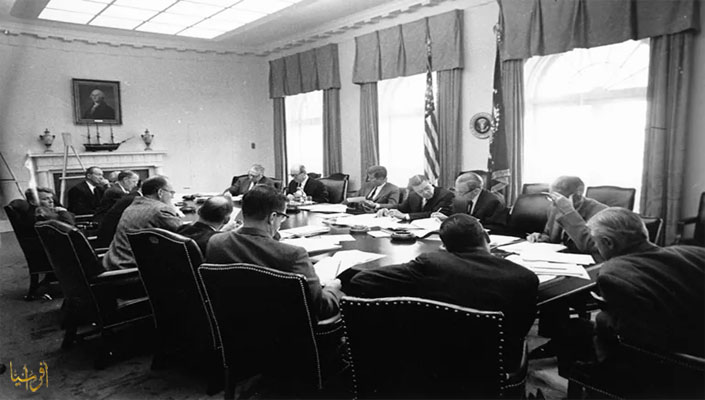
An emergency meeting of the U.S. National Security Council following the Cuban Missile Crisis (John F. Kennedy Library website)
The Cold War
The Monroe Doctrine was one of the principal foundations of Washington’s approach to Latin America, and its manifestations were most clearly evident during the Cold War.
Its influence peaked when John F. Kennedy’s administration uncovered the Soviet Union’s plan to install nuclear missile launchers in Cuba, just a few kilometers from Florida.
The United States responded by imposing a crippling naval blockade on the island to prevent Soviet shipments from reaching it. The world then appeared to be on the brink of a third world war before the Soviets backed down at the last moment in what later became known as the “Cuban Missile Crisis.”
The crisis ended with Moscow abandoning the project, withdrawing its missiles, and dismantling its sites, in exchange for Washington’s commitment not to invade Cuba or overthrow Fidel Castro’s regime, along with the dismantling of its air and missile bases in Turkey.
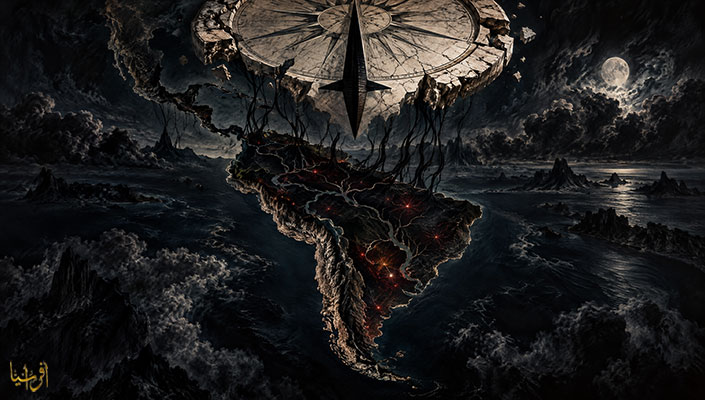
An Instrument of Power
Although the doctrine later became less prominent in official U.S. rhetoric, it gained greater prominence in political debates during the Cold War. It became a slogan invoked by liberal and conservative currents when analyzing U.S. interventions in the Western Hemisphere.
Outside the United States, the doctrine became associated with an attitude of superiority that justified domination, particularly as coups, covert CIA interventions, and a series of failed military operations proliferated. Despite theoretical talk of “continental defense,” Washington continued to act unilaterally in the name of confronting the “communist threat.”
With the end of the Cold War, many scholars declared the doctrine politically dead. In the late 1990s, historian Gaddis Smith wrote that the end of the confrontation with Moscow marked the inevitable end of Monroe. Others, however, argued that it had lost its value with the shift toward international multilateralism before and after World War II.
But the term did not disappear. In the 21st century, it continued to be invoked as a framework defining American foreign policy. For the right, the doctrine embodies a resolute approach to deterring any outside influence, treating it as a direct threat that demands a forceful response.
The Shield of the Monroe Doctrine: The Angry Tide and the New Colonial Order in Latin America
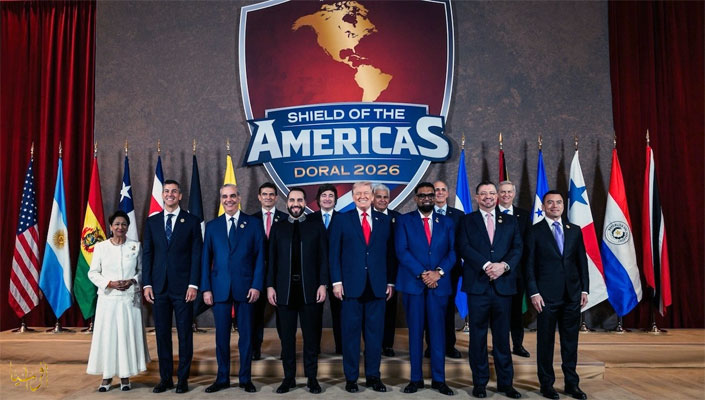
The Miami Summit
For his part, Carlos Ron writes: On March 7, 2026, at the Trump National Doral golf club in Miami, Donald Trump opened the “Shield of the Americas” summit, bringing together right-wing leaders from the “Angry Tide” in Latin America and the Caribbean around what he called a “counter-cartel coalition.” Washington’s prescription was clearly laid out: “The only way to defeat these enemies is by unleashing the power of our military.” Monroeism is on the offensive, and the Angry Tide has become its shield—not against the cartels, but against sovereign, people-centered national projects.
The invited leaders—Milei of Argentina, Paz of Bolivia, Bukele of El Salvador, Noboa of Ecuador, Asfura of Honduras, Peña of Paraguay, Chaves of Costa Rica, Mulino of Panama, Abinader of the Dominican Republic, Ali of Guyana, Prime Minister Persad-Bissessar of Trinidad and Tobago, and President-elect Kast of Chile—all belong to the political right.
The absence of the progressive leaders of Latin America’s largest economies—Brazil, Colombia, and Mexico—was striking. Speaking about Mexico, Trump declared: “The cartels are running Mexico. We cannot accept that.”
The images from Miami stood in stark contrast to regional meetings over the past two decades, when Latin American leaders met as equals to lay the foundations for political coordination and cooperation—such as UNASUR’s South American Defense Council and South American Health Council. In Miami, however, the assembled presidents competed in a publicity spectacle over who could stand closest to Trump in the photograph or keep the commemorative pen he used to sign the agreements.
Fifty Years of the “War on Drugs”: A Failed Policy
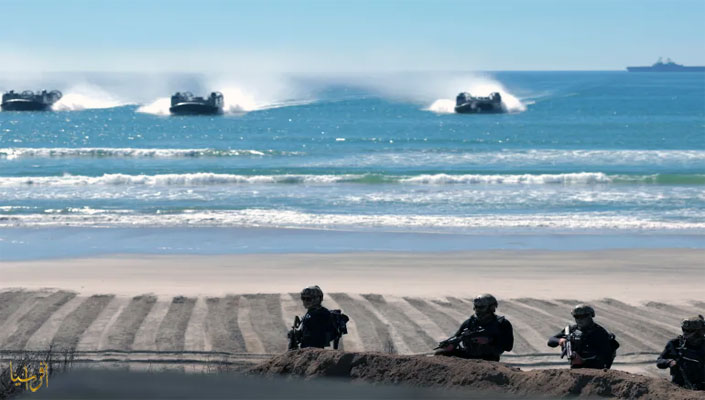
A group of air-cushioned landing craft during celebrations marking the 250th anniversary of the founding of the U.S. Marine Corps (AFP)
It is troubling that this coalition is committing to deeper cooperation with the United States in combating cartels, given the record of Washington-led counternarcotics policies. The “Addicted to Imperialism” series of studies, produced jointly by the Tricontinental: Institute for Social Research, the “Lawfare” Observatory, “CEPDIPO,” and “COCCAM,” lays out that record with devastating clarity: after more than fifty years of the “war on drugs,” the U.S. Drug Enforcement Administration (DEA) acknowledged before the U.S. Congress that the Sinaloa and Jalisco cartels alone have “associates, facilitators, and brokers in all fifty states of the United States.” This is the outcome of half a century of the most expensive and militarized counternarcotics efforts in human history.
The compiled data confirm this assessment. In 2023, 316 million people worldwide used illicit drugs—an increase of 22% over a decade earlier. The U.S. government has invested more than $10 billion in counternarcotics efforts in Colombia since 1999, yet cocaine production more than tripled between 2013 and 2017. The study shows that between 2016 and 2022—a period of intensive cooperation between the United States and Colombia—potential cocaine production in Colombia rose from 1,053 to 1,738 tons, while seizures and eradication operations also increased during the same period. More eradication, more production. More cooperation, more cocaine.
Ecuador: A Stark Example — No contemporary case illustrates this more clearly than Ecuador, whose president, Noboa, occupied a prominent position at Trump’s Miami event. As the “Addicted to Imperialism” studies document, Ecuador has undergone a process of foreign intervention since at least 2017, leading to a marked deterioration of the social state governed by the rule of law and a gradual militarization of public security along four structural axes: foreign intervention, economic liberalization and foreign debt, institutional deterioration, and a security-based approach to social problems.
Under Moreno (2017–2021), Ecuador restored its security ties with the United States, which Correa had suspended, returning to Southern Command exercises. Under Lasso (2021–2023), a memorandum of understanding was signed, explicitly modeled on “Plan Colombia,” with a projected budget of $3.1 billion over seven years—repositioning Ecuador as the region’s largest recipient of U.S. Foreign Military Financing, receiving $310 million between 2022 and 2023 and surpassing Colombia.
Under Noboa, following the assassination of presidential candidate Fernando Villavicencio during the 2023 campaign, General Laura Richardson of U.S. Southern Command personally traveled to Ecuador to agree on a “joint plan.” It included the deployment of U.S. military personnel with complete immunity from Ecuadorian jurisdiction—the same terms applied in Colombia—and was immediately dubbed “Plan Ecuador.” The homicide rate reached 47 per 100,000 people in 2023.
Noboa’s “Plan Phoenix” deployed the armed forces on city streets, built meg prisons modeled on Bukele’s, and sought a constitutional reform allowing foreign military installations—such as the base in the Galápagos. The militarization of public security did not resolve the crisis. Instead, it deepened it, while subordinating Ecuador’s sovereignty to the U.S. agenda in the Southern Hemisphere.
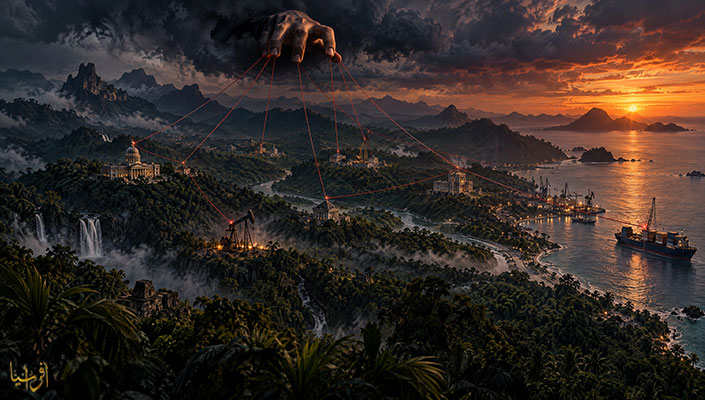
Two Hundred Years After Panama: Toward Unity in Latin America
The militarized framework of the war on drugs does not protect people from drug trafficking. Instead, it shields political elites from democratic accountability and normalizes authoritarianism under the banner of security. “Addicted to Imperialism” documents that in 2008, 35% of Colombian senators and 13% of members of the House of Representatives were under investigation for ties to paramilitary groups that also ran drug-trafficking operations. The “war on drugs” did not dismantle these networks; it provided them with political cover.
This is hardly surprising when we recall the origins of this framework. Decades later, Nixon’s chief domestic policy adviser acknowledged that the 1971 declaration of drugs as “public enemy number one” had another target:
“The Nixon White House, after that, had two enemies: the antiwar left and Black people… We knew we couldn’t make it illegal to be against the war or to be Black, but by getting the public to associate hippies with marijuana and Black people with heroin, and then heavily criminalizing both, we could disrupt those communities. We could arrest their leaders, raid their homes, break up their meetings, and vilify them night after night on the evening news. Did we know we were lying about drugs? Of course we did.”
At the regional level, from “Plan Colombia” to the “Shield of the Americas,” the purported fight against cartels has consistently served as a pretext for military spending, interventionism, and driving people from their lands. The latest example is Venezuela: the abduction of its elected president, Nicolás Maduro, was framed as an anti-drug operation—but was quickly exposed as a mechanism for reintegrating Venezuela into the oil economy managed by Washington.
In 1826, Simón Bolívar called for the unifying Congress of Panama with a vision of exceptional clarity: a confederation of Latin American republics acting collectively, safeguarding their independence, and negotiating with the great powers on the basis of sovereign equality. Today’s angry tide is the antithesis of that spirit. In Miami, Trump declared, “We will not allow hostile foreign influence to take root in this hemisphere—including the Panama Canal,” while Panama’s President Mulino sat in the audience, listening in silence. This is the Monroe Doctrine at its most unmasked.
Latin America and the Caribbean—with their progressive movements, parties, and governments—need a renewed regional agenda for sovereignty and concrete cooperation, including institutions capable of coordinating a sovereign response to the drug economy. The price of a kilogram of cocaine rises from about US$1,500 at the point of production in Colombia to $20,000 in the United States. The producers—the farmers—receive less than 1% of the value of the global cocaine market. Meanwhile, more than 70% of the weapons fueling cartel violence in Mexico are manufactured in and flow from the United States. In its hypermilitarized form, the war on drugs creates the very institutional framework for the health problems, corruption, and impunity it claims to combat.
The first quarter of this century has provided evidence that a different ambition can produce different results. “Operation Miracle” restored sight to more than 3 million people. ALBA’s literacy programs also eradicated illiteracy in Bolivia, Venezuela, Nicaragua, and Ecuador. Regional unity with the genuine purpose of reaffirming sovereignty and ensuring a dignified life for the population should not be abandoned in favor of failed policies and propaganda spectacles.
Carlos Ron is the co-coordinator of the “Our America” office at the Tricontinental: Institute for Social Research. He is a former Venezuelan diplomat. This article was produced by “Globetrotter.”
A Timeline of U.S. Strikes on Drug Boats in the Caribbean and the Victims of the Attacks
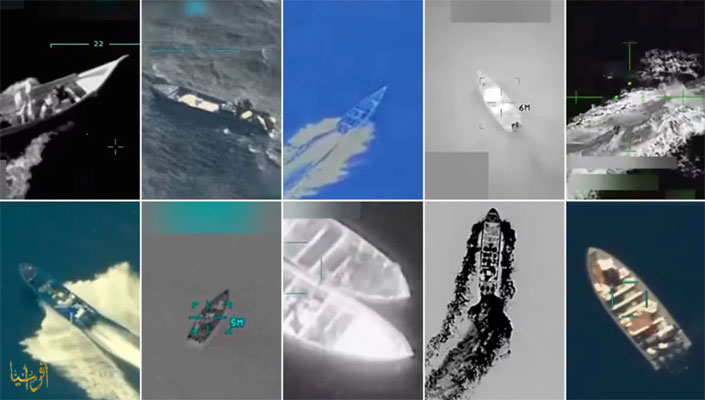
This grid of images shows 10 incidents in which U.S. forces targeted boats in international waters between September 2 and October 29, 2025/Pete Hegseth.
Despite the U.S. administration’s attempt to frame the operations as an effort to combat drugs coming from certain Latin American countries, some members of Congress and human rights groups question the accuracy of this report, arguing that suspected drug smugglers should face prosecution, in keeping with the policy of “interdiction” that the United States pursued before President Donald Trump took office.
The Trump administration has also provided no public evidence confirming that drugs were aboard the targeted boats or that the boats were linked to drug cartels.
Ultimately, the United States carried out multiple strikes in the eastern Pacific Ocean against boats it claims, without any evidence, were being used to smuggle drugs, killing hundreds of people.
Southern Command said in a post on “X,” formerly Twitter: “On April 15, at the direction of Southern Command commander General Francis L. Donovan, Joint Task Force Southern Spear carried out a lethal strike against a vessel operated by designated terrorist organizations.” This was the third known strike carried out by the U.S. military in the region that week.
The U.S. military has killed at least 177 people in strikes that destroyed 53 boats as part of a campaign that Washington claims is intended to curb the flow of drugs into the United States, according to official statements and a CNN analysis of search-and-rescue efforts. At least 15 people survived those strikes. The U.S. Navy briefly detained two of them before returning them to their home countries after it was established that they had no connection to drug smuggling, which refutes the U.S. administration’s claims. About 11 people are presumed dead after searches for them in the water proved unsuccessful.
The U.S. Coast Guard launched a search for an unspecified number of survivors who escaped their vessels before they were struck on December 30 in international waters. The Coast Guard then suspended the search on January 2, and officials later announced that there were eight survivors whose whereabouts they had been trying to determine. Similarly, the Coast Guard launched searches for survivors of strikes targeting boats on October 27, January 23, and February 9, but all three searches were suspended without locating the missing men. After the strikes carried out on April 11, the U.S. military said it had notified the Coast Guard “to activate the search-and-rescue system” after one person survived the first strike.
The Trump administration informed Congress that the United States is now engaged in an “armed conflict” against drug cartels, beginning with its first strike on September 2. It described those killed as “unlawful combatants” and claimed the authority to carry out lethal strikes without judicial review, citing a classified Justice Department report.
Some members of Congress and human rights groups questioned the validity of this report, arguing that suspected drug smugglers should face prosecution, in keeping with the policy of “interdiction” that the United States had pursued before President Donald Trump took office.
The Trump administration also provided no public evidence confirming that drugs were aboard the targeted boats or that the boats were linked to drug cartels.
________________

