

Venezuela Possesses Massive Oil Reserves
The Logic of Predation: Trump openly criticized his predecessors for not "taking the oil" from Venezuela or Iraq, or rare minerals from Afghanistan.
Afrasianet - Resuming talk about Venezuela and the American aggression against it reveals the necessity of continuing to expose American schemes targeting the Global South, especially those possessing strategic resources.
The US military attack on Venezuela reflects a coercive, utility-based imperialist strategy aimed at seizing strategic resources and restructuring supply chains in the Western Hemisphere under the so-called "Donroe Doctrine."
The attack on Venezuela represents the culmination of a deliberate strategy that took shape during Donald Trump’s presidency, aimed at seizing resources and asserting economic and political influence in the Western Hemisphere. Known as the "Donroe Doctrine"—an extension of the Monroe Doctrine—this approach involves intervention targeting Venezuela’s massive reserves of oil and valuable minerals, while employing political narratives regarding immigration and drug trafficking to justify the aggression.
The US military intervention against Venezuela, which culminated in the abduction of Nicolás Maduro on January 3, 2026, was not a sudden event; it had been prepared for a long time. In an article published in Carta Capital in February 2019 titled "Donald Trump, the End of Globalization, and the Venezuela Crisis," I argued that the US president at the time spoke with an unaccustomed degree of candor about the real goals of US imperialism: not defending democracy or human rights, nor even respecting the (selective) international treaties framed by liberal ideology, but controlling resources of strategic and economic value. Even back then, Trump openly criticized his predecessors for failing to "take the oil" from Venezuela or Iraq, or rare minerals from Afghanistan, revealing a predatory logic long concealed by traditional liberal discourse.
In January 2013, Trump tweeted: "I still can’t believe we left Iraq without the oil." In a debate with Hillary Clinton in September 2016, he suggested a return to 19th-century logic, saying: "To the victor belong the spoils. Today there is no victor... but I always used to say: Keep the oil."
During his presidency, Trump twice pressured the Iraqi president to cede more oil to offset war costs. It is recounted that his former National Security Advisor, Herbert McMaster, rebuked him the second time by saying: "This discredits America, frightens our allies, and makes us look like criminals and thieves." In January 2019, Vice President Mike Pence stated that Trump is "not a fan" of foreign interventions, except for "this half of the hemisphere" (known as the "backyard").
These were early indicators of what would later become known as the "Donroe Doctrine." Also in January 2019, then-National Security Advisor John Bolton stated that "the United States is in conversations with major US companies... and Venezuela is one of three countries dubbed the 'troika of tyranny,' alongside Nicaragua and Cuba." He added that "it will make a big economic difference to the US if we can get American oil companies to actually produce and invest in the Venezuelan oil sector."
In April 2025, during a meeting of the "Fourth International Humanitarian Dilemmas: Prospects for Social Transformation" conference in São Paulo—organized by the Tricontinental Institute for Social Research, the Landless Workers' Movement (MST), and the International Peoples' Assembly (IPA)—I argued that Trump would choose Venezuela as his first military target in the Western Hemisphere, marking the first direct military intervention in South America in history. The reading is simply that launching attacks on Canada or Greenland is risky and difficult to defend diplomatically. Conversely, Venezuela offers justifications that Trump’s MAGA political base can accept (namely, alleged threats from Venezuelan immigration and drug trafficking), while simultaneously providing massive reserves of oil and critical minerals that would boost US competition with China in the technological sector.
On December 4, 2025, the Trump administration published the National Security Strategy (NSS), which solidifies US strategic policy in the Western Hemisphere centered around "strengthening critical supply chains... reducing dependence and increasing US economic resilience... while making it more difficult for competitors from outside the hemisphere to expand their influence in the region." This document glorifies what analysts have dubbed the "Trumpian Appendix" to the Monroe Doctrine, or more sardonically, the "Donroe Doctrine." It is an explicit, transactional, and coercive version of Pan-Americanism that subjects Latin America to US dictates regarding security and capital accumulation.
In practical terms, military intervention in Venezuela is neither a defense of democracy nor a humanitarian intervention; rather, it is the official announcement of the end of "globalization," which tied US military power to the liberal ideology of national sovereignty as enshrined in the UN Charter—just as I warned was Trump's goal back in 2019. It is the end of the "American Century" as portrayed to the world by Woodrow Wilson during World War I and reformatted by Franklin D. Roosevelt during World War II.
What we are witnessing is the securitization of strategic resources within the context of US-China competition, and an attempt to restructure international production chains according to geopolitical considerations. This is a dangerous precedent that puts the principle of sovereignty on the line across the entire region, starting with the "New Troika," the next dominoes slated to fall by US imperial power: Cuba, Nicaragua, and Colombia.

The Geo-Economic Logic Behind Choosing Venezuela
Choosing Venezuela as the first military target was no accident; it resulted from a clear convergence between geo-economic opportunity and political employablity. The country possesses the world's largest proven oil reserves, alongside vast wealth in critical minerals necessary for clean energy production and defense manufacturing. Trump has repeatedly stressed the importance of these resources, including statements in an interview saying that after kidnapping Maduro, he would "run Venezuela."
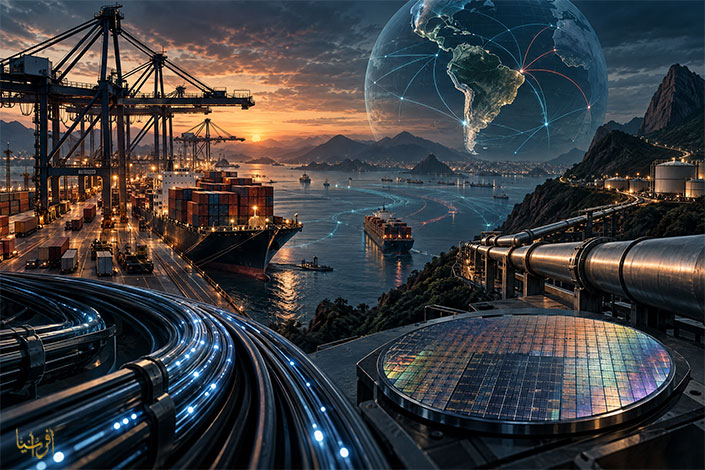
This degree of candor regarding the material goals of US imperialism links directly to a broader strategy based on friendshoring or nearshoring, as outlined in the 2025 National Security Strategy. This document not only calls for diversifying supply chains away from China, but seeks—at least rhetorically—to systematically restructure international high-value networks along geopolitical lines.
Thus, the dual objective toward Latin America becomes clear: first, establishing tight US control over critical mineral resources (such as lithium, copper, and rare earths) and strategic infrastructure (ports, communication networks, and energy systems); and second, integrating Latin American economies into manufacturing chains fully insulated from any Chinese participation or influence.
María Corina Machado’s proposal to Donald Trump Jr. vividly illustrates this dynamic: in exchange for supporting regime change that brings her group to power, she offered $1.7 trillion worth of Venezuelan assets to American corporations. This proposed action does not differ in essence from the oil concessions that characterized late 19th and early 20th-century classical imperialism, which paved the way for two world wars.
Regarding supply chains, the plan goes beyond the traditional obsession with resource extraction to reshape regional production systems. In labor-intensive, energy-intensive, or low-cost sectors where domestic US manufacturing is unviable, Washington will propose establishing manufacturing links within Latin America inside strategically sensitive chains (semiconductors, batteries, pharmaceuticals, advanced materials). This will take place under strict governance frameworks that completely exclude Chinese investment, technology, and market access.
This approach attempts to fragment production networks on geopolitical grounds and create parallel supply chains based on strategic loyalty. The Mexican government's decision on January 1, 2026, to impose tariffs on a range of products from China, Brazil, and other nations lacking free trade agreements with Mexico can only be understood in light of this strategy.
The symbolic dimension of choosing Venezuela as a target is also worth noting. The MAGA narrative requires enemies presented as threats to the "traditional American way of life." Venezuela fulfills this purpose neatly by being portrayed simultaneously as a source of unwanted immigration and drug trafficking—two core anxieties for Trump’s base. Unlike invading Canada or Greenland, which would be hard to justify domestically and could trigger a crisis within the Western Alliance, attacking Venezuela plays into deeply rooted prejudices and provides ready scapegoats for America's internal troubles.
Debunking Official Justifications
The three narratives used to justify military intervention (defending democracy, fighting drug trafficking, and humanitarian intervention) collapse under the slightest scrutiny, revealing themselves to be mere pretexts for a campaign driven by economic dominance and backed by political and military leverage to secure medium-term interests.
The argument for defending democracy is notably hollow, especially coming from Trump. Even without addressing the events of January 6, 2021, Trump himself has repeatedly and publicly mocked the use of "defending democracy" as a pretext for imperialist interventions, labeling it liberal hypocrisy. His track record underscores the cynical nature of democratic rhetoric; he maintains close alliances with loyal dictatorships, absolute monarchies, and provided unreserved support for the coup policies of Jair Bolsonaro and his inner circle in Brazil. The issue has never been the absence of democracy, but the failure to align with Washington.
As for the drug trafficking pretext, it is equally fabricated. Just days before invading Venezuela, Trump granted a presidential pardon to Juan Orlando Hernández, the former president of Honduras, who was convicted in the US of industrial-scale drug trafficking conspiracy. Drug trafficking is used as a ready narrative to demonize adversaries, yet it vanishes when the accused is a strategic ally. Selectivity could not be more glaring.
The humanitarian justification is the most blatant of the three. A administration that provides unprecedented military, diplomatic, and political support to Israel's genocide in Gaza (where over 74,000 Palestinian civilians have been killed, including over 18,000 children in a few months) possesses zero moral credibility to express concern for humanitarian conditions anywhere in the world. Furthermore, US military actions against Venezuela itself—from bombing civilian infrastructure to a naval blockade that for years prevented the import of food and medicine—tragically worsened the suffering of the Venezuelan people these policies supposedly aimed to relieve.

The Military Operation and Regional Ramifications
The sequence of events leading to Maduro's abduction followed a predictable scenario of coercive escalation. After months of tightened unilateral sanctions and mounting open threats, the Trump administration ordered a naval blockade on Venezuela. Trump likely did not realize that the naval blockade and military intervention carried out by Britain, Germany, and Italy in Venezuela in 1902 were direct causes behind the issuance of the "Roosevelt Corollary" to the Monroe Doctrine.
Just as Trump did, Theodore Roosevelt claimed the US had an exclusive right to act as the "policeman" of the Western Hemisphere, publicly declaring his intent to expel military and financial empires from Central America and the Caribbean. Trump revived the early 20th-century intervention pattern known as "Dollar Diplomacy," coordinating special forces and the CIA with domestic opposition factions and military defectors, culminating in the illegal abduction of the Venezuelan president on January 3, 2026.
Trump's subsequent remarks were crude, stating that the United States "will run the country" and use oil revenues to "pay for the military operation and rebuild Venezuela as it should be." This leaves no doubt that the objective is direct control over strategic resources and the reshaping of the Venezuelan state to serve imperial interests.
The regional ramifications are profound and dangerous. Cuba, Nicaragua, and Colombia are likely the next targets. Trump has previously threatened these nations, and the Venezuelan precedent shows such threats are not empty political rhetoric. The days of communist rule in Cuba, isolated for decades by blockades and recently exhausted by energy crises, may be numbered. Gustavo Petro also paid the price for his statements in New York as a key domino in Latin America's leftist chain that Trump seeks to topple, having fallen due to US support for his electoral rival.
Mexico, Brazil, and even Western powers like Denmark (over Greenland) and Canada are living on edge. Trump's threats against Greenland can no longer be dismissed as mere provocations.
Naturally, Latin America does not deal with imperial coercion uniformly. Argentina, under Javier Milei, offers a striking counterexample, where complete ideological and strategic alignment with Washington culminated in a $40 billion bailout package. This pattern of reward and punishment underscores the transactional nature of the new Western Hemisphere strategy: countries accepting subordination to Washington receive financial support, while those showing resistance face escalating coercion.
Nevertheless, Ecuador's resistance to foreign military bases—approved in a public referendum in November 2025—shows that Washington’s imposition of its will encounters obstacles even in smaller nations. However, the invasion of Venezuela raises the cost of resistance to an unprecedented level, cementing the reality that the US is ready to use direct military force whenever it deems its interests sufficiently threatened.
Brazil, China, and the Limits of Coercive Unilateralism
The "Trumpian" strategy of subjugating the Western Hemisphere through tariff blackmail and military threats faces clear structural limits. The Brazilian model clearly embodies these contradictions.
While Europe, Japan, and South Korea quickly caved to Trump’s trade demands due to their reliance on US military support—effectively being forced to "pay tribute to preserve the stability of the American empire"—Brazil has managed relative resistance. This resilience stems from specific structural advantages: China has cemented its status as Brazil's primary trading partner for over a decade, absorbing a large share of commodity exports. As a result, Brazil has accumulated massive international reserves, granting maneuvering room during currency crises. Additionally, Brazilian diplomacy has cultivated alternative ties via BRICS (Brazil, Russia, India, China, and South Africa) and other multilateral platforms in the Global South.
Ina Lula da Silva’s campaign for de-dollarization, which intensified after his April 2023 visit to China, poses a direct challenge to the core of American power: control over the international monetary system. Proposals for bilateral trade settlements in national currencies, discussions on creating a common BRICS currency, and diversifying international reserves gradually pull economic activity away from New York, weakening Washington’s ability to weaponize financial sanctions.
Brazil's degree of independent standing has caused clear alarm in Washington. Trump’s advisors openly revealed that the US is "very worried" about the BRICS alliance and de-dollarization, viewing Brazil as a special problem. However, attempts to subdue Brazil through punitive tariffs ran into a simple constraint: the US market, while important, is no longer decisive for the Brazilian economy as it was in past decades. Access to Wall Street remains necessary, but undermining it as a leverage tool would accelerate what Trump seeks to avoid: pushing Brazil out of the dollar world and into BRICS.
The deeper limits of the so-called "Donroe Doctrine" go beyond any single country. Long military occupations are unbearably costly, as Iraq and Afghanistan showed. US polls indicate that 55 percent of the population opposed the invasion of Venezuela, suggesting future military adventures will face growing domestic resistance, especially if they result in significant American casualties or high financial burdens.
More importantly, the United States is incapable of offering developmental proposals matching what China provides. While Washington's strategy ties consumer market access to political subjugation and uses unilateral sanctions as punitive tools, Beijing offers concrete infrastructure projects, long-term financing with investment patience, technology transfer, and expanded markets—all without burdensome political strings attached. This asymmetry in developmental offerings creates a structural advantage for China that neither punitive tariffs nor military threats can entirely neutralize.
Nor should the risks of geopolitical blowback be underestimated. Every US coercive action validates the Chinese narrative that Washington threatens Global South sovereignty, driving these nations to seek protection by aligning with Beijing. The invasion of Venezuela validates this thesis and may accelerate the formation of blocs and alliances with China, contrary to what Trump’s strategy claims to prevent.
It's Dones: The Dangerous Precedent and the Need for Collective Resistance
The US military intervention in Venezuela and the abduction of Nicolás Maduro constitute a blatant violation of international law and the UN Charter. Regardless of any evaluation of the Venezuelan government, the principle of non-intervention by unilateral military force is a fundamental civilizational achievement prepared since 1648 (the Peace of Westphalia) and cannot be abandoned without dire consequences for the international order.
The precedent set is extremely dangerous. If the United States can invade a sovereign state, overthrow its government, and directly seize its natural resources based on such flimsy pretexts, no nation will be safe unless it possesses military deterrence or strong military alliances. The normalization of unilateral military interventions undermines any claim of a rules-based international order. The emperor has been exposed as naked.
Consequently, this military adventure may reveal more weakness than strength. A dominant power confident in its economic, technological, and cultural supremacy does not need military invasions to secure access to resources or markets. The US readiness to use direct force reflects the erosion of softer forms of hegemony.
Maduro's abduction does not end Chavismo's dominance in Venezuela, though it weakens it, nor does it resolve the structural contradictions of declining American hegemony. The United States cannot offer an attractive developmental model capable of competing with the Chinese alternative, nor does it have the financial capacity to fund a "Marshall Plan" for the Western Hemisphere, nor can it reverse decades of domestic de-industrialization by imposing punitive tariffs on allies. Even if direct military control over Venezuela is established to secure its oil, it does not restore America's central position in global production chains.
Alternatives to subservience exist, but they require political coordination and strategic courage from Global South governments. Strengthening regional platforms like the Community of Latin American and Caribbean States (CELAC), the Union of South American Nations (UNASUR), and BRICS provides institutional space for collective resistance. Deepening South-South economic integration reduces vulnerability to US economic coercion, while diversifying international reserves and developing alternative payment systems undermines the power of financial sanctions.
The core lesson from the invasion of Venezuela is that isolated sovereignty is fragile, and only collective coordination can disrupt imperial power balance. The challenge facing progressive governments in Latin America and the Global South is to translate rhetorical condemnation into effective cooperation. The precedent has been set, and what is at stake is profoundly historic; upcoming steps will determine whether the 21st century witnesses the return of brutal military imperialism or the consolidation of a truly multipolar international order.
________________

