
Afrasianet - The early adopters of nuclear testing faced a major dilemma: the question of the "critical mass" that determines the minimum amount of uranium (or platinum and its equivalents) after which a series of sustained nuclear reactions begins.
The resulting science was used in the atomic bomb explosion in Hiroshima in 1945, but it opened the door to the peaceful use of energy, including reactors that produce electricity at a lower cost, giving a shining example that science is a double-edged sword.
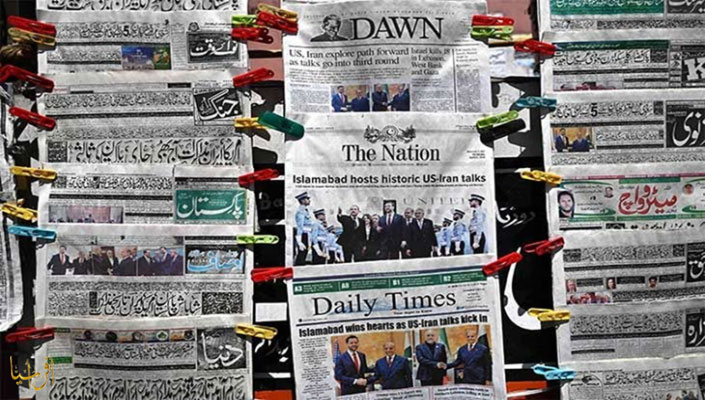
According to US President Donald Trump, the two sides have reached agreement on many things, but there is only one thing that matters, as he put it: "Iran is not ready to give up its nuclear ambitions."
Mohammad Baqer Qalibaf, the speaker of Iran's Majlis who headed his country's delegation to the negotiations, considered that Washington "has not gained Tehran's trust," which was reiterated by the Iranian Foreign Ministry, which said that the negotiations took place in an atmosphere of "mistrust and mistrust."
Two other "substantial" issues were the reason for the failure of the round of negotiations, the first was the US demand that Iran open the Strait of Hormuz immediately, and the second was Iran's demand for war reparations starting with the release of its assets held and frozen in several countries, including Iraq, Turkey, Luxembourg, Bahrain, Japan and Germany.
The US president on the subject of the nuclear project in particular is asking why the US administration is giving this top priority to burying any Iranian nuclear potential at all, including the possibility of the peaceful use of internationally controlled nuclear energy, which the previous US-Iran agreement was able to achieve.
Benjamin Netanyahu, something that Israel did not hide and even announced in the most arrogant and crude way, in a striking article in a Hebrew newspaper that talked about a new alliance that would be established after the war on Iran, which would include Israel, the pro-Israel "new Iran", and India, an alliance that would fight what he called "political Islam", which implicitly meant Pakistan, Saudi Arabia, Turkey, and Egypt!
Instead of resorting to possible diplomatic solutions, the US president decided to start a naval blockade of Iran, something that could develop again In addition to the fact that it does not solve the problem of the strait, but complicates issues in a way that will seriously affect the global economy, the countries of the Arab region, and the entire Middle East.

