

The intersection of biotechnology and artificial intelligence is reshaping the global biological risk map (Afrasia).
Afrasianet - The rapid advancement in biotechnology and artificial intelligence is accelerating the risks of these wars.
Key Features of the Future of Biological Warfare
• Genetic Engineering and Epidemic Design:
o Producing genetically modified pathogens to be more lethal or spread faster through the air (such as modifying viruses like Ebola or influenza).
o Developing germs and viruses that are completely resistant to available medical treatments and antibiotics.
• Artificial Intelligence and Biotechnology:
o Using artificial intelligence to analyze massive amounts of biological data and design pathogens with unprecedented precision.
o International security warnings (such as warnings from intelligence agencies like MI5 in October 2026) indicating that these technologies may fall into the hands of non-state actors or organizations.

As the ability of algorithms to analyze biological data increases, the need for controls to prevent the misuse of knowledge expands (Afrasia).
• Difficulty of Control and Global Consequences:
o Once an engineered pathogen is released into the environment, controlling it becomes nearly impossible, potentially leading to a devastating global pandemic that crosses targeted state borders.
•Intertwining with Climate Change and the Environment:
o Climate change and increasing environmental threats contribute to shifts in biomes and the emergence or worsening of new pathogens.
o Biological weapons are internationally prohibited. However, new developments in biotechnology and artificial intelligence raise questions about their history, risks, and regulatory methods.
Artificial intelligence might be misused in the future to develop biological weapons. This may sound like science fiction, but it has now become a focus of interest for scientists, security authorities, and international organizations.
Advances in biotechnology allow for the precise analysis and modification of disease-causing agents. Thanks to artificial intelligence, large amounts of data can be analyzed much faster. Therefore, experts warn that modern technologies could be misused in the long term to develop biological weapons.
Security agencies, in turn, are monitoring this development with concern. Ken McCallum, head of the British domestic intelligence service MI5, warned in October 2026 that artificial intelligence could increase the future threat of existing biological weapons if they fall into the hands of non-state actors.

In an interconnected world, infection may cross state borders faster than institutions can discover its source and contain it (Afrasia).
The Biological Weapon: A Threat Looming on the Horizon of the Future
Professor Khalaf Abdullah Muhammad writes: In an increasingly complex and interconnected world, the threat is not limited to traditional weapons like missiles and tanks; there is another type of weapon considered the most dangerous of all: the biological weapon.
This type relies on living organisms or toxins derived from them to cause widespread harm to humans. But what is this weapon? Has it actually been used? And will it be used in the future?
What is a Biological Weapon?
A biological weapon is the use of biological agents such as viruses, bacteria, fungi, or natural toxins as a tool to inflict harm. These agents can be spread through the air, water, or via animals, making them an invisible yet highly destructive medium.
In the view of most warmongers seeking the destruction of humanity, it is the weapon of the future that leaves nothing behind: "It can be said that the coming war will not be won by nuclear weapons and air power alone; rather, biological and chemical weapons will be used to support traditional and nuclear weapons." Among the most famous examples of this type of weapon are Anthrax and the Plague.
The most prominent feature of biological weapons is the difficulty of detecting them, unlike nuclear and chemical bombs. It is easy to maintain complete secrecy by covertly spreading them through the air. They have no color or odor, making them impossible to detect or trace to their source.
The microorganisms used are often invisible to the naked eye and cannot even be seen under an ordinary microscope, requiring an electron microscope (such as filterable viruses). Symptoms of infection may appear after a long period. Furthermore, they are characterized by fast and easy dissemination in our connected world via aviation and international travel, allowing a small infection to transform into a global pandemic within days.
Additionally, such weapons can be used by states, agents, or even terrorists without the perpetrator being caught, because their impact only appears after a specific incubation period during which the perpetrator has completely vanished before being discovered.
Moreover, biological weapons have a low manufacturing cost compared to other weapons: if the cost of a traditional weapon to destroy a square kilometer is $2,000, a nuclear weapon $800, and a chemical weapon $600, the cost of a biological weapon to destroy that same land area is just one dollar!

The danger of biological agents lies in the fact that they may remain invisible while their effects appear after the moment for early detection has passed (Afrasia).
Historical Evidence of Biological Weapon Use
In 1763, Britain, during its war with Native Americans, resorted to using blankets and handkerchiefs infected with smallpox by dropping them into Native American camps as "aid" with the intent of eliminating them.
Biological weapons were also used in the Korean War. Similarly, the United States used this weapon in 1970, spending nearly $32 million on over 50,000 tons of crop-destroying chemicals aimed at ruining fields used by Vietnamese insurgents for food supplies and hiding.
Biological Weapons: An Escalating Threat!
A report issued by the American artificial intelligence company Anthropic last September highlights the importance of this debate at present. According to the company's information, several attempts were uncovered where researchers intended to use artificial intelligence in the context of potential biological weapon research.
According to the report, these attempts included, among other things, funding applications for what is known as "Gain-of-Function" research and projects to study strains of avian influenza that might be more transmissible to mammals.
At the same time, Anthropic emphasized that such research can serve preventive medical purposes, but it could also be intended for offensive purposes. This fine line between legitimate scientific research and the potential for misuse has become one of the greatest challenges associated with modern biotechnologies.
To this day, there is no control system for biological weapons comparable to those for nuclear or chemical weapons. States fear that inspections might expose sensitive research data in medicine, the pharmaceutical industry, or biotechnology. Therefore, regulation of biological weapons relies heavily on transparency, voluntary reporting, and trust.

Historical memory reveals that employing biological knowledge in conflicts left human and environmental impacts that outlast the duration of the war (Afrasia).
"Dual-Use": The Greatest Challenge!
Detecting biological weapons programs is much harder than monitoring nuclear or chemical weapons. Many technologies that can be used to develop biological weapons also have civilian applications.
The same laboratory equipment used to develop vaccines or medicines can theoretically be used in military research. Experts speak of the problem of "dual-use": research can simultaneously serve peaceful, medical, and military purposes.
Added to this is the fact that a biological attack may initially look like a natural disease outbreak. It is often difficult to determine whether a pathogen was deliberately released or arose naturally, requiring intensive investigations.
This introduction was necessary following reports from multiple sources stating that the United States is showing unprecedented interest in expanding biological laboratories in various countries.
These reports indicate that this interest may be aimed at developing biological weapons and deploying them in countries that the United States considers hostile.

The fine line between legitimate medical use and potential misuse demands careful oversight and continuous transparency (Afrasia).
Is America Doing It?
Reports express concern over American laboratories laying the groundwork for a biological war launched by the US against several countries. Colin Sense, a third-class petty officer, stated that members of the US Naval Medical Research Unit Three (NAMRU-3), supported by personnel from the Expeditionary Medical Facility (EMF) at Camp Lemonnier in Djibouti (CLDJ) and in cooperation with the US Embassy in Djibouti, delivered mosquito monitoring equipment to the National Institute of Public Health of Djibouti (INSPD).
This delivery is part of a research study on vectors (disease-carrying insects) conducted in cooperation with the Djiboutian Ministry of Health, aimed at collecting and processing mosquito samples in the region.
US Navy Lieutenant Jay Duggan, a microbiologist at NAMRU-3, said: "This laboratory and field equipment will enhance the capacity of the INSPD to document the presence of disease-carrying insects in local communities in Djibouti. Furthermore, this equipment consolidates the research partnership between NAMRU-3 and the institute, and develops joint operational capacity in detecting insect-borne diseases."
According to the World Health Organization, vector-borne diseases are human illnesses caused by parasites, viruses, or bacteria transmitted by living organisms that spread infectious diseases among humans or from animals to humans, such as mosquitoes. These diseases include malaria, dengue fever, and yellow fever, which are common in Djibouti.
For his part, Lieutenant Joseph Santinoceto, administration director at the Expeditionary Medical Facility (EMF), stated: "This partnership with INSPD gives us access to a larger entity to collect and process samples in areas we otherwise could not reach.
This enables NAMRU-3 to provide better protection for our sailors, soldiers, and airmen against diseases within our area of responsibility." According to Santinoceto, the training will cover mosquito trapping and monitoring techniques, and assist in identifying the genomes of insect populations.
NAMRU-3 conducts research and surveillance to support deployed military personnel in Africa, the Middle East, and Southwest Asia. Its primary mission is to study, monitor, and detect infectious diseases of military and public health significance. Camp Lemonnier is an operational facility that enables US, allied, and partner forces to be present wherever and whenever needed.

Biological risks are not countered by technology alone, but by international cooperation that balances freedom of scientific research with the protection of humanity (Afrasia).
Why is the US Navy Investigating a Deadly Malaria Outbreak in Yemen?
DefenseScoop - Brandy Vincent - In response to a deadly resurgence of malaria sweeping populations in sub-Saharan Africa, the US Navy is seeking a contractor to provide data collection and medical surveillance services in Yemen. The organizers of this effort claim this step aims to support Navy investigations before the disease spreads to other areas or infects US forces.
The escalating malaria epidemic there—driven by a combination of humanitarian crises, environmental shifts, and changing mosquito distribution patterns—is one of the most serious global health emergencies in modern times.
Navy Medical Research and Development Command
This command represents a global network of Navy scientists and civilians working to identify and develop data on infectious diseases and their vectors.
These teams manage specialized research laboratories distributed within the United States and around the world. For instance, an infectious disease institute operated by the US Navy in Egypt seeks to conduct "a proactive surveillance study of acute febrile illness and malaria cases to identify the causative agents of these infections," according to contractual documents published this week.
Malaria is a mosquito-borne disease that causes severe fever, fatigue, breathing difficulties, organ failure, brain damage, and other serious symptoms that can lead to death.
Although the disease is currently concentrated mainly in tropical and subtropical regions—with the highest mortality rates recorded in Africa—communities in conflict-ridden Yemen are also facing a widespread and dangerous malaria outbreak that has extended beyond traditional hotspots to areas previously considered low-risk.
Moreover, the emergence of an invasive, urban-adapted mosquito species resistant to common insecticides in Yemen and parts of Africa has led to an unexpected rise in malaria cases on the continent this year.
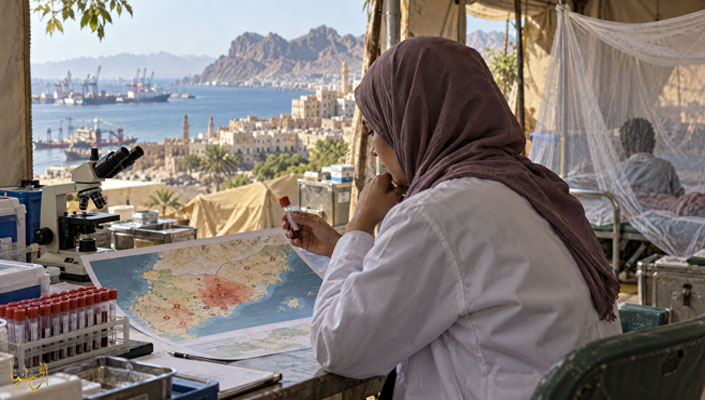
Regional outbreaks of infectious diseases pose a direct operational threat to military personnel deployed in forward positions (Afrasia).
An official military spokesperson stated: "The Naval Medical Research Unit (NAMRU) in Europe, Africa, and Central Command (EURAFCENT) has a contract with the National Malaria Control Program in Yemen, which provides data on malaria cases, mosquito species, and numbers.
This data is part of a project funded by the 'Department of War'—under the Global Emerging Infections Surveillance (GEIS) program—aimed at assessing infectious disease risks in the region." (President Donald Trump referred to the Department of Defense as the "Department of War" last year, although an official name change requires a congressional decision).
The US Department of War oversees these laboratories, prompting observers to question the ethics and objectives of these facilities.
The department’s Global Emerging Infections Surveillance (GEIS) program coordinates tracking and response activities globally against infectious diseases that have historically caused significant casualties, reduced the combat efficiency of deployed military forces, or currently pose risks to personnel and operational readiness.
In recent procurement documents issued by the Navy, officials expressed their desire to collaborate with a contractor capable of forming a local team to provide clinical, operational, and laboratory support services. These services will be used to support studies on the sources of acute fever and malaria in government hospitals and medical centers in Aden, Yemen.
Aden is a major coastal city located on the southern coast of Yemen near the entrance to the Red Sea. The United States has intensified its naval patrols and presence in that region over the past few years amid tensions with Iran and related drone and missile threats launched by the Houthi group from Yemen.
Procurement documents indicate the government also intends to award a fixed-price contract to "provide online access to highly accurate, detailed, and near-real-time data on shipping movements and commercial cargo flows."
Responding to questions this week, a military official did not provide details about this dataset or how it would support commercial shipping research and analysis within the medical efforts of the project.
The official told DefenseScoop: "The global arena of warfare is an ever-changing environment; therefore, interested vendors should submit their comments, questions, and capability statements to the Navy no later than September 1st."
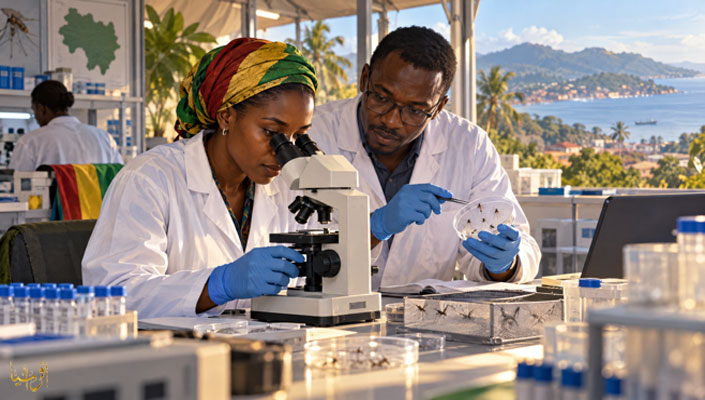
The "Vector Biology Research Program" is carrying out ongoing surveillance projects in several West African countries (Afrasia).
Navy (NAMRU EURAFCENT) and Partners in Guinea Enhance Disease Surveillance
Greta Ruffino writes: The Naval Medical Research Unit (NAMRU EURAFCENT) has begun working in cooperation with the Ministry of Defense of Guinea and the National Malaria Control Program to enhance disease surveillance capabilities and support the readiness of US forces in the region. Lieutenant Commander Matthew Montgomery, an entomologist at the unit's headquarters in Sicily, explained that "this initiative represents an important step toward expanding the impact of NAMRU EURAFCENT, strengthening its role in disease research, and providing health support to military forces."
To support this partnership, NAMRU EURAFCENT—funded by the Global Emerging Infections Surveillance (GEIS) program—organized an event for skills assessment and expertise exchange among specialists from February 22 to 28 in Conakry, Guinea. The event aimed to improve understanding of endemic disease threats that deployed US forces might face in the region and provide the scientific foundation for prevention and treatment measures against these threats.
This exchange program—led by Montgomery and Dr. Alia Zayed, a medical research scientist at the Cairo detachment of NAMRU EURAFCENT—is part of the "Vector Biology Research Program."
This program provides valuable insights into disease transmission risks, enabling US forces to prepare for deployments in environments with high endemic disease burdens. Participants learned about vector-borne diseases, exchanged best practices regarding mosquito collection, classification, and control techniques, and conducted practical experiments to enhance mosquito monitoring capabilities.
The Gulf of Guinea region holds vital strategic importance; thus, the successful execution of this event underscores the importance of ongoing monitoring and vector management.
Dr. Zayed stated: "Equipping military personnel in partner nations with the knowledge and skills needed to deepen their understanding of infectious disease transmission is one of the ways entomologists at NAMRU EURAFCENT support military health." The research portfolio of NAMRU EURAFCENT supports the regional objectives of the US Africa Command (AFRICOM), including strengthening partnerships with host nation health sectors and military forces. Additionally, the "Vector Biology Research Program" executes ongoing monitoring projects in several West African countries, contributing to broader efforts in disease surveillance and control.
NAMRU EURAFCENT—which operates under the umbrella of "Maritime and Medical Research and Development"—conducts research, surveillance, vaccine and therapeutic studies, diagnostic tools, and vector control measures within the areas of responsibility of US European Command (EUCOM), US Africa Command (AFRICOM), and US Central Command (CENTCOM).
The fact that these laboratories are subject to the Department of War rather than ministries of health and medical facilities reinforces observers' fears regarding the potential use of viruses in a dirty war that the United States might lead.

