
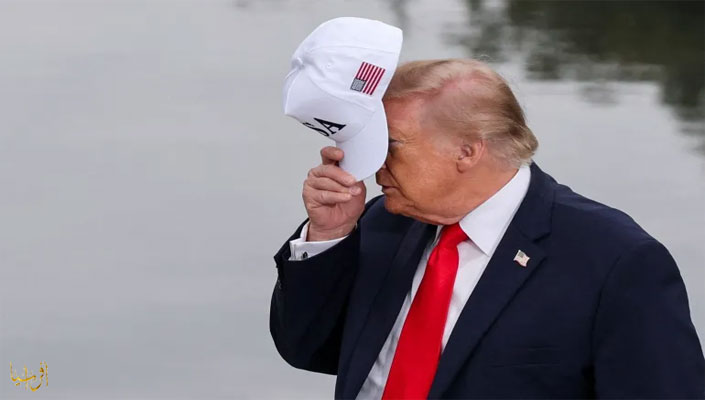
The scale of the defeat suffered by Republicans is seen as a categorical popular rejection of Trump's two-year tenure in the White House (Reuters).
Afrasianet - In one of the biggest surprises of 2026, Democrats snatched the Republican majority from both houses of Congress (House and Senate) and turned the midterm elections into an electoral slap that redrew the balance of power.
From Texas to Kansas, Iowa and Ohio, the Democratic Party has been able to make breakthroughs in states that were considered strongholds of the rival party, while a number of candidates close to President Donald Trump have suffered personal and political defeats that have carried personal and political connotations beyond the boundaries of local races.
The scale of the defeat suffered by Republicans is seen as a categorical popular rejection of Trump's two-year tenure in the White House, and the repercussions of his policies – both domestic and foreign – on the lives of citizens.
International newspapers such as the New York Times and the BBC attributed the decline of the Republican Party's popular base to several reasons, most notably:
1. High Cost of Living
The New York Times says that in interviews and at the polls, voters have expressed dissatisfaction with the status quo in the United States and their desire for change, especially as the cost of living rises to levels that are no longer tolerable for them.
Prices are still much higher than they were before the COVID-19 pandemic, but voters see Trump as not delivering on his 2024 campaign pledges to cut prices, and seems to be ignoring their livelihood concerns since taking office.
Susan Murray, a 78-year-old retired voter from Phoenix, told the New York Times that Trump doesn't know what it means to stop at a gas station and fill your car with gasoline, and "he doesn't know what it means to go to the grocery store and buy your necessities with limited income."
It added that Trump is "dealing with the United States very recklessly."
The BBC said that citizens' anger at rising prices was palpable on the ground in key constituencies, with prices rising by 3.7% in the 12-month period to September, driven by higher fuel and energy prices.
According to poll data among voters, about 8 in 10 voters (79% of respondents) said inflation has caused them and their families severe or moderate suffering over the course of the year.
"Fuel prices, grocery prices, everything is going up," one voter in North Carolina told the BBC ahead of the election, adding that she had changed her vote from Republican to Democratic in this election.
2. War on Iran
The US-Israeli war on Iran, which has been raging since February 28, is one of the main factors behind the wave of rising prices that has become a burden on American voters, as its repercussions have cast a shadow on energy markets and supply chains, and have been directly reflected in the cost of living.
The war on Iran has shut down the Strait of Hormuz, one of the world's most important arteries for trade and energy, causing fuel prices to rise sharply. This is precisely why the war is unpopular with most Americans who have expressed their disapproval at the ballot box.
For MAGA supporters, it also seemed to break with Trump's promise in his "America First" campaign pledge not to wage any new wars abroad.
A BBC poll showed that nearly 6 in 10 voters (63 per cent) believe the US has made the wrong decision to launch military action against Iran.
Separately, three-quarters of voters (74 percent of respondents) said conflict was a decisive or major factor in their vote during the congressional elections.
The New York Times quoted one voter as saying that he made his choice in favor of the Democrats for two main reasons: Trump's overlook of the Epstein files, and his cabinet, which he put it as "a secretary of war who understands nothing about the war."
After the results of the vote were announced, Trump acknowledged that the war played a role in the defeat, but insisted in an interview with Fox News that he had no choice but to intervene militarily to prevent Iran from acquiring a nuclear weapon.
3. Democrats' positions
Democratic candidates' positions also had an impact on voter turnout during the midterm elections, with many finding them to be in line with their views on issues affecting their daily lives.
The BBC believes that part of the Democrats' sweep of the election results is due to the views of some of the party's candidates, who have adhered to a disciplined message about the cost of living and access to health care, especially in traditional Republican strongholds.
In South Carolina, Democratic candidate Annie Andrews won a surprise victory, after her focus on affordable health care resonated widely among voters, many of whom saw the existing health care system as inadequate.
Abdulrahman al-Sayed (Abdul), who won the seat in Michigan for the Democrats, made "taking money out of politics and putting it in your pockets" a key slogan of his campaign, which won the votes of the majority of the state's residents.
Lamont Fischer, a 46-year-old independent voter from Texas, told the New York Times that he voted for James Talarrico, the state's first Democratic senator in decades, because his positions align with his convictions.
In contrast, some Republican candidates, such as Ken Paxton in Texas, have been criticized for mismanaging their campaigns and not focusing enough on voters' concerns.
4. Trump's Decline in Popularity
Voter discontent centered around the rocket jump in prices and the war on Iran and was directly linked to President Trump, given that his policies led to them.
His decline in support extended to the Republicans themselves, which was why he lost some of the party's historic strongholds he won in 2024, as voters did not approve of his policies after his administration failed to deliver on his election promises.
This is a fact that even J.D. Vance, the US vice president, did not deny, as he stated today that the results are a direct reflection of the expansion of the rejection of the war within the United States.
The shift of some Latino and African-American voters from Republican support has tilted Democrats in those strongholds.
5. Discontent with support for Israel
The US public has also recorded a significant decline in its support for Washington's unconditional support for Israel, especially in the wake of Israel's genocidal war on the Gaza Strip that has been raging since October 7, 2023.
Democratic candidates have seized the opportunity in this election to attract votes that reject U.S. support for Israel, making it a centerpiece of their campaigns, demanding that the money be directed toward improving Americans' lives.
Abdul has been a prominent Democratic voice against U.S. support for Israel, calling for taxpayer money to be used to improve the lives of Americans rather than to support Israel, which is committing genocide against Palestinians.
Thus, the results of this election proved the extent of the decline in the popularity of Trump's policies, reminding him that the support of Americans is not a guaranteed asset, but rather a temporary trust that may be withdrawn when issues that affect their pockets, security, and future are ignored.

