
The recurring and sequential terrorist events in Jordan during this period open the door to a political question this time: "Who benefits from attempting to instigate chaos in Jordan, and at this particular stage?" — Al-Mayadeen
Afrasianet - Mohammad Faraj - On this exact day, 21 years ago, in 2005, the Amman hotel bombings crime took place. Among the victims was the well-known director Moustapha Akkad, director of renowned cinematic masterpieces like "The Message" and "Omar Al-Mukhtar". Akkad was possessed by the idea of building bridges between East and West, and exporting a true image of the region's cultural and social heritage.
Yet, he ultimately fell martyr at the hands of Takfiri organizations whose special bridges with the West intertwined—perhaps even more strongly—than the bridges Akkad himself tried to build.
In the lobby of that very hotel—the Grand Hyatt Amman—my university study companion, Raafat Al-Bourini, was martyred alongside Akkad. Raafat was never seen without a book in his hand, investing his time on the bus in reading. Upon arrival, he would invest his time in meaningful conversation; discussing the manufacture of taboos in our societies, or Márquez’s intricate network in "One Hundred Years of Solitude".
I did not attend Raafat’s burial. I prefer to keep my final image of friends in a living form. Years later, when I read Albert Camus' novel "The Stranger", I was not surprised by his attitude toward avoiding viewing his mother's corpse. Many considered it coldness in Camus’ feelings at the time, but I read it in a different context.
I decided to mourn Raafat on the very day of his funeral at another location: during massive anti-terrorism demonstrations in West Amman (or "Downtown" as we call it in Jordan; despite all developments of the Abdali project, Jordan doesn’t have a "downtown"—it has "Wust Al-Balad"). Youth groups and leftist parties were specifically the ones leading those demonstrations.
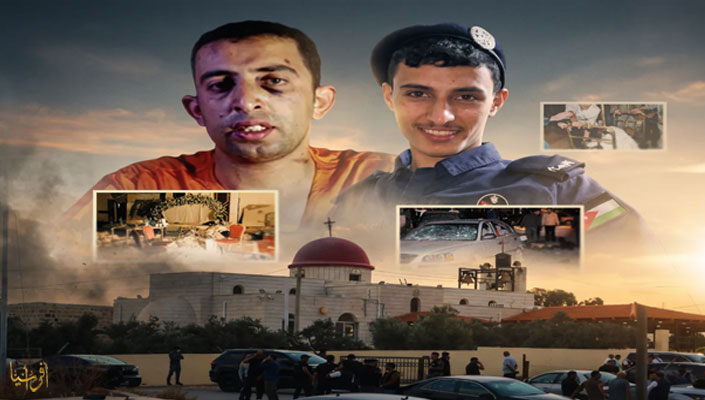
Ten years later, the wave of terrorism sweeping deeply through Syria and Iraq expanded, rapidly crossing into Lebanon and Jordan. Jordanian pilot Muath al-Kasasbeh was martyred at the hands of ISIS terrorists, and Public Security personnel were martyred while chasing terrorists in the Karak Castle.
From time to time, on intermittent occasions, I have tried to read whatever helps understand how this criminal mindset forms and grows. An old book translated by Egypt's National Center for Translation fell into my hands with a striking title: "The Mindset of Terrorism: Why Do They Fight by Dying?" The book included analyses and ideas from major Western thinkers: Jean Baudrillard, Umberto Eco, and Jacques Derrida. In the midst of the analysis, Western terrorism is not separated from Eastern terrorism.
Jean Baudrillard, for example, drew a parallel between the terrorism of September 11 and symbolic terrorism in the Twin Towers, earning accusations from French cultural circles of supporting terrorism—a comparison not far from what Edward Said previously argued regarding the relationship between the hands that pull triggers and the hands that manufacture and distribute weapons.
Sociology provides insights related to the absence of productivity, independence, and love in terrorism (Erich Fromm views the absence of these vital elements in the human personality as opening a channel to the lower ego with its dark instincts). Educational sciences link it to curricula and learning tools. Psychology offers a broad spectrum starting from childhood frustration to the "destructive desire" or the urge for self-destruction.
No single discipline can provide a complete answer and solution, but a holistic vision of the scene can deliver a comprehensive "protocol" to counter terrorism.
The vast majority of those joining terrorist organizations—ISIS and its diluted copies (which are many, by the way)—have decided to commit suicide. The triad of "rapid transition to immortality — rooted in misleading religious views", "suicide — rooted in accumulated frustration", and "continuous combat — rooted in accumulated destructive urges akin to adrenaline addiction" turns terrorism into a salvation weapon. Here lies the role of text, curricula, education, organizational circles, and so on, which embellish and nurture this "salvation" and turn crime into a "religious duty"!
These days, the wave of terrorism against Jordan is intensifying. Following the terrorist crime at the church in the village of Hammoud in Karak, attempts emerged to smuggle weapons via thermal balloons, followed by the stabbing crime of a Public Security officer, martyr Jawad Salayta, on Al-Madina Al-Munawwara Street in Amman.
Jordanians' questions following this wave of terrorism may vary: the security official asks about how the crime was prepared, its threads and connections, and how to proactively detect similar plots in the future? The politician asks who benefits from chaos in Jordan and how to block their path? The social observer asks how the incubators of this thought grew, infiltrated quietly or otherwise among us, and how they can be neutralized and dismantled?
Jordanians must compile their answers honestly and cohesively. Some questions require strategic answers and a long-term executive plan, while others fall under emergency measures and the current phase, demanding rapid execution whose core title is the cohesion of state institutions and society.
Mercy to martyr Salayta and before him to the martyrs of the Karak church... Jordanians will fight and defend their social security... Let it be a fight against the right party in the right place from the arenas of both sociology and politics!
Brief Political Analysis
When discussing political plots to instigate terrorism, certain headlines are indispensable for proper analysis:
"Creative Chaos": Ever since Washington adopted this policy, inciting terrorist organizations has become a permanent tool in reshaping societies and redrawing maps—specifically for the benefit of "Israel".
"The Mad State": Moshe Dayan stated that "Israel" must always appear like a rabid dog whose approach instills fear. However, this madness involves not just deterrence, but also expansionist frenzy.
This is precisely what is happening now. Chaos in Jordan serves Israel's plans for displacement and emptying the West Bank of its people, amid clear Jordanian rejection of this scheme. It also secures geographical modifications in southern Syria to serve the "David Corridor" aspired to by Israel.
Gideon Sa'ar's 2015 writings regarding the importance of partitioning Syria do not differ—at least methodologically—when targeting Jordan (not necessarily through partition, but through redrawing maps).
"Human Reservoir": Takfiri organizations in Syria remain strongly present. The Jordanian deterrence operation executed by the army points to one of the locations where these groups operate.
There remains a human reservoir of terrorists in Syria sought to be recycled into different geographical areas, representing a mass of mercenaries ready to move across borders—some wanting to rid themselves of their burden, and others wanting to use them before discarding them.

