
Why do nations kill when they are rich?
Afrasianet - Omar Abd El Rahman Ahmed Ghanem - Once upon a time, Sudanese stood on the horizon, contemplating the bounties of their country: the Nile is flowing, the earth stretches endlessly, the sky does not skimp on rain. Then came oil, then gold, then the innumerable
promises; promises that tomorrow will be warmer, that wealth will change the face of the country. But when they returned home, they found bread absent from their tables. When they opened the windows, they smelled gunpowder instead of blossom.
They looked at each other, and one of them said in pure heartbreak: We have everything but comfort. And here the story begins, the story of a country that resembles a long poem: its days are gold, its nights are Nile, and its people are good and melt the hardest hearts. But what
wound is this that makes a country of this serenity so full of blood?
Oil did not become an economic lever, but rather a fuel for the first civil war, and then a source of tensions that preceded the secession of the south. When the south left, with most of its oil production, Sudan's economy suddenly collapsed, leaving a vacuum that could not be filled by alternatives.
Sudan's Historical and Geopolitical Background: Between the Genius of Geography and the Tragedy of History
Sudan is not just a location on the map, but a geographical node in which Arab and African identities intersect, and where the desert plains meet the fertile banks of the Nile. This specificity has made it a bridge of civilization, and at the same time an arena of competition between forces that do not share their visions or interests.
Since the kingdoms of Kerma, Nabta and Mero, Sudan has had deep civilizational roots. But Turkish-Egyptian rule, and then British colonialism, reshaped the country according to its own calculations, leaving behind economic and social gaps between the center and the periphery.
With independence, Sudan inherited this legacy of inequality, without institutions capable of managing diversity and organizing wealth. Then came geography to add another burden: vast borders with seven countries, enormous resources, and a strategic location at the gateway to the Horn of Africa and the Red Sea.
All of this could have been a source of strength, but in light of the weakness of the state, it has turned into an open arena for anyone who wants influence or wealth.
Thus the burdensome history and the seductive geography combined to form a complex theatre: a country rich enough to covet, weak enough to protect itself.
Resource Damn
• Gold and Oil in Sudan: From Earth's Treasures to Collapse Fuel
When Sudan discovered oil, it seemed to be on the cusp of an economic renaissance. Gold later came to raise hopes that the country would become a rising regional power. But the paradox soon became unfolding: resources that were supposed to raise citizens' standards of living were turned into tools of conflict between political elites and armed groups.
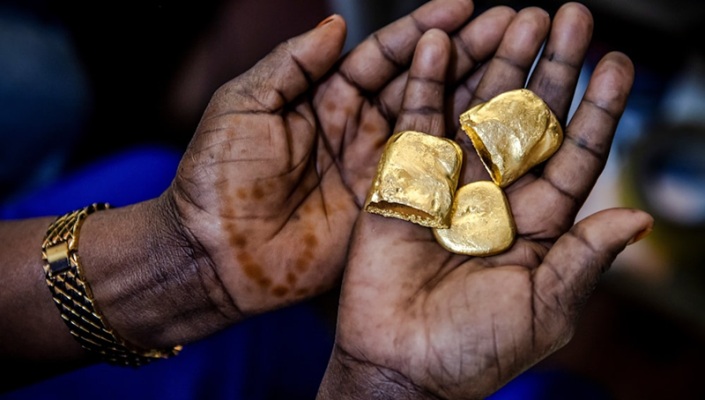
Then came gold as a quick alternative, but it was like an ointment that covered a deep wound. Mining began indiscriminately, and the state was not present enough to regulate it, and armed forces emerged to seize the mines and use them to build their military and political influence.
Gold has become a currency of war, a means of strengthening the centers of power rather than strengthening the state. This is how Sudan has entered what is universally called the curse of resources: wealth without institutions, resources without justice, which turns into a curse when politics is absent and good governance is unlikely.
The war has not only destroyed the economy, but has destroyed people's daily lives. Millions have been displaced from their homes, stripped of their livelihoods, and forced to live in makeshift camps, where mud and dust mix.
From a fragile economy to a doomed economy
Sudan's economy has never been as strong as the country's wealth, but in recent years of war it has retreated from fragility to the point of actual collapse. A country that relies on unprocessed primary exports, suffers from poor production infrastructure, poor resource management, and entrenched corruption, has always been on the brink of collapse.
But the outbreak of war has turned this edge into an abyss. Supply chains have collapsed, factories have stopped, agriculture has been disrupted in its most important seasons, intercity transport has stopped, and millions of citizens have become displaced and refugees.
In the absence of the state, the economy has become managed by black market mechanisms, as currencies have multiplied, prices have risen, and prices have ballooned to a degree that is no longer measured in percentages, but in the pain that weighs down the daily life of citizens.
The collapse was not limited to the loss of production, but also extended to the loss of confidence. Investment stopped, banks were paralyzed, the private sector collapsed, and in the absence of a political or security vision, the economy survived on aid and transfers, and on the remaining pockets of people's resilience.
Thus, the economy has gone from a fragile and repairable economy to a disaster that needs a comprehensive reconstruction: building peace before money, institutions before projects, trust before numbers.
Between displacement, famine, and the collapse of services. A homeland that suffers in silence
The war has not only destroyed the economy, but has also destroyed people's daily lives. Millions have been displaced from their homes, stripped of their livelihoods, and forced to live in makeshift camps, where mud and dust are mixed, and pain is mixed with waiting. Famine has become a familiar sight, disease is killing mercilessly, and schools have stopped functioning in many areas. Hospitals have become nothing more than a façade amid shortages of medicines and medical equipment, and a lack of qualified staff.
Even the most basic services, electricity, water, and transportation, have collapsed, leaving citizens walking between cities that lack the most basic necessities of life, and their lives depend on contradictory decisions or aid that does not arrive on time. In the midst of this majestic silence, the reality of Sudan is embodyed: a country rich in resources, poor in services, and people who are patient despite the pain. Every day that passes in Sudan carries stories of loss, patience, resistance, and hope that does not die, despite everything.
When everyone, at home and abroad, understands that Sudan is not a mine for sharing but a home to live, only then will the bleeding of gold and blood stop.
How did Sudan's resources turn into fuel for war and marginalization?
• Wealth without a state: The absence of effective central administration has made every wealth the cause of a new conflict, and every rich region is an arena of competition between groups seeking influence.
• Position and margin: Development has been confined to the capital, while the regions with most of the wealth have remained marginalized.
Inequality has become a spark that has been ignited by long wars.
• External Interventions: Sudan's location and wealth have made it the target of regional and international ambitions, which have contributed to prolonging conflicts.
• Lack of alternative development: When young people do not find education and job opportunities, weapons become a natural alternative for many.
The result was clear:
• Huge resources versus a weak state.
• Abundant wealth for an increasingly impoverished people.
• A lot of gold, more blood.
Gold does not build nations. Humans do
• Sudan does not lack goodness, but it lacks the state that protects those goods.
• It lacks gold, but the system that makes it a blessing rather than a curse.
• It is not lacking in rain, but in planning that makes rain bread and not a flood.
And when everyone, at home and abroad, understands that Sudan is not a mine to share, but a home to live in, only then will the gold and blood bleed stop.

