
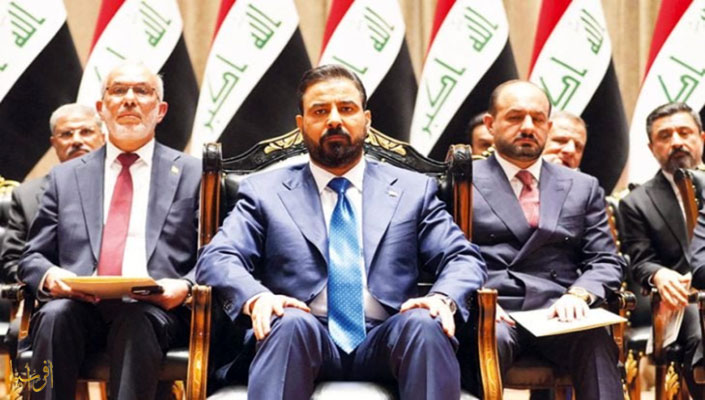
Afrasianet - Mashreq Raysan - It seems that giving Zaidi the green light to launch his campaign without referring to any political figure, for fear of frustrating them or leaking information and fleeing targets, has sparked a wave of interviews that began to "question" his intentions to fight corruption.
The ouster of Iraq's former deputy oil minister, Ali Adnan, opened an unpaved path for Iraqi Prime Minister Ali al-Zaidi to expose government corruption files since 2003, topple those involved in them, and recover the money derived from them, estimated at about $2 trillion, in a move that may seem politically supported, but in reality it is not, given its association with influential figures who have long had the upper hand in protecting their infiltrating arms throughout the Iraqi state.
Hornet's Nest
At the end of last May, al-Zaidi decided to compromise the hornet's nest when he arrested Adnan al-Jumaili, the deputy oil minister for liquidation affairs, the general manager of the North Refineries and Baiji Refinery Company, who represented the tip of the thread leading to a wider network of dozens of governmental, parliamentary and political figures.
In this case, the government has recovered more than $86 million from al-Jumaili alone, in addition to quantities of gold jewelry, luxury cars and a collection of real estate in various areas inside Iraq The confessions of the "black box" later led to a campaign that became known locally as "Green Souls", which contributed to the arrest of a "first group" of those involved in the case, including Zameel al-Jumaili, the Deputy Minister of Oil for Distribution Affairs Ali al-Bahadli, who is a candidate to take over the position of oil minister in the current government, but his inclusion in the "US sanctions" prevented this.
Al-Zaidi's campaign against corruption received wide political support, especially from the Shiite "Coordination Framework" that brought him to the presidency of the government, not to mention the Sunni National Political Council, which lost one of its pillars in "Sawla al-Khadra", the leader of the "Azm" alliance, Muthanna al-Samarrai, in addition to the influential Kurdish parties "Democratic" and "Patriotic Union". Iraqi leaders are angry with the Green Soul because al-Zaidi did not inform them of its details before its implementation, and that it included the names of figures connected to their political blocs.
Green Light
It seems that giving Al-Zaidi the green light to launch his campaign without referring to any political figure, for fear of frustrating them or leaking information and escaping targets, sparked a wave of interviews that began to "doubt" his intentions to fight corruption, especially after the cold in attaching the first step of the "Green Prayer" to other similar steps.
Al-Hashimi said that "the element of surprise was a decisive factor in the success of the campaign launched by the government a few days ago, but it focused on the small corrupt, which led to the loss of the opportunity to exploit this element to overthrow the big corrupt." In order to disrupt the government's efforts to combat corruption, and to make do with the measures that have been achieved, and to prevent the expansion of the circle of targeting."
A golden opportunity
"The prime minister missed a golden opportunity that could have achieved great results in the fight against corruption," he said, noting that "the fact that the senior officials involved were left out of the circle of accountability allowed them to exert pressure on the government and obstruct its efforts."
Al-Hashimi stressed that "there are doubts about the possibility of repeating or expanding the upcoming government campaigns," noting that "if they take off, they will face greater challenges after losing the element of surprise, and their results may be limited to formal measures that do not live up to expectations, while they will remain Indeed, the political discourse in Iraq towards the anti-corruption campaign has been more bold in warning of the consequences of not including everyone, or the fear of political motives behind it, or its exploitation of "political liquidation."
He pointed out that "there are figures against whom arrest warrants have been issued that are not related to corruption files, but came within the framework of political liquidations." Al-Khafaji pointed out that "senior corrupt people still hold sovereign positions and manage important joints in the state," considering that "the Iraqi street knows the parties and personalities involved in corruption files."
On June 16, Special Presidential Envoy Tom Barrack conveyed that US President Donald Trump looked forward to receiving Prime Minister Ali al-Zaidi at the White House in mid-July, to discuss the future of the "mission" relationship between Baghdad and Washington.
Most notably, did the arrested figures in the anti-corruption campaign represent a "scapegoat" to convince Washington of the seriousness of the Iraqi government in fighting corruption?
Or is it a message from the Trump administration that Al-Zaidi conveyed to the political leaders that they are not safe from any sanctions that may affect them and their victims? Although political sources confirm that the "Green Soul" came under Iraqi guidance and implementation.
________________

