
Afrasianet - Yahya Shams - Al-Nahar newspaper - The year 2025 witnessed dramatic moves, from the "October Agreement" that stopped the war, to the exertion of unprecedented maximum pressure on the regional parties.
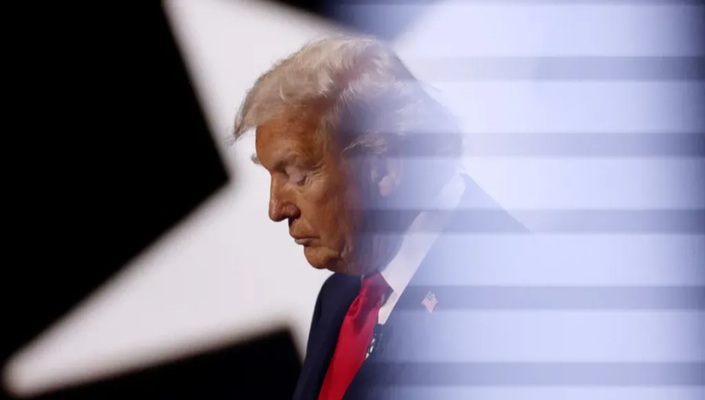
In early 2025, US President Donald Trump returned to the White House with his ethereal slogan: "Peace through Strength".
This slogan was not just an election banner, but an unequivocal promise to end the wars that had undermined the prestige of the United States, especially the Gaza war, which has exceeded its second year.
The year 2025 has seen dramatic moves, from the October Agreement that halted the war, to the exertion of unprecedented maximum pressure on regional parties, giving the world the illusion that a lasting and comprehensive peace is possible. But at the beginning of 2026, the calm in Gaza looks like the calm before the storm, as the "power" of the U.S. administration collides with the "ideology" of the factions on the ground, and reconstruction plans falter at the threshold of disarmament.
To what extent has the principle of "peace by force" in Trump's second edition been able to overcome multiple obstacles? Has the logic of force and deterrence actually succeeded in ending the Gaza war?
Trump's Doctrine in the Balance of Reality: Freezing the Conflict Instead of Resolving It
According to President Trump's "October 2025 Agreement," the "October 2025 Agreement" sponsored by President Trump, is primarily aimed at protecting the image of the US administration from failure in front of international public opinion. However, "this agreement appears to be a 'unilateral ceasefire,' as the resistance factions abide by it while Israel continues its military operations that resulted in more than 400 martyrs in Gaza after the agreement was announced."
Al-Deek explained to An-Nahar that the essence of Trump's strategy is not toward a permanent political solution, but rather toward "freezing the conflict" by replacing political rights, such as the right to self-determination and the two-state solution, with economic and security arrangements. This is clearly embodied in the "Sunrise Project," which seeks to impose an alternative economic reality to political solutions, something that is difficult to achieve given the Palestinian social and political structure that is based on historical rights that cannot be overcome.
This reality has created separate entities within the Strip (East Gaza and West Gaza), where reconstruction is only talked about in areas under Israeli military control.
The Disarmament Knot: The Impossible Path and Regional Stakes
According to al-Deek, the issue of disarming the resistance is the biggest obstacle that threatens to collapse the current track. While leaks talk about a US-Israeli agreement to disarm within two months at the beginning of the "second phase," the Hamas leadership asserts that this demand is unfeasible, considering that the weapons are a long-term process and not an immediate decision. The Egyptian ideas, which put forward a timetable of six months, were rejected by the American and Israeli sides.
This knot is directly related to regional shifts, where Trump's "green light" to strike Iran weakened its allies and diminished Tehran's regional influence, leaving Hamas in a politically and field isolated position. However, Israel's requirement for disarmament in exchange for a withdrawal beyond the "yellow line" keeps Gaza in a state of siege and a complex humanitarian situation, unless there is an international resolution that goes beyond economic solutions toward a comprehensive political horizon.
Has Trump succeeded in implementing the principle of "peace by force"?
American writer and journalist Stephen Zioni tells An-Nahar about a dramatic shift in the course of the regional conflict in 2025 with Trump's return and his adoption of the principle of "peace by force", which was clearly manifested in the success of the "October 2025 agreement", which not only froze the conflict, but also sought to end the war in Gaza entirely. This approach was based on exerting maximum pressure on all parties, as Israel was given a "green light" to direct painful military strikes deep inside Iran and its allies in the region, which led to the Tehran's regional influence has declined and its ability to support its proxies in the region has been weakened.
This Iranian retreat from the Zionist view had a direct and decisive impact on the structure of Hamas in Gaza, which found itself alone in the face of the Israeli military machine, forcing it to engage in settlement tracks imposed by the new reality of power.
On the geopolitical level, this "vacuum" resulting from the decline of Iran's role has led to the emergence of other regional powers, such as Saudi Arabia and Turkey, which have become central to shaping the future of Gaza, Syria, and Lebanon within a new strategic equation.
However, the price of this "forced peace" has been high for the Palestinian cause, as Palestinian geography has fragmented and the West Bank and Gaza have been transformed into divided cantons controlled by checkpoints and settlement authorities, making the dream of an independent Palestinian state more elusive than ever.
Despite the discontinuation of the guns, the question remains whether this stability, imposed by the logic of power and regional deals, will sustain the stability of the conflict, and whether it will be able to address the deep roots of the conflict or whether it is simply a rearrangement of the balance of power at the expense of historical rights.

