
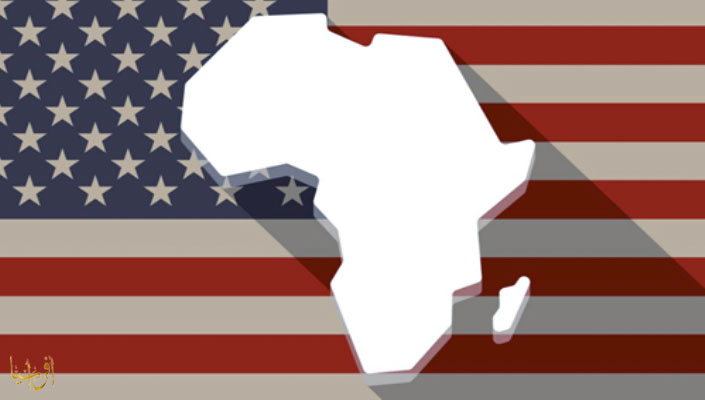
Afrasianet - Abbas Mohamed Saleh - The U.S. Counterterrorism Strategy 2026 reveals that Africa is no longer a political, moral priority or long-term commitment in the U.S. vision as much as a space for threat management.
The U.S. Counterterrorism Strategy 2026, released by the White House in May, has raised broad questions about the nature of U.S. engagement in Africa and the limits of Washington's commitment to security and stability issues on the continent, especially in light of the Donald Trump administration's "America First" policy and its selective tendency.
This strategy is an extension of an approach clearly demonstrated in the 2025 National Security Document and the 2026 National Defense Document, which have already enshrined the decline of Africa's place in U.S. policy priorities in light of a radical revision of U.S. policy toward the continent in general, and treating it primarily as an arena of potential or existing threats or an arena of geopolitical competition, rather than an equal partner in the current crumbling international order.
Africa in the Trump Administration's Perspective
The latest U.S. strategic documents reflect a selective approach to the continent, based on bilateral cooperation with "selected partners" in accordance with U.S. national security requirements, rather than on a comprehensive vision of stability and development in Africa.
The shift in the U.S. position on Eritrea is a clear example of this pragmatism: a country that has long been described by the West as "North Korea of Africa" and ruled by a brutal dictatorship and the world's worst model of individual rule, may today become a potential partner because of its geopolitical location overlooking the Red Sea and Bab al-Mandeb, in light of the escalating importance of the security of sea lanes after the recent Gulf War and the prospects of a renewed war with Iran again, especially if Pakistan's current efforts on the side of Pakistan fail other parties in order to reach a settlement of the U.S.-Israel war.
The Trump administration's moves point to growing concerns about indications of the potential for increased cooperation between the Houthis in Yemen and al-Shabaab in Somalia, which threatens the security of the Red Sea region, which explains the Trump administration's recent opening to Asmara, as part of broader arrangements to reshape the balance of power in the Red Sea basin, in parallel with the shifts that followed Israel's recognition of "Somaliland" in late December.
Terrorism in Africa and the American Perception
There is no dispute that "terrorism" has become one of the most serious challenges facing the African continent. According to the recent Armed Conflict Location and Event Data Project (ACLED), "global jihad threatens Africa more than any other region in the world."
The latest U.S. counterterrorism strategy acknowledges this reality, noting that large parts of Africa have become a "renewed terrorist reality" as ISIS and al-Qaeda become more active.
However, the U.S. reading of this strategy is sometimes simplistic, especially in interpreting al-Shabaab's continued resilience in Somalia as tied solely to the Somali tribal structure, while ignoring more complex factors such as state weakness, failed state-building and political stabilization projects, external interventions, and the group's ability to build parallel economic and administrative networks, as well as highly effective regional networks in terms of recruiting and providing financial resources.
Concerns about the Trump administration's terrorism policies are not only inadequate, inconsistent or selective, but also the use of counterterrorism policies to achieve narrow agendas and bypass international laws on the definition of terrorism and terrorist acts. Underscoring these growing fears of the "politicization" of counterterrorism approaches, Sudan -- which since April 2023 has been at war between armed forces and the externally backed Rapid Support Militia (RSF) -- has been included in "parts of Africa where the terrorist threat is a reality Incident", along with West Africa, the Sahel, the Lake Chad basin and Mozambique.
Moreover, this designation does not appear to be a neutral security characterization supported by the relevant international laws and legislations, which raises questions about the possibility of using it later to justify political or punitive measures under the pretext of combating terrorism, which go beyond objective considerations, especially in light of the complexities of the Sudanese conflict and the intertwining of regional and international interests associated with it.
The "light footprint" and shifting the burden to Africans
The U.S. Counterterrorism Strategy document makes it clear that the Trump administration has no intention of engaging militarily broadly or long-term in Africa. It speaks of a "light military footprint," while demanding that regional partners ("the chosen ones") shoulder the bulk of the counterterrorism burden.
The document explicitly states that the United States expects its partners to "share effective intelligence and deal with common threats as they arise," reflecting an approach based on managing threats at the lowest possible U.S. cost, without dragging them into long-term commitments or high costs.
Thus, Washington seems primarily concerned with preventing terrorist groups from using Africa as a base to threaten American soil in the first place, while leaving the threats facing African societies themselves to local states, no matter how fragile, weak their capabilities, and the nature of the challenges and threats they face, especially if some of these countries are not of importance to American interests, as the current administration knows them.
From Counter-Terrorism to Protecting Christians
One of the most striking shifts in the new strategy is the link between counterterrorism and the protection of Christians, especially in Nigeria. Trump has recently focused increasingly on what he describes as the "targeting of Christians" by jihadist groups, even though the threat from jihadist groups affects various components of Nigerian society, both Muslim and Christian.
In light of the current administration's quest for resource control, this rhetoric is seen as an attempt to construct a narrative that justifies interventions that serve narrow interests to serve broader economic and geopolitical goals, especially since Nigeria is one of the largest oil producers in Africa and the world, opening up fears of a reproduction of the intervention and pressure model seen by other resource-rich countries such as Venezuela.
It is clear that the Trump administration is also employing networks of lobbies and lobbying firms to guide its policies toward Nigeria. These moves are based on Nigerian lobbyists that have accumulated influence and experience within decision-making circles in Washington, such as advocacy groups linked to the demanding issue of the Niger Delta with a demanding nature related to environmental justice and development, as well as the currents of the Biafra independence movement that focus on narratives of religious and ethnic oppression against the Igbo people in southeastern Nigeria, as well as the influence of "black Christian Zionism" currents within Nigeria Some of the pressure networks linked to the issue of the "Ibo" in Nigeria.
"Peace by Force" or False Peacemaking?
Although the Trump administration has adopted a rhetoric based on the realization of "peace through force," recent experience suggests that this approach, as has been demonstrated in many cases, is actually focused on fueling conflicts and crises rather than establishing peace, and is based on producing fragile and hasty political understandings or "peace on paper" without addressing the root causes of the crises in which it is currently engaged.
This is evident in cases such as the Democratic Republic of Congo (where the strategy described what has been achieved as a "historic peace agreement!") and Libya, where U.S. moves focus more on managing balances and achieving strategic interests of its own and those of its allies, rather than building stable and sustainable settlements.
Similarly, in Sudan, despite the worsening humanitarian catastrophe described as "the world's largest refugee and displacement crisis" and "the world's largest humanitarian crisis," U.S. engagement appeared limited and hesitant, associated with the U.S. president's Middle East and Africa adviser, a seemingly "pariah" figure in Washington's decision-making circles who is more inclined to identify with the interests of some regional actors, rather than the principle of ending these conflicts as a core goal.
Counter Terrorism and Narcotics
The strategy has expanded the concept of threat to include transnational drug and organized crime networks as a source of funding for terrorist groups. However, this linkage raises concerns that terrorism designations and drug trafficking accusations could be used as political pressure tools against Washington's adversaries or governments that are inconsistent with its policies or weave the agendas of U.S. allies toward certain countries.
These fears are clearly present in some of the misleading narratives circulating recently about the nature of the conflict in Sudan, where there is talk recently about the country's transformation into a center for Captagon production, although the reality of war, institutional collapse, the spread of militias and criminal networks, and organized crime represent the real context of these phenomena, which have been directly caused by regional parties allied with Washington, so they turn a blind eye to these forces while seeking to blackmail a weaker party to achieve narrow political gains for them or these parties.
Based on the above, as in the case of Sudan, the link between counterterrorism and counter-narcotics may be used as a political and security pressure tool to serve the interests of these parties, or to justify pressures, sanctions, and interventions in some countries and regions, in order to serve geopolitical and economic goals that go beyond declared security considerations.
Space for Threat Management
Once again, the U.S. Counterterrorism Strategy 2026 reveals that Africa is no longer a political or moral priority or a long-term commitment to the U.S. vision as much as a space for threat management, competition, protection of narrow interests, and transcending the established institutional and bilateral frameworks of partnerships with parties within the continent that have been entrenched for decades.
Overall, with the escalation of international competition and the decline of the traditional American commitment to the continent, Africa appears to be approaching a more complex phase, in which the fight against terrorism intersects with power struggles between external powers, and in which considerations of security, economic, and geopolitical competition between many parties become the main determinant of the nature of external engagement.

