
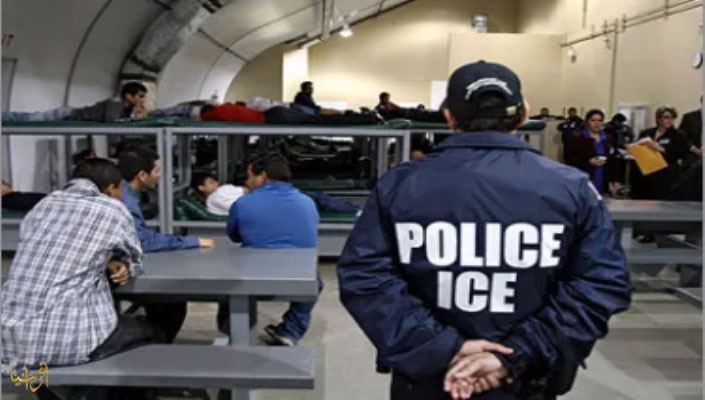
The Guardian: The Trump administration has expanded deportations to third countries through agreements with governments around the world
Afrasianet - The administration of US President Donald Trump has extended its deportation policy beyond sending migrants back to their countries of origin by sending them to third countries with which they have no connection, under arrangements with governments around the world.
The British newspaper tells the story of Iranian Nika who fled her country and received legal protection that prevents her from being deported to Iran, before authorities re-arrested her and transferred her in handcuffs to Central Africa without being told her destination, noting that she is one of more than 25,000 people deported by the Trump administration to countries other than their countries of origin.
Through an investigation involving the Guardian with 23 media organizations, a vast web of agreements and funding that enabled Washington to expand deportations unfolds, in exchange for testimonies revealing what awaits some deportees after their arrival, and growing legal objections to the mechanism of implementing the policy.
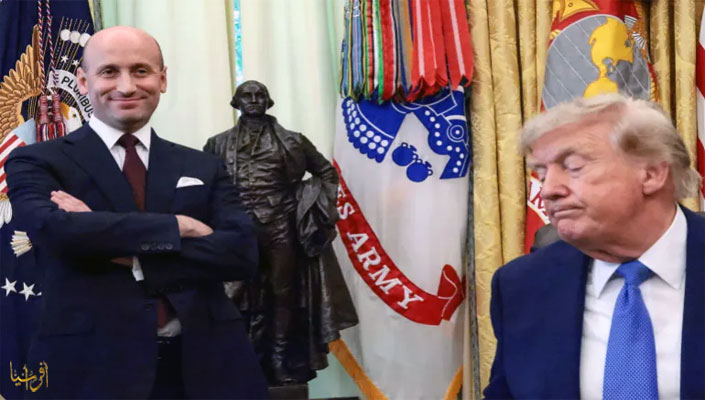
The Guardian: White House deputy chief of staff Stephen Mueller (left) leads deportation policy to third countries (Reuters)
Migration Deals
To paint a more comprehensive picture of the policy of deportation to third countries, the press coalition interviewed more than 100 people who had been affected by or participated in Washington's campaign against irregular migration , and reviewed documents detailing agreements that U.S. officials have made with governments around the world.
The investigation also tracked more than 100 trips that transported migrants and asylum seekers to 28 different countries, and the actual number is likely to be higher, as its database only includes flights that it was able to independently verify.
Internal records reviewed by the Washington Post show that the Trump administration has pledged at least $410 million to secure deals with 35 countries, about a third of which are located in Africa. It has allocated 30 million to Cameroon to support UN operations in the country in exchange for receiving 1,000 migrants, while the Democratic Republic of Congo has promised 75 million for 2,000 migrants.
White House deputy chief of staff Stephen Miller, who has openly stated his desire to end most immigration to the United States, is leading the policy, citing current and former U.S. officials that Miller has bolstered his influence within the State Department by pushing appointments that have allowed him to override other foreign policy priorities in favor of implementing his agenda.
Among those appointments is Christian Erhardt, the newly created head of the Remigration Office, who, after diplomatic tours of the continent, helped conclude at least 13 agreements to deport migrants to third countries in Africa, according to the report.
Alma David, one of the most prominent immigration lawyers behind the policy, sees the policy as an attempt by the Trump administration to "undermine the concept of asylum and refugee protection," explaining that when the U.S. cannot legally return people to their countries of origin, it can send them through a third country that considers itself a transit center.

The Guardian: Human rights and legal objections mount against deportation of migrants to third countries (Reuters)
Exile without safety
Many of those deported to third countries are people whose fears of returning to their countries of origin have been seen by immigration judges as serious enough to prevent deportation. The Iranian citizen was granted such legal protection and was released on May 28 from U.S. Immigration and Customs Enforcement custody, allowing her to stay and work in the country.
But her lawyer, Sahar Jalili, discovered after her deportation that the authorities had sent her to Central Africa without a passport, only to find herself without identity documents or a visa.
The report shows that Central Africa is one of 13 countries receiving deportees and the United Nations International Organization for Migration (IOM) will support them after their arrival by providing food, housing and psychological support.
He adds that U.S. support for the organization continues despite the Trump administration's sweeping cuts in funding to U.N. agencies, as there appear to be exceptions when funding contributes to the implementation of the deportation program.
Nika says that the organization has treated her well and provided her with safe housing and transportation when needed, but she describes what is happening there as not a real life: she cannot leave the house without a chauffeur provided by the organization, cannot find work and does not speak the language of the country.
A federal appeals court ruled that deportations to third countries were unlawful because they violated due process for not giving deportees enough time to appeal their decision to send them to another country, the Guardian said, adding that the government is expected to appeal the ruling and continue to implement its policy.
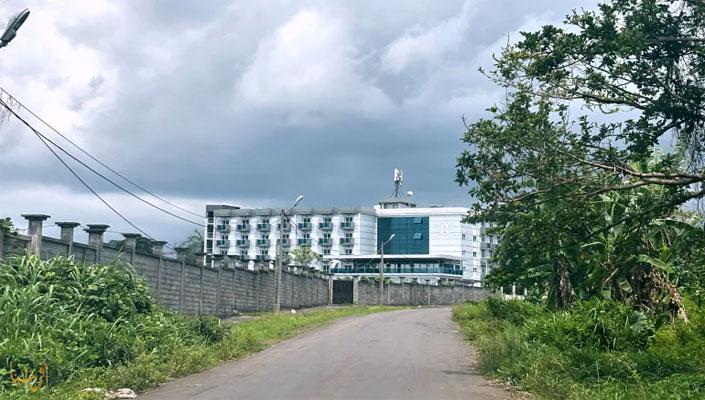
The Bami Hotel in Equatorial Guinea is dedicated to the detention of deportees from the United States (Associated Press)
The Transatlantic Deportation Triangle. From the Green Card to the Horror Hotel in Malabo
On the same subject: The scene looked like a movie clip: a policeman pointed a firearm at a detained migrant who raised his hands in a defiant position and surrendered to bullets at the same time, while another migrant knelt down for fear of a sudden pull of the trigger, while loud screams were heard among the other migrants trapped in a hotel lobby.
It happened within 70 seconds in a video leaked by an immigrant from the infamous "Bami" horror hotel on the edge of Equatorial Guinea's former capital, Malabo.
According to testimonies quoted by the New York Times and Reuters, the brawl began over a dispute over the use of mobile phones, but quickly escalated, with men wearing T-shirts with the words "National Police" pointing what appeared to be semi-automatic assault rifles at the deportees at the entrance to the hotel.

Migrants detained at Bami Hotel in Equatorial Guinea threaten firearms (Reuters)
Recurring concerns
Such recurring incidents reinforce the concerns of human rights groups and lawyers about what people forcibly sent to the Central African country under a U.S. deportation program could be subjected to behind the closed doors of the suspicious hotel.
The administration's program is anachronistic: what was seen as a racist policy in an era that caused millions of slaves to be transported from Africa to the Americas across the Atlantic has now turned into a reverse deportation to a third country.
In 2025, President Donald Trump's administration signed bilateral agreements with African countries, including Equatorial Guinea, to receive migrants that it cannot legally return to their countries of origin.
Equatorial Guinea, like other countries cooperating with the U.S. deportation program, is known for its poor human rights record, including torture and arbitrary detention, according to U.S. State Department reports.
Many of those deported under so-called "third country" arrangements state that they have been stripped of their rights of protection previously obtained from U.S. immigration judges, who have argued that these migrants could face torture or other abuse if repatriated.
Washington has defended " third country" agreements as legal and stated that deportations are carried out in accordance with U.S. immigration law.
But some 9,000 kilometers from the U.S. transatlantic coast, the law has no effect inside the Bami Hotel, and there are few options for deportees held indefinitely to determine their fate.
There, deportees complain of gross human rights violations, beatings, lack of medical care, constant psychological pressure, and severe restrictions on movement and communication with the outside world.
For example, the American newspaper quoted witnesses and lawyers as saying that two migrants among the deportees were beaten with firearms and pushed down a flight of stairs after handcuffing and covering their heads by police officers at the hotel.
Egyptian migrant Ahmed Suleiman, one of the victims of the beating at the hotel, was quoted in a text message sent to the newspaper as saying the situation was very dangerous for their lives.
The details indicate that the 31-year-old Suleiman holds a green card in the United States, but he lost this legal status after being sentenced to prison in 2023 on charges of drug possession and aggravated assault.
The second victim of the beating was Samson Burhani, 47, who arrived in the United States as a refugee from Eritrea at the age of 13. He was deported after being convicted of second-degree robbery in 1998, when he was still in high school. However, the court ruled that he could not be returned to his country because of the risk of torture there.
Unfortunately, Burhani was being held accountable for his regular visits. During one such review this year, he was arrested and later deported.
Today, Suleiman and Barhani are doubly miserable, losing their U.S. resident status and facing an uncertain fate in a horror hotel that lacks adequate services and care.
A local lawyer told the New York Times that he had recently visited the hotel and found no medical supplies, despite many people suffering from serious medical conditions, including diabetes and acute hernias.
According to lawyers, the government used the hotel to isolate a patient suspected of having the Ebola virus. Witnesses also observed health workers wearing protective suits apparently transporting patients to the hotel.
Information and Details
According to current information, 31 people are being held at the hotel, out of 53 people deported to Equatorial Guinea between November 2025 and July 2026, according to data from the Deportation Observatory, a survey tool run by International Refugees and Human Rights First.
According to the Observatory, the deportees hail from 11 African countries, as well as Georgia, Jamaica, Brazil and Cuba.
Reuters reported that last month, five people whom the United States was trying to deport to Liberia refused to disembark and were later transferred to Equatorial Guinea instead. Three of the deportees said they were pressured to return home despite fears of torture and other abuses, stressing that they were not offered any alternative options.
The indefinite detention at the Bami Hotel reflects a fundamental contradiction in many of the arrangements between Washington and foreign governments, as Equatorial Guinea has agreed to receive these people, but has not granted them any legal rights or documents that allow them to live or work there, even temporarily.
______________
Source: Reuters + The New York Times

