
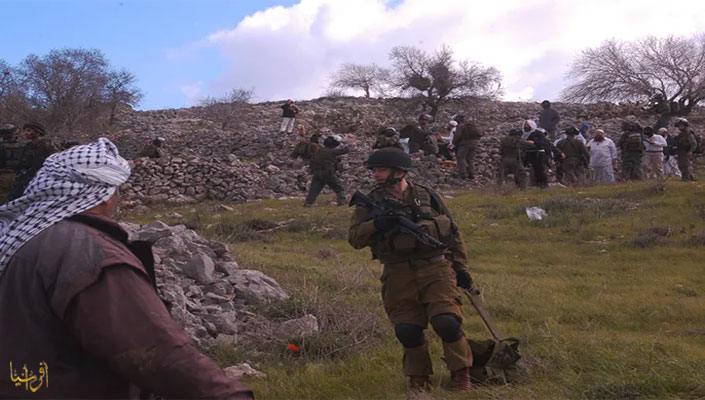
Superior rights for settlers in roads, water, land, and security at the expense of Palestinians!
Afrasianet - Mohammed Daraghmeh - Israel is imposing severe restrictions on the movement of Palestinians in the West Bank, opening roads exclusively for settlers at specific times, and increasing military checkpoints.
It has also exploited the war on Gaza to expand settlement activity and build new settlements, granting settlers water and legal privileges, and transferring civil and military powers to tighten control over the West Bank.
If you are a resident of the city of Ramallah or other West Bank cities and have work outside your city, you must wait until 9:00 AM. External roads are open exclusively to settlers heading to their jobs in Jerusalem and Tel Aviv during this time of day.
The same applies to those returning; they must avoid the period between 5:30 PM and 9:00 PM, when external roads are opened for settlers returning from work.
The Israeli army sets up military checkpoints at all entrances to cities and population clusters, and soldiers completely close these checkpoints during designated periods, trapping Palestinian cars behind them so settlers can enjoy freedom of movement on external roads.
This does not mean the checkpoints open fully during the rest of the daylight hours. Soldiers deliberately obstruct traffic flow through inspection, searching, and passenger ID checks—often with the intent of harassment, making the simplest tasks extremely difficult.
The Israeli authorities have imposed severe movement restrictions in the West Bank since the early days of the war on Gaza, and these restrictions increased markedly after the war ended in its old form following the ceasefire agreement in October of last year.
Recent reports from Israeli human rights organizations indicate that Israeli authorities have increased the number of military checkpoints and obstacles in recent months to over a thousand checkpoints.
Entrenching and Deepening Apartheid
Israel exploited the war on Gaza to carry out unprecedented, extensive settlement projects, including approving the construction of 104 new settlements and establishing 160 outposts or settlement farms, as announced by Prime Minister Benjamin Netanyahu recently on multiple occasions. It has also established a new network of roads to connect settlements to each other and to Israel.
Cartography and settlement expert Khalil Tufakji says: "The new roads that Israel has paved in the West Bank, such as the Trans-Samaria highway and others, make passersby feel as though they are in the heart of Israel rather than the West Bank."
He added, "We know very well the faces and forms of racial discrimination practiced by Israel against us, and the extensive privileges it grants to settlers at the expense of our land and resources, but these practices have witnessed an increase and transformation in recent years."
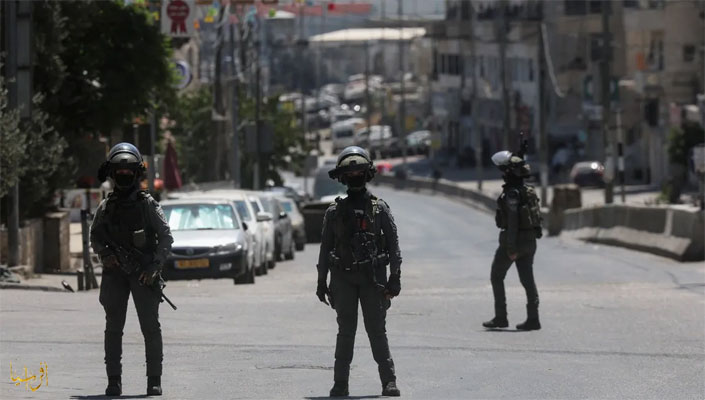
Israeli forces during a raid on the Qalandia refugee camp for Palestinian refugees in the occupied West Bank. August 25, 2026 - REUTERS.
Netanyahu’s Government Accelerates Measures to "Impose Sovereignty" on the West Bank Before Elections
Abruptly, the Israeli Ministry of Housing announced tenders for the construction of 1,200 housing units in the E1 area, which is considered the most sensitive zone in Israeli settlement projects in the West Bank.
Israel controls public lands known as "state lands," which make up 40% of the West Bank's area, harnessing them to build settlements and related projects, including agricultural, industrial, and tourist areas.
It also controls nature reserves covering half a million dunums, rocky lands known as "Al-Atliya" (unused land), and rocky lands used to produce building materials such as stones, which cover 12,000 dunums, according to cartography expert Khalil Tufakji.
National Preference
The Israeli government grants special privileges to settlers to encourage them to move and live in settlements established in the West Bank, such as financial grants for every family, a five-year tax exemption, free transportation, and others.
Israel grants settlers the lion's share of water extracted from various water sources in the West Bank.
Image Description: Israeli settlers diverting the course of Palestinian water to fill a pool in the West Bank.
Israeli settlers seized a pipeline that used to irrigate Palestinian lands and diverted the water flow to an old pool at an archaeological site, which they later promoted as an Israeli tourist attraction.
Shaddad Al-Ateili, former head of the Water Authority, stated: "Racial discrimination in water is clear and evident through individual quotas. A settler receives 400 liters of water daily for domestic use—including homes, gardens, and swimming pools—compared to just 80 liters for a Palestinian."
He added, "In agriculture, there is no restriction on the settlers' water share used to irrigate their vast palm, flower, and vine plantations established on West Bank lands, while the Palestinian farmer is forced to buy limited, negligible quantities of water at high prices from the Israeli water company."
A New Legal Framework
Over the past year, the Israeli government enacted a legal framework to expand the settlement project and deepen the apartheid system. In February, it approved a law allowing individual Israelis to purchase land in the West Bank, whereas this was previously restricted to government institutions and settlement associations.
It also enacted a new law changing land registration procedures to make property transfers easier, and passed legislation opening the land registry to individual Israelis.
Israeli Energy Minister Eli Cohen described these measures as laying the groundwork for "de facto Israeli sovereignty over the West Bank, without the need for a formal declaration."
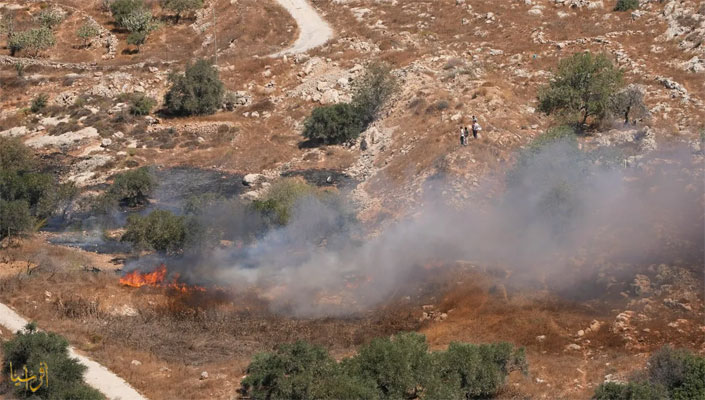
Israeli settlers watching flames they set in olive groves in the village of Burqa in the occupied West Bank. September 17, 2026 - REUTERS.
Merging Economic Suffocation with Settlement: An Israeli Strategy to Accelerate the Annexation of the West Bank
Israel is intensifying its measures to accelerate the annexation of the occupied West Bank by combining economic suffocation, the expulsion of Palestinians from their lands, and the expansion of settlements.
During this year, the government also approved the transfer of sweeping civil and legal powers from the military administration to Israeli civil institutions and ministries.
In August, Defense Minister Israel Katz approved an army plan to transfer law enforcement powers over settlers in the West Bank to the Israeli police, a step described as an important precursor toward official annexation.
The government also passed a law allowing it to control all archaeological sites in the West Bank, including those located in the heart of the Palestinian Authority's territories.
In October of last year, the Israeli parliament (Knesset) voted in a preliminary reading on a bill to apply "the sovereignty of the State of Israel over the settlements."
Law and Security
The Israeli government has granted settlers the freedom to arm themselves and form militias that launch daily attacks on Palestinians to drive them from their residential communities, rights, and farms.
The Israeli police refuse to accept any complaints filed by a Palestinian against a settler. In many cases, the complainant ends up being punished.
Siege, Settlement, and Displacement: Israel Narrows Living Space in the West Bank
The circle of Israeli attacks in the West Bank is widening, encompassing raids, home demolitions, settlement expansion, and escalating settler violence.
Activists in rural villages and residential communities have formed groups to monitor and document settler attacks and publish them. Despite these attacks being documented with video and audio, Israeli authorities largely ignore them.
These attacks have reached foreign media outlets and diplomatic missions in the country. Recently, Israeli authorities were forced to take some measures against members of settler militias after Western countries filed complaints following documented physical assaults against their representatives. These included physical assaults against Belgian and French ambassadors last week in the village of Al-Taybeh east of Ramallah, as well as a fierce assault on a Washington Post photojournalist, resulting in fractures to her limbs.
"Rasid" Road Conditions
While Jewish settlers—numbering around 800,000—enjoy freedom of movement on West Bank roads, Palestinians live under the restrictions of military checkpoints that obstruct all movement. This has driven affected citizens, especially drivers, to launch initiatives, including forming social media groups to report on conditions at military checkpoints.
At a later stage, local radio stations began broadcasting a round-the-clock bulletin called "Road Conditions," and some stations even dedicated a specific reporter for road conditions.

