
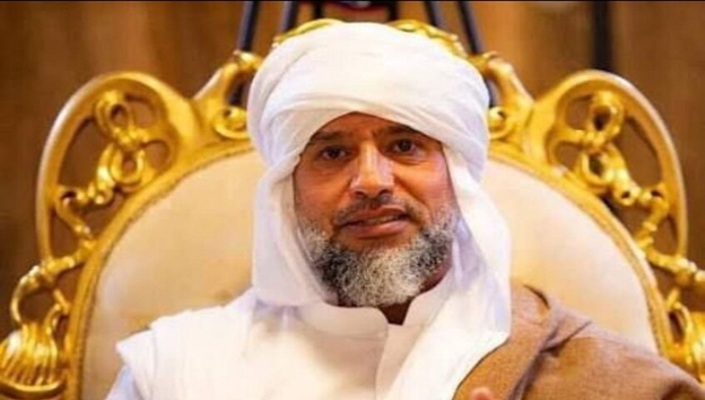
Afrasianet - Libya after Saif al-Islam may seem less ideologically complex, but it will remain mired in its divisions, and the vacuum left by it will not be filled by an inclusive national project but will be divided among disparate interests and alliances.
End of the Back to the Past Project
For decades, Saif al-Islam Gaddafi has been a figure oscillating between the image of the heir to his father's heavy legacy and the image of the reformist who tried to present himself to the West as an acceptable face. His assassination in Zintan on February 3, 2026, closed a long page of controversy, but it also opened a wide door to questions about the future of Libya, the nature of the vacuum he left at home, and whether this absence will rearrange the balance of power in a way that leads to stability or consolidates a new cycle of conflict.
Saif al-Islam was at one point the most powerful man in Libya after his father, although he did not hold an official position. He played prominent roles in policy formulation and mediated sensitive diplomatic files, from the abandonment of weapons of mass destruction to the payment of reparations to the families of Lockerbie victims. He tried to present himself as a reformer, calling for a constitution and respect for human rights, benefiting from his education at the London School of Economics and his proficiency in English, which made him close to Western governments that were looking for a gateway to deal with Libya. But the moment of the revolution in 2011 revealed the other side, as he chose loyalty to family and clan, calling opponents "rats" and threatening rivers of blood to be spilled in defense of the regime. This contradiction between the reformist and the heir, between the image of the statesman and the image of the son of the tribe, haunted him to the end, making him a contradictory symbol that combines the hope of stability with a memory burdened with violence.
Saif al-Islam's departure closed a long page in Libya's history, but it did not close questions about the future. He folded international secrets files, removed a divisive symbol, but left behind a country searching for a new identity.
After the fall of the regime, he was sentenced to death by the Libyan judiciary before enjoying a pardon, but he remained wanted by the International Criminal Court on charges of crimes against humanity. He spent many years in detention in Zintan, away from the luxurious life he led under his father, and then returned to the forefront by announcing his candidacy for the presidency in 2021, a move that contributed to the complication of the electoral process and sparked widespread controversy. For supporters of the former regime, his candidacy was a final "guarantee card" against the unknown future, and a banner that could gather Beneath it are the tribes and families that felt excluded after 2011. But for his domestic and international opponents, he was a threat to the settlement process, as they considered that his return would reproduce the past and fail any attempt to build a new state.
His assassination has effectively ended any hope of reproducing the old regime through a personality that carries the legacy, name, and old networks. The loyal tribes in Sirte, Wadi al-Shati, and the southern regions will find themselves without a unified political leadership, contested by local loyalties and immediate interests.
In the east, Khalifa Haftar will read the event as a historic opportunity. The absence of Saif al-Islam has removed a symbolic rival that could, under certain circumstances, become a de facto contender for the loyalty of tribes and neutral actors. For Haftar, this absence gives him more space to present himself as the only military commander capable of imposing order and rebuilding the state.
With his striking pragmatism, he can capitalize on this vacuum to bolster his international image, attracting the loyalties of tribes formerly loyal to Gaddafi, shifting their loyalties from an ideological-historical framework to a pragmatic one. Security. This shift will strengthen Haftar's social depth, giving him a broader base in post-conflict arrangements.
In the West, Abdulhamid Dbeibah will read the event in a different but intersecting way in the end result. Saif al-Islam's absence will strengthen his government's legitimacy as the sole internationally recognized executive authority, and remove a potential threat that could have posed any alliance between Saif al-Islam and his local rivals.
This will allow Dbeibah to focus his efforts on consolidating the government's authority and expanding its economic influence. In turn, pro-Gaddafi tribes in the West may move to integrate into Dbeibah government's alliances in exchange for political and economic guarantees, broadening the base Dbeibeh's social and weakened the likelihood of a unified tribal opposition.
His assassination practically ended any hope of reproducing the old regime through a character with a legacy and a name. Loyalist tribes will find themselves without a unified leadership, contested by local loyalties and immediate interests
At the international level, Saif al-Islam's absence is expected to open the door to a more flexible approach to Libya. The disappearance of a controversial and judicially wanted figure removes one of the psychological and diplomatic obstacles that have been impeding the engagement of some international powers, which could allow for a more streamlined approach to existing Libyan parties. The Libyan landscape is likely to see new powers seeking a foothold in North Africa. India and Pakistan, for example, may continue to turn Libya into an arena of soft competition, with the East consolidating its security and military ties with Pakistan, while the West expanding its economic and technical partnerships with India.
This new balance may give the Libyan parties wider options, but at the same time it could open the door to a long-term regional competition for influence. Western powers, especially the United States, European countries are likely to find an opportunity in Saif al-Islam's absence to accelerate political settlement efforts, as there is no longer any fear of a controversial return of a figure that could confuse understandings, which could push these forces to deal with Haftar and Dbeibah as key parties in the Libyan equation.
The Libyan landscape is more likely to see changes in the form of alliances than changes in the core of the crisis, as structural problems – from weak state institutions to the economy's dependence on rents, to the unfair distribution of wealth – will remain unless radical solutions are proposed. But it will still be mired in its structural divisions.
The vacuum left by the old symbol will not be filled by an inclusive national project, but will be distributed among disparate interests and changing alliances. External openness, while it may entail, also risks turning the country into a new arena of competition, rather than a bridge to stability.
The departure of Saif al-Islam Gaddafi has closed a long page in Libya's history, but it has not closed questions about the future. He has folded international secrets and removed a divisive symbol, but he has left behind a country searching for a new identity amid a struggle for power and influence. Only the future will reveal whether this absence is the beginning of a long-awaited path of national reconciliation, or just a passing stop in the ongoing Libyan conflict.

