
Hebron: Siege, displacement and destruction of Palestinian property
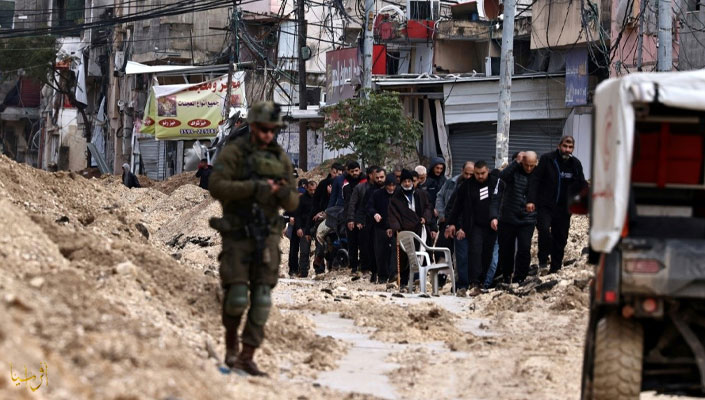
Afrasianet - Hundreds of Palestinian families in the city of Hebron in the south of the occupied West Bank are living in harsh humanitarian conditions, after the Israeli occupation forces forced them to leave their homes at gunpoint, amid the continued siege, road closures, demolition of facilities, seizure of residential buildings and their conversion into military sites, in a scene that puts the residents in front of an unknown fate, between forced displacement, loss of livelihoods, and fear of prolonged absence from their homes.
Many families were unable to take their basic needs with them when they left, leaving behind their children's medicines, clothes, personal belongings and toys, while women, children, the elderly and the sick found themselves facing severe challenges to secure shelter, health care and daily needs, with no clear guarantees as to when the military operation would end or when they would be allowed to return home.
In the neighborhoods of Deir Baha, Al-Jalda, Farsh al-Hawa and other areas of the city, the repercussions of the military operation go beyond the scene of the evacuation of homes to threaten the social and living stability of the residents, with the continuation of demolitions and bulldozing, restricting movement, disrupting businesses, and turning Palestinian homes into military posts and interrogation centers.
Hundreds of families facing displacement
The latest statistics of the Hebron Municipality reveal the extent of the humanitarian repercussions of the military operation, as 379 families including 2456 people were affected, including 171 infants, 204 elderly people, 27 people with disabilities, and 159 people with chronic diseases.
According to the statistics, only 154 people were registered in safe places, reflecting the scale of the humanitarian needs resulting from the forced departure of the population, especially since a number of families include individuals who need continuous health care or special living conditions.
The Mayor of Hebron, Eng. Yousef Al-Ja'bari, said that the occupation forces surrounded the city and a number of neighboring villages, and forced residents to evacuate their homes through loudspeakers, which prompted women, children and the elderly to go out into the streets without shelter, in light of the uncertainty about the end of the military operation and the possibility of return.
The suffering does not stop at the loss of housing, as patients face difficulties in obtaining their medicines and health supplies, while the elderly and people with disabilities find themselves in displacement conditions that are not commensurate with their needs, and children are deprived of the family stability and safe environment to which they are accustomed.
In the face of these circumstances, the municipality declared a state of emergency and opened shelter centers to receive the affected families, including the Child Happiness Center and the Korean-Palestinian Center, in cooperation with partner institutions and local community institutions, in an attempt to provide minimal shelter and protection to families who were forced to leave their homes.
However, the provision of temporary shelters does not end the crisis, as military operations continue and it is unclear how long families will be away from their homes, and the consequent additional burdens of securing food, water, clothing, medicines, and children's needs.
Demolition, bulldozing and seizure of houses
In parallel with the evictions, the occupying forces continue to demolish and bulldoze Palestinian facilities in various areas of Hebron, targeting homes, commercial facilities and properties on which the residents depend in their daily lives and sources of income.
Amer Abu Arafa, a journalist from Hebron, said that the demolitions were concentrated in the area of Farsh al-Hawa, where an area estimated at 14 dunums was bulldozed, and more than seven structures were destroyed, in addition to a large house with an area of about 600 square meters.
He added that the occupation forces continue to raid and search houses in various areas of the city, in conjunction with closing the entrances and restricting the movement of citizens, pointing out that the attempts of some residents to reach their homes have become fraught with the risk of assault and beatings.
Abu Arafa gave an example of this in the case of the Mukhtar of the Shawar family, an elderly man who tried to reach his home in the Ain Deir Baha area to get his medicines after he was forced to leave, before he was assaulted and taken to the hospital for treatment, according to his statement.
The residents' fears are exacerbated by the occupation forces' seizure of buildings and houses and their conversion into military sites. Abu Arafa pointed to the seizure of a building in northern Hebron and its transformation into a military post, as well as the seizure of a house belonging to the Al-Natsheh family in the suburb of Al-Zaytoun, south of the city, and the arrest of its owner and the conversion of the house into a military barracks.
Other houses and villas have been turned into interrogation and interrogation centres and soldiers' command sites, he said, pointing out that vehicles transporting water and food to some of these sites have been observed, raising fears that the military presence will continue there for a long time.
These developments are even more dangerous, because controlling homes not only means depriving their owners of shelter, but may also prevent them from returning even after military operations have subsided, especially if they continue to be used for military purposes or are destroyed and bulldozed.
Abu Arafa warned that the stabilization of the military presence inside residential neighborhoods could impede the return of residents to their homes, while the Israel Broadcasting Corporation quoted security sources as saying that the campaign in Hebron could continue after the elections, according to the original report, which reinforces the families' fears of prolonging the displacement.
Blockade cripples economy, threatens thousands of families
The repercussions of the military operation are not limited to the families who were forced to leave their homes, but also extend to large sectors of economic life in Hebron, which is one of the most prominent centers of production, industry and trade in the Palestinian territories, where thousands of families depend on daily labor, factories, workshops, and commercial establishments to secure their basic needs.
Abu Arafa said that the blockade imposed on the city restricts the movement of food and supplies in and out of the city, while large numbers of workers were unable to reach their places of work, and the movement of goods was halted in several areas, leading to the closure of factories and economic facilities.
About 40% of the factories were closed due to the difficulty of workers' arrival and the disruption of the transport of goods, he said, in addition to other facilities being damaged or located near the areas of military operations.
For his part, Mayor Yousef al-Jabari warned of the economic repercussions of the blockade, explaining that Hebron represents about 40% of the Palestinian national economy, and that dozens, even hundreds, of factories have stopped working as a result of the restrictions imposed on movement, the difficulty of the arrival of workers and the disruption of the transportation of goods.
These restrictions are directly reflected in the situation of families, as the shutdown of factories and the disruption of commercial activities deprive workers of their sources of income, while the expenses of displaced families, who are forced to make ends meet far from their homes, including food, water, medicine and accommodation necessities, are increasing.
A family that has lost their home not only faces the problem of finding shelter, but may also lose their source of income, while their ability to meet the needs of their members declines as lockdowns continue and workplaces are inaccessible.
The damage extended to infrastructure, including streets and water and sewage networks, as well as the seizure and confiscation of part of municipal equipment, al-Jabari said, in light of the proliferation of military vehicles and the appearance of the city's streets almost devoid of usual movement.
Al-Jabari described what is happening as making Hebron a disaster city, in light of the overlap of humanitarian, economic and service damages, and the difficulty of the residents to reach their daily needs.
Arrests, attacks increase residents' fears
In conjunction with the displacement, demolitions and road closures, the occupation forces continue to make arrests in various areas of Hebron governorate, amid reports of detainees being beaten and humiliated during detention.
Abu Arafa said that the number of arrests he documented exceeded 49 cases, some of whose owners were released, while others remained in detention.
He added that a number of those released spoke of being beaten, insulted, ridiculed and used profanity against them during detention, noting that he saw bruises on the bodies of some of them after their release.
These practices, along with the closure of neighbourhoods and the seizure of homes, increase fear and instability among residents, who do not know whether their homes will remain available for return or will be converted into military positions, nor whether their property will survive demolition and bulldozing.
These conditions also put families with infants, the elderly and the chronically ill at a crossroads that go beyond providing temporary accommodation to include ongoing health care, medication access, child-friendly environment, and ensuring that families are able to manage their daily affairs.
Returning to Homes. The Most Urgent Demand
As the siege continues and Israeli forces deploy inside residential neighbourhoods, the possibility of returning to homes remains one of the most pressing issues for the affected families, who have found themselves forced to leave their homes without knowing how long the military operation will take or the conditions under which they will be forced to return.
The Hebron Municipality and local institutions are trying to provide shelter and assistance to affected families, but these efforts remain limited in the face of widespread needs, especially if the displacement is prolonged and factories and businesses continue to be disrupted and the movement of residents continues to be restricted.
Fears are compounded by the demolition of some facilities and the seizure of homes and their conversion into military posts, developments that raise questions about the fate of private property and the possibility of residents regaining their normal lives after the operation.
In light of these facts, the crisis does not appear to be just a temporary evacuation of homes under the pressure of a military operation, but rather an intertwined situation of loss of shelter, disruption of livelihoods, restriction of movement, and a threat to family and social stability, the effects of which affect the displaced people and the rest of the residents of the city and the governorate.
As families wait for the opportunity to return, the fate of children, the sick and the elderly remains the most urgent, with their need for safe living conditions and care that cannot be easily guaranteed in places of displacement.
For families who have been forced to leave their homes, returning means not just restoring a roof that protects them, but restoring safety, privacy, property and livelihoods, and restoring a daily life disrupted by the siege and displacement. With no clear date for return, there is a fear that temporary accommodation away from homes will turn into long-term displacement, with a growing humanitarian, economic and social toll.

