
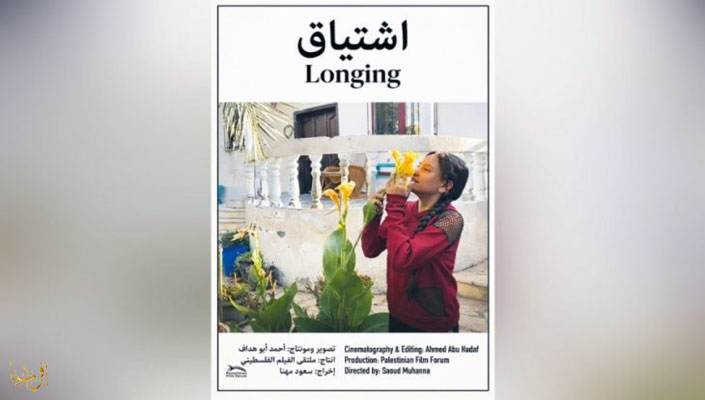
Afrasianet - Kamal Al Qadi - The passions of Palestinian cinema are still included in the events and details of the frequent daily tales, about the dream of settling down and returning to the arms of homes, the warmth of the family, the fun of children, the taste of sitting under the shade of trees, the fragrance of flowers and olive branches.
The war did not distance the people of Gaza from their aspirations, but rather increased their adherence to hope, life, and faith in their absolute right to land and housing, and to go to sleep in safety and tranquility after a long night's sleep, prolonged insomnia in the darkness of the night, the darkness of the tents, the scarcity of livelihood, the scarcity of water, and the children's screams of hunger and thirst.
A miserable diary that Palestinian long, short, documentary and documentary films continue to tell with pain and sadness, perhaps someone will hear and be aware of the suffering of the residents of the occupied territories as a result of the blockade in Gaza and other other affected cities and villages.
Palestinian films, whose details and stories emerge from the heart of the crisis, are characterized by human visions and avoid images of blood and permissible killings in broad daylight and dusk at night, as they do not reproduce what happens in the daily lived reality, but rather draw attention beyond the images published in the newspapers and transmitted via satellite channels, which have lost their impact due to the frequent repetition and no longer hurt any politicians and leaders.
The latest thing that unfunded and self-made cinema has produced inside the besieged Gaza is a new experience that contradicts all the previous short and documentary theses, in terms of language, image, and theme, and the dialogue contained in the mouth of the young heroine "Amal", a symbol of innocence, spontaneity and honesty.
The new experience in the short feature film by director and screenwriter Saud Muhanna, bears its title, which distinguishes her, "Ishtiaq", to signify the meaning and feeling stored in the chest of the heroine, who is no more than thirteen years old, as she lives her day between the noise of tanks and the sound of bombers, and a lost hope in the sense of security, while she sees in her dream what she wishes for and is kept by her subconscious mind, as the little girl dreams that she has returned to her house and went up to her bedroom and hugged her bride who was forced to part with her two years ago.
In the midst of the joy of returning, she opened her small wardrobe to look for her brightly colored dresses and her new shoes that she had left before putting them at her feet, as she was saving them for the holiday that did not come, so the world became dark around her on the seventh of October and her dream dissipated and became a nightmare.
The child Amal kept looking in the corners of the two-story house surrounded by a garden Sing about her two brothers, whom she lost in the war, before her father told her that they had risen with her mother to the other world accompanied by mercy, satisfaction and forgiveness, an imaginative atmosphere that director Saud Muhanna added to the events through his artistic tools, which were enhanced by the cheerful lighting with its strong white tones in harmony with the light color of the house that resembles a villa with its clean curtains flying from the windows.
A situation that brought to mind the image of Palestinian houses before they were destroyed, and how they were oases of comfort, relaxation and tranquility before the smoke of war that swept through them, hiding the most beautiful things in them and obliterating their features, spirit, luster and artistic touches, so that after their glories they became rubble and sad ruins for which their owners weep.
The film, which is only 6 minutes long, was reduced to all its minute details, the harvest of two years of crises, suffering and bitterness, as the dramatic condensation played a prominent role in it, and the dialogue was not consumed unnecessarily, as the semantic images that the photographer and editor Ahmed Abu Haddaf succeeded in compensating for any excess dialogue, enriched the idea to be embodied and the dream from which the heroine Doaa Al-Dabbas woke up to the voice of her father, the artist Iyad Dandan, when he called her out loud to wake her up from her sleep to tell her of the arrival of the water cart, and Doaa realized that she is still in the battle of daily life, suffering what others suffer from the hardship of living, the roughness of the bed, and the lack of food. Yes, it is still a prisoner of pain and waiting, living the orphan in its sense and being patient with the vices of time, which is the little flower that has not yet bloomed all its leaves.
The innocent child is left with nothing but a kind, affectionate father and friends from her peers who share her dream of returning home, garden and school.
This was the vision of the various Palestinian cinema, represented in the film "The Passion of the Producer" with the self-support of the Palestinian Film Forum, which is located according to its record and its old address in Gaza City, which is headed by the film's director and writer, Saud Muhanna.
The praise for the soundtrack is truly guaranteed to those who composed it, as it contributed with the lighting, montage and other artistic elements to enhance the exceptional creative state of the whole world, which increased the interaction and feeling of the whole What is intended and intended by the film in the six dazzling minutes, the difference at the level of the event and the visual, aesthetic and mental vision.
________________

