
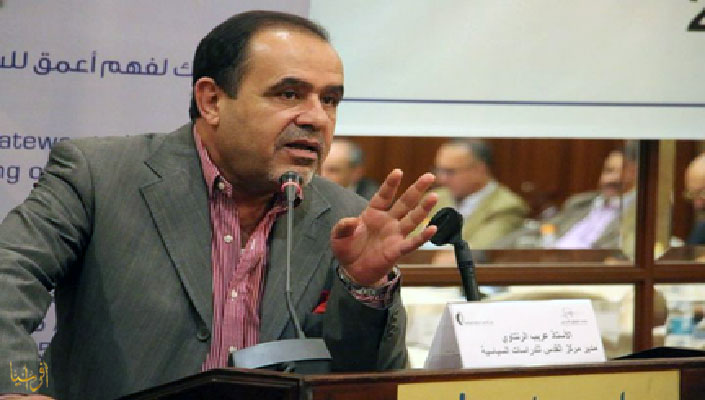
Afrasianet - Oraib Al Rantawi - As soon as the presidential decree was issued to organize the third legislative elections since the establishment of the PA, and the first in two decades of disruption and postponement, the debate intensified among the Palestinian elites, between the welcoming, the reserved and the skeptical, to be added to the layers of Palestinian division, a new class that we do not know how it will end, and the alliances, and the processes of rapprochement and divergence between the Palestinian forces and components.
Some of the more cautious and pessimistic Palestinians do not rule out postponing the entitlement again, especially if those in charge have nightmares of failure and defeat, despite the precautions, "engineering" and precautionary measures.
The beginning of the story
The story of the elections began with a surprise presidential decree calling for the election of a new National Council, as part of an effort that was said to aim at reviving the PLO and renewing the legitimacy that had been "illegitimate" for many years. We say "surprising":
• First, because it is the first time since the establishment of the PLO that the Council was to be formed by election, not by appointment, "consensus" and "quotas."
• Second, because many Palestinians viewed this call as a "flight forward" to avoid the merit of presidential and legislative elections, which Palestinians of all backgrounds have long demanded, provided that they be held simultaneously or preceded by the presidential and legislative elections.
• Third: Because the organization after Oslo and the establishment of the PA, it was subjected to systematic marginalization and limitation, which turned it into a mere circle of power, while the original principle was for the organization to be the leadership, the reference, and the symbol of sovereignty and representation, so what awakened the leadership of the PA after a long absence, to the importance of reviving and reviving the organization, and is this really the goal of the desired presidential decree, or is there something behind it?
In any case, the confusion did not last long, as the decree was issued in the opposite direction to the path that has been forged since the establishment of the PA in 1994, when regional and international wills converged to "dissolve" the PLO, and to elevate the status of the PA and replace it, as part of a broader and dangerous vision that seeks to reduce the Palestinian people to the people of the West Bank and the Gaza Strip, to drop the issue of refugees, diaspora and the right of return, and to reduce the Palestinian geography to what is left of the West Bank, after satisfying the expansionist appetite of the settlement community and the settlers.
The presidency quickly turned the page on the National Council elections, after being informed of regional and international messages denouncing and excluding the move, as there is no political green light that it has obtained, no funding for such a step, and no approval to consider it part of the "reform program" that Arab and international parties are pressuring Ramallah to accomplish.
Although it is called a reform program in the relevant political literature, it is in essence a project to reformulate the Palestinian system, strike at the collective Palestinian memory by targeting school curricula, media policies, and religious discourse, and destroying the "icons" of the Palestinian national struggle, which were associated with memory, martyrs and prisoners.
After its first decree hit the wall of repulsion, the presidency submitted a second decree, setting November 28 of this year as the date for holding legislative elections, with an undated promise to hold presidential elections in the first quarter of 2025, and raising the number of members of the Legislative Council to 200 members from 132 members, which was the number that was monitored, and still for the share of the interior (the West Bank and the Gaza Strip) in the National Council when it is reconstituted.
Today, the Palestinian Central Elections Committee is translating the decree, setting timetables for the stages of the electoral process, and starting to receive applications for candidacy and competing lists, as if the electoral entitlement is inevitably underway, on schedule, even though Palestinian voices are growing and multiplying, expecting and warning of the consequences of postponing the elections again, after they were suspended and postponed at the last minute in 2021.
Other balanced votes, which do not exclude the issuance of a new decree that restores the elected members of the "legislature" to their previous number (132 members), "issued yesterday", provided that the rest of the 68 members are appointed by the presidency, and perhaps arguments and pretexts that may surprise us all.
Anyone who thinks that Israel will be content with observing the electoral scene from spectator seats or the operations rooms of international election observers is mistaken, as Israel is a key player in designing the process and influencing its course, and it will certainly not allow elections that come at different sizes to its interests.
Will the elections be held on time?
The original is that the presidential decree put the train of the legislative elections on the track to reach its expected stop on time, but two factors may derail it:
• The first is Palestinian-internal, and it relates to the PA's calculations and its reading of the possible results of this entitlement, if it reaches the conclusion that the "engineering" and precautionary measures keep the door open for unfavorable results, it will "create" excuses and justifications for postponement and disruption, and it is more likely that the PA and its supporters do not have the luxury of taking the risk of organizing open elections on various possibilities, as the specter of the 2006 elections, and the sweeping victory of Hamas, is still a nightmare hanging over the heads, despite all the developments and serious events that have taken place over the past two decades.
Here we open the brackets to point out that the PA's concern comes not only from the weights of its opponents and traditional rivals, especially from Hamas and those who will ally with it, or whom it will support in the entitlement, but also from currents, "lists" and opposition voices that proliferate from within Fatah itself, which have become more daring to criticize the presidency, authority, decrees and priorities, and by influential leaders, some of them historical, within Fatah, especially those who were marginalized and expelled, before, during and after Fatah's eighth congress.
The scenario of Fatah "defeating itself in the elections" is increasingly occupying a place in the calculations of the handful that made decisions and issued decrees.
• Second, the Israeli factor mistakenly thinks that Israel will be content to observe the electoral scene from the seats of spectators or the operations rooms of international election observers, Israel is a key player in designing the process and influencing its course, and it will certainly not allow elections that come in sizes different from its interests.
Israel today is not the Israel of 1996 or the Israel of 2005 and 2006, Israel today, in the grip of the extreme right, engaged in translating the "Decisive Plan", reconsidering its position on the PA itself, and the last thing it wants is free and fair elections that renew its legitimacy and grant legitimacy to the forces fighting it in Gaza and the West Bank, while the war of extermination, cleansing, displacement and intimidation is still in its bloody chapters for the third year in a row.
Here, too, we open brackets to point out only some of what Israel can do to influence the electoral process, and perhaps prevent it if necessary:
1. Arrests and possibly assassinations of undesirable candidates.
2. Threats and blackmail of candidates, as happened at the Eighth Fatah Conference.
3. Obstruction of access to polling stations in certain areas.
4. Escalation of the situation on the ground in Gaza, the northern West Bank and some of its other camps.
5. Activating the mechanisms of "security coordination" and intensifying the power of money, security and influence to shape the entire scene.
All of this raises two hypotheses:
y or may not take place, as they are only inevitable to the extent that their results are decided in advance.
• Second, these elections may be the first for a Palestinian whose integrity may be challenged, given the circumstances surrounding them, on the one hand, and in the context of the "engineering" of the Palestinian regime that has been in full swing for almost two years, on the other hand.
From the point of view of the majority of Palestinians, including many of the factions and forces in which they will participate, the elections are not part of a rallying cry, but rather the culmination of the process of "adapting" and "re-engineering" the Palestinian regime to align with the outcomes of the solutions that are being discussed in the basements and behind closed scenes.
Controversy and division issues
Since the first decree, the election talk has caused successive waves of controversy and division, which included various Palestinian components and entities, and focused on a number of topics, including:
Timing and priorities: A group of Palestinians saw in its timing as superfluous, which could have been dispensed with, if the Palestinian leadership had heeded the calls for consensus and activated the unified leadership framework, formed a national unity government, and adopted dialogue and the participation of all, as a method of leadership and management, instead of exclusion, demonization, marginalization, exclusivity and exclusivity, and considering that the elections may be a "luxury" that can be postponed, in a time of extermination, purges and fascism, if this leadership had taken a different path.
From this point of view, the priority should be given to confronting this war and the settlement encroachment, and not to elections that are being prepared without dialogue or consultation, and will be an additional reason to deepen the divisions instead of bridging them, and to weaken the Palestinian system instead of strengthening, rejuvenating it and renewing its legitimacy.
Appointment and political requirements: There is a Palestinian consensus, which is not excluded only by the influential group behind the "turbulent and successive decrees", the last of which strikes the first of which is a consensus to reject appointment in all positions and councils, and to adopt elections as a means of occupying these positions, provided that their integrity and transparency are preserved, that they are rid of the notorious requirements of the "International Quartet", and that equal opportunities are guaranteed for those involved in it.
Appointment is an exception that requires dialogue and consensus, and in the narrowest case of necessity, the rule is free, fair and open electoral competition. The synchronization and correlation between the legislative and presidential elections, although one must be presented over the other, the presidential one first, followed by the legislative, contrary to what is stipulated in the presidential decree.
Some balanced Palestinian views call for a broad national dialogue to choose a figure to run for the presidency and supervise legislative elections with strict national standards, in a way that establishes the unity of the Palestinian home and guarantees elections that contribute to strengthening the steadfastness and resistance of the Palestinians, and solidifying the return of their political system, in which the PLO occupies the place of the heart and head.
In this way, and in this alone, the elections will be a link in the path of reviving the Palestinian situation, and a step forward on the long road in resisting the most ugly and prolonged occupations.
Attitudes and Trends
Unfortunately, the elections to be held, from the point of view of the majority of Palestinians, including many of the factions and forces that will participate in them, do not fall within a rallying point, but rather are the culmination of the process of "adapting" and "re-engineering" the Palestinian regime to align with the outcomes of the solutions that are being discussed in the basements and behind closed scenes, which can be reduced to four words: "liquidating the national cause and project."
Its opponents reject it for this reason, for the context in which it is being conducted and for the purpose of its conduct. Those who are involved in it are of two types: one is motivated by selfish personal and partisan interests, so as not to say "opportunist", which puts it ahead of other calculations and priorities, and the Palestinians know them well.
As for the second type, it justifies its participation by its keenness to confront this project and prevent the drift of power in its contexts, and the desire to reform the system from within, without giving us a single reason sufficient to convince us of the feasibility and seriousness of this participation, especially since at once, at the moment of registering his electoral list, he dropped all his previous demands for the improvement of the law and the dropping of the burdensome political requirements that he had burdened with.
Some balanced Palestinian views call for a broad national dialogue to choose a figure to run for the presidency and supervise legislative elections with strict national standards, in a way that establishes the unity of the Palestinian home and guarantees elections that contribute to strengthening the steadfastness and resistance of the Palestinians, and solidifying their political system, in which the organization occupies the place of the heart and head.
In the intense and ongoing Palestinian debate over the elections, the positions of forces and personalities reveal a map dominated by four trends:
• The first trend: Fatah al-Rasmiyya and its allies within the organization, including leftist factions, half-and-quarters, and the remnants of factions that have eaten and drank for ages, these forces are responsible for "engineering" and are involved in it, and they are looking for what they can gain from it.
• The second trend: Leftist factions, some of which are resistant, were quick to preach participation with arguments and pretexts ranging from saying that elections have always been a popular demand to ensure good representation and participation, to correct the path of power and to promote the national project, and that it is better to work from within the institutions than to boycott them, without a clear focus, or sufficiently, on the contexts of the electoral process and the circumstances in which it is confounded, and the significance of holding them at this time after two decades of interruption.
It was surprising that the Popular Front in particular was quick to register its electoral list, despite what it had previously demanded in pre-election dialogues, amendments to the law, and guarantees of integrity, transparency and equal opportunities.
I think that most of the factions of the Palestinian Left, although they have given a "wink to the left" through their calls for the formation of broad coalitions, dialogue and consultation as a basis for organizing the process and as a lever to ensure its integrity, seem to be "turning to the right", going to the merit individually, and engaging in the game of appointment when the time comes to complete the formation of the National Council.
• The third trend: He announced his refusal to participate in the elections, or demanded that he not participate in them because he does not have the right to participate, some of which (Islamic Jihad) has been characterized by since the establishment of the PA until today, and others, which include a range of forces, initiatives, and personalities, at home, especially in the diaspora, which does not have the right to participate in the legislative elections.
• The fourth trend: Hamas and those who support it, who have not yet spoken and apparently find it difficult to make the decision to participate or boycott, for political reasons on the one hand, and practical reasons on the other, which are mainly related to the security calculations surrounding the movement of its leaders and cadres, and anyone who runs in its name or is merely supported by it to compete.
Like many factions, it refused to be singled out for the decision and called for dialogue, criticized the contents of the presidential decree and its heavy conditions, and called for the legislative elections to go hand in hand with the presidential election, but did not disclose whether it would boycott and call for a comprehensive boycott, or whether it would participate directly or through the support of certain candidates and lists, or whether it still hoped for a postponement, in the hope of resuming a national dialogue, the results of which it never respected.
In summary, unless something unthinkable happens, the elections are expected to be held at the end of November, and the resistance and opposition forces are unlikely to reach a common or unified position, and it is unlikely that they will run the elections with a "historic bloc" capable of change, or boycott them as a single bloc that would delegitimize their people.
It is also not expected to succeed in ensuring that the presidential elections are held on their proposed approximate date, or that they will be held in a different way than planned, and it is likely that the upcoming elections will add a new factor to the factors that weaken the Palestinian system, instead of strengthening and unifying it.
________________
Oraib Al Rantawi - Jordanian writer and political analyst, Director of the Jerusalem Center for Political Studies.
________________
