
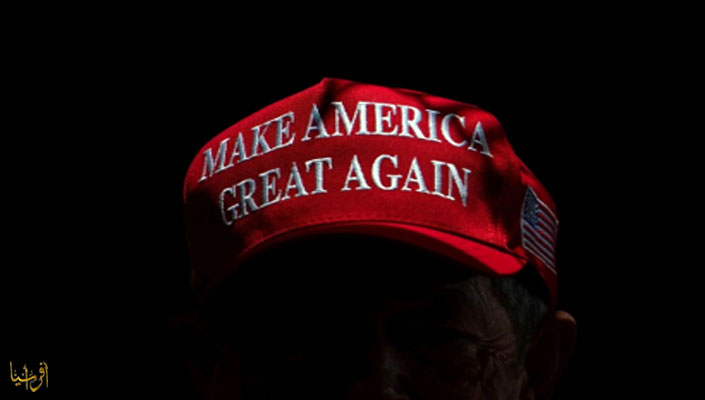
Right-wing ideologues have turned U.S. foreign policy into a tool for private gain and anti-democratic reaction.
Afrasianet - Author: Anne Applebaum- The Atlantic magazine publishes an article discussing the shift in U.S. foreign policy under U.S. President Donald Trump toward using power and influence to serve private ideological and business interests, and supporting far-right allies, pushing Washington's traditional allies to look for alternatives and threatening the U.S.-led international order since World War II.
In the summer of 2025, the Brazilian government suddenly found itself in the midst of a deep crisis, with the Trump administration unexpectedly imposing a 50% tariff on the country's products, posing a threat to all parties, from coffee farmers to shoe manufacturers. At the same time, the United States revoked the visas of eight Brazilian Supreme Court justices and imposed unprecedented financial and travel-related penalties on a powerful judge and his family.
For the first time in recent memory, a U.S. administration used tariffs, not for economic reasons, but as a tool to influence the domestic politics of a friendly democracy.
PRESIDENT TRUMP HAS BEEN PUBLICLY VENTING HIS ANGER ON WHAT HE CALLED THE "WITCH HUNT" THAT TARGETED FORMER BRAZILIAN PRESIDENT Jair Bolsonaro, who was on trial at the time for plotting a coup after losing the 2022 election. Some of Bolsonaro's followers stormed the Brazilian parliament and other federal buildings, likely influenced by the actions of Trump supporters in the events of January 6, 2021. Steve Bannon, who described the participants in the Brazilian insurgency as "freedom fighters," was one of the many MAGA supporters who supported and encouraged them. When these rhetoric was coupled with domestic grievances, the rhetoric of "denying the results of the U.S. election" found fertile ground in Brazil.
This put Brazilians in a strange position: "All of a sudden all of our official channels of communication were cut off, and huge numbers of unofficial actors started knocking on our doors, and that was interesting," a young official told me.
Some of these visitors were of a kind previously unfamiliar in Washington: lobbyists who flaunt not their ties to government officials, but to the people who frequent Mar-a-Lago, or to MAGA influencers, whose accounts on the X platform (formerly Twitter) could capture the president's attention.
Other businessmen offered to provide government services, while seeking to make deals for their own benefit; for example, an investor, who claimed to own a holiday home near Besant's home, offered to arrange a meeting with the Treasury secretary in exchange for personal access to vital minerals. The Brazilians rejected the offer.
Little by little, Brazilians are learning the same lesson that other U.S. allies around the world have learned: that the United States is no longer the country they once were. U.S. power is no longer exercised exclusively by trained diplomats and trusted officials working through official state channels; unofficial emissaries, private companies, cyber fraudsters, and hardened ideologues, both within and outside the government, have a greater role and influence. Unlike their predecessors, these people don't talk about democracy, they don't seek to build long-term relationships, and they don't care about America's reputation. They use the tools of U.S. diplomacy and government to serve their own purposes, both to advance their business interests and to achieve their ideological goals, because, suddenly, they are able to do so.
The clique of "predators" who currently govern the U.S. federal government is no different. Although they are mistakenly labeled "isolationists," many true believers in this approach do not consider themselves ordinary Republicans who have won an election and will temporarily hold power until the next election; they are not just Trump followers, they believe they represent something much greater: the vanguard of a movement that will change not only America, but the entire world.
Nor do they trust the many leaders of democratic countries that have long shared the same political and economic values with America. While the military, U.S. intelligence services, and allied governments continue to work closely, ideologically oriented people, both inside and outside the administration, are seriously seeking to replace those governments with individuals and parties who share their contempt for liberal democracy and what was once perceived, at least in terms of aspirations, as American values.
To achieve this, they must expand their global influence, manipulate elections in former partner states, and change the flow of money and power, particularly within other democracies. Much of the world has long believed that America's defense of democracy is hypocritical, and that American-led economic integration serves only its own self-interest; but people, even those who genuinely believed in the post-World War II American project, are now beginning to realize that it no longer exists.
These once-marginal ideas have become a mainstay of U.S. foreign policy. At this year's Munich Security Conference, Rubio articulated the same position in a more polite manner: in the face of "an unprecedented wave of mass migration that threatens the cohesion of our societies," he called on America and Europe to work together based on "our shared history, Christian faith, culture, heritage, language, and ethnic origins." But he made no mention of any shared commitment to democracy, transparency, or the rule of law.
The implication of this proposition, which was outlined in the Trump administration's National Security Strategy last year, is that America has a special interest in the policies of historically white and Christian European countries, and in supporting far-right leaders and political movements that seek to preserve Europe's white and Christian character, even though most of these forces are not currently in power. The document made it clear that, although America would no longer intervene to promote democracy anywhere in the world, U.S. policy had become aimed at "helping Europe correct its current course," a phrase that justifies direct U.S. intervention in European politics to prevent what the document vaguely describes as "civilizational erasure" and to enable allies with those ideologies to come to power.
The battle against this existential threat has already begun. Sarah Rogers, the secretary of state for public diplomacy, told Congress this year that America is "now fully utilizing all the tools at our disposal—from exchange programs, cultural heritage initiatives, small grants, and more—to advance the president's America First" agenda. In practice, this means that the U.S. government is using diplomatic pressure, visa bans, and cultural funding to support parties and leaders seen as "civilized allies" in its international struggle, and to undermine its adversaries, even if they are leaders of legitimate governments with longstanding ties to the United States.
In its hemisphere, the State Department is committed to a more explicit and explicit imperialist project. The NSG states that other governments in North and South America must submit to the demands of U.S. officials or companies, or the U.S. will change those governments. As in Europe, the Trump administration will push hard to elect and keep politicians who support U.S. hegemony and keep them in power, declaring that it will "reward and encourage the region's governments, parties, and movements that, in general, are in line with our principles and strategy."
Others have different, more direct reasons for wanting to "make America Great Again." This category includes executives in the oil and gas, cryptocurrency, rare earth mining, and, above all, big tech companies. Their motivations differ from those of ideologues, but they share the belief that power is the only thing that matters, and that it should be the preserve of "superior human beings," the wealthy, the smartest, and often white men.
Miller's words have no doubt appealed to business leaders who are happy to see the tools of American government and diplomacy being reused, not to build a world safe for democracy, or even for Americans, but to create a world that pays off for them.
According to the New York Times, Trump himself made an unprecedented $2.2 billion in the first year of his second term, much of which came from crypto projects. But he also enjoys exerting power over others, and he uses the tools of governance to achieve this: tariffs give him financial and personal leverage over foreign leaders. His invasion of Venezuela has also given him an ostensible victory over an old adversary, as well as a shadowy control over Venezuelan oil, something he has long boasted about.
The Digital Services Act does not address censorship at all, particularly with regard to Americans. The law obliges digital platforms to protect minors and comply with European laws, which are enacted by democratically elected legislatures that prohibit Nazi propaganda and Holocaust denial in Germany and elsewhere, as well as child pornography and incitement to terrorism, and provide transparency about their use of algorithms. European laws on freedom of expression differ from those in the United States, but Europeans have the right to enact and enforce their own laws, just as they have the right to make different laws related to food safety or air pollution.
Bannon, who had left the Trump administration by then, did not publicly claim to be speaking for America or defending its interests.
But people with views similar to Bannon's are now speaking for America, and their influence on the international system is as enormous as the Bolsheviks were in the past.
Rather, the change lies within the democratic world that emerged after 1945, a world that was not only based on the law but also on a set of constraints imposed mostly on itself by the parties. In this world, American power drew much of its momentum from alliances that America chose not to exploit for narrow interests. Long-term relationships were considered highly valuable, given the impossibility of predicting when allies would be needed.
Nor have American politicians been managing the country's foreign policy, or even domestic policy, with the aim of achieving financial gain for themselves or their children while in office. Although U.S. policy in the Middle East has always been controversial, and the results of U.S. military interventions around the world have been uneven, at best, America has helped lay the foundations for eight decades of peace, prosperity, and ultimately democracy in Europe and large parts of Asia, creating markets for U.S. companies and providing unprecedented support for U.S. power.
This world is rapidly fading; instead, following the president's example, various people, both inside and outside the administration, are quick to seize this revolutionary moment for "zero-sum victories."
Countries that distance themselves from this frantic conflict know they will pay the price: Canadian Prime Minister Mark Carney said at the Davos forum earlier this year: "If we don't sit at the table, we will be the main course." And he was right.
In practice, these tariffs had another purpose; from the Canadian government's point of view, they were the beginning of a campaign to weaken the Canadian economy. Prime Minister Carney said Trump was "trying to break us so that the United States can have us." As part of the negotiations to ease tariffs, Canada was forced to abandon the idea of taxing U.S. technology companies.
As in Greenland, the economic campaign has been accompanied by an informal power campaign. Canadians listen to many of the same podcasts, and watch many of the same videos that Americans watch.
During the coronavirus pandemic, some far-right U.S. podcasters sought to reach new audiences by amplifying Canadian truckers' protest against vaccine mandates. Some may have done so because they agreed with that view, and others may have done so for money, knowing that the internet rewards anger. Since 2022, the truckers' protest has morphed into a full-scale separatist movement in the province of Alberta, and bloggers have now embraced the issue as well.
It's not just a media project: On at least three occasions, State Department officials have welcomed representatives of the Alberta Prosperity Project, a separatist group.
The province of Alberta is located in the heart of Canada. If the province were to secede, the geographical connection between eastern and western Canada could be cut off, the country would lose much of its oil and natural gas production, and the province's important contributions to the national budget would fade. Canada could lose its viability as a cohesive and viable nation, especially if other provinces begin to question the viability of the union.
In 1990, Pat Buchanan, the intellectual spiritual father of the MAGA movement, stated that if Quebec ever seceded from Canada, America should "mend the pieces," that is, take over the rest. This seems to be the policy now; if not the officially stated U.S. policy toward Canada, it is, at least, that of the "predator camp": squeeze the economy, dismantle the federal federation, and then acquire the remaining parts. No, this is no joke.
The idea of a dedicated group of Americans planning to break up Canada, or the desire of businessmen with vague ties to the U.S. government to create the political conditions that would allow the United States to seize Greenland, may surprise Americans; however, this should not be the case. Every tactic used against Brazil, Canada, or Denmark has also been used elsewhere, not to support democracy or boost American prosperity, but to spread "illiberal revolution" and profit for the predators who support it.
Here's a partial list of them: direct financial support for revolutionary allies. About two weeks before Argentina's midterm elections, in October 2025, the Trump administration announced a $20 billion bailout package to pull Argentina's economy out of its financial crisis.
It was an outright bribe: If the country did not vote for Javier Milley's party, a civilized ally of the "Make America Great Again" (MAGA) movement, Trump would withdraw that support. Indeed, Milley's party won political support from revolutionary allies and illiberal parties.
In Germany, in February 2025, Vice President Vance was keen to meet Alice Faidel, co-chair of the Alternative for Germany (AfD). During a visit to Hungary in 2026, a few days before the national election, Vance announced his support for the re-election of Viktor Orbán as prime minister; he even made a phone call to Trump at a public event in Budapest to reaffirm this support as well.
Media Promotion of the Revolutionary Allies:
The far-right visual media regularly opens their doors to foreigners wishing to strengthen their image as revolutionary leaders in their countries.
Mass rallies in support of the revolutionary allies:
Meetings of the Conservative Political Action Conference (CPAC), once a major platform for American conservatives, have morphed into mobile shows where there are payable sponsors, providing a platform for emergence and a semi-official tone of U.S. endorsement for local far-right currents.
Ending Democratization Efforts:
All U.S. government institutions created over the decades to promote democratic ideas and practices have been weakened, dismantled, or redirected in the service of the "revolution." The U.S. Agency for International Development (USAID) has faded; foreign broadcasters such as Voice of America and Radio Free Europe/Radio Liberty have barely survived; and the State Department's annual reports on human rights practices in countries, once considered a neutral source of information, now suggest that Germany is more repressive than El Salvador.
Revolutions inspire other revolutions, as well as counterrevolutions; the United States produces both. Global politics is undergoing gradual shifts, as leaders imitate Trump's tactics, change their loyalties to win affection, show a surprising interest in cryptocurrencies, or strive to hedge against the greedy American regime.
Most governments in the traditional democratic world cannot compete with others in this race; Europeans, Canadians, Australians, and others cannot "buy" the U.S. president's affection by investing in his sons' businesses, because it is illegal. They also find it difficult to adapt to this new world in which formal diplomacy intersects with vested interests.
Instead, these parties have begun to look elsewhere for relationships, technology, and trade opportunities. No one previously imagined that Canada would find itself having to sign a defense agreement with the EU, as well as conduct defense technology negotiations with Australia; however, Canada has taken both steps.
The EU also recently struck a free trade agreement with India, which received little attention a few years ago, and another with Australia. In the first half of 2026, at least 26 world leaders visited China, including the prime ministers of Britain, Spain, Germany, and Canada. Ultimately, even if a Democratic nominee wins the White House in 2028, corporations bolstered by federal funds and ideologies who have taken control of institutions will continue to influence Congress and voters.
These shifts have been met with ridicule and attack by some, including the Pentagon's Elbridge Colby, who has argued that America's allies cannot do without or replace them. This may be true in the short term, but if Colby or others believe that America's old friends will stop looking for other options, they are misunderstanding the depth and essence of the shift in the perception of America—a shift that is not limited to the capitals of certain countries, but extends to the minds and hearts of people around the world.
Many may not care about the details of Brazilian politics or understand World Liberty Financial's business dealings, but many understand the meaning of cheating. The president of the Norwegian Football Association made an ethics complaint, arguing that "manipulating a rule in this way puts us on a dangerous slope that could threaten the whole game." The story resonated, not because of the importance of that particular World Cup game, but because America's smug disregard for others was all too familiar.
Other Americans may soon come to the same conclusion: For decades, we have convinced ourselves that our country represents democracy, freedom, and free trade. We believed that we had allies and countries that shared our thinking and values. We thought we were against dictators and corrupt regime rulers who were stealing their people. What happens when we realize that we are no more?
________________
