
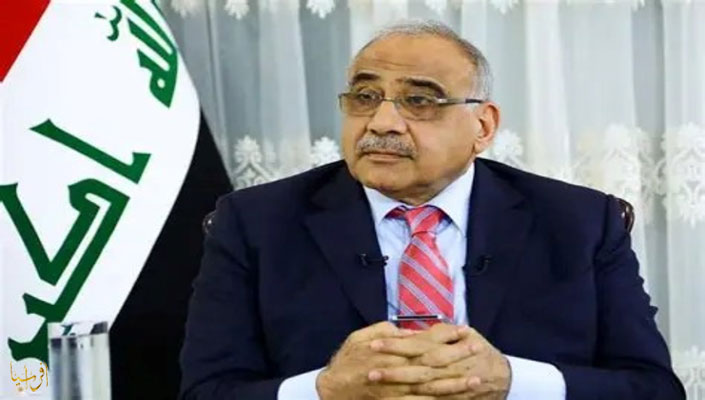
Afrasianet - Al-Mayadeen - Many people are still wearing pre-2023 glasses on their eyes, with normalization, the Gulf economy, and Israeli and American power being the main paths. Mr. Adel Abdul-Mahdi provides a reading of the events between 2024 and 2026, which broke this paradigm!
West Asia Region?: Why is this name used in evaluating the results of battles and wars since the Al-Aqsa Flood and to this day?
A. Throughout history, the region of West Asia has been the most important region in the world. It is perhaps still one of the most important regions of the world today in terms of its history, location, wealth and population. It is where the divine messages were revealed. From it the first civilizations arose, and in it the great empires that ruled the world for a long time settled.
The name "Middle East" is a transcendent colonial expression, which expresses the centrality of Europe, so that the West is the center and axis, around which it revolves and has the rest of the parts. All of this is part of the components of the concepts and practices of domination. Just like drawing a map of the world – which is now circulating among us – according to the Mercator Projection, which inflates the areas of Europe and the West, and shrinks the areas of other continents.
The rest of the nations are not partners or equals or independent independent forces for the West, but shadows of it, without which they do not exist. They are measured, near or far, by the extent to which they serve it and achieve its interests.
The Middle East or the Near East is on its borders, or mediates between it and the Far East. West Asia is its land route to Africa, that is, the whole of the ancient world. The name is not intended to take it away from its other national or religious spaces, it is an essential part of the Arab and Islamic nations, and it is a major part of the countries of the South, the Third World, and the global national liberation movement.
- Population: Based on the United Nations estimates for 2026, the population of the West Asia region is about 317.7 million.
- Area: Area estimates vary by boundary classifier, but the most common figures are:
. About 4.8 million square kilometers (according to the United Nations and Worldmeter)
. Approximately 6 million square kilometers (according to other encyclopedias that include a wider scope).
- Countries: The list of countries varies based on the political or geographical definition adopted, but the following countries are usually mentioned:
. Arabian Peninsula: Saudi Arabia, Yemen, Oman, UAE, Qatar, Bahrain, Kuwait.
. Fertile Crescent: Iraq, Syria, Lebanon, Palestine, Palestine and its occupied territories, and sometimes Cyprus is added.
. Iranian Plateau: Iran.
. Anatolia and Caucasus region: Turkey, Georgia, Armenia, Azerbaijan.
. Some classifications may include Egypt (Sinai Peninsula) and Afghanistan, while others exclude them.
In this paper, we will evaluate the war from the whole of West Asia as one interconnected arena. We do not judge and deal with each country, or the event as a separate event from the whole scene. This allows us to properly weigh and measure what is going on in the arena as a whole, and thus to evaluate the effects, expectations, and sources of strength and weakness in each country. Our vision is not torn apart and lost in the details, variables, and momentary effects, and there are at least two considerations for following this approach.
- The arena is indeed interconnected in its events, the pillars of the battles taking place in it, and the unity of the arenas and the goals of all the warring parties in it. The United States, the West, the Zionist entity and some local parties are governed by a unified strategy throughout the region. Their policies in each country are part of that strategy, and so do terrorism and ISIS.
Only our peoples and countries must remain governed by their geography, concepts of sovereignty and fanaticism, which colonialism designed as the basis for them. If this is to govern us realistically, it must not rule us at least conceptually, so that we can overcome the wrong and misleading influences, and so that we can see events, their repercussions and their consequences more realistically.
- If we remain on the fragmented view, we will fall into the game of the media, bloggers, and propaganda and the amplification of partial and localized news at the expense of macro and comprehensive facts. We are absent from the big waves and the facts that make up reality and its paths, and we are drowning in the small truths that no matter how big they are, they will remain small waves that will be swallowed up by the big waves when their definite hour comes. This is what we see happening, unfortunately, with many people. They misjudge and deny the facts. When events come against what they were preaching, we see them not reviewing themselves, but clinging to new narratives and illusions, without taking precautions from what has happened and is happening.
Palestine is the heart of the region. And the heart of events, the past, the present, the future of the region, and everything is organically connected to Palestine. That doesn't mean it's not connected to other things. That's how it was. And that's how it is now, and that's how it will remain. And it's not just a struggle over a piece of land, history is full of the transformation of larger and richer areas of Palestine from one monarchy to another.
Palestine represents a point of conflict or meeting between the heavenly religions. Because of it, the Frankish Wars (Crusades) were from the end of the eleventh century (1096 AD) to the end of the thirteenth century (1291 AD). It contains the first prophets of Judaism, and it is the birth of our master Jesus (peace be upon him), which is the first qibla for Muslims, and it is the third of the two holy mosques, and the land of Israa and Mi'raj, which is the promised land for the Jews.
That is why we say that Palestine is the compass. In it all things come together. We are not facing religious wars in a specific part of the world, but rather a colonial movement that made, nurtured and nurtured Zionism. A movement in which all peoples participate, with or against it, participate. We are not facing an old or new history and time, but the whole of history. We are not facing a patch of land for a people or a nation that wants to be displaced, but rather a global project that has no limits, a project that may be the first factor of nuclear wars. Any analysis that excludes Palestine, Zionism and its effects on states, governments and peoples, Western hegemony and global capitalism, ignores a major factor, or the first factor by which things are measured.
Before getting to the heart of the matter, it may be useful to mention a narrative on which Judeo-Anglican Zionism is based, which says that this is a land that God has assigned to the Jews and should be given to them.
Who are the Jews? Regardless of the correctness or legitimacy of relying on religious narratives to draw the rights of peoples and states today, the question must be asked whether the Jews of Palestine today are descended from the prophets of Israel, or are they descended from the inhabitants of Palestine at the time? Are Herzl, Ben-Gurion, or Netanyahu the heirs of the population that lived through that period?
Or are the Canaanites who predate the period of the Torah and Talmud by thousands of years, and who have always been the inhabitants of these places and did not come to them from abroad? Perhaps the most prominent study on this subject is the 2020 study by the journal "Seal", which is the largest and most accurate study by everyone. An international team of scientists, in collaboration with Harvard University, the Hebrew University, and others, analyzed the genomes of 93 skeleton remains of Canaanite sites (Megiddo, Sidon and Ashkelon) and concluded that Palestinians and Arabic-speaking groups in the region, as well as Jewish groups, inherit at least 50-80% of their genetic makeup directly from the Canaanites and the inhabitants of the Levant in the Bronze Age.
Other than the above study, no contemporary Jewish family (neither Netanyahu, Ben-Gvir, nor other founders of the state) has a family tree, genealogical documents, or DNA tests dating back to before the Babylonian or Roman captivity, let alone the era of the Israelite prophets.
This research will deal with the unity of the battle, the unity of the region, and the reality and future of the three forces active in this arena, and we mean by that:
. The hegemonic forces are represented by the United States, the Zionist entity, and those allied with them.
. The resistance forces from Iran, Yemen, Palestine, Lebanon, Iraq and those allied with them.
. Swing and centrifugal forces.
We will divide this research into two parts:
1. Adopting the criterion, methodology and method to evaluate what has happened and is happening.
2- The balance of power between the three main forces before and after the Al-Aqsa Flood
Section One Criteria and Methodology
1- The criteria adopted to calculate victory and defeat, and the rising and falling forces.
A. Academic Standards: Military academies, such as the Prussian and French schools until World War II, relied on criteria derived from the theories of key theorists such as Carl von Clausewitz and Antoine-Henri Jomini to evaluate victory or defeat based on decisiveness on the ground, the destruction of the enemy's army, and the achievement of political goals.
- Neutralizing the center of gravity and destroying military power:
· Destruction of the main army: Consider the destruction of the adversary's "center of gravity", represented by its core field forces, as the most prominent criterion for decisiveness.
· Loss of combat capability: The inability of the defeated army to regroup or field follow-up.
· Forcing the adversary to retreat: Controlling the theater of operations and forcing the enemy to withdraw from its fortified positions.
- Spatial and field control:
· Land retention: Gain or protect strategic and vital areas of operations.
· Paralyzing supply lines: Cutting off enemy lines of communication, supply, and rear communications.
· Fall of castles and fortresses: Control of the opponent's core urban and military centers.
- Political and moral will.
· Submission to political will: surrender or acceptance of the belligerent government by the coercive terms of the victor.
· Morale breakdown: The disintegration of military discipline and the sense of defeat within the ranks of the army.
· Achieving the political goal: Since war is an extension of politics, victory is measured by the extent to which the political goals set before the war are achieved.
B. The "West Point" criterion: The U.S. Military Academy adopts "West Point" in its definition of victory and defeat based on the military doctrine of the U.S. Army and the philosophy of the strategic thinker Carl von Clausewitz.
Standards are not measured by controlling territory alone, but by achieving political ends and breaking the will of the enemy.
Thus, the criteria for defeat and victory are as follows, which are divided and textually derived from West Point research centers such as the "Institute of Modern Warfare and Centers of Military Doctrine":
- Defeat Criteria: A force is considered defeated if it loses the ability or desire to fight.
· Physical defeat: Temporary or permanent loss of military capability to conduct operations, stripping the enemy force of its means of combat and destroying its tactical infrastructure.
· Psychological defeat: a breakdown of morale, mental exhaustion, and a loss of will and motivation among the leadership and individuals to continue the war.
· Inability to achieve goals: The inability to protect its core goals or prevent its adversary from imposing its conditions on the ground.
- Victory criteria
· Achieving the political goal: True victory is what translates military success into a lasting political achievement that achieves the goals of the state and ends the conflict in the desired way.
· Culminating Point: Reaching the stage where the maximum possible strategic superiority is achieved compared to the available resources.
· Subjugation of will: Breaking the will of the political and military opponent and forcing him to accept dictates or conditions for ending the fighting.
c. The criterion for scrutinizing the basic pillars on which the systems stand: the previous two criteria, although clear, are more true in wars between states. In the current war, we are facing a full-scale war of liberation. And we can say universal. It is an existential war for everyone. Survival or annihilation.
Therefore, the criteria of "academic school" or "West Point" are not enough to understand the facts. We must go deeper to see the existential foundations of the various parties. We say this despite the fact that even according to the other two criteria, the United States and Israel have failed to achieve victory over the resistance forces, Iran, Yemen, and a broad global front. In the wars of liberation, the resistance is a victory, not to mention deterrence and offensive defense. While the attrition, confusion, and confusion of the other side is considered a defeat, or the beginning of a defeat.
D. Conclusion:
All of the above criteria clearly show that the aggression – despite its assassinations, destruction, air superiority and fire – has been defeated in this war, or is on the verge of defeat. It has not achieved any of the objectives it declared at the beginning of the war. It can be summarized in four objectives:
1- The overthrow and surrender of the Iranian or Yemeni regime or the disarming of the resistance.
2- Dismantling the Iranian nuclear file.
3- Restricting the missile file.
4- Stop supporting the resistance forces in Palestine, Lebanon, Yemen and Iraq.
The Three Disadvantages of Staying in the Current Analysis Mode (Knowledge, Versus Information Consumption)
We are faced with two contexts. The first is the consumption of news and information without placing it in cumulative holistic frameworks that can be judged. The second is the reliance on a true "theory of knowledge" that sees the details in the context of a cumulative holistic vision. It does not limit itself to the event, but also scrutinizes it whether it will grow, endure, grow and become a final reality, or on the contrary, it will be an emergency event that will fade quickly.
The first approach is consumed by scattered news and quick information. It loses the vision and the truth and thus anticipates the future outcomes. The second vision is based on presenting the macro facts, linking the components to each other, and checking the outcomes.
Instead of a quick news story that closes the view, it will be based on graphs that first put the full facts and constants as they are on the ground, and then clarify the upward and downward trends of the various variables and forces.
In short, there are three major drawbacks when adopting the logic of drowning in the consumption of fabricated information, daily news, or even fragmented information:
1- The first disadvantage: "addiction to official sources" (the Reuters trap and satellite channels): Yes, these have superiority and a huge amount of news and reports issued by major agencies (Reuters, Associated Press, Bloomberg). These sources treat the truth as an "event" that covers (assassination of a leader, the fall of a hill, a minister's statement). But they do not treat the truth as a "curve" or "momentum", or as graphs. They give you an immediate picture (1,100 tons of explosives on the Ali al-Tahir Hill), but they hide the composite picture from you (Israel's loss of all deterrence bases in the region). Here, as happens to the majority, the trap of "the event" is not read.
2- The second disadvantage: "lack of conceptual imagination": Politics is not the evaluation of the realities of the moment, or what is called "the art of the possible", but politics is also "imagination", or more correctly, "the science of imagination and perception", which relies on monitoring trends to draw the most realistic perceptions to anticipate the future.
The first approach is "static" and "reactionary", and the second is vital, "dynamic", "progressive" and "revolutionary". Politics and history adopt the equation of "continuity and discontinuity". Some close their visions to the continuity of the past, and continue to cling to the old balance of power.
He does not see that there are major shifts that are being made to adopt the new and to set new balances of power in front of him. The bombing of 27 bases and facilities of the most powerful power in the world is not just a military strike, but a declaration that this force has limits.
The same is true of the Strait of Hormuz or Bab al-Mandeb. They are not just waterways, but the artery of the global capitalist economic system, and controlling them is equivalent to having an economic atomic bomb.
The media has long resisted the cutting off of Hezbollah's supply routes after the fall of the former Syrian regime. However, it does not give a great strategic assessment of this achievement that the resistance has achieved and is accomplishing.
It goes without saying that the global capitalist system, in its rise and fall, does not only affect local powers, but also has a relationship with countries, movements, and major currents of the world. This means the expansion of the alliances established by the resistance with powerful and rising powers globally and historically, such as the BRICS and the Shanghai. It goes beyond mere religious, sectarian or national loyalties, to enter the circles of the entire human movement.
The third disadvantage: "Focusing on the official players, and ignoring the field players: regimes and governments are not the only ones who make the present and the future, they may have formal armies and formal economies.
Section Two: The balance of power of the three main parties, the pillars and the facts to determine victory and defeat, or the curve of rise and fall
First: The situation before October 7, 2023
Let us briefly assess the balance of power between the three parties before the Al-Aqsa Flood, i.e., the United States and Israel and those with them, the resistance and those with it, and the oscillating and centrist forces in three matters:
1. Geopolitical/military.
2- Economic
3- Popularity/legitimacy.
First: The Scales Before the Al-Aqsa Flood
1- The Palestinian situation:
· The limited resistance and the narrowness of the areas of engagement. Limited operations and the firing of rockets from Gaza, which, despite their great impact at the time, do not compare to what will happen later. The continuation of internal divisions and the disruption of the political process. The escalation of Israeli incursions in Jerusalem and the West Bank. The emergence of new local Palestinian armed groups such as the "Assad's Den" and the "Jenin Brigade"
· Living conditions: A suffocating blockade on the Gaza Strip and extremely high unemployment rates, which undoubtedly increased after October 2023.
· Political stalemate and the challenge to the legitimacy of the leadership. Whether the leadership of the Palestinian Authority or the resistance, the complete halt of peace negotiations, and the absence of any political horizon for the establishment of a Palestinian state.
2- The Israeli situation:
· Geopolitical and security: Perceptions in the Israeli military that Hamas is "deterred" and preoccupied with managing economic affairs in Gaza, that the front is relatively stable, and the formation of the most right-wing government in Israel's history headed by Benjamin Netanyahu, which included parties that support the annexation of the West Bank, the relocation of the US embassy to Jerusalem (2017-2018), the official recognition by the United States (2019) of Israel's sovereignty over the occupied Syrian Golan Heights, etc. This period was the peak of the period of "strategic calm" and "diplomatic breakthroughs" (the Saudi-Iranian agreement, normalization efforts with Israel).
· The economic growth rate in Israel was 6.5% in 2022, and after October it declined dangerously.
· Popularity and legitimacy: The internal popular protests, especially with regard to the "judicial amendments," proved that Israeli society was reassured in its situation. The protests were an issue of internal struggle over legitimacy and governance, rather than a difference in the country's attitudes toward its enemies.
3- The Arab Situation:
· The Path of Normalization: The continuation and expansion of the Abraham Accords, with advanced discussions under the auspices of the United States towards normalization between Saudi Arabia and Israel.
· Marginalization of the issue: Official Arab interest in the Palestinian issue has declined in regional partnership discourses.
· Internal Crises: Several Arab countries are preoccupied with their economic or internal crises (e.g., Syria, Yemen, Libya, and Lebanon).
4- The Western Situation:
· Interest in normalization, the Abraham Accords, and regional economic connectivity projects (such as the India-West Asia Corridor announced at the G20 summit in September 2023).
· Conflict management: Dealing with the Palestinian issue as an administrative and security file that needs to be "managed and contained" rather than a final solution.
· NATO and the US-European alliance seek to encircle and encircle Russia and mobilize more former Soviet states (Ukraine and Belarus, for example) or the Caucasus countries (Azerbaijan, Armenia, and Georgia, for example) to break out of their ties and belong to the Western alliance.
· The West collectively stands against the rise of China and exerts all kinds of pressure to encircle China politically and commercially to impede its economic, scientific and knowledge growth and rise.
Second: The situation after the Al-Aqsa Flood, the wars of support and aggression against the Islamic Republic:
Based on the criteria we have adopted and the adoption of the Pillar Review approach, we will assess the extent of progress or regression achieved by each party. Away from "propaganda" and exaggeration of minor events, and the neglect of major logistical and strategic realities with fixed and comprehensive effects.
The disintegration of the foundations of the Zionist entity:
1- Settlements: The rates of immigration and reverse migration in Israel for the past ten years (2016-2026) witnessed relative stability at the beginning, with an average of about 40,000 to 60,000 departures annually. This was followed by a sharp and unprecedented rise starting in 2022, specifically witnessing a record escalation between 2023 and 2025, bringing the total number of long-term departures to about 268,000 Israelis. All the statistics below are derived from the same Israeli sources, which are no secret that they disguise the numbers, and reduce the volume of immigration because of its danger to the future of the entity.
Evolution of reverse migration rates (departures from the entity):
· Previous period (2009-2021): The average departure rate of Israeli citizens from the country was about 36,000 to 40,500 people per year on the overall average.
· 2022: A significant increase of about 59,400 departures was recorded.
· 2023: The number jumped sharply to around 82,800 to 86,500 departures, with the outbreak of war late in the year.
· 2024-2025: Rates have remained at historic record levels not seen in a decade and a half. Some 91,499 people left in 2024, and 90,922 people in 2025 for extended periods of more than three consecutive months or more.
B. The nature and quality of reverse migration:
· Talent and brain drain: Studies issued by Tel Aviv University and the Israel Tax Authority have shown that the largest percentage of the recent wave of departures is concentrated among productive and highly qualified groups, such as engineers, academics, and holders of doctoral degrees.
· Doctors and high-income earners: The percentage of departures from high-income and high-income brackets has increased by about 80%, in addition to doubling the number of departures from the high-tech and health sectors.
C. Migration Balance (Comparison between Arrivals and Departures):
· In contrast, the number of returning Jews or new arrivals has declined compared to the demographic hemorrhage of departing residents, which has led to a clear negative balance of immigration for Israeli citizens (those leaving far outpace returnees and new arrivals), especially in recent years.
2- Trust in the army: deterrence capability, ultra-Orthodoxy, exhaustion, suicide, and deployment capacity: The IDF is going through an unprecedented strategic and operational crisis since the outbreak of the Gaza war in late 2023 and the prolongation of confrontations on multiple fronts, revealed through clear indications of deterrence erosion, severe shortages of manpower and ammunition, as well as widespread exhaustion and sharp political and social differences on the issue of conscription.
A. Indicators of a decline in Israel's deterrence capability
· Failure to prevent preemptive attacks: The inability of the intelligence and technical system to provide adequate early warning or prevent major attacks.
· The multiplicity of fronts and the continued attrition of the home front: The inability to resolve the battles quickly, and the constant bombardment of Israeli cities with rockets and drones for long periods.
· Decline in strategic objectives: The decline of declared military objectives from "total elimination of adversaries" to long-term conflict management and attrition.
B. The Shortage of Numbers and the Crisis of Recruitment and Recruitment
· Human Deficit: The military leadership has acknowledged a shortage of about 12,000-15,000 troops, including thousands of fighters in actual combat units.
· Haredi conscription crisis: The escalation of the sharp political and social dispute over the exemption of students from religious institutes from conscription.
· The burden on reserves: The number of days of service required for reservists has risen to record levels (between 80 and 100 days/soldier per year), which threatens to collapse the reserve system. This is evidenced by the increasing level of trauma and suicides among IDF personnel.
The Rehabilitation Department of the Ministry of Defense admits that about 9,000-11,000 soldiers with disabilities, mental disorders, and PTSD are directly affected by the current war. Recent estimates indicate that about 17,000 new wounded in this war suffer varying degrees of psychological trauma. Nearly 170,000 requests for support have been received. Reports based on military data have documented some 66 suicides among soldiers and officers since the start of the war in October 2023 until mid-2026.
C. Exhaustion and fatigue in the "IDF"
· Physical and psychological exhaustion: The longest continuous war in the history of the Israeli army has led to deep exhaustion of soldiers, regular officers, and reserve forces alike.
· Rebellions and protests on the ground: Instances of rebellion and refusal of orders within some combat brigades (such as the incidents in the Givati Brigade) were attributed by experts to a crisis of leadership, mistrust and total exhaustion.
Lack of ammunition and resources
· Strategic stockpiles scarcity: Facing a severe supply of basic munitions, interceptors, and military equipment parts.
· External constraints and production: Costly reliance on stockpiles from Western allies such as the United States and Germany, with international constraints and pressures and slowness in domestic production lines to fill the gap.
3- External support: The awareness of the world, especially the youth, especially the Jews, of the crisis of the entity.
We are witnessing the disintegration of the relationship between Israel and the United States on the one hand, and Israel and the West in general on the other. The tensions and regressions in the traditional alliance between Israel and both the United States and Western countries are also manifested in the erosion of the Western party and popular consensus, and the disparity in the management of regional files such as the Iranian file and the Gaza arrangements.
The policies of the Israeli government were increasingly seen as a political, moral and strategic burden on the interests of those capitals.
a) Tensions between Israel and the United States.
· The decline of the partisan consensus: Support for Israel has shifted from being an absolute consensus between Democrats and Republicans to a matter of polarization and division within the American political scene.
· The disparity in the region's architecture: Washington's objection to Israel's hardline tactics in Gaza and the West Bank, and the administration's pursuit of regional settlements and security arrangements that do not necessarily coincide with the wishes of the Tel Aviv government.
· The crisis of trust and direct pressure: The US administration has transformed, at many stages, from an absolute donor of cover to a source of pressure and curb the Israeli military movement in order to preserve regional stability and supreme interests.
B. Tensions between Israel and the West (European countries)
· International and moral isolation: Growing public and unofficial criticism in European capitals of Israeli policies and military operations, leaving Western governments under deeper pressure to reassess their relations.
· The disintegration of common values: The feeling of Western elites of Israel's disavowal of the system of modernity and Western democracy.
· Economic and political costs: Large segments of public opinion and decision-making circles in Europe view Israel as a party that harms Western foreign relations and constitutes a strategic and security burden.
4- International and moral condemnations and wars of extermination issued against Israel: After the Al-Aqsa flood and the war of annihilation in Gaza, several prominent condemnations and resolutions were issued against Israel by international forums.
a. Orders and decisions of the international judiciary.
· The International Criminal Court (ICC) has issued arrest warrants for senior Israeli officials (Netanyahu and Galant) on charges of war crimes and crimes against humanity, while rejecting Israel's appeals to the court's jurisdiction.
· The International Court of Justice (ICJ) has issued advisory opinions and judicial rulings affirming the illegality of the Israeli presence and occupation in the Occupied Palestinian Territories, and obliging Israel to take measures to prevent genocide, facilitate the entry of humanitarian aid, and cooperate with UN agencies such as UNRWA.
b. Condemnations and UN reports.
· UN Commission of Inquiry Reports: Independent commissions of inquiry of the United Nations Human Rights Council have condemned Israeli policies, citing evidence of acts amounting to serious crimes and genocide against Palestinians.
· United Nations General Assembly resolutions: The General Assembly adopted resolutions rejecting the policies of annexation and the continuous procrastination of the Palestinian people's right to self-determination and the establishment of their independent state, and called for an end to the Israeli occupation and the imposition of international pressure and steps to reduce Israel's impunity.
5. National unity: liberalism versus religious. Eastern versus Western. The Gaza war and successive regional wars have led to radical transformations in Israeli society. From a "temporary unity" at the moment of the outbreak of events to a deep reality of fragmentation and divisions, which have exacerbated between the nationalist religious right camp and the secular segments. Clashes between the political and military levels have increased. Formal democratic values have clashed with the ambitions of extremist currents.
A. Political and institutional division
· The crisis of leadership and responsibility: A raging struggle over responsibility for the failures of October 7, 2023.
· Dispute between politicians and the military: Mutual criticism between political leaders and heads of the security services regarding the conduct of battles and their horizons.
· The conscription crisis: The fierce debate over the exemption of ultra-Orthodox Jews from military service continues amid widespread refusal to conscript by them.
b. Social and ethnic division
· Secularists vs. Haredim: Widening the intellectual and living gap regarding the sharing of state burdens, military service, and the country's future directions.
· Class and Ethnic Divide: Levels of psychological trauma and social pressure vary between Ashkenazi Jews (Jews of Central and Eastern Europe) and Mizrahi (Jews from Arab and Muslim countries) according to historical and social backgrounds.
C. Values and ideological divisions
· The decline of democratic discourse: The rise of far-right currents that believe in the supremacy of Jewish identity at the expense of the rules of the judicial and democratic system.
· The priority of survival vs. polarization: There is a growing sense within Israeli elites that internal polarization and the value divide are the most serious threat to the existence of the entity compared to external threats.
6- The decline of the dreams of the ideal model: democracy, justice and justice (execution), ethics, science and innovation, and the transformation of the desert into a paradise.
7- The decline of justifications from the periphery about the Israeli entity, the escalation of the resistance movement, whether armed or civilian, and the increase in opposition to Israel's behavior, including from recognized countries.
Pillars of the Global System of Hegemony
1. Decline in excessive deterrence
2- The disintegration of the economic foundations of the system of hegemony: The global economic system is witnessing a radical transformation and a gradual disintegration of the traditional rules of globalization that have prevailed for a long time, to be replaced by the logic of retreat, national security, strategic hedging and competition. Without going into details, the US debt has exceeded the limits of $40 trillion, and it is constantly rising.
The role of the dollar in the reserves of central banks has declined, and the economic growth rates of Western countries have declined. The infrastructure of Western economies has been degraded. The economies of the old colonies have advanced and deprived the metropolitan centers of wealth and capabilities that would have allowed them to have a surplus of power that would allow them to dominate the world.
a. Open supply chains and absolute efficiency.
· Shifting to protectionism: moving from seeking the lowest cost of production across continents to localizing or transferring industries to friend-shoring
· Priority for flexibility and security: The continuity of the flow of goods is becoming more important to countries than simply reducing operational costs.
b. Multilateral freedom of trade
· The Decline of the Role of International Organizations: The Effectiveness and Rules of the Security Council and the World Trade Organization in the Settlement of Fair Disputes.
· The rise of tariffs and targeted policies: Tariff barriers by major powers and massive government subsidies for domestic manufacturing and the green economy.
C. The Consolidated Financial and Monetary System
· Politicization of the financial structure: The increasing use of economic and financial sanctions and cross-border assets as tools of political pressure.
· Monetary pluralism and alternatives: The decline of absolute and monolithic dominance of traditional payment networks and currencies in favor of alternative monetary arrangements and bloc-based efforts.
W. Global technical and digital cooperation
· Technological fragmentation: technical disengagement and mutual restrictions on state-specific technology investments. Impact of this disintegration on national economies (developing and emerging)
· Hindering co-innovation: Pure and cross-border industrial cooperation has slowed due to mutual strategic uncertainties.
· Opportunities for regional blocs to play an alternative role.
3- The failure to encircle Russia, besiege China, and eliminate the Iranian regime. On the contrary, the emergence of differences and contradictions between all Western parties, whether between them or between the United States and Israel. Or between the West and Israel, or even the United States and Israel. Or between the normalized countries and Israel, or the swing countries, the United States and Israel. The role of Shanghai and BRICS has escalated. It has turned into challenge and confrontation instead of hidden policies and politicization.
4- The disintegration of the unity of the countries of the hegemonic system with the leader and leadership of the world (the United States). The emergence of sharp conflicts, as is the case with the United States and Canada.
A. Divergent foreign and security policies: The most prominent indicators of the disintegration or cracking of the Western camp led by the United States are the divergence of strategic visions between Washington and European allies, most notably the disagreements over the management of regional crises such as the Ukrainian or Iranian file, Europe's refusal to engage in some American military operations, as well as the American tendency to review the military presence in the West Asian region, and the reduction of support in NATO to pressure Europe to take on the burdens of its own defense.
· European rejection of unilateral operations: The reluctance of key European countries to participate in unilateral U.S. military operations or pressure toward Iran and the Gulf region.
· The crisis of the commitment to collective security: The US administration has repeatedly threatened to reconsider its traditional obligations within NATO.
· U.S. Military Review: The U.S. Department of Defense announces the start of a comprehensive review of the presence and military forces in Europe to push European allies to bear the full cost of their defense.
b. Internal economic and political fissures
· Trade disputes: The imposition of tariffs and protectionist policies that affected the confidence of trading partners on both sides of the Atlantic.
· The Rise of Populism: The Growth of Political and Right-wing Currents in European Countries Demanding Reduced Dependence on the American Decision and the Search for Strategic Independence
Third: How is the balance of power now
The U.S. and Israeli militaries are bombing their enemies, and their systems are unable to stop the missiles and drones that are hostile to them. Significant numbers of Israelis are emigrating. The U.S. and global situations are facing great divisions and difficulties, while the Gulf regimes are facing difficult security and economic difficulties. All of these indicators are indisputable facts.
Yet the mental model for many remains stuck with the realities of pre-October 2023. Normalization, the "Gulf economy," and Israeli and American power were the main tracks. Many are still wearing pre-2023 glasses. Events from 2024 to 2026 have broken this paradigm.
In order to correct this in the adopted methodology, it is necessary to "weigh the events" instead of the "number of events", as examples:
- The bombing of 27 American bases has a disjointed event weight of key pillars, equivalent to 100 times the Israeli operations in Lebanon, Palestine, and Syria. Because it changes the equation of deterrence and the balance of power in the region.
- The emigration of a quarter of a million Israelis has an eventual weight that dismantles the main pillar of the settlement idea on which the Zionist project is based, and is equivalent to 100 times that of any diplomatic statement.
- Sana'a's control of Bab al-Mandeb and the closure of the Strait of Hormuz have an evental weight, and a change in the central pillars in the balance of power in the region is equivalent to 100 times the Israeli advance in Syria or Lebanon, and control of some corridors and villages.
- The funeral of 10 million Iraqis for the body of Mr. Khamenei has an eventful weight because it shows the mobilization in support of the resistance, and it is equivalent to 100 times the demand for the disarmament of the resistance demanded by Israel and the United States. The environment of resistance and the will of the people is the guarantee that the weapons will be either in the hands of an authority that resists aggression or an authority that is too weak to withdraw a weapon from the resisters.
- The rise in energy prices, indebtedness, the decline in the role of the dollar, and the escalation of the structural economic crisis in the world have an event weight equivalent to 100 times the increase in Iran's economic difficulties. The global economy is not going through a transient economic crisis, but rather the collapse of many of its historical structural foundations. With the increase in its expenditures, the loss of great resources that used to come to it from its colonies, and the continuous progress of its opponents on all fronts.
And measure on that.
The "narrative of the moment" and perceptions must be abandoned, which are entrenched in historical continuity, which are sold by agencies, satellite channels, daily debates, and the logic of regimes, which take over the minds, by addressing their daily affairs and their immediate feelings.
Moving to a "comprehensive field understanding" and paying attention to everything that affects the real existential foundations. This causes decisive radical interruptions and major global, regional and national effects.
From this perspective, we must see the change in the balance of power through the economic crisis of the Gulf countries, for example, and the decline in their oil exports, which are the source of their strength. Bloomberg reported that the Saudi Ministry of Finance has held talks with international banks to arrange a sovereign loan of up to $10 billion in September 2026.
The UAE has requested loans to government-linked entities and semi-government companies to finance its commercial activities. Qatar's budget deficit for the first time in its history amounted to $5.82 billion during the second quarter of 2026. The total public debt of the Saudi government amounted to $444.6 billion, which is equivalent to (31.7%-33%) of the GDP. The UAE's public government debt is about $192-257 billion (depending on the totality of some government companies' debts) and represents about (32.8%) of the GDP.
It is through this lens that we must see the unprecedented international isolation of Israel and the United States. Especially among the global youth. The mass rise where the bodies of leaders are assassinated, but the Arab and Islamic street is becoming more sympathetic. The axis of resistance is shifting from an "Iranian issue" to a "regional liberation project", even a "global". The people see their regimes as incapable of protecting Gaza and Jerusalem, while they see Iran, Hezbollah and Ansar Allah fighting. This puts the Gulf regimes and the swinging states in a position of "accountability or impotence" in the eyes of their people.
The memorandum of June 17, 2026 signed between Presidents Trump and Bezshekian is not just an agreement, but an American admission of defeat. This does not change that the United States later tried – and is now trying – to circumvent it. It agreed to basic conditions in Iran's interest, and to negotiate with Iran from a position of weakness, and that this weakness has increased and not retreated. The axis of resistance feels that its strength has increased and not weakened from June 2026 and today.
All of this is reinforced by the positions of the Shanghai and BRICS countries, whether on the Palestinian issue or the war on Iran. The Shanghai Cooperation Organization represents 42% of the world's population and 36% of its economy according to the PPP. While the BRICS represents half of the world's population and 41% of its economy according to the PPP scale. This makes the axis of resistance in harmony with an emerging global bloc that has all the scientific, security, economic, political and international elements to confront the Western hegemony, which is in crisis and declining.
The main takeaway: who is advancing and who is retreating?
We organized four tables. The first three tables will show the economic and military percentages of the parties that we have dealt with in our research. The fourth table represents the effects of the war since the Al-Aqsa Flood to the present day on the balance of power and the proportion of each party in it. In the four tables, we relied exclusively on Western sources to calculate the percentages.
Note that we took India out of Shanghai and placed it with the centrist and oscillating powers, even though India is swinging more towards Russia, China and Iran, than it was before the Al-Aqsa Flood. But we did this as a precaution, and we paid the charge of falling too far.
However, there are field results that have certainly corrected theoretical estimates or academic calculations, including:
1- The collapse of the doctrine of imported security" and the exposure of American bases.
2- The equation of "cost versus efficiency" (asymmetric weapons).
3- The Weapon of Corridors, Straits and Logistics Privilege of Shanghai.
4- The failure and freezing of Israeli and American goals and their repercussions.
5- The powers of the United States, Israel and the West in general, despite the continuation of their power and resources, no longer determine the fate of the battle, but rather try to reduce the losses. They do not know how to withdraw from a battle that opened their fire, without a real strategy or components.
The American and Israeli publics are the most important indicator of the victory or defeat of Trump and Netanyahu. Their apparent decline in popularity is now the most important proof that they have failed in this war.
This will not change what will happen in the upcoming elections in the United States and Israel. Elections are flawed and money. Trump has already begun publicly bribing voters by announcing that he will pay $5,000 to every adult American citizen, after his popularity plummeted due to the failure of the war in the polls to about 32 percent, and Netanyahu is doing the same by holding parades in Lebanon, Syria, Gaza and the West Bank.
6- The Axis of Resistance writes the rules of West Asia, and even changes the global equation from a unipolar world to a multipolar world.
7- The swing countries and powers have narrowed their options. If they go along with Israel and the West, they will lose their legitimacy. If they side with Palestine and the resistance, they will enter into a battle with the first party, and they will be treated as if they are in an alliance – real or objective – with the second side.
8- Although not all of the SCO countries are part of the axis of resistance, but the axis of resistance is dominated by them. There is a coalition of interests in breaking the unilateralism of the international system, which is strongly supported by China and Russia. The axis of resistance and the Shanghai countries are in the same longitudinal line and each side serves the other, which allowed us to deal with them as a front, even if it is not declared.
9- These and other considerations prompt us to make adjustments. This is shown in the fourth table, which we organized by making changes to the old ratios by giving ratios that many have adopted in the distribution of power sources in the field of West Asia, and not only globally, and that they are available in the field and not only as quantitative components. They usually use (6) ratios: military power (30%) according to each side of its ability to use and renew its weapons + economy (25%) by diagnosing the pressures caused by the economy + logistical capacity and corridors (15%) + alliances and strategic depth (10%) + deterrence and counter-deterrence and its effectiveness (10%) + the ability to withstand attrition and political legitimacy (10%).
Table Four:
Final Conclusion: I will respect the proportions of Western sources. However, if we add the economic and historical factors and the widespread movement of the peoples to reject unipolarity, Israeli policies, the solid will of the resistance on the one hand, and its successes on the ground in thwarting almost most of the plans of their enemies, and the movement of the peoples on the other hand, and the dynamism and dynamism of the Shanghai and BRICS countries, we believe that the ratios will change again, and we estimate that at the current stage they will be as follows:
1. The axis of resistance + Shanghai and BRICS, which are not part of the axis of resistance. But they provide an umbrella to consolidate their new foundations and gains: 55% (steadily progressing).
2- The camp of the United States, Israel, and the West: 30% (a clear decline, with contradictory and confused policies, structural crises and sometimes even existential crises).
3- States and oscillating and centrist forces: 15%. They still seem to be active on the surface, but they are losing the real initiative and are gnawing at their internal weaknesses. This will prompt them to determine their options in the near future. This will change their current percentages. We believe that according to all the data, it will improve the rates of resistance by either part of its share or its entire share to stand up to aggression and occupation. This will generate great historical momentum, the data of which may appear before the end of this decade, according to objective estimates.
One final note: When we talk about "final calculations," we are not talking about absolute results, but about results for the period between the "Maximum Flood" and the results recorded now. Facts may change in the future, fast or slow, up or down, as happens with any final calculations.
This research is not an academic research, to present various estimates and sources of information. Rather, this is our estimate according to what we believe to be reliable, truthful, and objective information. We claim these facts and estimates. We adhere to the saying "on those who claim to be sworn (truthful), and on those who deny the evidence (proof, etc.)."
________________
Adel Abd Al Mahdi - Former Iraqi Prime Minister.
