
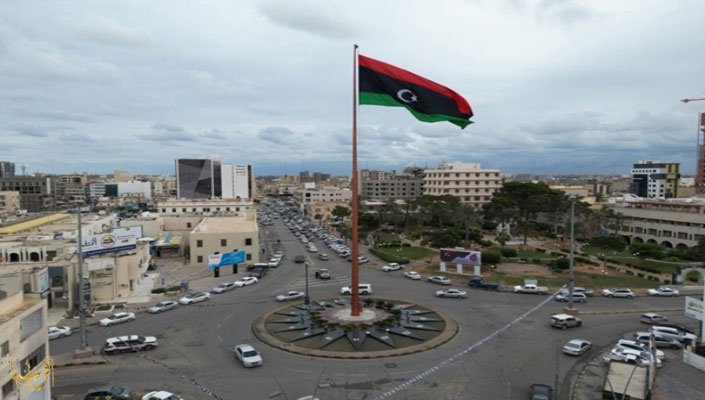
Afrasianet - The United States is seeking to broker a power-sharing deal between the two rival administrations in eastern and western Libya, a U.S. official said Wednesday, in a bid to unify the oil-rich country.
Massad Boulos, US President Donald Trump's adviser on the Middle East and Africa, told the Financial Times that he is working to unify the country's fragmented institutions under a single authority, while encouraging US oil companies to invest.
Boulos, a Lebanese-American businessman and father of the US president's daughter-in-law, Tiffany, said, "Our plan is to form a unified government and unify all institutions," but this plan has not been formally put forward by the Libyan parties and most of its details are based on informed sources, not a public agreement.
Boulos said his plan would be "complementary" to the U.N. efforts to hold parliamentary elections and could become "part of a package. and a short-term arrangement" that precedes the parliamentary and presidential elections.
Boulos said Washington is encouraging major U.S. oil companies to invest in Libya, noting that ConocoPhillips and Chevron have already signed agreements with Libya in 2026.
He noted that Libya's oil production could double to 3 million barrels per day by the end of the decade. "This will put Libya on the global map of major oil producers," he said.
A unified government under the auspices of the United States
According to informed sources, the plan is to appoint Saddam Haftar, the son of retired Libyan General Khalifa Haftar, the military commander in control of eastern Libya, as head of a presidential executive council.
The sources added that the head of the internationally recognized government of national unity in Tripoli, Abdelhamid Dbeibeh, will continue in his position, and one of his close relatives will assume a position in national security.
Saddam Haftar is the deputy commander of the so-called Libyan National Army, the armed faction led by his father in Benghazi in eastern Libya.
Diplomats and analysts said they were skeptical that the Boulos Agreement, which would formalize the power exercised by leaders who have relied on Libya's armed factions, could be achieved amid mistrust between the two sides and the concessions that will have to be made on joint governance.
Claudia Gazzini, a senior analyst at the International Crisis Group, which is currently visiting eastern Libya, told the newspaper: "These are just wishes. There is no public discourse here in Benghazi about reconciliation with the other side or that it is time to move forward. It's all about the achievements of those in power now, and it's all based on seeing Tripoli as an enemy."
Ghazini noted that many Libyans are skeptical of the possibility of concluding the agreement, because they "know the personalities of the conflicting parties and their way of thinking."
Consultation & Support
Italy, Libya's main trading partner, has been consulted on the plan and expressed its support, but believes it is likely to be difficult to implement.
Libya has been in chaos since the 2011 revolution that toppled the late leader Muammar Gaddafi. After disputed elections in 2014, the country was divided into two rival political camps, one in Tripoli in western Libya and the other in Benghazi in the east of the country.
Boulos pointed to steps taken in his roadmap to unify Libya, including the agreement reached last November on financing development for both sides of the country. In addition, for the first time in more than a decade, the East and West signed a unified national budget last April.
He added that the two sides also participated in the Flintlock military exercises, which were led by the US Africa Command (AFRICOM) and conducted in Libya last April.
"Most importantly, our colleagues at AFRICOM have been and are still working with both sides on a military unification plan," Boulos said.
