
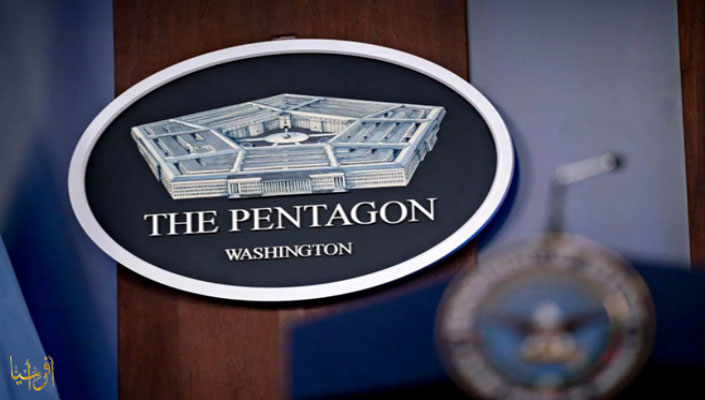
Afrasianet - Despite the close U.S.-Israel alliance and decades of intelligence cooperation, two current U.S. officials and a former U.S. official say the Pentagon is increasingly concerned about Israel's escalating espionage activities against the United States.
The officials confirmed that the US Department of Defense has recently raised the level of counterintelligence threat associated with its closest allies in the Middle East to the highest level possible.
The U.S. Defense Intelligence Agency (DIA) has released a new counterespionage risk assessment in recent weeks, the officials said, as tensions between the U.S. and Israel escalate over the future course of the war with Iran. They added that the agency published an internal memo that raised Israel's rating to a "critical" level, according to NBC News.
The officials explained that this designation came as a result of concerns within the Pentagon that Israel is making intense efforts to monitor senior U.S. officials, with the aim of obtaining information about internal deliberations and decision-making mechanisms within President Donald Trump's administration on conflicts in the Middle East.
The Defense Intelligence Agency's assessment includes a seven-page document accompanied by an infographic, according to one official. The document notes that Israel's ability to carry out human espionage and gather technical information has reached a "critical level."
The report also documents a series of specific incidents that have escalated U.S. concern, the official added.
The Israeli embassy in Washington categorically denied the allegations, stressing that "Israel does not collect intelligence on American entities, as well as American government officials."
"Israel's intelligence efforts are focused on its enemies rather than its allies, and any claims otherwise are either the result of misunderstandings or political motives," an embassy spokesman said.
The Pentagon declined to comment on the report, while a White House official called the story "completely false" and based on sources who "have no knowledge of what is going on."
The Office of the Director of National Intelligence, which oversees all U.S. intelligence agencies, did not respond to requests for comment.
Although mutual espionage between allies and adversaries is a common practice globally, current and former U.S. officials have emphasized that Israel's recent moves have gone beyond what they see as routine or expected intelligence activity.
Officials could not say whether there was a specific incident that prompted the Defense Intelligence Agency to raise the alert level.
The development comes at a time when relations between President Trump and Israeli Prime Minister Benjamin Netanyahu are increasingly at odds over the war with Iran and Israeli military operations in Lebanon, including a tense phone call last week.
Trump later admitted to reporters that he had called Netanyahu "crazy" during the call, amid growing questions about whether the two countries' goals in the Middle East were beginning to diverge significantly.
Since the ceasefire went into effect in early April, Trump has been seeking a diplomatic deal with Iran to end the war that began on Feb. 28. Israel, on the other hand, has publicly expressed skepticism about Tehran's commitment to any potential deal.
Netanyahu has also pushed for a resumption of military strikes against Iran, and has disagreed with Trump, who has called for a reduction in attacks against Hezbollah in Lebanon, according to Western officials.
U.S. officials and experts say Israel is watching closely whether Trump decides to resume large-scale military operations against Iran or move toward ending the conflict.
The officials noted that the most prominent practical outcome of this assessment within the Pentagon is that U.S. officials are required to take extra precautions when traveling to Israel or holding meetings with Israeli officials.
At the same time, they stressed that the new assessment has not yet affected the level of daily intelligence exchange between the two countries, especially those related to the war with Iran.
One current official said, "The United States is already taking extra precautions when visiting Israel. They are known to use very aggressive methods of gathering information."
The U.S. side, like other countries, maintains extensive counterintelligence systems aimed at monitoring and preventing espionage operations carried out by foreign countries, whether adversaries or allies, protecting government secrets and monitoring any attempts to recruit or pressure U.S. officials.
According to former diplomats and security officials, Israel has for years enjoyed a reputation for extensive intelligence activity even toward the United States itself, something that has long worried U.S. security officials and diplomats.
Experts and former officials say senior U.S. officials often take special precautionary measures during their visits to Israel, including using makeshift phones and computers, and being very careful when holding talks inside hotels.
"Israel has a very aggressive intelligence apparatus," said Emily Harding, deputy chief of defense and security and director of the Intelligence, National Security and Technology Program at the Center for Strategic and International Studies in Washington, D.C., adding that Israelis are "very interested in knowing what we're doing."
The controversy is reminiscent of the case of U.S. Navy intelligence analyst Jonathan Pollard, who was convicted in the 1980s of selling top-secret U.S. documents to Israel and spent 30 years in prison.
Other precedents suggest that the U.S. itself is spying on its allies as well, as revealed by former National Security Agency contractor Edward Snowden's 2013 leaks that showed Washington was eavesdropping on European leaders, including former German Chancellor Angela Merkel.
Despite the continued close U.S.-Israel alliance and decades of intelligence cooperation, current concerns about the possibility of Israeli espionage operations at this critical time could undermine trust between the two countries, especially in light of the differences over dealing with Iran, according to former U.S. officials.
