
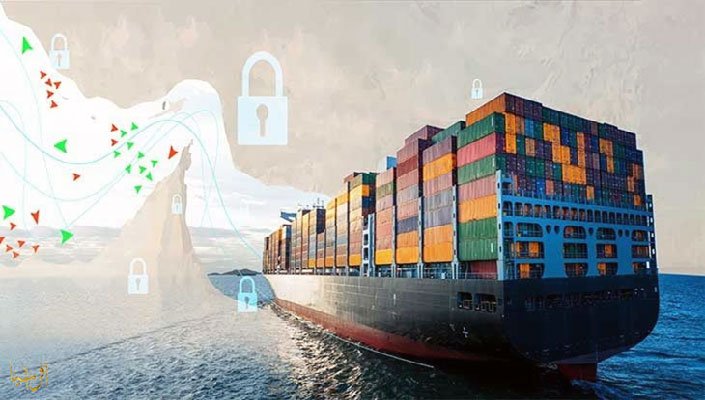
Afrasianet - Bilal Al Talidi - The first crisis is the energy crisis that resulted from the US-Israel war on Iran, but also a global trade crisis due to the closure of sea crossings, the second crisis is the turning point that the Russia-Ukraine war has entered, and the resulting global food crisis, as well as the deepening of the energy crisis in the world, and the third crisis is related to the Israeli incursion into the region and the paths of distress that have entered The situation in Lebanon, occupied Palestine, and Syria is due to Tel Aviv's insistence on using the card of disarming the Palestinian factions, and the Lebanese Hezbollah to create an additional justification for the occupation, preventing Damascus from building any military capability, and trying to drag Ankara into the war, and the consequent crisis of the regional security system in the entire region.
Climate data, especially the expansion of heat waves and the extension of droughts, are deepening the food crisis in the Arab world, and even bringing the challenge of security to the forefront Many strategic experts who follow the security challenges at their various levels put a red circle on the European region, as the most fragile region, considering its energy needs, because in the end, the United States of America cannot provide the energy needs of all of Europe, and Algeria can at the extreme limit only provide part of its energy needs.
But this red circle, which is justified by an energy crisis that Europe faces in the absence of a political solution between Iran and Washington, is turning black for the Arab region, due to the multiplicity of security challenges.
The picture looks very bleak, as the oil countries cannot continue to spend in the long term by moving their sovereign funds as long as the Strait of Hormuz is closed, and alternative options are possible, but on the one hand, providing them requires large investments over a longer period of time, extending for years.
On the other hand, the security guarantee, as replacing ships with investment in the construction of pipelines that divert to the Red Sea, for example, requires securing these pipelines, which involves great risks in a turbulent regional environment in both Yemen and Sudan, and even thinking of Syria as one of the possible alternatives, has become a red line imposed by Tel Aviv with its aggressive policy.
As for the non-Gulf Arab countries, especially those that do not have energy resources, the matter becomes more complicated, as the Russia-Ukraine war tends to become more complex by targeting energy sources and spaces The more the closure of the Strait of Hormuz, the worse the fertilizer shortage crisis will be, and with it the crisis of agricultural production.
However, the repercussions of the Strait of Hormuz crisis raised the challenge to a higher ceiling, causing high inflation rates, low growth rates, and higher food prices, as the most importing countries such as Egypt, Saudi Arabia, and Algeria became in the circle of the challenge of food security.
"The food crisis in the world is worsening and the Arab world will have the largest share of it, and the longer the closure of the Strait of Hormuz, the more the crisis of fertilizer shortages increases, and with it the crisis of agricultural production"
________________
More dangerously, the repercussions of these crises will be greater on the African continent, which will have a serious impact on some Arab countries, especially in North Africa.
The State of Food Security and Nutrition 2026 by the Food and Agriculture Organization of the United Nations (FAO), the International Fund for Agricultural Development (IFAD), the United Nations Children's Fund (UNICEF), the World Food Programme (WFP) and the World Health Organization (WHO) indicates that by 2030, some 510 to 520 million people in the continent will face hunger The 2026 Middle East conflict, coupled with extreme weather events and cuts in official development assistance and humanitarian funding.
Threatens to undermine gains made in the fight against hunger, Sudan, South Sudan, Somalia, the Democratic Republic of Congo, Nigeria, the Central African Republic, and Burundi topping the list of threatened countries, meaning that Arab countries, particularly North Africa and Morocco in particular, will be These challenges pose serious problems, all of which revolve around the ability of Arab countries to ensure food security in light of regional tensions in the region, as the economic situation, in general.
In the event of a scenario of continued conflicts in the Middle East and between Russia and Ukraine, is more likely to regress, and international and regional conditions will limit the ability of Arab countries to In the so-called Arab Spring of the Arab Revolutions, the explosion of the social situation provoked the political crisis in the Arab world, especially the crisis of democracy, and the demand for justice, dignity, freedom, and governance topped the list of priorities of the Arab peoples in the various opinion polls carried out up to 2013.
But today it seems more complicated, because when it comes to food, the scenario becomes darker, especially in countries that know other security challenges, such as water security, or challenges related to political legitimacy, and the lack of trust in political institutions.
In the language of the Arab citizen, the demand for freedom and justice is an essential aspiration that is concentrated in the memory, but it can be postponed if stability is threatened, because the stability that guarantees a livelihood is worth sacrificing by postponing the demand for freedom and justice, but when the demand for sustenance and food itself becomes threatened, stability loses its justifications, and the demand for justice and freedom returns again, not as an aspiration, but as an existential demand in order to meet the needs of the living.
The Arab countries that are most threatened will not necessarily be those whose suffering will be greater than the food crisis, but rather Those whose levels of legitimacy are declining, whose distrust of them and their institutions is high, and the social forces that are most likely to influence the scene will undoubtedly have a greater capacity to mobilize social and promote the values of social solidarity.
________________
Bilal Al Talidi - Moroccan writer.
________________
