
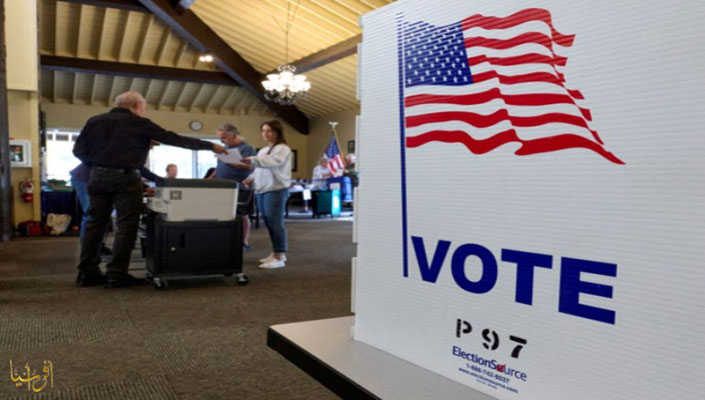
Afrasianet - "I don't care." This is how Trump talks about the impact of Iran's war on the midterm renewal.. U.S. President Donald Trump downplayed the impact of the Iran war on November's midterm elections.
Trump has said on more than one occasion that he is not worried about the political fallout of a protracted conflict with Iran, adding that their leaders are wrong in their judgment if they think the midterm elections will force him to make a deal.
Referring to the Iranian leadership, he recalled at a White House cabinet meeting: "They thought they would be more patient than me, and they said we would be more patient than him. He has midterm elections. I don't care about the midterm elections."
Trump made the remarks during discussions about how to end the conflict.
His disregard for the pressures of the midterm elections could add to the fears of Republican allies, who are already concerned about past statements that have downplayed the economic impact of the war on Americans.
Trump had initially said the war would last four to six weeks, and it is now entering its fourth month.
Sometimes, he suggested that the conflict could end in a matter of days, later saying that it might last for some time.
As voters become increasingly concerned about rising prices, especially fuel, political pressure is mounting on Trump's Republican Party , which is likely to struggle to maintain control of the House of Representatives and possibly the Senate.
That concern was exacerbated by Trump's decision to endorse Ken Paxton, the primary candidate facing a scandal, instead of incumbent Republican Senator John Cornyn of Texas.
Paxton is facing criminal fraud charges, and his wife is going through divorce proceedings from him on religious grounds, yet he easily defeated Cornyn in the party's primary on Tuesday after the president endorsed him.
Democrats now believe the Senate seat in this Republican-leaning state can be contested in November.
During the Cabinet meeting, Trump also referred to some of his construction projects in Washington, which some Republican lawmakers see as a distraction from more pressing economic issues.
A Reuters review of his public statements since January showed the U.S. president increasingly mentions the White House ballroom, renovations of Lincoln's reflective pool and plans to build a giant arch.
On the edge Will he resume the war after the midterm elections?
In this regard, Mr. Abdullah Ali Askar writes:
The U.S.-Iran memorandum of understanding came after months of war and tensions that have weighed on U.S. energy markets and the U.S. economy, as U.S. President Donald Trump faces a decline in his popularity, and while the deal has helped calm economic concerns, doubts remain surrounding Trump's future and his ability to survive after the election.
Resumption of War
According to The Telegraph, Trump may ask Iran for a new peace deal after the midterm elections, with a member of his inner circle saying the US president needed to secure a deal before the election to tackle rising inflation and support at-risk Republican seats.
The US source close to Trump said that the US president was required to reach a deal before the election because of the high inflation and its impact on the chances of Republicans to retain their seats in Congress.
He added that Trump may be ready to withdraw from the deal after the Nov. 3 vote, which will determine the balance of power in Congress, which could lead to a resumption of war with Iran.
But the White House denied the allegations, insisting that Trump "always acts in good faith and abides by his commitments" to the agreements he makes.
Five months chance
Trump's poll numbers have fallen to a record low since the start of U.S. strikes on Tehran on Feb. 28, prompting Iran to close the Strait of Hormuz, the world's most important offshore oil chokehold point.
After the announcement of the memorandum of understanding last Sunday, the strait was reopened and gasoline prices fell, providing an economic breakthrough that was reflected in the American political scene, and the US president had five months to try to change the course of his election campaign, which was affected by the decline in his personal popularity during the past period.
Democrats are widely likely to regain control of the House of Representatives, while Senate races are described as more competitive between the two parties.
According to multiple sources, the peace deal and the reopening of the Strait of Hormuz have helped allay fears among Republicans worried about the repercussions of the economic crisis.
Surrender to Iran
The possibility of a reconsideration of the deal after November remains, as the memorandum of understanding has angered hardline Republicans and Israeli officials who see it as a capitulation to the Iranian regime.
According to the 14-point document, Tehran could benefit from an influx of up to half a trillion dollars from the reconstruction fund, released assets and the lifting of oil sanctions.
Critics of the deal fear that the money could be used to rebuild Iran's arsenal of drones and missiles, as well as funding affiliated groups such as Hezbollah, and the memo postpones issues related to Iran's nuclear program and uranium enrichment to negotiations set to conclude within 60 days.
Open Options
Israeli Prime Minister Benjamin Netanyahu is deeply angry with the deal, while hardline Republicans continue to criticize it publicly, as it remains unclear whether Trump will seek to renegotiate with Iran if he abandons the deal, or whether he may eventually head to resume military action.
U.S. Secretary of State Marco Rubio, known for his hardline stances toward Iran, has largely remained silent on the memo, while Trump has reiterated his adherence to keeping military options on the table, saying last Wednesday that the U.S. would "go back to bombing" if talks were not completed within 60 days.
In response to allegations of seeking a new deal after the midterm elections, White House spokeswoman Anna Kelly said the allegations were "fake news."
She added that Trump has always acted in good faith and fulfilled his commitments as long as the other parties have kept their commitments, stressing that he has a proven track record of making good deals for the American people.
The United States has bombed Iran twice during the ongoing diplomatic negotiations, the first in June and the second in February when the war began.
Fragile truce
There is skepticism in Washington about the ability of the ceasefire, which is supposed to last 60 days until negotiations are completed, to hold out for this long.
This truce was shaken after the Israeli bombardment of Lebanon, before a hastily reached truce came into effect.
Amid continued disagreements over key issues, the agreement appeared to be the result of economic and political pressures that pushed the parties to a temporary settlement that eased tensions and reduced pressure on energy markets, without resolving the more complex issues between the two sides.
Trump is between two predicaments. Iran's War and the 2026 Elections
As for the writer Saja Yasser, she says:
In Washington, two crises that are no longer separate in President Donald Trump's calculations intersect: a war with Iran from which the White House cannot find a clear way out without political cost, and a midterm election approaching in a year in which the enthusiasm of a balanced segment of Republicans who do not fully belong to the MAGA camp or to Trump's opponents within the party has waned.
American newspapers and websites read this intersection as a double test of Trump's presidency, because the war is putting pressure on the economy and fuel prices, and confusing the image of a president who promised decisiveness, while an election is approaching that could turn into popular judgment on his management of the war, the economy, and power together.
In an op-ed in the New York Times, Republican pollster Kristen Soltz-Anderson writes that the most pressing electoral threat to the Republican Party lies not in Trump's most loyal MAGA base, nor in the anti-Trump Republicans who have effectively left the camp, but in a broader segment of what she calls "ordinary Republicans."
These are, as the author describes them, clearly conservative and Republican, with a deep aversion to the Democratic Party, but they do not first identify themselves as Trump supporters.
Anderson says that this segment, which represents about half of Republicans, still supports Trump overall, but it doesn't give him the enthusiasm the party needs in the midterm elections.
According to the author's polls, the percentage of Republicans who hold a "very positive" view of Trump has fallen by about 10 points in a year, and only 44 percent of Republicans strongly approve of his management of the economy.
Most tellingly, the enthusiasm gap is widening: 62 percent of Republicans who identify themselves first as Trump supporters say they are very enthusiastic about voting, compared to just 49 percent of those who identify themselves first as partisan Republicans.
Republican Coolness
Anderson put these numbers in the context of a warning to Republicans, because, according to several polls, Democrats seem more willing to go to the polls to stop Trump's agenda.
In Anderson's poll, 82 percent of Democrats say winning the midterm elections is very important, compared to just 57 percent of Republicans, a percentage that drops to 47 percent among "partisan" rather than "Trumpian" Republicans.
Among Republicans who identify themselves more closely with the party than the president, only 29 percent strongly approve of Trump's economic performance, and less than half believe the economy is improving, and they seem less satisfied with the party's performance on health care, foreign affairs, and the state of democracy.
Anderson points out that only about a third of this segment strongly supports U.S. military operations in Iran, which means that the war that Trump presents as a sign of strength against his opponents does not automatically turn into an electoral asset within his party, especially if it remains without a clear victory, or energy prices continue to put pressure on voters.
The Cost of War
This reading meets the Daily Beast's quote from writer Michael Wolf, who says that White House staff and Trump' s political team are tracking oil prices moment by moment, to gauge the political fallout from the war.
According to Wolff, those around Trump "don't know" how to get out of the war, nor how to manage it politically, while the president publicly insists that things are going well.
The average price of a gallon of fuel in the United States was $4.48, up nearly $1.5 since Trump launched his war on Iran on Feb. 28, the Daily Beast reported.
The newspaper also based on a Washington Post poll in collaboration with ABC News and Ipsos, which showed that 61% of Americans believe that the use of military force against Iran was a mistake, compared to only 36% who considered it the right decision, and that the percentage of dissatisfaction with Trump's performance reached 62%, the highest in either of his two states.
The war has so far not given Trump the "flag-waving" effect that accompanied previous U.S. wars in their early days, but has faced widespread rejection from an early on.
In 2026, Iran becomes a double burden: an unpopular war on the one hand, and a tangible cost of living at gas stations on the other.
Truce by name
The Intercept focused on a sharper legal and political angle: The Trump administration is sticking to a ceasefire that it says is not over, despite ongoing clashes between U.S. and Iranian forces.
Gen. Dan Keene, chairman of the Joint Chiefs of Staff, said that since the cease-fire was announced, Iran has fired on commercial ships nine times, detained two container ships, and attacked U.S. forces more than 10 times, yet he said those attacks remain "below the threshold" of resuming major combat operations.
When asked if the truce ended after the exchange of fire between the two sides, Defence Minister Pete Hegseth replied: "No. The ceasefire is not over," according to the website.
The Intercept argues that this insistence is not just a field characterization, but is related to the pressures of the War Powers Act of 1973, which sets a time limit for the continuation of military operations without congressional authorization.
Hedgesath told the Senate Armed Services Committee that the ceasefire, as understood by the administration, would suspend or suspend the 60-day deadline, a suggestion to which Democratic Senator Tim Kaine responded by saying he did not believe the law supported him, warning of "serious constitutional concerns."
In this sense, the truce seems more like a formula to keep the war below the threshold of official recognition: the administration declares victory, adheres to a ceasefire, and at the same time faces attacks and clashes that make the war actually exist, even if it remains suspended in political language.
The specter of the 2026 elections
But the most serious impasse in 2026, writes Thomas Edsall in the New York Times, has to do not just with whether the war will cost Republicans seats in Congress, but also what Trump might do if he feels defeat is imminent.
Edsall places the midterm elections in the context of a long history of Trump's refusal to lose, recalling a statement in which he said his presidency was so successful that the country "shouldn't even have an election."
Edsall reviews a series of statements and actions that he sees as indicative of a tendency to expand presidential power, from Trump's repeated talk about broad rights that people don't know, to his "morality" and "reason" that stop him, to his repeated claims of "rigged elections" and his call for the federal government to interfere in the administration of elections within the states.
Experts and centers such as the Brennan Center and the Cape Orr Republic raise concerns about the use of emergency tools and the executive branch in a tense election context.
Edsall is focusing on Presidential National Security Memorandum No. 7, which he says gives the Justice Department, Treasury Department, IRS and other agencies a license to prosecute leftist groups as linked to political violence or "domestic terrorism," with no clear legal framework for the category of "domestic terrorist organization" in federal law, Joel McCleary is quoted as saying.
Edsall, in the opinions of experts such as Elizabeth Goytin and McCleary, argues that the danger lies not in a single tool, but in the accumulation of layers of power: presidential memos that are less transparent than executive orders, potential emergency declarations, and secret presidential emergency documents that could be used in major crises.
The report does not say for sure that Trump will do so, but it does offer worrisome scenarios if the president decides to challenge or disrupt the 2026 results.
A two-sided impasse
Through these readings, the Iran war and the 2026 election do not appear as parallel crises, but as two circles that feed on each other: the war raises oil and fuel prices, puts pressure on Trump's economic image, and weakens the enthusiasm of some Republicans who do not see themselves as part of the MAGA movement.
Elections, on the other hand, make every decision in the war governed by an internal question: Will Trump appear strong or reckless? Victorious or stuck? Able to end the war or forced to deny its continuation?
Anderson warned in the New York Times that "ordinary" Republicans staying at home could mean electoral disaster for the Republican Party, while Edsall argues in the same newspaper that Trump's fear of losing could open up more dangerous paths for the institutions and electoral process.
The Intercept and Daily Beast place the war itself at the heart of the crisis: a nominal truce, high fuel prices, an administration that knows no way out, and a president who insists that everything is under control.
Therefore, Trump does not face an external predicament in Iran and an internal predicament in 2026, but a one-sided dilemma with two sides: if the war escalates, it will deepen its political and economic cost, and if it retreats, it will risk the image of power on which he built his speech.
Between these two options, the question haunting the White House becomes less military than it seems: How does Trump go to the 2026 election without the Iran war turning into a referendum on his presidency as a whole?
________________
Source: The Intercept + The Daily Beast + The New York Times - Agencies
________________
