
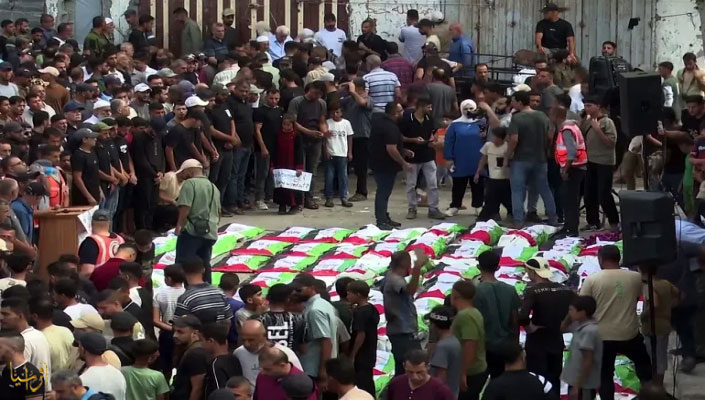
Farewell to the bodies of 100 martyrs after they were recovered from the rubble in the Zaytoun area in Gaza City
Afrasianet - Bashar Abu Zekri - The Civil Defense in Gaza has recovered about 100 martyrs from the rubble of destroyed houses in the Zaytoun neighborhood, including 60 children, nearly three years after their martyrdom.
Al-Jazeera's correspondent in Gaza, Ghazi Al-Aloul, said that 55 of the martyrs who were recovered were from the family of Malka, in addition to martyrs from the families of Al-Balawi and Salmi.
The correspondent of Al-Jazeera pointed out that the Civil Defense crews were able to retrieve the bodies after many hours of work and in the absence of the necessary heavy equipment.
The families had bid farewell to the bodies of their sons for the first time since their disappearance, after the competent teams were able to recover their bodies from under the rubble of their destroyed homes, after years spent under the rubble, as a result of the Israeli aggression on the Gaza Strip.
The Civil Defense in Gaza continues to demand the entry of heavy equipment to facilitate the search and recovery of the bodies, but the occupation refuses to bring them in, according to officials in the Authority.
According to local estimates, about 8,000 bodies and remains of martyrs are still under the rubble of destroyed buildings in various areas of the Gaza Strip.
Al-Jazeera's correspondent pointed out that the second phase of the operations to recover the bodies of the martyrs from under the rubble began yesterday in the Central Governorate, and includes the city of Deir al-Balah and the Nuseirat and Maghazi camps.
A farewell that has been delayed for years
The farewell scenes carried the effects of years of waiting: mothers, fathers, sons and relatives stood in front of the bodies of their loved ones, after all that time they had been unable to know their fate or where they were lying, while grief mingled with the bitterness of recovering the remains from the ruins of war-destroyed homes.
The recovery of the bodies was not just an operation to search for missing people under the rubble, but also brought back to their families the remains of people who had been missing for years, and whose bodies and traces remained under the rubble, until the competent teams were able to reach them and return them to their families to be laid to rest.
Throughout this period, many families were deprived of burial and farewell ceremonies, and the fate of their loved ones remained unknown, before the rescue put an end to the heavy wait that these families experienced.
As the bodies emerged from the rubble, the rubble that witnessed the moment of loss turned into a final farewell station, in a scene in which the bitterness of loss was mixed with the convenience of finally reaching the bodies of those who had been absent for so long under the rubble.
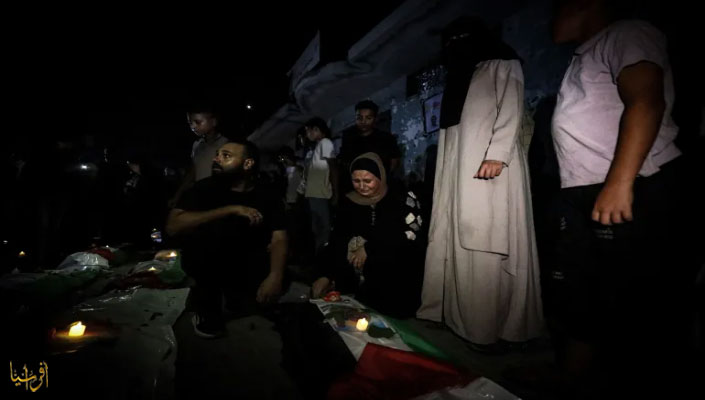
Families in Gaza bid farewell to the remains of their martyrs after years of waiting (Anatolia)
Documenting the moments of farewell
Circulating videos and photos documented scenes of the bodies being retrieved and preparing for their funeral, and showed families retrieving the remains of their loved ones after years of being under the rubble, amid an atmosphere of grief and prayer.
The footage also showed part of the farewell ceremony, with family members gathering in front of the bodies and remains of their loved ones, in preparation for burying them after years of waiting.
The bodies of the martyrs are being laid to rest after years spent under the rubble of destroyed homes. As families prepare to bury their loved ones, the moment of farewell seems years late, but it finally comes to an end to the heavy wait left behind by the war.
The circulation of these scenes coincided with a wide interaction on social media, where activists and journalists recalled the years of waiting experienced by the families of the martyrs, and expressed the impact of the scenes of farewell and burial.
From rubble to farewell
Activist Louay Khaled described the scene as an extension of "the never-ending smell of death in the streets of Gaza", pointing out that the remains of more than 100 martyrs, including about 70 children, were recovered from the rubble of houses destroyed during the war.
Activist Mahmoud al-Sharif said that the images circulating are "not fleeting", describing what appeared in them as shrouds and remains found among the rubble, considering that these scenes reflect the extent of the destruction left by the shelling in residential neighborhoods in Gaza.
Activist Khaled Safi posted photos from the farewell ceremony, noting that Gazans are bidding farewell to the remains of their martyrs after the specialized teams managed to recover him from under the rubble of destroyed houses in the Zaytoun neighborhood, explaining that a number of them belong to the Malika family.
In the same context, activist Moeen al-Kahlout wrote: "From under the rubble to the graves... 100 martyrs mourning," referring to the bodies that were recovered from the ruins of the Zaytoun neighborhood in preparation for burial.
The activist, known as al-Hakim, described the scene as "funerals and oppression that have been postponed for more than two years", noting that the families of the martyrs have been waiting for a long time for the opportunity to bury their loved ones and hold farewell ceremonies.
In his post, he stopped at the suffering of families who wait years to bury their children, wondering how much pain a father and mother are experiencing when their search for their child turns years later into searching for bones, remains, or a final trace that indicates it, concluding by saying: "In Gaza, even funerals are postponed. Even a farewell takes years."
More than a thousand days since separation
Journalist Bashir Abu Shaar also published photos from the farewell ceremony, and wrote about "a farewell look at bodies and faces stripped of all their features," pointing to the recurrence of scenes of loss and farewell in Gaza, where children bid farewell to their friends for the last time with tears and flowers.
Journalist Aziz Khalil al-Bahtini described the scene as "the last farewell", pointing out that more than a thousand days have passed since the separation, waiting and searching for the remains of loved ones, before their families finally reached the moment of burial and farewell.
These interactions reflect part of the suffering experienced by the families of the martyrs, whose loss was not limited to the loss of their loved ones, but also extended to years of waiting to know their fate, and then recovering and burying their bodies.
Since October 7, 2023, Israel has continued to wage a genocidal war against the people of the Gaza Strip, despite reaching a ceasefire agreement with Hamas, which resulted in the death of 73,470 Palestinians and the wounding of 174,540 others, most of them children and women, according to the latest data from the Ministry of Health as of September 2.
________________
