
Afrasianet - Oraib Al Rantawi - The Israeli government has not swallowed the ceasefire agreement between Washington and Tehran easily and easily, and its president finds it difficult to digest and, more importantly, to justify and market it to his allies and friends, and behind them the Israeli public.
He must confront the deluge of accusations and criticism coming from all sides, threatening his image and status as the "King of Israel," and exposing his chances and the chances of his party and coalition to win the November elections, leaving the door wide open once again to face the courts on charges of corruption, abuse of power, and negligence on October 7, and his failure to reap the fruits of his war of destruction against Iran, with little strategic results.
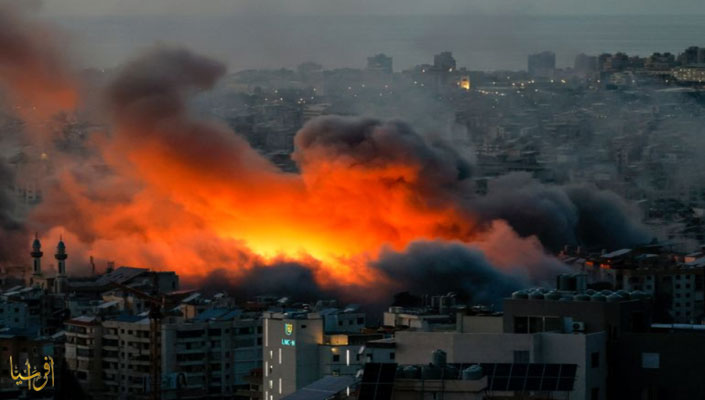
In these very circumstances, Benjamin Netanyahu, who is accused by many Israelis of going out of one war to another just to stay in power, decided to jump into a new bloody and destructive adventure, like all his wars and battles on various fronts, and to order his army to open the gates of hell on dozens of towns and villages in various Lebanese countries, and to tear apart the heart of the capital, Beirut, even if it costs the lives of hundreds of innocent Lebanese civilians, and to strike at the infrastructure of homes and medical and social facilities. Killing and destruction are required in their own right, regardless of any military or political objectives, as has been the case in Gaza, Lebanon, and, more recently, Iran.
It is easier for Netanyahu (if he is difficult) to market a ceasefire similar to a ceasefire on the Lebanese front, as the Israelis, who overwhelmingly supported the war on Iran, even after despair has crept into their souls about the possibility of achieving its "maximum goals," support the war on Lebanon with a larger and higher majority.
Two explanations for Netanyahu's behavior
In explaining Netanyahu's madness by carrying out 100 airstrikes in less than ten minutes against Lebanon, there are two explanations, from the point of view of experts and observers, including the author of these lines:
First, the man decided to drop Iran's approach to the "interdependence of the two tracks" between Lebanon and Iran, which Tehran succeeded in including in the "preliminary agreement" for the ceasefire, in light of all the published English, Persian, and Arabic texts about this agreement, and with the testimony of the Pakistani prime minister, the main mediator in the "deal," who said that the agreement also includes Lebanon.
The second is inflicting the maximum amount of death and destruction on Lebanon, especially in the environments of Hezbollah, its displaced and displaced, and the social environments that host more than a million displaced people from the south, the suburbs of Beirut and the Bekaa, as part of the "intimidation and shock" tactic, and a continuation of the strategy of "ironing with fire" that Tel Aviv has long adopted to sow terror in the hearts of successive generations of Palestinians, Lebanese, and Arabs, in the hope that this will be a deterrent lesson.
In the first interpretation, it can be argued that the agreement's inclusion of Lebanon alongside Iran was among the most troubling issues for Netanyahu, as he can claim that his war and the United States on Iran has achieved a lot of achievements, even if no one believes him.
However, such a claim will not be bought in Israel, especially by the residents of the northern settlements, who see with their own eyes the faltering operations of their "invincible army" in the towns of the front fringe in southern Lebanon, who have lived through the lie of destroying Hezbollah's arsenal of rockets and drones for the past six weeks, and who, in any case, are still committed to their shelters and fortified rooms on instructions from the home front.
The fact is that it is easier for Netanyahu to market a ceasefire on the Iranian front than it is to market a similar ceasefire on the Lebanese front, as the Israelis, who overwhelmingly supported the war on Iran, even after despair of the possibility of achieving its "ultimate goals" crept into their souls, support the war on Lebanon with a larger and higher majority, and still do.
This is one of the realities of Israel's domestic politics, which Netanyahu is aware of and fears its repercussions, and that is why we saw him take the initiative hours after the announcement of the ceasefire agreement to say that it does not include Lebanon, and that the war against this country and its resistance continues.
In the second explanation, which is no less likely than the first, Netanyahu fears next Friday's negotiations in Islamabad between the Iranians and the Americans, especially in light of Tehran's insistence on the "convergence of the two tracks," and the consideration of its negotiators that the sinful attack on Lebanon is a grave violation of the agreement, which may require a similar Iranian response, and may threaten the agreement as a whole, an important point picked up by Hezbollah, as well as by the Lebanese state, which was quick to encircle Netanyahu's attempts to "separate the two tracks" and try to use this clause in favor Ending the Israeli aggression against Lebanon.
There is a wide range of Arab and Islamic countries, and indeed the majority of the international community, who stand behind the idea of ending hostilities on various fronts and tracks, fearing that the escalation of one of them will lead to the collapse of an agreement that is still fragile, and that the various capitals of the world have an interest in consolidating and strengthening it, and moving it to a permanent, comprehensive and final peace agreement.
As if Netanyahu is in a race against time, he wants to use the 48 hours between the ceasefire and the Islamabad negotiations to inflict the greatest amount of destruction and death on the Lebanese people, all Lebanese, especially in the ranks of Hezbollah and its social incubator.
Apparently, the man and his political and military pillars did not think that they did not have time to do what they wanted in Lebanon, and they would not have thought that Washington would trade Tehran even in the unity of the arenas and the convergence of the tracks. Time is like a sword for Netanyahu, if he doesn't cut it.
Tehran's allies in Iraq and Yemen will not leave the party alone, as their sources say, and they will engage in a support war that could descend into the return of the specter of war, prompting Pakistani diplomacy to reiterate that the deal includes Lebanon and not only Iran.
First test of a fragile agreement
All eyes have turned to how Hezbollah will respond first to these bloody attacks, and in fact, its reaction has not been long overdue.
The group adhered to the ceasefire at the moment Iran and the United States committed to it, and returned to a policy of "restraint" in the face of ongoing Israeli aggression, but the attack that tore apart the heart of the capital will make it difficult for it to continue its policy of patience and tolerance.
More important, however, is how Iran will respond to the first test of the agreement, and will it leave the party alone in the face of the Israeli war machine?
Estimates say that Iran considers the Israeli attack on Lebanon a serious breach of the agreement, which necessitated contacts with Islamabad, and with the Pakistani army chief in particular, to work to salvage the fragile agreement before it collapses.
Tehran's allies in Iraq and Yemen will not leave the party alone, as their sources say, and they will engage in a war of support that may descend into the return of the specter of war again, which prompted Pakistani diplomacy to reaffirm that the agreement includes Lebanon and not only Iran, after which the parties will engage in an intensive "storm" of contacts to stop the Israeli unbridled unrest.
According to information reported by diplomatic circles, Iran's "delay" in opening the Strait of Hormuz comes as an expression of pressure to stop the Israeli war on Lebanon, and to push Washington in particular to exert pressure on Netanyahu and his government to stop this Israeli "mad party."
It is in no way excluded that Iran will seek to adopt the tactic of separating the "two allies of yesterday" as it plans its reaction to the Israeli strikes on Lebanon, such as targeting Israel, excluding American bases and assets, and instructing its allies (the proxies) to do something similar.
In summary, Netanyahu is "in crisis" that Trump is abandoning him and going to a deal with Iran behind his back, just as he did before with the Houthis' Ansar Allah, when he concluded an agreement with them behind Israel's back, leaving the port of Eilat in ruins due to Yemeni attacks on ships heading to it.
Aware that his task of thwarting the deal may not seem easy, given Trump's enthusiasm for it and his promotion of its interests, Netanyahu is drowning Lebanon in blood and destruction in the short distance from the cease-fire to Islamabad.
