
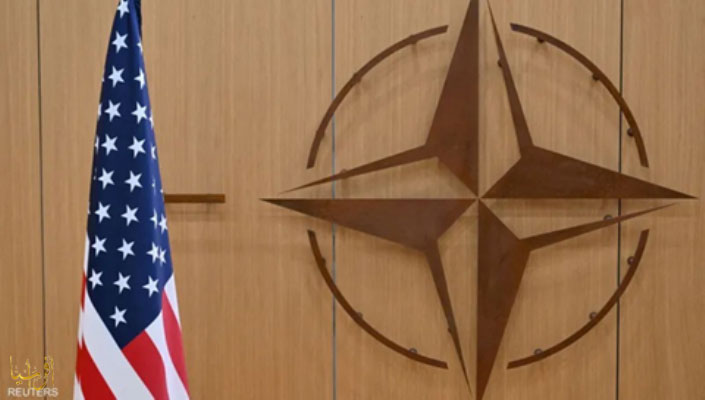
Afrasianet - In his book "NATO's Transformation from the Principle of Defense to the Principle of Intervention in the International System (Expansionist Vision"), the author: Mustafa Dahou discusses in this topic the North Atlantic Treaty Organization (NATO) as one of the most important military alliances during the Cold War period, which has continued to exist to this day despite the disappearance of the original reasons that led to its establishment, which is a defense doctrine to confront the threat of Soviet expansion.
In addition to its ability to adapt to the strategic changes that have affected the rules of behavior of countries in the international arena, within the framework of the United States of America's quest to lead the international system, and its adoption of an expansionist and interventionist policy that resulted in the accession of countries from Central and Eastern Europe to its membership, and the establishment of partnerships and cooperative relations with many countries of the world, which led to its intervention in Libya, Iraq, Afghanistan, and Serbia in support of the directions of the US foreign policy and its global role.
This has prompted major countries such as Russia and China, which feel threatened by the alliance's policies, to react against its expansionist behavior, which has led to the emergence of several initiatives and projects directed against its expansionist policy, such as the establishment of the BRICS, the Shanghai Cooperation Organization, and China's Belt and Road Initiative.
In a separate study, this study examines NATO, one of the most important alliances during the Cold War.
Although its primary purpose of existence – to protect the continent of Europe – has ceased to exist, and is able to adapt to profound changes in international relations.
Operating under the leadership of the United States, NATO has pursued an expansionist policy in Eastern Europe, and seeks partnerships with countries around the world.
NATO's interventions in Iraq, Afghanistan, and Libya have prompted Russia and China to establish strategic relations in the face of Soviet expansionism, through the Shanghai Cooperation Organization and China's Belt and Road Initiative.
Despite the U.S. pressure on NATO and its members, U.S. practices in using the alliance will remain despite the uncertainty in U.S. President Donald Trump's handling of the alliance.
NATO's main military interventions, known by its acronym NATO, is an intergovernmental alliance that includes military forces from various member states. NATO has 32 member states, as well as many other countries involved in peace partnerships.
From the NATO literature "NATO's main responsibility lies in maintaining peace and security in the international arena. NATO's primary goal is to resolve disputes or disputes that threaten the stability of any country or region peacefully. In NATO operations, diplomacy is given the highest priority, but if it fails, military action is resorted to. "
But this literature is nothing but words written on paper.
NATO has been involved in some of the missions that have shaped the history of countries and regions.
Some of NATO's most prominent military interventions:
Operation Anchor Guard, Kuwait, Iraq
Iraq invaded Kuwait on August 2, 1990, after being accused of stealing oil. Other sources indicated that Iraq planned the attack months before the invasion because it was unable to repay debts it borrowed to finance its war with Iran. Western countries believed that Iraq was coveting Kuwait's oil.
Two days after the attack, Saddam Hussein announced the annexation of Kuwait as Iraq's 19th province. Most States, including the League of Arab States, have condemned Iraq. The U.N. Security Council called on Iraq to withdraw from Kuwait unconditionally, but Iraq refused. Iraq has been given a deadline of January 15, 1991, to withdraw or face military action.
During this period, Operation Anchor Guard was launched with airborne aircraft from Turkey. The operation's mission was to control air and sea traffic and provide aerial surveillance
This process resulted in the immediate liberation of Kuwait on February 25, 1991.
The Praetorian Guard forces were part of the Gulf War aimed at liberating Kuwait from the Iraqi invasion. These forces were established in 1991 by the North Atlantic Treaty Organization (NATO) as part of a military strategy to get Iraq out of Kuwait.
This strategy came in response to Turkey's request given Iraq's superiority over it. The Imperial Guard Mobile Force, along with air defense systems, has been deployed to Turkey.
The intervention was a great success, and on March 9, 1991, Kuwait regained its sovereignty. Joint Guard Operation, Bosnia and Herzegovina
The Bosnian War broke out in 1992 as a result of the breakup of Yugoslavia. The situation worsened, necessitating the intervention of the United Nations Security Council.
The Council passed a resolution in October 1992 declaring a no-fly zone.
In 1993, NATO imposed a no-fly zone from June 1993 to 1996.
Several other NATO operations followed. In 1995, a two-week aerial bombardment began, ending the Yugoslav War.
Operation Allied Force, Kosovo - Montenegro - Serbia
Slobodan Milosevic led a campaign against KLA separatists and Albanian civilians in Kosovo.
The United Nations Security Council passed a resolution in 1998 calling for a ceasefire, but negotiations did not continue after March 1999. NATO had no choice but to launch Operation Allied Force on March 24, 1999. The operation mainly targeted Yugoslav military capabilities. On June 3, 1999, Slobodan appeared to have refused to accept the decision to allow NATO to deploy its peacekeepers in the country.
NATO did not conduct any military operation during the Cold War, despite its existence at the time. NATO's mission was initially to protect its territory from any threat from the Warsaw Pact. After the 1949 Agreement, NATO's work expanded to include peacekeeping and conflict resolution.
But it has turned into a tool for American domination over countries and peoples and their destiny.
The existential crisis!!
NATO claims it is facing the biggest existential crisis in its nearly eighty-year history
. While U.S. President Donald Trump and his national security team have ostensibly turned their backs on Europe, declaring that they will no longer pay for its security, the region's leaders are scrambling to raise funds to increase their support for the war in Ukraine and bolster their military capabilities. However, there have been no concrete indications that the United States, the dominant power in NATO, will withdraw from this military alliance or seek to dissolve it.
NATO serves multiple purposes for the United States, and it has done so since its founding in 1949. Pressuring European countries to increase their spending on self-defense is one thing, and it is quite another to misinterpret it as a broader U.S. strategic withdrawal from Europe.
Despite the rhetoric, what Trump is doing is not outside the scope of the general approach of the American elite: to maintain global influence through tools such as NATO and the system of obedient European states, rather than isolating the United States behind the Atlantic and Pacific.
NATO will remain a tool in the hands of the Global North regardless of the inevitable challenges ahead.
"NATO: the most dangerous organization on earth"
The political scientist Peter Goan (1946-2009) wrote during NATO's bombing and disintegration of Yugoslavia in 1999:
We must keep in mind two unfortunate facts:
First, NATO countries have been and continue to be determined to exacerbate the world's power and wealth inequality, to destroy everything that challenges their overwhelming military and economic power, and to subordinate almost all other considerations to these goals; and second, NATO countries find it all too easy to manipulate their own people into the illusion that they are leading the world's population toward a more just and humane future, when in fact they are not doing so at all.
NATO uses the language of human rights and collective security to hide the motives behind its origins and current existence.
It is useful to go beyond this rhetoric and look at the actual record of this military alliance – not the claims of the human rights coalition
In a study titled "The History of NATO and an Assessment of its Role in the US-Led Imperialist System. The study focuses on how NATO, since the fall of the Soviet Union, has redefined itself as a global policeman, and has intervened in various ways in the Global South.
Part One: The Aggressive Alliance
The idea of NATO originated during the final years of World War II, when the United States and the United Kingdom began discussing new security arrangements after the defeat of fascist forces in Europe.
In 1945, the United States hosted the San Francisco Conference, where the United Nations was founded.
The Charter of the United Nations, ratified by the fifty participants in the conference, allowed (in Chapter VIII, Article 52) to form regional security organizations, and to give them law enforcement powers – such as sanctions and military intervention – but only with a mandate from the United Nations Security Council (in Chapter VIII, Article 53).
Based on this authorization in the UN Charter, the United States brought together ten European countries and Canada to sign the Treaty of Washington in 1949 and create NATO. European countries that joined NATO went through various experiences in the postwar period: most, such as France and Germany, were forced to rebuild their armies almost from scratch; others, such as Britain, maintained relatively intact armies, while one country—Iceland—had no regular army at all.
NATO provided these countries with a U.S. military (and nuclear) shield. In 1949, the CIA circulated a memo explaining that NATO's real goal was not only to deter the Soviet Union from threatening Europe, but also to maintain "long-term control of German influence" and settle the question of "who will control German potential and thus maintain the balance of power in Europe."
This realistic assessment is a more accurate view of NATO than the interpretation of its charter.
The CIA's understanding had a European counterpart.
As NATO's first secretary-general, Lord Hastings Lionel Ismay, wrote in an internal memo in 1952, the organization must "keep the Soviet Union out, the Americans inside, and the Germans in check.
In the year before NATO's founding, George Kennan, the U.S. secretary of state, wondered how the U.S. had "about 50 percent of the world's wealth, but only 6.3 percent of its population." The repercussions of this must be resolved. As Kennan wrote in the 23rd report of the Policy Planning Group:
This disparity is particularly significant between us and the peoples of Asia. In this situation, we must be envied and resentful. Our real task in the coming period is to create a pattern of relations that will allow us to maintain this inequality without harming our national security.
The "pattern of relations" that had to be built to control the so-called "envy and resentment" of the peoples of Asia and the Global South in general began in the year before NATO was formed, when the United States reshaped the security arrangements in the Americas through the Inter-American
Treaty of Mutual Assistance (or Treaty of Rio) of 1947, and then through the adoption of a new charter of the Organization of American States in Bogotá, Colombia, in 1948. These treaties linked Latin American countries to the United States United.
A few years after the founding of NATO in 1949, the United States concluded security treaties in East Asia (the 1954 Manila Treaty, which established the Southeast Asian Treaty Organization (or CITO) and in Central Asia (the 1955 Baghdad Treaty, which established the Central Treaty Organization, or CENTO). Alongside these treaties, the Organization of American States, led by the United States, committed to anti-communist action through the Special Security Advisory Committee against the subversive acts of international communism in 1962.
The United States created this environment of military treaties for two purposes: to rein in any communist parties or forces in the regions, and to enable their influence over governments around the world.
This was part of a broader show of force that enabled the United States to build and maintain military bases — and in some cases with nuclear capabilities — far from its shores but close to the Soviet Union, the Democratic People's Republic of Korea, the Democratic Republic of Vietnam, and the People's Republic of China, effectively laying the groundwork for a global military presence.
The need for military agreements began to wane during the 1960s to the 1980s for many reasons.
First, the United States had established a formidable global military presence, with military bases from Japan to Honduras, established by bilateral treaties.
Second, military technology has undergone tremendous development, giving the United States much greater flexibility and mobility thanks to its arsenal of intermediate-range missiles, nuclear submarines, and its enormous air capabilities
Third, the United States developed a strategy known as "operational alignment," which allowed it to use sales of its military technology to allied nations as a means of promoting joint military exercises, which are actually conducted under U.S. military command, and mostly for its strategic interests.
Finally, the United States established regional command structures, such as Pacific Command (Bacom, which became Indo-Pacific Command in 2018), Southern Command (Southcom) in 1963, and Central Command (CENTCOM) in 1983, which had already concluded bilateral and multilateral agreements with allied militaries.
Therefore, there was no need for additional regional military alliances.
These new mechanisms to strengthen the U.S. military presence globally have made security agreements less necessary in regions such as Asia and the Middle East.
The Southeast Asia Treaty Organization (SEATO) was dissolved in 1977, largely due to a lack of interest from Southeast Asian countries, and two years later, following the Iranian Revolution, the Central European Treaty Organization (CENTO) was shut down.
But the situation was different in Latin America, where the Organization of American States (OAS) is still active today, focusing precisely on how to reduce the role of the left in Latin America (Cuba's membership in the organization was suspended in 1962, after which Fidel Castro called it the "Ministry of Colonies").
Besides the Organization of American States, NATO was the other crucial exception. It has not been resolved.
Lord Hastings' formula remained in place: Keeping the Soviet Union out:
Maintain U.S. military bases and NATO bases, as well as U.S. nuclear weapons in Europe, as a deterrent to any Soviet moves beyond existing post-World War II borders.
Keeping Americans in the EU:
From the U.S. point of view, this actually meant keeping the Europeans in check, implying that they would not be allowed to form their own continental army, and that whenever the EU's expansion was discussed, NATO's expansion would go along with it to maintain U.S. influence in the region.
Keeping the Germans in check:
Ensuring that the old imperialist powers had no ambitions beyond being U.S. allies, a vision that the U.S. has adopted not only toward Germany, but also throughout Eurasia, and especially toward Japan.
NATO, therefore, remained an essential element of the structure of US imperialism. ... Regardless of what U.S. and NATO officials stated, it was clear that they had three goals of this military pact: to prevent the left from growing in their countries (destroying the Popular Fronts in France, Greece, and Italy during the late 1940s and 1950s, as well as the anti-war movement in West Germany during the 1960s and 1970s), to contain and weaken the socialist bloc (including, after 1959, the Cuban Revolution), and to prevent national liberation movements in Africa and Asia from succeeding (including, after 1959, the Cuban Revolution) He supported Portugal's colonial wars in Africa from the 1960s to the 1970s and helped the United States in Korea in the early 1950s and Vietnam from the 1960s to the 1970s).
Part Two:
NATO World NATO In November 1991, a month before the Soviet Union officially dissolved, NATO issued a report titled "The New Strategic Concept" in which it acknowledged that there was "a brighter new era in Europe.
Under these circumstances, NATO members could have gained enough confidence to dissolve the alliance.
Instead, they have legitimized NATO's continued presence, warning of "multi-directional" threats that require coordinated interventions, even outside the territories of NATO member states.
In 1997, at NATO headquarters in Brussels, U.S. Secretary of State Madeleine Albright stated that with the demise of the Soviet Union, "many believe that we no longer face such a unified threat, but I think we still face it." So what is NATO's goal? Albright explained:
It claimed that it was to stop the spread of nuclear, chemical and biological weapons.
This is intended to defuse the combination of technology and flammable terrorism, and the possibility, though seemingly unlikely, that weapons of mass destruction will fall into the hands of people who do not hesitate to use them.
This threat mostly stems from the Middle East and Eurasia, so Europe is particularly vulnerable.
In other words, NATO had to intervene in areas outside Europe to protect Europe.
This is the optimistic superficial explanation.
But there is another way to understand what Albright said clearly.
Since the collapse of the Soviet Union, Russia has effectively surrendered to the United States under President Boris Yeltsin (whose re-election in 1996 is credited to U.S. intervention), and the United States has seized the opportunity to use its enormous military power and NATO, its main global tool, to expand its influence throughout Eastern Europe and punish any "reaction states" (as described by Anthony Lake of the U.S. State Department in 1994) that refused to embrace the policies of globalization, neoliberalism, and American hegemony.
Governments of the Global North need the image of a threatening enemy to legitimize NATO's presence. Whether it is the perceived threat of communism (the Soviet Union during the Cold War) or allegations of terrorism (al-Qaeda) or authoritarianism (Russia and China more recently), NATO member states are instigating fear of the "enemies of the free world" to convince their people of the need to further militarize their societies, such as increasing their military and police forces.
This populism also contributes to the integration of progressive movements and trade unions into NATO's war effort.
Indeed, in 1991, it was clear that the United States would use NATO to subjugate Eastern Europe and Russia, and that it would later be used as a global policeman against any "rogue state" that decided to challenge American influence in this new era.
NATO's lines of engagement will strictly follow U.S. policy. The 2002 U.S. National Security Strategy, developed by U.S. President George W. Bush, also noted that "our forces will be strong enough to deter potential adversaries from seeking to enhance their military capabilities in the hope of surpassing or equaling U.S. power."
The concept of "potential adversaries" — initially called "backlash states" or "rogue states" in 1994, then "catastrophic terrorism" in 1998 — quickly focused on Russia and China.
There were geopolitical considerations that influenced this decision, but there was also a financial aspect.
When the Soviet Union collapsed, the arms industry feared that a "peace dividend" would follow and that its profits, which had grown tremendously during that period, would be negatively affected.
The arms industry created the U.S. NATO Enlargement Commission, chaired by Bruce Jackson (then vice president of Lockheed Martin), which lobbied the U.S. Congress to pass the NATO Enlargement Facility Act of 1996.
Over the next two years, from 1996 to 1998, the six largest military contractors spent $51 million lobbying Congress to encourage NATO expansion
As Joel Johnson of the Aerospace Industry Association put it: "The stakes are enormous." The first to take the initiative will ensure market dominance for the next quarter century (aircraft sales assume huge additional purchases of spare parts and new aircraft to maintain and expand fleets) NATO members were strongly encouraged to buy from the U.S. arms industry, so NATO's expansion was an expansion of the arms market for Boeing, Lockheed Martin, McDonnell Douglas, Northrop Grumman, Raytheon, and Textron (then known as the "Big Six," all based in the United States)
For example, between 2015-2019 and 2020-2024, European NATO members more than doubled their imports from the arms industry, with 64% of them coming from the United States.
Europe's dependence on U.S. arms manufacturers has been a problem for the region's bureaucrats for decades.
In 2003, for example, a European Commission study stated that "there is a risk that European industry will become a mere secondary supplier to major U.S. contractors, while basic knowledge remains the preserve of U.S. companies.
This was part of the overarching vision of subordinating Europe to U.S. ambitions.
In 1999, bypassing any UN peacekeeping mandate, NATO launched a war on Yugoslavia to divide it. During this war, NATO bombed the Chinese embassy in Belgrade, which China still believes was a deliberate act.
This was the first indication of NATO's expansion beyond its area of operations. Two years later, NATO carried out another operation "outside its area of operations" by entering the U.S.-initiated war in Afghanistan.
This gave NATO confidence that it now had the ability and permission to act as a policeman of the U.S.-led regime, as Ivo H. Delder, who became the U.S. ambassador to NATO in 2009, and James Goldger (a longtime advocate of NATO enlargement) wrote in Foreign Affairs magazine in 2006 about "Global NATO.
Although NATO did not officially enter the illegal war on Iraq in 2003, it did provide logistical and communications support to both Poland and Turkey during the war.
During this period, NATO began to expand its relations with military forces around the world, particularly in Eastern Europe and East Asia, and participated in the U.S. war on so-called terrorism in various ways.
Before the collapse of the Soviet Union, and to allow the annexation of the GDR, the U.S. government pledged to the Soviet government that NATO would not expand beyond Germany's eastern borders.
But after the fall of the Soviet Union, NATO did just that. The bombing of Yugoslavia in 1999 sent a clear message to the Eastern European States:
Either you are with us or against us.
In subsequent years, these countries joined NATO: the Czech Republic, Hungary, and Poland in 1999; Bulgaria, Estonia, Latvia, Lithuania, Romania, Slovakia, and Slovenia in 2004; Albania and Croatia in 2009; Montenegro in 2017; and North Macedonia in 2020. In the process, the United States has taken steps to ensure that a newly unified Germany is "reined" and that it operates only within the borders set by Washington.
He allowed the EU's eastward expansion, but preceded it (or at least approved) NATO expansion.
Thus, the dominance of the United States in the Western bloc was entrenched, especially in Eastern Europe.
Although four of Russia's neighbors (Estonia, Lithuania, Latvia, and Poland) joined NATO by the mid-2000s, the Russian government would not have allowed Georgia and Ukraine, two countries that share a vast border with Russia, to join. At the NATO summit in Bucharest in April 2008, with Europe increasingly dependent on Russian natural gas and oil, France and Germany blocked Georgia and Ukraine's accession to NATO
The deployment of Russian troops following the Georgian-Russian military confrontation in South Ossetia in the same year was the first indication of how willing Moscow was to go far to block Georgia's EU or NATO accession ambitions. The 2014 Ukrainian government's displacement, influenced by the United States, the insistence of the Nordic countries on Ukraine's accession to NATO, and the U.S. withdrawal from key arms control treaties—including the Anti-Ballistic Missile Treaty (2002) and the Intermediate-Range Nuclear Forces Treaty (2019)—have given Russia the impression that Washington aims to deploy intermediate-range nuclear weapons on its borders.
This was non-negotiable for Moscow, and led to Russia launching a special military operation against Ukraine in 2022.
Since the early 1950s, the United States has complained that it is shouldering the burden of NATO spending because European countries are not spending enough on their military capabilities.
In 1952, the British Parliament debated the imbalance in military spending and compulsory military service among NATO countries.
However, the level of military spending remained low in European countries, and even declined in the 1970s as a result of the international détente that followed the signing of the Anti-Ballistic Missile Treaty in 1972 and the Helsinki Accords of 1975, as well as the stagflation that stifled European economies in the same period, exacerbated economic tensions.
In the 1980s, then-US President Ronald Reagan's administration pressured Europe to increase military spending. In the post-Cold War era, U.S. officials have reaffirmed the need to increase European military spending. At the same time, Europe has realized that its dependence on the United States is preventing its independence.
After the wars in Bosnia (1995) and Yugoslavia (1999), for example, there was a debate in European capitals about their dependence on the United States..
The main motivation behind the quest to build the European satellite navigation system, Galileo, was this concern.
A 2002 European Commission paper noted that "if the EU finds it necessary to carry out a security mission that the United States does not consider to be in its interest, Europe will be powerless unless it has the satellite technology that has become so necessary.
By the 2006 NATO Riga Summit, members agreed to raise their military spending to 2% of their GDP, a benchmark that was confirmed at the 2014 NATO Wales Summit.
Although European countries were aware of the problems of military dependence, they wished to remain under the cover of U.S. military support. European leaders rushed from NATO summit to agree to increase their military spending regardless of the damage to their societies and foreign policies, which were increasingly militarized
In 2022, German Chancellor Olaf Scholz gave a speech later known as the "tipping point" (i.e., "the beginning of a new era"), in which he pledged to allocate a $100 billion fund to increase military spending.
Then, in 2025, when the U.S. government decided to cut military aid to Ukraine, the German government (then headed by Chancellor Friedrich Merz) — previously known for its smug attitude toward fiscal prudence toward its own people and against the people of poorer European countries (such as Greece) — ignored the debt reduction rule (a ceiling that limits government borrowing, which was included in the country's constitution in 2009) in order to increase military spending.
In the same year, the EU also announced plans to approve €800 billion in war loans.
In other words, funds can be provided to NATO, but not to social protection or basic infrastructure.
Part III: NATO and the Global South In 2023, after Russia's special operation in Ukraine, German Ambassador Christoph Huysgen lashed out at Namibia's Prime Minister, Sarah Kogongiloa-Amadilla, for why her country did not condemn Russia.
Kogongiloa-Amadhila calmly replied that her country "seeks a peaceful resolution of this conflict so that the whole world can direct all its resources towards improving the conditions of people around the world instead of spending them on acquiring weapons, killing people and stoking hostilities.
Kogongiloa-Amadhila added that the money used to buy weapons can be used even in Europe, "where many are suffering."
What mattered in this dialogue was not what Kogongiloa-Amadilla said, but simply anything that contradicted the consensus of the Global North.
Confusion spread throughout the hall and outside.
Why are the leaders of the small and poor countries of the Global South critical of the Global North, and why are they no longer as subservient as they once were? As Japanese Foreign Minister Yoshimasa Hayashi wrote in the preface to the 2023 Diplomat Book, which sought to understand the rise of the Global South: "The world now stands at a crossroads in history.
In a November 2024 report, NATO rapporteur and former Lithuanian Foreign Minister Odronius Azopalis acknowledged the changes the world is witnessing with the rise of the Global South:
Arguably, the West has not adapted quickly enough to this new reality, allowing authoritarian powers such as Russia and China to penetrate significantly into Asia, Africa, and Latin America and the Pacific, reaping enormous economic and geopolitical gains.
Azopalis' assessment shows how little the leaders of the Global North understood the rise of the Global South.
Indeed, it is the emergence of a new center of industry and productive forces in Asia (from India and China to Vietnam and Indonesia), and the creation of a new set of development institutions (including the New Development Bank), that has given poorer countries some leverage in the face of the IMF, which is dominated by the US Treasury.
In other words, it is not that China is making "significant progress" on these continents, but rather that China – and other countries – are able to support development efforts in poorer countries.
Since the Global North is not doing so, they are no longer obligated to support it.
To simply describe China and Russia as "authoritarian powers," and to assume that the outdated rhetoric of Western liberalism and democracy will appeal to countries wishing to develop their economies, is foolishness.
It is also ridiculous to accuse countries that routinely ally themselves of tyranny.
The NATO elite's inability to understand the true course of history paralyzes their minds, and instead they resort to the assumption that the peoples of Africa, Asia, and Latin America and the Pacific are the victims of Russia and China's deception, and that if they had recognized the reality of Western liberalism and democracy, they would have made the right decision to submit to the Nordic countries.
However, NATO has established a strong presence in the Mediterranean, on the African continent, and in Asia (and has a secondary role in Latin America, where its main ally is Colombia).
The Mediterranean, the War on Terror, and Migration Employment
By the 1990s, NATO had extended its influence to explore ways of cooperation around the world, starting with what it called its "southern neighbor" (i.e., the countries south of the Mediterranean).
In 1994, the Alliance launched the Mediterranean Dialogue, a forum that allows countries outside the NATO region to exchange information with NATO countries
Many countries joined the dialogue successively, from Algeria, Egypt and Israel to Jordan, Mauritania, Morocco and Tunisia, many of which did not have relations with Israel but nevertheless participated in the dialogue with their representatives.
In 2004, a year after the United States and a number of its NATO allies participated in the illegal war on Iraq, NATO brought together four Gulf Arab states (Bahrain, Kuwait, Qatar, and the United Arab Emirates) in the Istanbul Cooperation Initiative to strengthen military cooperation between NATO and the Persian Gulf. Several countries involved in these initiatives (including at least Qatar, the United Arab Emirates, and Morocco) in NATO's 2011 Operation United Protector, which led to the collapse of the Libyan state.
In 2016, NATO opened the Southern Strategic Guidance Centre near Naples, Italy; in 2017, it opened the Istanbul Cooperation Initiative Regional Centre in Kuwait; and then, as part of the dialogue, it proposed the establishment of a NATO liaison office in Amman, Jordan. The office was announced at the 2023 NATO summit in Vilnius, and opened the following year.
These statements and statements speak at length about human rights and democracy, but the key words are actually counter-terrorism and preventing migrants from crossing the seas.
After the horrors of NATO's war on Libya in 2011, when the alliance was mired in the quagmire of the war on terror, it waged war on migrants from across the Global South who had traveled to the war-torn country in an attempt to cross the sea to Italy.
NATO leaders have begun to speak of this tragedy as "exploitation of migrants," which for them means that their enemies are using migrants as a "hybrid threat" to flood their countries (a term used specifically when Russia allowed asylum seekers from several countries to cross the border into Finland in 2024). At a meeting in Washington in 2024, former NATO Secretary-General Jens Stoltenberg explicitly acknowledged that "NATO has a role to play" in "exploiting migration.
This means that NATO is harnessing its entire military arsenal to defend the "bulwark of Europe", a right-wing anti-immigrant idea.
Africa says: "NATO, withdraw!"
The most important action taken by NATO in the Southern Mediterranean was its use of force to destroy the Libyan state in 2011. This action opened the door for Africans and others to migrate to Europe via Libya, while at the same time leading to a terrorist attack on Algeria, Mali, Burkina Faso and Niger.
More than a decade later, the effects of NATO's intervention remain. It is worth noting that this intervention was carried out under the pretext of the "Responsibility to Protect" (R2P), an international rule developed by the United Nations that has been under great pressure and aimed at "ensuring that the international community does not again fail to stop the crimes of genocide, war crimes, ethnic cleansing and crimes against humanity."
While the International Commission on Intervention and State Sovereignty established the "Responsibility to Protect" rule in 2001 in response to the 1994 genocide in Rwanda and the NATO bombing of Yugoslavia in 1999, it was only after the United States undermined the idea of "humanitarian intervention" with its illegal war on Iraq in 2003, until it was formally adopted at the 2005 UN World Summit.
France, which was among the countries that contributed to the destruction of Libya, took advantage of the subsequent terrorist attack on the Sahel region to justify its military intervention in the region, from which it has now been forced to withdraw by popular coups in the shadow of... The slogan "France, go!"
This slogan, "France, go!" , it expands to include: Europe, leave! NATO, go! For most of the population of the African continent, it will not be easy to distinguish between the European Union, the United States, and NATO.
The European Union's policy on migration, for example, is not a civilian policy, but a paramilitary one, using the Italian gendarmerie (Arma de Carabinieri) and the Spanish Civil Guard (Guardia Civil) to patrol the Sahel region through the Sahel Rapid Surveillance and Intervention Task Force (GAR-SI) from 2017 to 2021. At the same time, the United States used drones to provide surveillance capabilities from the massive US military base AB 201 in Agadez, Niger.
French military intervention, U.S. bases in the region, and the use of surveillance techniques in the Sahel and Sahara Desert, which are heavily controlled or banned in Europe:
This is how North Africa experiences the NATO project – not for human rights, but for brutality.
However, NATO's presence in Africa has posed a challenge to the continent's governments, which are still seeking funding and technical assistance.
In 2015, this dynamic gave NATO the right to establish a liaison office at the African Union headquarters in Addis Ababa, Ethiopia.
This concession allows NATO to request training and funding for the fledgling African Rapid Intervention Force (one of its five regional forces is the Economic Community of West African States (ECOWAS) Rapid Intervention Force, which nearly invaded Mali, Burkina Faso, and Niger after its popular coups in 2021, 2022, and 2023, respectively).
African military commanders continue to visit the military headquarters of NATO countries, which are now formalized under the name of the NATO-AU Military Staff Talks.
With this convergence, there is little mention of the 2016 statement of the African Union Peace and Security Council in which it called on member states to be cautious about foreign military bases on their territory.
China's challenge to NATO
The wars in Yugoslavia, Afghanistan and Libya have pushed NATO out of its area of direct operations.
However, this represents only a small part of the geography of NATO's imperialist influence. As Steen Reining of the Danish Institute for Advanced Studies writes in his 2024 book "NATO: From the Cold War to Ukraine, the History of the World's Most Powerful Alliance": "Of course, NATO cannot ignore the Indo-Pacific, because this region has become the main concern of the United States in the field of geopolitics.
This wording may be of interest to linguists: NATO "cannot ignore" the central issues that concern not NATO members as a whole, but the United States. In other words, Renning, whose book is the closest we get to an authoritative study of NATO, acknowledges two frank confessions.
First, the organization's policy is not determined by the North Atlantic Council (NATO's official decision-making body), but by the United States.
Second, since 2009 (when Barack Obama became U.S. president), the U.S. has increasingly viewed China as its main competitor, prompting NATO to expand its influence to threaten and put China in its shoes. Until recently, NATO described China as providing "opportunities and challenges," as stated in the 2019 London Declaration.
Two years later, under pressure from the United States, NATO decided that China was no longer "opportunities," but rather that "its stated ambitions and assertive behavior present structural challenges to the rules-based international order, and to areas relevant to the alliance's security" (according to the 2021 Brussels Declaration) and in an article published on the NATO website in 2023, Luis Simón, of the Royal Institute of Elcano in Madrid (founded and funded by the Spanish state), argued that "China represents a challenge to an international order that continues to reflect to a certain extent." A great transatlantic value and interest.
This is a valid observation: It is not that China opposes the "rules-based international order," as the State Department claims, but that it may oppose transatlantic domination of the system. Simon points to two other important ways that show China's "importance" to NATO' s security.
First, China has weapons systems that can reach Europe, and it has "critical infrastructure in Europe."
Second, since the new Cold War with China "has enormous implications for the United States," NATO should engage in the Indo-Pacific region. This reinforces Renning's view that if it matters to the United States, it must matter to NATO (here, Simon, a Spaniard, agrees with Rening, a Danish citizen, that the sovereignty of their countries' foreign policies can be ceased to Washington).
It is this attitude that has prompted NATO to use the specially designed partnership program (established in 2021) to build close ties with Australia and New Zealand (which were already members of the intelligence alliance "Five Eyes"), as well as Japan and South Korea. These countries are now part of the Indo-Pacific 4 (IP4) group, and attended the NATO summit in Madrid in 2022 as near-full members.
Then, in September 2024, Japanese Prime Minister Shigeru Ishiba called for the formation of an "Asian NATO." However, although the Alliance has previously considered opening a liaison office in Tokyo, a NATO Asian presence would be largely unnecessary given the elements already in place in the U.S. Indo-Pacific strategy, such as:
• The Five Eyes Alliance, a network of intelligence agencies linked by undeclared agreements, including Australia, New Zealand, Canada, the United Kingdom, and the United States.
• The Quadrilateral (or Quadrilateral) Security Dialogue, which includes Australia, India, Japan, and the United States• The trilateral alliance, which replaces India, which is less enthusiastic, with the Philippines.
• The Australia-United Kingdom-United States Alliance (AUKUS).
• The Japan-South Korea-United States Alliance (JAKUS).
In addition, the U.S. government has lured, in a highly provocative manner, into China's Taiwan province into NATO's growing role in Asia.
For example, the Taiwan Policy Bill, introduced by the U.S. Congress, considers Taiwan a "major non-NATO ally," while a proposed amendment to the Arms Export Control Act of 1976 includes its inclusion in the list of "recipients of the NATO Plus agreement," allowing it to bypass various nuclear non-proliferation rules.
In other words, there are already several platforms that carry out NATO's Asian missions, and NATO is fully engaged in the Indo-Pacific region, as evidenced by its willingness to join the U.S. project to patrol the waters around China and build security projects such as bases and alliances. NATO has already begun its activity in the Pacific.
In addition to its expansion in several countries in the Middle East.
This is the politics of power in the twenty-first century.
