
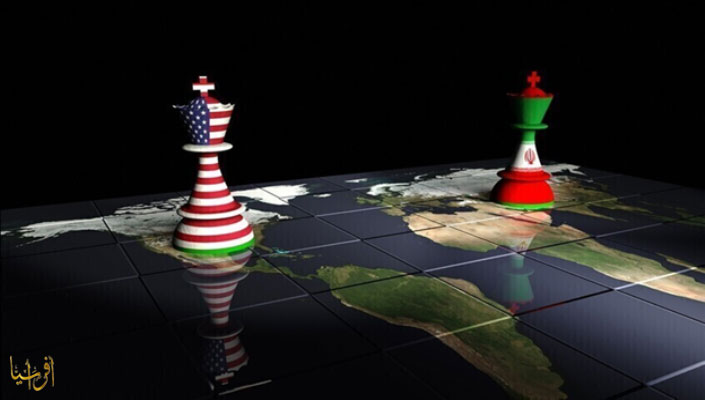
Afrasianet - The nuclear deal between Washington and Tehran has entered the final drafting stage, according to Western media, conditional on Iran giving up enriched uranium in exchange for the release of its assets, while waiting for the ratification of Trump and Khamenei.
The Washington Post revealed that the memorandum of understanding between Iran and the United States obliges Tehran to give up its stockpile of highly enriched uranium.
The newspaper added that "the memorandum of understanding includes a commitment on the part of the Iranians not to possess nuclear weapons and nuclear powder, specifically Iran's stockpiles of highly enriched uranium."
It is assumed that after the agreement is approved, the parties will have two months to discuss the specific mechanism for implementing this condition.
A source told the newspaper that the United States does not intend to release the frozen Iranian assets until Tehran gives up its stockpiles of highly enriched uranium.
CNN quoted a senior U.S. official as saying that "it could take a few more days to finalize the U.S.-Iran memorandum."
According to the network, the United States believes that Tehran has agreed to the main points of the agreement, but disagreements over the wording remain (referring to the wording of some texts), which requires lengthy approval in Iran.
Fox News previously reported that the framework agreement between the United States and Iran is 95 percent complete, although negotiators are still discussing the Strait of Hormuz and Iran's nuclear stockpile.
US President Donald Trump confirmed during a phone conversation with Israeli Prime Minister Benjamin Netanyahu that he would not sign a final agreement with Iran without the removal of enriched uranium.
Rubio: Either we make a good deal with Iran or we will resort to alternatives
U.S. Secretary of State Marco Rubio said Washington was determined to reach a diplomatic settlement with Tehran, but stressed that other options were still on the table if negotiations failed.
Rubio told reporters in New Delhi, as reported by Reuters: "Either we get a good deal with Iran, or we have to sort things out somehow.
"We will give diplomacy every chance of success before resorting to any other alternatives," he added. without specifying the nature of these alternatives.
Rubio added that the US administration is working to finalize a nuclear deal with Iran that will be of limited duration, without providing further details about the content or duration of this agreement.
The statement comes after Fox News reported that the framework agreement between Washington and Tehran is "95% ready," despite ongoing disagreements over the wording of points related to the Strait of Hormuz and Iran's stockpile of nuclear materials.
President Donald Trump has previously indicated that the talks are proceeding constructively, but he instructed negotiators not to rush to conclude the deal, saying that time is in Washington's interest.
Trump confirmed that there is general agreement on the draft of the future agreement, and that he has held phone calls with the leaders of Bahrain, Egypt, Jordan, Qatar, the United Arab Emirates, Pakistan, Saudi Arabia and Turkey to discuss the memorandum of understanding within the framework of the peace deal with Iran.
The agreement between Iran and the United States through Israeli eyes: the details and Tel Aviv's position. Who is the loser and who is the winner?
In a report, the Yedioth Ahronoth newspaper monitored the most prominent statements and news about the terms and details of the possible agreement between Iran and the United States.
What does the agreement include?
The details of the deal have not been fully disclosed, but in the United States they say it includes, among other things, an initial commitment by Iran to reopen the Strait of Hormuz once it begins — and later also to dispose of its stockpile of enriched uranium.
However, the manner in which the uranium stockpile will be evacuated — as well as where it will be transferred — is still subject to negotiations, as is the duration of Iran's future moratorium on uranium enrichment.
In the United States, they argue that sanctions relief, as well as the release of frozen Iranian assets, will only happen if the Strait of Hormuz is actually reopened -- and Iran fulfills its commitments to negotiate limits on its nuclear program. In such a case, Iran will be able to sell oil and revive its economy.
A U.S. official told CNN that "the specific dollar amount that Iran will receive as part of the deal is still being discussed."
CBS reported that President Donald Trump's administration essentially wants to see a major Iranian commitment to abandon uranium enrichment. According to a senior administration official, the difference between a 20- or 30-year commitment is "meaningless," and the most important question is the enforcement mechanism.
According to him, the current deal will go "further" than the 2015 nuclear deal, which allowed Iran to enrich uranium to a certain level. President Trump is also trying to link the agreement with Iran to the accession of other Arab countries to the Abraham Accords, but so far there has been no official discussion of this by Israel or any other country with which it may sign normalization.
Senator Lindsey Graham, who has already made some dubious predictions in the background of the war, said in practice that Trump was "demanding" it from Saudi Arabia, Qatar, and Pakistan, calling it a "genius proposal" from the president. But as mentioned, it is not yet clear how credible that claim is.
In the United States, however, they say that Iran's Supreme Leader Mojtaba Khamenei appears to have agreed in principle to the details of the plan, which eventually also includes removing Iran's stockpile of enriched uranium, and assert that Iran now appears "more willing to bargain than it was before the war began."
How long will it take to reach a final agreement?
The current deal is supposed to last for 60 days. U.S. Secretary of State Marco Rubio said the U.S. is ready to engage in "very serious talks" over the days on Iran's nuclear program if the Strait of Hormuz is opened, adding that "nothing nuclear can be done within 72 hours on a napkin."
"The strait must be opened immediately, and then we will enter under agreed parameters into very serious talks on enrichment, on enriched uranium, on an Iranian commitment that it will never have a nuclear weapon," he said.
Rubio: Iran will benefit from its agreement to negotiate
"This can't take years, but it will take some time to address these technical issues," he noted. Rubio also hinted that the U.S. may renew its threats to attack Iran if negotiations do not yield results within two months. "Ultimately, the approach must deliver what we want it to deliver. If it doesn't, the president has all the options available to him in the 60 days that he gets."
Trump has publicly stated that he has instructed his men not to "not rush." He wrote on his Truth Social platform: "If you make a deal with Iran, it will be a good and decent deal, not the one made by Obama, who gave Iran huge amounts of cash, and a clear and open path to nuclear weapons. Our deal is the exact opposite, but no one has seen it or knows what it is. It is not over even in full negotiations.
So don't listen to failures, who criticize something they know nothing about. Unlike those who came before me and who should have solved this problem many years ago, I don't make bad deals!"
What about the goals of the war?
According to Yedioth Ahronoth, the deal, if signed, could achieve only one of them – the dismantling of Iran's nuclear program – and even that would be only temporary and unguaranteed.
The other goals of the war, such as toppling the regime or restricting ballistic missiles, are unlikely to be achieved. In addition, Iran is expected to receive many billions that will revive its economy and allow it to "support groups loyal to it further."
What do they say in the IDF?
The military has criticized the bloc, and security officials have warned that it could be a return to a policy of "buying calm at the expense of a long-term threat."
A security official told the newspaper that the IDF believes that the military achievements against Iran and Hezbollah in the recent period create a rare strategic opportunity, and that Tehran should not be allowed to emerge from the crisis when it is stronger.
Will the energy crisis end with this?
Forecasts suggest that, at least in the near term, oil and gas prices will not return to what they were, and even if the Strait of Hormuz is truly reopened, it will take time to untie the bottleneck that has arisen in it.
In addition, many energy facilities have been damaged throughout the war, and it will take time to repair them and resume production. The price of crude oil has not fallen below $94 per barrel since mid-March, and Brent crude futures closed Friday at just over $100 per barrel.
With a deal expected to be signed, we are likely to see a drop in prices, but analysts at JPMorgan, who expect the strait to open around the beginning of June, estimate that the price of oil will average $97 per barrel for the rest of the year.
What does this mean for Lebanon?
Israeli Prime Minister Benjamin Netanyahu claims that the deal will not tie Israel's hands from acting against Hezbollah in Lebanon, but in fact the IDF is already under restrictions now—most of the time it refrains from aerial bombardment deep in Lebanon, except once when the commander of the Radwan force was eliminated. In contrast, Hezbollah operatives continue to fire suicide drones at the forces, a problem that has yet to be properly resolved.
In the meantime, it appears that against the army's wishes, Israel will continue the political path of open and direct talks with Lebanon, although so far it does not appear to lead to a breakthrough in resolving the problem of Hezbollah's large armed presence in the country.
Source: Yedioth Ahronoth - Agencies
