
When the word "urgent" loses its meaning, we lose not just a journalistic term, but a tool that helps us distinguish between what deserves attention and what doesn't.
Afrasianet - Aws Hani Al Qara'a - The world that was said to be over this morning is still there, and the economy that collapsed before noon is back in business.
The war that was supposed to ignite the region in a matter of hours has been added to it with new breaking news that confirms that it has not yet ignited. In fact, it seems that the one thing that hasn't escaped all this news is the meaning of one word: "urgent."
Once upon a time, the word appeared at extraordinary moments: a military coup, a declaration of war, the death of a leader, a natural disaster, or an event that changed the course of an entire country.
The word "urgent" was a media alarm bell that only rings when necessary. Today, it has become a way of life.
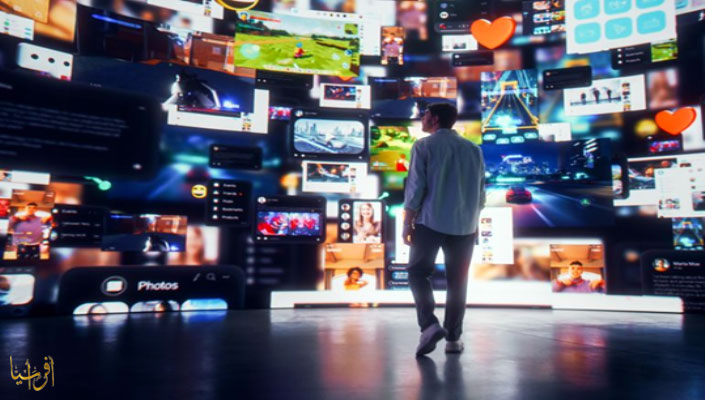
The problem is not in the word itself, but in the environment in which it produces. We are living in a new economy, which can be called the "attention economy." In this economy, media organizations compete not only to convey the news, but also to capture the reader's eye.
It is enough to open your phone and find dozens of breaking news before you finish drinking your coffee: Urgent about a statement. Urgent about denying the statement. Urgent about a response to the negative. And another breaking news that confirms that the previous breaking news was exaggerated. The word has turned from a description of an extraordinary event to a daily tool to compete for the public's attention.
Perhaps the great irony is that inflation has affected not only currencies, but also words. Just as a currency loses value when it is printed in huge quantities, words lose their power when they are consumed infinitely.
When everything becomes urgent, nothing comes back sooner.
The problem is not in the word itself, but in the environment in which it is produced. We live in a new economy, which can be called the "attention economy." In this economy, media organizations compete not only to convey the news, but to capture the reader's eye for a few seconds in a sea of content that flows non-stop.
The word "urgent" has become more like a light sign on a busy road. Sometimes it doesn't matter what you say, as much as it matters to get passersby to pay attention to you.
But this game has a price.
Human beings were not created to live in a state of constant alert. Our bodies and minds deal with breaking news as they deal with real alarm.
Increased level of attention, increased stress, a sense of a threat or a major development that needs to be followed immediately.
When this alarm is repeated dozens of times a day, something strange happens: we stop responding. It's the same phenomenon that happens when someone shouts "wolf, wolf" every day. In the end, even if the wolf does appear, no one will notice.
This is why we may be living today in an unprecedented media paradox. In history, man has never received such a large number of warnings, warnings, and notifications, and yet he has never been so indifferent to many events.
We have consumed fear until it has lost its effect. We have gone through the news of wars, disasters and crises as we go through the weather forecast.
Most interestingly, the word "urgent" is no longer just a media tool, but has become a popular culture. It has moved from news screens to social media platforms, from journalistic institutions to individuals themselves.
The real challenge for the media today may not be to produce more breaking news, but to reclaim the lost meaning of words, because words, like currencies, need trust in order to retain their value.
Everyone now has their own breaking news.
• URGENT: New photo.
• URGENT: New comment.
• URGENT: A new crisis.
• URGENT: A new scandal.
Even our personal lives are being run by the logic of urgency. We want the news immediately, the responses immediately, the success immediately, and the spread immediately. It's as if time itself has become slower than we expected.
But the question worth pondering is: what happens to society when its members live in an ongoing media emergency?
One possibility is that people will lose their ability to distinguish between the important and the ordinary. When all events are presented with the same degree of urgency, it becomes difficult to know what is really worth paying attention to.
A story about a war may be presented in the same way as a passing political statement or an unconfirmed rumor. The result is that media discourse begins to settle the differences between different things.
Everything matters.. So nothing matters.
And therein lies the irony. The word, originally designed to alert the public to extraordinary events, sometimes has become a cause of dilution of the sense of those events themselves. Perhaps that's why the question is no longer the big news? Rather: Is it worth it to be urgent at all?
The real challenge for the media today may not be to produce more breaking news, but to reclaim the lost meaning of words, because words, like currencies, need trust to retain their value.
When the word "urgent" loses its meaning, we lose not just a journalistic term, but a tool that helps us distinguish between what deserves attention and what doesn't.
The world that was said to be over in two hours is probably fine, but it is the word "urgent" that needs a rescue.
