
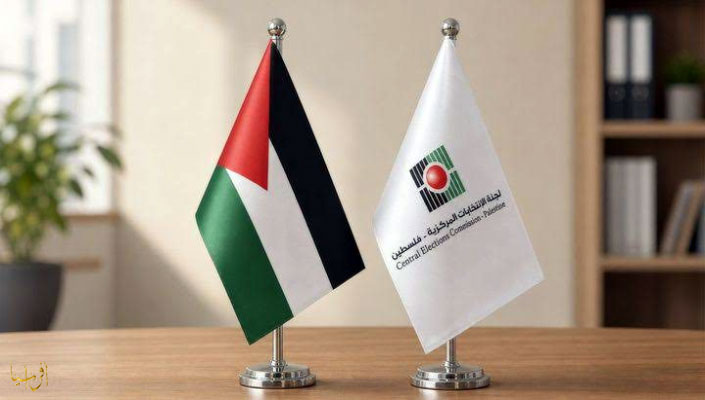
Afrasianet - Anis Fawzi Qasim - The Palestinian factions – which is the miserable name of most of these factions, or the rest of them – are still haunted by an imaginary "election" called the Palestinian elections, and their actions came in response to a request from President Donald Trump, or inspired by him, and they are busy making contacts and meetings to form lists and formulate programs, as if they are in a sovereign state and not under the authority of an occupying power. The film "Naza," produced by two Israelis, proved that Israel views us as "worthy of annihilation."
It has become certain that the existing authority does not have legitimacy until elections are held to create legitimacy, but what is important in this context is the question of which electoral law will be held if these elections are held.
The residents of the district in Ramallah issue a law or an amendment to a law, whenever one of them has a "corrective" idea, which makes it clear that the elections do not come for a national need or to meet the desire of the masses, but rather come on the orders of the Supreme Court of the White Door.
That is why we are witnessing a stream of conflicting laws and amendments, and then we have to choose which legislation will be implemented.
If we assume that the electoral system approved by the Executive Committee on 2/6/2026 is the "system" that will govern the electoral process, we note the following:
"The effort exerted in the election process, which is doomed to fail in advance, will be in the interest of our people if we think together in fighting the starvation machine used by the occupation soldiers and settlers against our people in their various areas of presence"
______________
At the beginning of the regime, it was stated that this system would regulate the "mechanism for the election of the National Council in the homeland and in the diaspora," meaning that the process includes both Palestinians in the diaspora and inside the occupied homeland.
This is a sound text, but will it be done in practice? Are the people of Gaza in the midst of elections still looking for a drop of water, a morsel of food, a glass of milk, or a roof over their heads? And what about the people of Jerusalem? Will Israel agree to their elections free of charge?
The electoral system then goes on to define the "committee" as the Central Elections Committee that will manage and supervise the electoral process "in the diaspora areas and supervise it."
However, the system does not disclose who will supervise and administer the elections at home, and this statement is confirmed by Article 2 of the law, which stipulates that the scope of application of this system is limited to "exclusively diaspora elections."
Naturally, the "committee" will form the Palestinian presidency, and the committee must necessarily be "on the size of the president."
How can we ensure transparency and integrity in the elections in the diaspora? Complicating matters further, the definition of the committee added: "Or any temporary committee formed to manage elections in the diaspora." The committee that will necessarily form the committee is the president, that is, the committee will be chosen by the president and his directions.
The system introduces the "electoral complex", which is a representative body that includes representatives of the components of the Palestinian arena, which is responsible for selecting the representatives of those arenas.
The system did not disclose who will form this body, and if the components of the arena in a country choose an "electoral complex" that is not the size of the presidency, can you name who will represent it in the Article 5 of the Statute stipulates that if the Electoral College cannot be formed, the PLO's Executive Committee may adopt a consensual mechanism, and we must mention that all factions have held more than fifteen meetings to decide on strategic issues, but they have not succeeded.
One of the major mistakes in this system is in the formation of the National Council, as Article IV specifies that the Council will be composed of (350) members "provided that the seats allocated to the Palestinian territories (200) seats shall be filled, in accordance with the principle of governing membership", and the Diaspora will have (150) seats, of course there is no doubt about the number and there is no competition between the outside and the inside, but we know for sure that the internal elections will be governed by the security services and by the long hand of the authority, which means that the largest number will be for the internal elections (ruled by an Israeli occupation and an authority whose legitimacy is challenged), meaning that the majority of the votes in the decisions of the National Council will be for the inside.
This is a major challenge to the decisions that will be taken, which will constitute a tool for counting and division more than it will lead to national unity and cohesion.
To make matters worse, Article 8 stipulates that in order to accept the list's candidacy, it must declare its commitment to the PLO, its political and national program, and the resolutions of international legitimacy, in short, the candidate and his list must agree to the Oslo Accords.
This is a sure recipe for divisions in the Palestinian arena, but the problem is not only in this condition, which has become like a "necessary" in the songs, but the bigger problem is that the PNC and the Central Council have issued a series of resolutions calling on the Executive Committee to stop security coordination and/or withdraw from the Oslo Accords.
What commitments will the list declare to honor? Are they the obligations to sign the Oslo Accords, or the obligations to withdraw from them? One of the jokes invented by the system is that it stipulates in Article 25 that the candidate must attach to the application a list of the signatures of 3,000 registered voters, "with the exception of the lists of factions."
The factions are also supposed to attach a list of 3,000 signatures, as they are among the national factions that claim to lead A large segment of the people, and that the masses rally around their slogans and achievements, or did the exception come to protect them from revealing the secret?
In conclusion, Article 52 stipulates that this "system" repeals the Election Law of 1965. How is it palatable that a system abolishes a law, and the latter is the highest rank in the legislative process, and a law may only be repealed by another law?
Finally, with respect to the many brothers and comrades who are crowding at the gates of the lists, we may ask, is it reasonable that the occupation will allow the elections of a "council" if it does not support the occupation and offer it, openly or secretly, bouquets of roses and obedience, or at least "no opposition"?
Although I am convinced that many of the candidates inside the country stand firmly against the occupation, why should they work within the elected council?
They know with certainty that they will not be able to remove a military barrier, make a change in the division of territories, build a road network connecting Palestinian cities, all of which are Area A, or make any change, however modest, to the terms of the Oslo Accords.
Brothers and comrades, I hope you will take a look at the latest report of the World Food Programme (WFP) on the fact that 900,000 Palestinians from our people in the West Bank are now suffering from food insecurity.
The process of starvation is expanding from Gaza to the West Bank to the diaspora camps, following the withdrawal of funding from UNRWA.
The effort that is being made in the electoral process, which is doomed to fail in advance, will be in the interest of our people if we think together to fight the starvation machine used by the occupation soldiers and settlers against our people in their various areas of presence.
______________
Anis Fawzi Qasim - Palestinian lawyer and writer.
