
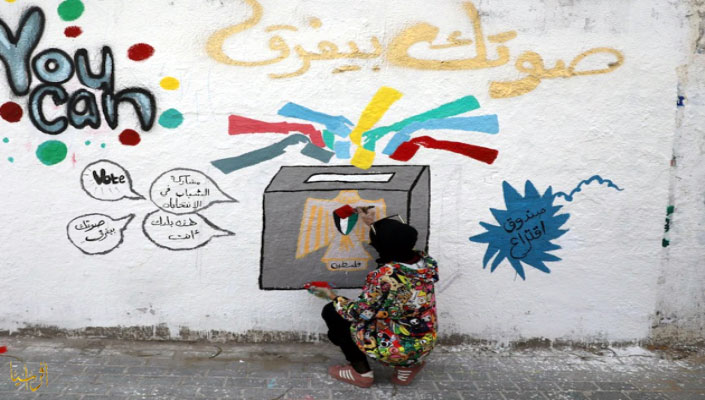
Afrasianet - A recent Palestinian poll reveals a widening trust gap between the street and the PA as the upcoming elections approach amid widespread doubts about their ability to bring about real political change.
The poll, conducted by the Palestinian Center for Survey Studies and Research (PCSR) between August 5 and 8, 2026, showed that 79% of respondents consider the PA a burden on the Palestinian people, in an indicator that reflects a high level of dissatisfaction with the performance of the PA and its institutions.
The signs of decline did not stop at the assessment of the authority, as 70% of the respondents supported the resignation of President Mahmoud Abbas, reflecting the expansion of popular objection to the continuation of the current leadership.
Widespread skepticism of the elections
The survey results show that the crisis of confidence extends to the elections themselves, with 70% of respondents saying they do not expect the next election to be fair.
At the same time, 44% expected the election date to be postponed, while 40% said they do not intend to participate in them, which poses challenges to voters' confidence in the feasibility of the electoral process and its ability to bring about political change.
These percentages indicate that the problem is not only about who will get the votes, but also about the extent to which the street is already ready to give the upcoming elections enough confidence as a means of changing the current political reality.
The poll results present the Palestinian leadership with a very difficult picture as the elections approach, with three main indicators coming together: a majority sees the PA as a burden, a majority supports Abbas's resignation, and an almost identical percentage that doubts the integrity of the elections.
The expectation of postponement of the elections and the reluctance of a percentage of voters to participate add another factor to the scene, especially if the state of mistrust persists in the period leading up to the maturity.
These figures come at a time when the Palestinian scene is witnessing an increasing debate about the future of the political system and the shape of the next phase, which makes the results of the elections, if held, linked not only to the distribution of seats, but also to the extent of popular confidence that the political process itself will enjoy.
As the Palestinian forces prepare to run for office, the results of the poll paint a clear picture of the popular mood that a large majority does not see the PA in its current form capable of representing its aspirations, and a large percentage does not trust that elections will be the way to change this reality.
________________
