
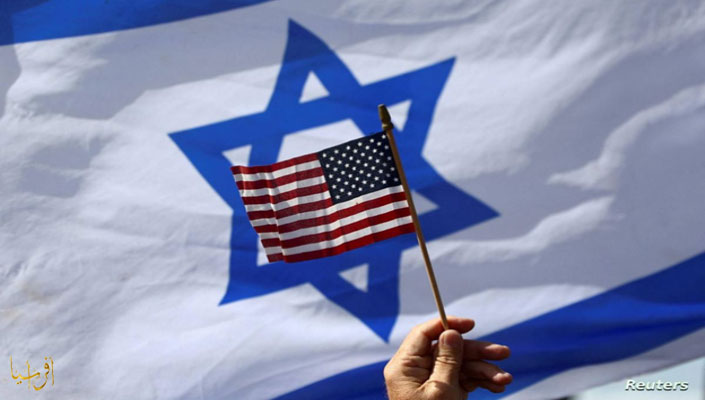
Afrasianet - A U.S. military attack on Iran may have less to do with U.S. security and more to do with the Israeli government's priorities.
One of the most prominent justifications for the Israeli-American attack on Iran is to bomb the country to force it to adopt a friendly attitude toward the United States and Israel.
Few believe that this will work. Iran, a country equal to Germany, Britain, and France combined, has a population of 93 million, more than three times the population of Iraq when the United States, even with a large army, tried to turn it into an ally. We all remember how it ended.
President Donald Trump has run two successful presidential campaigns on a populist foreign policy platform in which he pledged, "I will not start a war, I will stop wars," and denounced the "endless wars" of his predecessors in Iraq and Afghanistan.
But now he appears to have abandoned the "America First" policy without a clear strategic justification. Understanding this war as a rational decision presumably leads America to pursue a specific goal that serves Americans.
Iran's long-range missiles were not a foreseeable threat to the United States, according to U.S. intelligence estimates. This draws attention to the fact that the origin of the war is real, and the main beneficiary of it, is Israel.
U.S. Secretary of State Marco Rubio acknowledged that the basic answer to the question "Why [attacking Iran] now?" is that the decisions to go to war with the U.S. were practically driven by Israel. "We knew that there would be Israeli action, and we knew it would lead to an attack on U.S. forces, and we knew that if we didn't strike them before they launched those attacks, we would suffer more casualties and maybe more deaths, and then we would all be standing here answering questions about why we knew about it and didn't act."
The first part of Rubio's answer that Israel was planning to attack Iran and that Iran would respond by targeting U.S. sites reflects a real problem: Israel's behavior imposes security and economic costs on the United States.
Successive U.S. presidents have provided Israel with billions of dollars in military aid, political cover in international forums, and worked tirelessly to shield it from accountability for its war on Gaza and its prolonged occupation of the West Bank.
Israel has become accustomed to acting with impunity and ignoring U.S. interests, particularly with regard to Presidents Barack Obama, Joe Biden, and Trump's stated priorities to reorient U.S. foreign policy toward the challenges of China's rise.
But the Trump administration's solution, as Rubio explained, was simply to acquiesce to Israel and engage in a deadly war of choice against Iran, predictably contributing to chaos in the region, killing Iranian civilians, and promising (similar to the ill-fated Iraq war under George W. Bush) a rapid regime change into a democracy friendly to the United States and Israel.
The true goals of Trump's war cannot be found in his strategic vision, which (if any) is overshadowed by volatile positions that serve his personal tendencies and short-term political interests.
Although most combat operations have been carried out by the U.S. military, with significant risks to U.S. soldiers and taxpayer costs, the war was born, planned, and insisted upon by Israel and its longtime prime minister, Benjamin Netanyahu.
"I have tried to persuade successive U.S. administrations to take firm action [against Iran], and President Trump has done so," Netanyahu said, acknowledging his efforts to push the United States into another war in the Middle East.
Netanyahu is notorious for exaggerating his promises about the results of U.S. interventions: In 2002, he said, "If you remove Saddam and his regime, I guarantee that it will have tremendous positive repercussions in the region."
While Israel leads one of the world's most powerful nuclear arsenals, Netanyahu has been warning for decades that Iran is an existential threat to Israel simply because it seeks to acquire the capability to build a nuclear weapon.
But the real reason for Netanyahu's obsession, according to this argument, is the role that this rhetoric (despite the abundance of contradictory evidence) has played in cementing his image as "Mr. Amin," the only leader in Israel who is willing and capable of doing what it takes to defend Jews against the "Hitler of the age."
With the prospect of criminal conviction and jail time if he leaves office, Netanyahu has a lot to lose. So far, the push for war has helped him, but now that he got his war and killed the Iranian "dictator," what is his plan? The best way to answer this question is to look at what he sought to do and what he actually did in Gaza.
After the Hamas-led attacks on Israeli settlements near the Gaza Strip on October 7, 2023, Netanyahu launched a war of destruction and punishment whose stated goal was to end Hamas' rule there.
This goal has not yet been achieved, but it was also not actually its real goal. After more than two years of crushing bombardment and killing or injuring more than 10 percent of Gaza's population, Hamas still rules Gaza. But this protracted war, conducted in a way that keeps Netanyahu in power and boosts his chances in the upcoming Israeli elections, has turned Gaza into an arena of suffering, chaos, and a near-open firing zone for the Israeli military.
This, to a large extent, is also what awaits Iran, and one that will once again serve Netanyahu more than any other interest Possible U.S. security or geopolitical.
To illustrate, Israel relies on the United States for military aid, as well as for protection within the United Nations and the International Criminal Court, when these multilateral institutions try to hold their leaders accountable for war crimes in Gaza, Lebanon, Syria, and Iran could not have carried out their wars in Gaza, Lebanon, Syria, and Iran without U.S. support.
The cost of a war in Iran remains uncertain, but it can indeed be concluded that its human and financial cost would have been enormous and could have been avoided entirely.
Beginning to address the policy failures that have brought the United States to this point requires scrutiny of how a country described as a vassal of a superpower can gain so much influence over the foreign policy of a great power.
In 2001, Benjamin Netanyahu made very clear his vision of Israel's influence over the United States, telling Israeli far-right activists: "I know what America is. America is something that can be moved very easily, moved in the right direction. They will not stand in the way."
The Israel lobby, led by a small group of Israeli-American billionaires and Americans from both parties who put the ambitions of Israel's right-wing government at the forefront, is once again preparing to flood the campaign finance system ahead of the 2026 midterm elections.
At the same time, the United States is embroiled in a war that Israel has long sought against Iran without a clear justification for U.S. national security. It is easy to portray Donald Trump as another U.S. president who has come under Netanyahu's influence. But Trump, unlike his predecessors, is different: he sometimes says what is usually said behind closed doors.
Speaking to the Israeli Knesset in October 2025, Trump himself referred to the Israel lobby's grip on U.S. foreign policy, specifically Israeli-American billionaire Miriam Adelson, one of the lobby's largest financiers and the largest campaign donor in the entire U.S. political system.
So Trump said, "Miriam? Look at Miriam. It's right there in the back. Get up now. Get up." Concluding his friendly talk about the Adelson family, Trump questioned the loyalties of his biggest and most powerful financiers, saying, "I actually asked her (and this embarrassed her) and I said, 'So, Miriam, I know you love Israel. What do you like more, the United States or Israel?" ... I refused to answer. This could mean (perhaps) Israel.
This article was published on March 12, 2026, in The Nation. Eli Clifton is an American journalist and scholar specializing in U.S. foreign policy, lobbying, and U.S.-Israeli relations. Ian Lustek is a prominent American political science professor specializing in Middle East and Israel affairs, a scholar of nationalism and conflict, and the author of influential academic works.
