
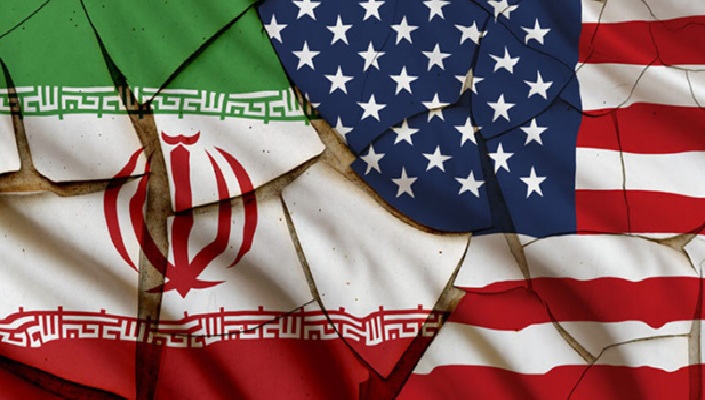
Afrasianet - Oraib Al Rantawi - Iran is unlike any of the countries in which Washington has recorded varying successes in the game of "toppling and changing regimes", and it is certain that if the war breaks out, it will produce a unique experience in its course and beyond.
Dark clouds shade the skies of politics and media in the region stretching from the Caspian to the eastern Mediterranean, from the shores of Mandab and Al-Ahmar, to the banks of the Tigris and the Euphrates, not to mention the open front on Gaza, which has not ended after about 100 days of the ceasefire agreement. Scenarios that fly here and there, and models that are conjured up to describe and diagnose what might happen, especially on the Iranian front.
The situation is serious, and even very serious, far from the policy of intimidation and intimidation practiced by parties from inside the region, and in particular, from outside it, and it is not prudent in anything to compare "intimidation" with "underestimation", as the players, countries, movements, and factions, do not have the luxury of building on the best scenarios, but rather preparing to face the worst, which justifies conducting a "horizon tour" in the prevailing patterns of thinking.
Four scenarios
There are four scenarios that are being circulated in various political and media circles, which do not have the same weight, of course, and their weights and weights differ according to the party that talks about them or promotes them:
The first is the "more of the same" scenario, which is based on Washington maintaining its old tools in dealing with Iran, with a more intense tendency to tighten sanctions and control their implementation, pursuing the "shadow fleet" to prevent Iran from exporting its oil, media campaigns and "psychological warfare", in conjunction with the implementation of cyber operations, and encouraging "Israel" to carry out intelligence operations inside Iran, against people or facilities, to deepen Iran's crisis and weaken the prestige of its regime and leadership, while maintaining the sword of death threats and "beheadings" on the The necks of a wide range of Iranian political, military, scientific, and spiritual leaders to keep them in a state of alert and tension, and to confuse the command, control and control system.
This is what Washington and Tel Aviv are doing today, with all their hard work and diligence, but it is unlikely that the aggressive behavior of the two strategic allies will be limited to these tools, as they are important as a preparatory stage for what will come next, but after 47 years of the revolution, it is no longer sufficient in itself, to meet the interests of Washington and Tel Aviv, or to satisfy the arrogance of power, the "arrogance of the leadership" and the narcissism of Donald Trump, "who if he says he does", and the chances of this scenario will decrease if the confrontations escalate in the This is what Tel Aviv is working to fuel, in close cooperation with "organized opposition," to motivate Trump to move to a harsher and more painful scenario, and the exaggerations in portraying the numbers of demonstrators and "estimating" the numbers of victims of the dead, wounded and detained, are nothing but an attempt by these parties to embarrass Trump and push him to fulfill his pledge to strike Iran if it "kills" the demonstrators.
The second is a joint US-Israeli aggression, which is more likely and likely than the first, in which Washington and Tel Aviv carry out military strikes, air and missile, against strategic Iranian targets, including military installations, camps and commanders of the Revolutionary Guards in particular, and missile production factories, and possibly a return to nuclear facilities, in an expanded or replica restoration of the 12-day tour last June.
This scenario aims to dismantle the command and control system, and weaken the role of the Guard and the mandate of the Guide... Weakening the prestige and prestige of the regime, promoting protests and generating opposition from within the regime, and encouraging other opposition to activate their roles, in order to overthrow the regime in the country.
Those who are enthusiastic about this scenario conjure up three models of change that Washington and its allies have succeeded in implementing over the past quarter century... The "Iraqi model" and the resulting chaos, terrorism, and conflicts, which in the Iranian case, will be more severe for the region and the world, as Iran is a major regional country, and ninety million Iranians will eat the green and the dry if chaos and wars of components and identities break out, and the sparks of the coup in the Iranian scene and its fragments, will affect the region, and will not remain within its borders, and will affect the European continent and the world, in the form of waves of migration, terrorism, and blind violence. Unless Washington's failure to learn from its past experiences is chronic, the Trump administration will not do so.
The Syrian model", which is said to stem from the failure of the "nation-state building strategy" promoted by the George W. Bush administration now, in Iraq and Afghanistan, has nothing to enhance its chances in Iran, as the Assad regime was not toppled by a revolution or by the opposition marching, but by the allies' withholding of their support and umbrella from it, after it was worn out from within, and there is no "Hay'at Tahrir al-Sham" in Iran, nor "liberated" areas over which the opposition extends its control, and there is no regional neighbor, capable or even willing, to play the roles that it has played Turkey and others, before and after December 8, 2024... Any hadith of this kind loses its value and context.
Other observers recall the "Venezuelan model" that is still "fresh" in their minds on the screens and front pages of newspapers, because the renewed beating of the drums of war on Iran coincided with Washington's kidnapping of Venezuela's legitimate president from his fortified palace.
This model is invoked as an expression of "emergency maturity" in the performance of American policy, which has only beheaded the regime and kept the institutions of government and state in order to avoid slipping to the bottom of a new quagmire, and for fear of the specter of chaos and the conflicts that are generated on it. Even with the worst-case scenario: targeting the Supreme Leader (by killing rather than kidnapping), there will be another leader the next morning, and the sources of power in the Islamic Republic are distributed among several centers, and Iran is a large country, far from both American and Israeli centers of power.
Third: The scenario of a double strike and the division of tasks, such as Washington striking Iranian targets, and leaving it to Israel to deal with Hezbollah in Lebanon. While Tel Aviv places the overthrow of the regime and spreading chaos and division at the top of its priorities, considering that Iran's existential threat to Israel will remain as long as the regime remains, Washington may be inclined to change from within the regime, and not on its ruins.
In order to ensure that the military operation does not deviate from its objectives and finds Washington embroiled in a turbulent sea of waves, a team of observers is likely to see such a scenario, and they believe that the next operation will mainly target sensitive strategic locations, centers and commanders of the Revolutionary Guards, and its supporters from the revolutionary current, in the hope that this will lead to the "escalation" of a moderate reformist current that responds to American demands, as is currently happening in Venezuela, thus striking two birds with one stone: It overthrew the revolutionary regime and prevented the eruption of the volcanoes of anger and chaos that it fears, as well as the countries and peoples of the region.
Meanwhile, Israel is simultaneously carrying out the "closing of the score" operation with Hezbollah, which is encouraged by Washington (green light) and receives support from the Israeli opposition and public opinion, and only a few countries in the region are taking action to prevent it from happening.
Fourth: The scenario of a preemptive Iranian strike, this scenario is being circulated in Israel in particular, and work is being done to confront it, as if it were the most likely scenario, although many parties exclude it, both in terms of Tehran's need politically and legally, so as not to be a detonator for the next war, or in terms of Iran's inability to deter any military action and prevent "next day" strikes, which will of course be justified, harsh as never before, and supported internationally and regionally on a larger scale, while Tehran's allies in Moscow And Beijing, they will face an embarrassment in supporting Tehran if it launches the first missile.
War, Likely or Certain?
There is a so-called "last quarter of an hour" scenario, such as Tehran and Washington, directly or through intermediaries, reaching a comprehensive deal that pushes the specter of war, in exchange for "concessions" made by the Iranian side in its nuclear program, and in exchange for financial, economic and trade deals with the "man of deals" that satisfy his open appetite and exceptional ego, a deal that may be painful for the Iranian side, even if the price is to prevent war.
But if this does not happen, Iran's success in inflicting tangible losses on the American (and Israeli) side, especially in its human resources, is enough to break the wave of arrogance and end the madness party in the White House, and Iran is not required to win the next confrontation, which requires it to at least be steadfast and steadfast, and inflict casualties on the aggressors, with which it is difficult to think of continuing this "thuggery", especially by a president who came to power, with the slogans of ending the existing wars, and ensuring that there is no More of them erupted... Trump understands that his voter base will not tolerate him, nor his party, if he leads the country and its people into more adventures beyond borders, creating a new hemorrhage in resources and lives.
Iran is not like any of the countries in which Washington has recorded varying successes in the game of "overthrowing and changing regimes", and it is certain that if the war breaks out, it will produce a unique experience in its course and afterwards. However, the next round of clash, if it occurs, will be decisive in terms of rebalancing forces and alignments, and perhaps reshaping the image and maps of the Greater Middle East, for many years and decades to come.
