
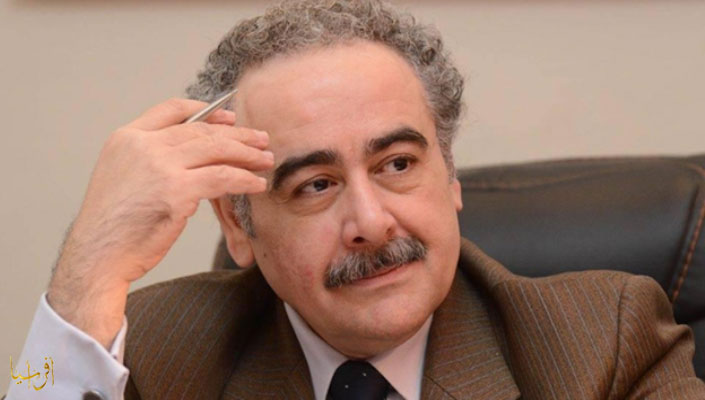
Afrasianet - Dr. Alaa Abdel Hadi - Mahad in the Psychoanalytic Methods of Literary Impact - Colloquial Poetry as a Model - as Part of Cultural Criticism:
An excerpt from a long paper of mine – perhaps useful – presented at the Conference on Arab Culture Between Oral and Writing. Faculty of Arts, Cairo University, April 6-8, 2010.
The analysis and references are referred to in the original research, to prevent what you all know!
In the unconscious
Oral as a tool for psychoanalysis of the vernacular poetic text
"Dialogue Paradise" as a model
First, we start from the hypothesis that both the creative literary text and the psychoanalytic theory offer one form of knowledge to the other, because if we assume that the real situation of the interpreter – the analyst – lies inside the text and not outside it, the clear contradiction and strict boundaries between literature and psychoanalysis do not fall on the distances themselves.
But are almost close to the point of contact, where psychoanalysis can be pervasive in "intraliterary" literature"As much as literature can be pervasive of "intrapsychoanalytic", the methodological bet is no longer an application of psychoanalysis to literature but a bet of mutual inclusion in both.
Here we present a textual interpretation based on the current of psychoanalysis of literature, of a poetic text written in the Egyptian dialect, "Paradise the Dialogue" by Ibrahim Khattab, which is a poetic work, full of mourning, pain, and metaphors that the poet pushed to a range that is often not reached by vernacular texts, which are concerned with communicating with the general public, and celebrate what is circulating there, where the secret of all colloquialism lies.
In contrast to this Diwan, with which the reader may feel alienated and ambiguous, due to a set of complex rhetorical mechanisms that prevented the completion of meaning in the text, as if it were a curtain behind which the poet hides! This is what led us to analyze it through the perspective of the unconscious, and we consider that ambiguity is a kind of semiotic defense.
And that It will somehow guarantee the desire, based on the Freudian school of analysis. On this point, Lacan argues that what is analytic of the first order is not the intelligible read, but the illegible and its effects. This is because what is required for analysis is the urgency of the unread in the text.
The reader will have to be prepared to understand how this meaningless speech can be thought of as a richness of meaning, not an absence of meaning, and to give it a special role in exploring and revealing the truths of the unconscious.
In this paper we will adopt the ideas of Jacques Lacan in particular; in my opinion, Lacan's importance here lies not in any new teachings that his "school" may posit, but in his clear assertion that there is more than one method of incorporating psychoanalysis into literature. This paper is an answer to the question: Can psychoanalysis provide us with insight into the specificity of the poet?
Psychological criticism that begins with textual analysis always goes beyond the level of language to approach the reasons for its production – in one form or another – of motives and conflicts, and this leads to an important modification in the course of interpretation. I left myself completely to be led by this work, without presuppositions, after I had envisioned from the beginning a critical path based on giving the text its full opportunity to guide me to its poetic world, without my intervention!
My approach to this was based on a small trick: that the poet's oral recitation leads me to a key to a closed door, which is the door of the analysis of the poetic unconscious in the written text, and that "both poetry and the unconscious are mutually supportive", and that the mechanisms of unconscious analysis in the poetic text can support what can be analyzed while the poet is reciting it!
The text shares the unconscious life of its author. Our choice to read this work is not so much because of its aesthetic importance as because of its ability to support the validity of our approach to this study. Approaching Kant, we assume that we can treat imagination as an empirical function that controls experience, rather than descends from it.
Psychoanalysis is a rhetoric that is still in the process of being created; a rhetoric that takes risks, a rhetoric that creates statements according to its lust. Perhaps it is in this understanding of the crippling and exacerbated kinship that both rhetoric and psychoanalysis are inextricably linked.
I asked the poet, under the pretext that I am not good at reading colloquialism, to record the work for me in his voice, shortly after the publication of his colloquial poetry work, "Conversational Paradise".
The key to my entry into this research was to draw my attention to those passages that have received special attention in the poet's recitation, i.e., by linking writing to oral, a relationship that is always absent in the analysis of contemporary poetic texts, and I have recorded in writing, automatically and directly, those passages in which the poet raises his voice in the recitation, "Krishindo", or lowers it with "D-Krishindo" with a shudder and affection, or when he recites it with a noticeable inner absorption, in addition to the passages in which the poet pays special attention, or which He was slow to give it deliberately.
And so, I know from the beginning that the poet knows that this tape is not directed at the general audience, but rather a tape directed at a critic, who needs it in order to complete a critical study of the work, because the critic, as I understood it, is not proficient in reading the Egyptian vernacular, and the intention here is quite clear to both the author and the analyst.
Also, the poet's awareness of his text – through his poetic awareness – was able to send messages – through speech – to his critic always on the conscious and unconscious levels, by saying to him, for example, through the achievement aspects of the pronunciation of the phrase orally, or in the various semiotic aspects possible in the recitation, pay attention, God, here is a beautiful passage, and this passage is important, and so on, regardless of the validity of this judgment issued by the author's awareness of his poetic author!
The author may think that this passage is the most important passage of the text, with his own aesthetic awareness, and the critic proves otherwise, but the usefulness of this procedure lies in the ability of the voice, during the recitation of the poetic text, to detect and to put up barriers that limit the permanent ability of the unconscious to evade, so we assume here that the unconscious in its relation to the poetic text is always present in the poet's recitation.
And that is regardless of the poet's conscious attempts to direct the critic's consciousness in the way he recites passages with her eyes, which are A method of analysis, although it is affiliated with me, needs dozens of contributions from other critics to modify it and develop it at the level of psychoanalysis of literature. In order to monitor the unconscious worldview that is reflected in the author's work, based on the dictionary,
"Methodological betting is no longer inherent in the application of psychoanalysis in literature, but has become a bet of mutual inclusion between them."
At first, I was wary of the danger of my presence in the text, so I redoubled my attention to those places that I occupied as a critic while analyzing the poetic consciousness in the text.
This is after compiling these passages in which there has been a noticeable psychological change in the poet's recitation, by describing these passages as the important aspect of the text that I should be interested in at the beginning, without knowing what this fragmentation might lead me to in the structure of the work.
At the end of my exclusive, I got a scattered collection of poetic passages, which Jama'a does not collect, other than those issued by the poet's own voice!
As Lacan says, there is no language in which interpretation can avoid the effects of the unconscious; and the interpreter is no more immune than the poet against unconscious errors and errors.
The isolation of these passages, and listening to what might lead me, was a key to analyzing the text, and a guide that would lead me to observe the movement of the creative unconscious in the whole text afterwards. In other words, this isolation of these partial texts was.
On the procedural level, a reliance on analysis, which I could have put forward if it had not led me to a coherent and correct analytical evidence of the creative consciousness of the poetic text – if we assume that the word Sahih is accurate in this context – afterwards.
"What is concerned with analysis in the text is not necessarily the unconscious conclusive" in the poet, we must leave his cause or the problems of his life as they are. In order to determine the place of analysis in such a text – or the point at which it is included in the text – we do not have to know what is known, or to find an answer, perhaps what is needed is to determine the situation of the unknown and to find a question."
But what about the distance between the sense and its expression through language? What about the distance between the direct expression of this meditation and its translation into a written literary language, among peoples who suffer from what is called bilingualism, a colloquial language that is thought of, and a literary language that is different in its internal structure in which it is written?
What about the shift between the first burst of feeling, which the vernacular language is considered to be the most authentic in expressing their feelings, and expressing it through writing in classical language, and with a different mechanism of expression through the language, and in a way that gives chance a space in which the meaning in the written language is gradually moved away from the sensible that can be translated directly and honestly through the colloquial language and oral, and this is related to the so-called "dyslexia" in a way in the sciences of language.
These questions may have been a justification for trying to link oral and writing in the analysis of the vernacular poetic text, from the perspective of psychoanalysis of literature.
This is the first attempt that I know, as far as I know, in using this methodology in the psychoanalysis of the literary impact related to the poetic genre. In order to determine the position of the analytic in such a text – to determine the position of the object of the analysis or the point of its textual inclusion – we do not necessarily have to recognize what is known and find an answer, but, perhaps more challengingly, to determine the position of the unknown and to find a question.
What I am presenting here, then, is an adventure on a methodological level, and I don't know what to lead me. In any case, these passages were the first material of the text that guided me to analyze the creative unconscious throughout the text afterwards, and gave me a sensitive hand to touch the manifestations of this unconscious on the stylistic and thematic levels in particular.
Literary work, as Paul Ricoeur argues, "unleashes not only speech to desire, but gives it all possible masks, i.e., all the twisted possibilities of expression to which style referrs", and has adhered to a set of principles in analysis, the most important of which is the famous Lacanian principle that the unconscious is built as a language.
Each text has a relationship with the subconscious of its author, and each text has different levels of analysis, one of which is the relationship between the text and the writer's consciousness.
Behind some rhetorical images, repetitions, repeated metaphors, or sentences of an urgent nature in the text, we can find a functional structure, a symbolic system, which can be inhabited, in which the critic reorganizes the products of an author, revealing a deep psychological structure, and keeping pace with the unconscious movement of the author and its impact on the text. and
We will base this on a set of elements that constitute milestones for our research journey ( ) such as:
A. The principle of strangeness: In order for an element of the work to belong to what we here call a personal myth, and for it to appear as the result of an unconscious reflection, it must have an unexpected appearance. We have begun to apply this principle to the poet's recitation of the entire diwan. We extracted from it the poetic passages that the poet recited differently from the rest of the passages.
B- The principle of consistency: Scattered phrases, pen slips, and allegorical repetitions may form a symbolic system, which the critic should not treat as a random system, as the repetition of an element of the work, or one of its methods, without the possibility of attributing that repetition to chance, is of particular importance in this study.
We have found the repetition of a specific theme that is permanently related to fate verbally, semantically, or interpretively, as the study will show.
C. The principle of coherence: The personal myth is a symbolic structure whose elements are organized around a theme that can be identified in the form of a myth of "a second semiotic system with the concept of Barthes, words with a dual meaning." The discovery of the prevalence of three methods in the structure of the text at the macro level, through the many images produced through the use of these methods, may have validated this principle in this study.
D. The principle of overlap: The coherence of the personal myth is in fact nothing but a work project whose value is measured by the sum of the data it collects in a suitable system that allows for the establishment of overlaps between the components of the myth and between aspects of the biography that remain inexplicable in research. The subject is the loss of love on the part of the subject."
This research has gone through stages as follows:
First: Identifying the passages that witnessed a change and difference in the poet's recitation, and their connotations at the analytical level, and I mean the elements that revealed the dominance of the significance of revelation and destiny over these passages.
Second: Limiting the semantic repetition of the word al-Qadr and its synonyms indicating the revelation and obscurity and their locations throughout the text.
Third: Analyzing the endings of the poems, and their relationship to fate, and the unconscious compulsions that made them in such a way that closed the meaning and left it hanging on the denunciation of fate, as if mentioning the word fate at the end of a poem is enough to end it at the level of significance!
Fourth: Limiting the manifestations of the ego pronoun in the dialogical paradises, and the impact of the obsession of "fate" on the fate of the ego and its manifestations in the Diwan.
Fifth: The impact of this obsession with "fate" and its cruelty on the poet on the stylistic aspects of the Diwan has been limited to three stylistic mechanisms that are unconscious in the structure of the work that produced the Diwan in the form it is, namely:
1- The style of the posterior buttocks: and the structure of the semantic contrast in the poetic line.
2- The structure of the question in the poetic text, whether it is that which carries an objection from the poet to his reality, or that which seeks to be revealed.
3- The structure of the double negation, which made it clear that all the choices of the poetic ego in the Diwan are negated, the situation that placed it in the middle of something that does not settle on one side. So his attitude towards things and the existence around him moved away from the mirror.
Sixth: Identifying the elements of failure in the structure of the work, in relation to the psychoanalysis of the literary impact.
Seventh: Conclusion of the study.
