
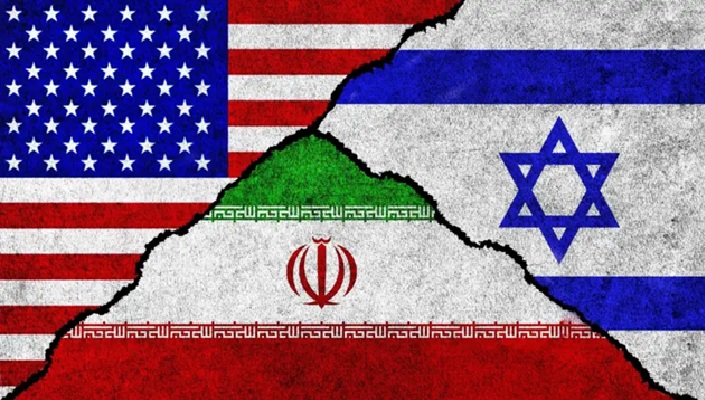
Afrasianet - Ahmed Al-Haila - A wave of demonstrations in Iran has swept across the country in a few days, due to the rise in the dollar exchange rate by 21% in December and the rise in inflation during the past year 2025 by about 43%, according to the Central Bank's estimates.
However, these demonstrations quickly developed into political demands that affect the existence of the political system in Iran, and witnessed manifestations of violence against public institutions, and clashes with security and police personnel, of which about 109 were killed as of January 11, according to Iran's Tasnim News Agency, and more than 270 were injured, according to official authorities.
The U.S.-based Human Rights Activists News Agency reported that 116 Iranians had been killed and more than 2,600 had been arrested.
The Trojan Horse and the Love of the Iranian People
In September 2022, there were widespread social protests after the death of Mahsa Amini while in custody by the morality police for wearing a hijab, protests over rising gasoline prices in 2019, and fresh water shortages in 2018 and 2025.
The demonstrations have been more organized and spread faster since they began on December 28, and their ceiling quickly shifted from demands for living due to the economic crisis and the U.S. blockade to calls for the country's political system.
This is where there is a point of disagreement between observers and within the Iranian environment itself, between those who see the demonstrations as a natural and legitimate issue for the Iranian people, who have suffered for decades from the deterioration of the economic situation, the deterioration of the local currency against foreign currencies, and the government's failure to address the accumulated economic problems and public services.
He pointed out that those who believe that the livelihood protests are right, but they have deviated from their peaceful path and the demands to improve living and the economy that is deteriorating due to the US blockade, by entering local groups supported by external parties to incite the Iranian people against the regime and demand its overthrow.
First: The violence of some demonstrators against security personnel, police, and public institutions, with the aim of dragging the official authorities to use force to deviate the scene from its peacefulness, and thus provoke the Iranian people against the regime, as indicated by the victim figures.
• Second, Israel has been one of the most important instigators against the regime and supporters of its overthrow, a goal that it pursued, despite its failure, in its recent war against Iran in June 2025.
In his last visit to Washington, at the end of December, Benjamin Netanyahu discussed the scenario of a new military strike on Tehran to complete the destruction of its nuclear project and its hypersonic ballistic missile system, which had a profound impact on stopping the Israeli attack on Iran.
• Third: The direct role of the United States of America in inciting the demonstrators to continue their protests, despite its violence against the regime, especially the position of President Donald Trump, who said that Iran aspires to freedom, and that the United States is ready to help in this regard, and the Iranian regime also threatened by saying, "If they shoot the demonstrators, we will shoot them," "I told them that if they start killing people... We will beat them hard."
This is considered American immunity for demonstrators to raise the level of violence and attack on the regime, state institutions, security and police services.
This incitement or interference in Iranian affairs comes in light of what Washington has actually done by violating Venezuela's sovereignty and kidnapping President Nicolás Maduro, to get its hands on oil and political decision-making, which has made Trump's threat more serious than ever.
These positions prompted Iranian officials, the Iranian army, and the secretary general of the National Security Council to accuse Israel and the United States of responsibility for inciting the demonstrators for political reasons, after Iranian President Masoud Bazeshkian was citing the reasons for the demonstrations for economic and livelihood reasons in the early days, away from Washington.
It is then justified to question the behavior and goals of groups of protesters who have adopted violence against the regime and state institutions, and to hang the matter on foreign interventions that are described as hostile to Iran and the interests of the Iranian people.
The United States of America is selective in its positions and has exceeded the standards of international law, compared to its unlimited support for Israel in its genocide of the Palestinians in Gaza, and compared to its violation of Venezuela's sovereignty, its arrest of President Maduro, its interference in the country's internal affairs politically and economically, and its threat to control the Danish island of Greenland by military force.
The US administration, with its delinquency, and the Israeli occupation with its arrogance, indicate that their positions on the protests in Iran are political par excellence; not out of love for the Iranian people but hatred of the regime and its policies that are outside the American and Zionist system, regardless of the idea of human rights and public freedoms, and they use the reformist and just living demands of the Iranian people, as a Trojan horse to penetrate the Iranian situation and manage it according to their interests and interests only.
Pre-emptive war. Who strikes first?
Since the Israeli aggression against Iran ceased, after the 12-day war in June 2025, the scenario of a renewed outbreak of war against Iran at the initiative of Israel and in partnership with the United States has not been lost on the scene, in order to complete the destruction of Iran's nuclear project and ballistic missile system.
Israel believes that it has not resolved its battle with Iran, and that it has not won the balance of deterrence, and that the Iranian regime's survival and its beginning to repair what was destroyed by the war constitute a renewed threat to Israel, upset the balance of its overwhelming superiority in the region, and hinder its aspiration to redraw the Middle East, in addition to its differences with Turkey and the countries of the region that reject Israeli hegemony.
Not to mention that Iran has not abandoned its support for Hezbollah in Lebanon, which Israel accuses of restoring its military power and fears restoring its strength, which constitutes a catastrophic failure for it, the extreme right and Benjamin Netanyahu, who seeks to eliminate the opponents of the Israeli occupation irrevocably.
In this context, Israel has treated the demonstrations in Iran as an opportunity that must be exploited to eliminate the regime internally,
which exempts it from the costs of the war on Iran, and is therefore interested in pouring oil on the fire until it bears fruit.
If Tehran before the demonstrations feared a surprise Israeli strike and was seriously preparing for it, what prompted Israel to send a message of reassurance through Moscow, lest it carry out a preemptive strike against Israel, how can Tehran react to the demonstrations and the efforts of America and Israel to overthrow its regime?
In this context, Iran is expected to address this issue through tracks, including:
• First: Addressing the demonstrations economically and security, by suppressing violent groups that attack the police and public institutions, and neutralizing them from the peaceful demonstrations that the Iranian government promises with serious reforms to inflation, the economy, and public services.
This is what Iranian President Bazeshkian is basically talking about, in order to calm thoughts and stop the protests.
• Second: Readiness for any external military intervention by Washington or Tel Aviv, or both, lest Washington intervene under the pretext of supporting and "protecting" the demonstrators, as President Trump promised, or fearing that Israel, with American support, will strike sensitive areas in Iran, with the aim of destroying the remaining nuclear project and missile systems, and preparing for the collapse of the Iranian regime, and reshaping it according to American standards, which will distance Iran from its alliance with Russia and China, and its neutralization from supporting Hezbollah in Lebanon and Hamas in Palestine, and Ansar Allah in Yemen.
If Tehran can put out the flames of the demonstrations soon, and restore the scene with a package of economic and social reforms, Washington and Tel Aviv will miss the opportunity.
Either if the demonstrations continue, intensify, and begin to threaten the regime or pave the way for external military intervention, according to Iranian estimates, it is not unlikely that Iran will resort to a pre-emptive strike against Israel, with which it fleees forward, extinguishes the fire of internal demonstrations and protests, and reshuffles the cards, in the context of redrawing the equations of power and mutual deterrence.
In this context, the secretary of Iran's National Security Council, Ali Larijani, said, "Israel is responsible for the current situation, and his country is in the midst of a war, there is no peace and no ceasefire."
At a time when the Iranian Revolutionary Guard Corps (IRGC) stressed that "protecting the achievements of the revolution and the security of the country is a red line," which practically puts Israel in the eye of Iranian goals, in light of what American media and White House officials are talking about that President Trump is seriously considering issuing a mandate to launch an attack on Iran.
